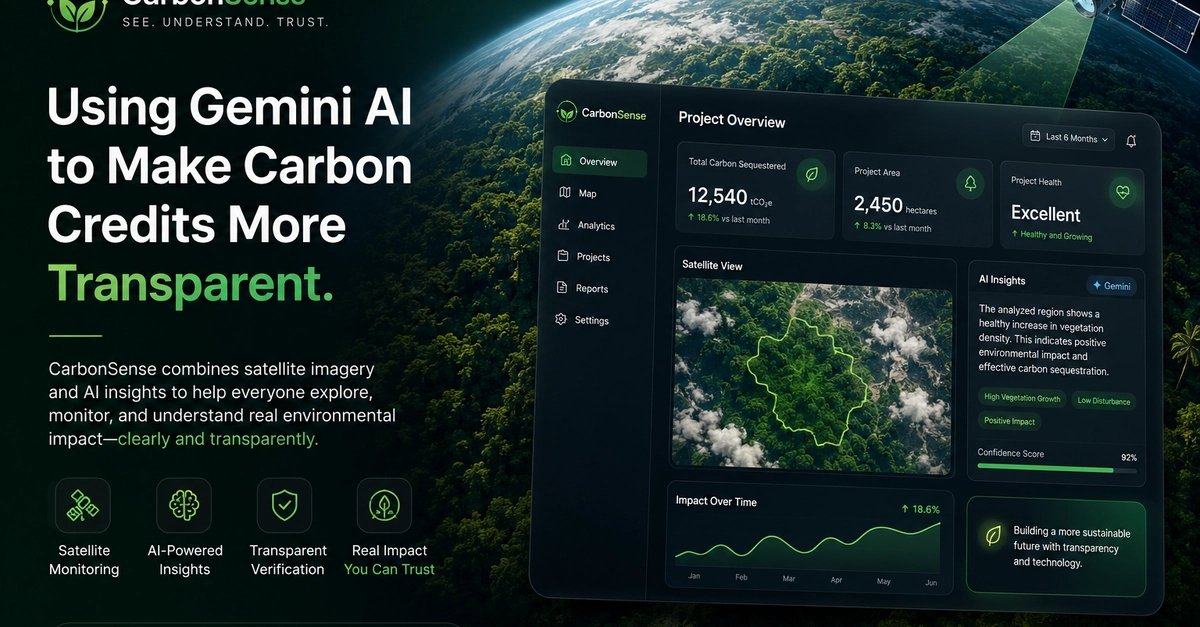
Arun Goyal, Founder & MD at Octal IT Solution, driving enterprise transformation through AI-powered platforms and product engineering.gettyThe larger opportunity for carbon credits may lie in the infrastructure that enables transparency, verification, reporting and trust across the ecosystem.Over the last few years, I have had many conversations with sustainability leaders, corporate leaders, investors and technology providers exploring climate innovation. Through these discussions and my work at the intersection of technology and emerging business models, I have gained deeper insights into how carbon markets are evolving, particularly how organizations are moving from viewing carbon credits as standalone environmental assets toward integrating them into broader strategies around transparency, accountability and value creation.A misconception that persists in conversations with business and corporate leaders is that carbon markets are often viewed as a sustainability issue rather than a business issue. What many organizations underestimate is how carbon considerations are increasingly becoming integrated into economic systems, investment decisions and long-term corporate planning.As climate disclosure requirements evolve across jurisdictions and companies continue pursuing net-zero and decarbonization commitments, carbon is becoming increasingly measurable, traceable and economically relevant. This shift among enterprises, investors and corporate leaders extends beyond sustainability reporting. It opens up new opportunities in the space of carbon trading platforms and emissions intelligence tools, verification systems, tokenization frameworks and financial products with a climate focus.The Digitization Of Carbon MarketsHistorically, carbon markets have struggled with fragmented registries, inconsistent verification processes, a lack of transparency, slow settlement cycles and fears of double-counting. These inefficiencies have often undermined confidence in the market and discouraged broader participation.Technology today is starting to address many of these challenges. Organizations are experimenting with blockchain-based registries, tokenization frameworks, AI-assisted verification systems and digital exchanges to improve transparency and traceability. Early initiatives, including Toucan Protocol and KlimaDAO, illustrated how blockchain infrastructure could increase transparency and liquidity in carbon markets, although they also highlighted the challenges of maintaining credit quality and market confidence. Exchanges such as Xpansiv continue to digitize and streamline environmental commodity trading.In some respects, carbon market infrastructure is beginning to resemble transformations previously seen in payments, banking and securities markets, where digitization improved settlement, transparency and market access.Why Enterprises Are Paying AttentionMany institutional investors continue incorporating climate and ESG-related metrics into investment analysis. The regulators want more transparency. Customers are looking for greater proof of environmental responsibility, not just generic sustainability claims. What many organizations overlook is that future competitiveness may depend not just on financial visibility but also on carbon visibility. Companies that do not measure and communicate environmental performance may face growing pressure from investors, regulators, customers and business partners.Based on discussions with enterprise leaders, demand appears to be gradually shifting from carbon accounting to carbon intelligence, enabling companies not only to measure emissions but also to use environmental data to support decision-making and long-term planning.Why The Real Opportunity May Be The InfrastructureOne conclusion that always comes up in the conversations I have is that the biggest opportunities might not be in carbon credits themselves but in tackling the trust, verification and transparency issues that still constrain market participation.As carbon markets grow, companies will need robust systems to track, verify and report emissions, manage compliance and participate in the marketplace. Much of this infrastructure is already in the works, spanning carbon registries, verification platforms, carbon accounting systems, emissions monitoring solutions, audit and traceability tools, tokenization frameworks and AI-powered emissions intelligence platforms. Together, these technologies form the foundation that enables carbon markets to operate with greater transparency, trust and efficiency. Historically, some of the most durable value has often been created by infrastructure providers rather than the marketplaces they support. In digital payments, companies such as Visa and Mastercard built significant value by enabling transactions across the ecosystem rather than participating directly in individual exchanges. The AI FactorOne underappreciated trend is the intersection of artificial intelligence and climate finance. Most discussions about AI are about productivity and innovation. Much less discussed is the environmental impact of the rapidly growing AI infrastructure.With the accelerating adoption of AI comes the rising need for data center capacity and energy consumption. This puts new pressure on tech companies to balance innovation and commitments to sustainability.When I talk to enterprise leaders, I’m hearing more discussion around how to measure and manage the environmental footprint associated with AI adoption, particularly as data center energy demand grows. At the same time, many large technology companies are investing in renewable energy procurement, carbon reduction initiatives and more energy-efficient infrastructure as they expand their AI capabilities.Carbon Is Entering Financial MarketsCarbon is also increasingly being integrated into financial instruments such as green bonds, sustainability-linked bonds, transition finance programs and carbon-linked investment structures. As sustainable finance continues to mature in 2026 and beyond, these mechanisms are expected to play a growing role in funding climate transition initiatives while creating stronger links between environmental performance and capital allocation. What is particularly interesting is that financial institutions are beginning to view carbon not simply as an environmental metric but as a measure of risk, resilience and long-term value creation. I expect to see more carbon-related metrics incorporated into the investment process and corporate valuation models in the next decade. As disclosures around climate change evolve, environmental performance might become a more important input in capital allocation decisions.Looking AheadThere are still challenges for carbon markets around standardization, verification, transparency and governance. The different carbon credit standards and measurement approaches can create uncertainty around the actual impact of a credit, while verifying whether emission reductions are real, additional and not double-counted remains a critical challenge. Building reliable systems for tracking, reporting and validating carbon data will be important for creating trust among businesses, investors and regulators. Overcoming these challenges will be key to long-term market credibility and institutional adoption.I think the key question is not whether we will see more carbon markets develop but whether organizations are developing the capabilities to compete in that future. Carbon trading is not the sole business for entrepreneurs. Some of the most valuable companies in this space may be those building the infrastructure that enables transparency, verification, reporting and trust across the carbon ecosystem. Carbon credits already operate as tradable environmental assets in many markets, but the larger opportunity may lie in this infrastructure. Organizations that recognize this shift early will be better positioned in a future where environmental performance has real economic significance.Forbes Technology Council is an invitation-only community for world-class CIOs, CTOs and technology executives. Do I qualify?
How Carbon Credits Are Becoming Digital Assets
The larger opportunity for carbon credits may lie in the infrastructure that enables transparency, verification, reporting and trust across the ecosystem.
1,069 words~5 min read