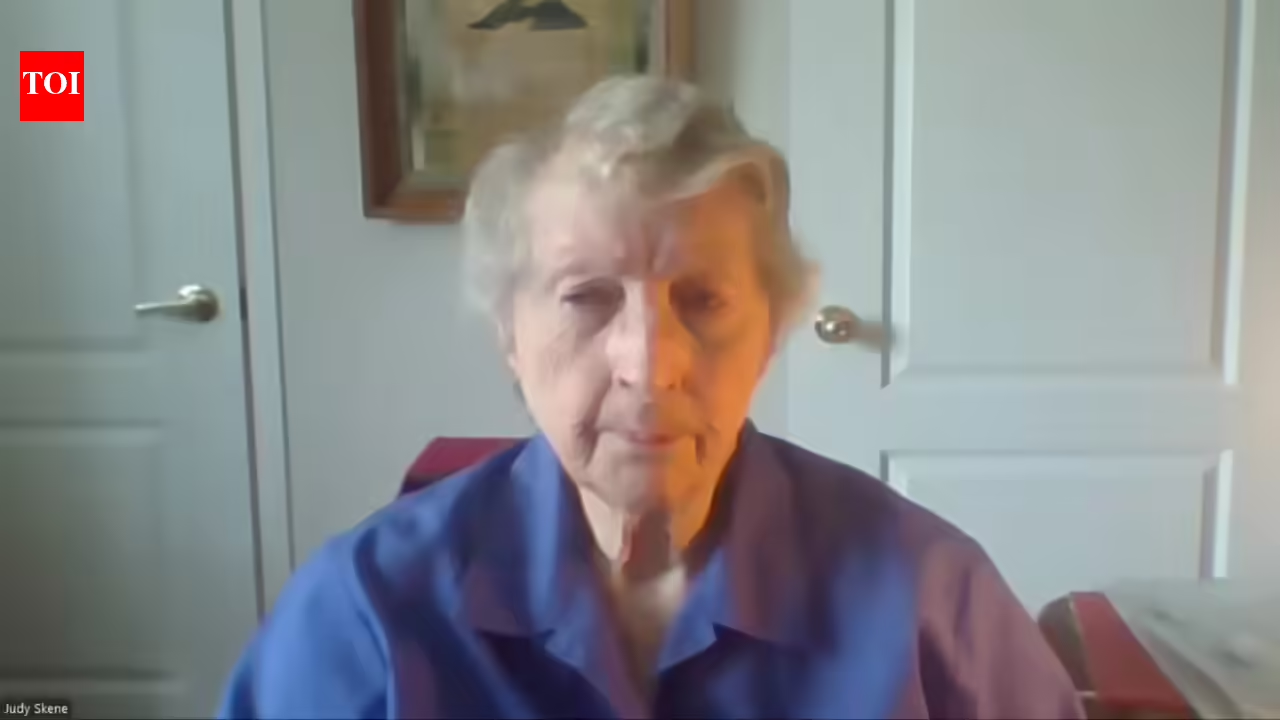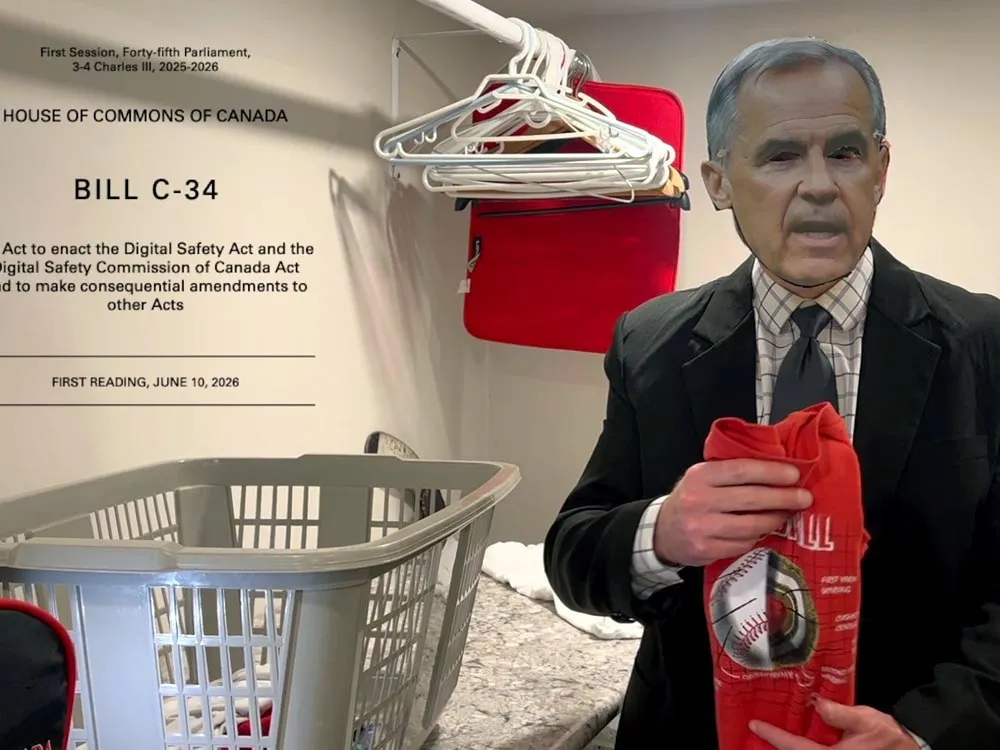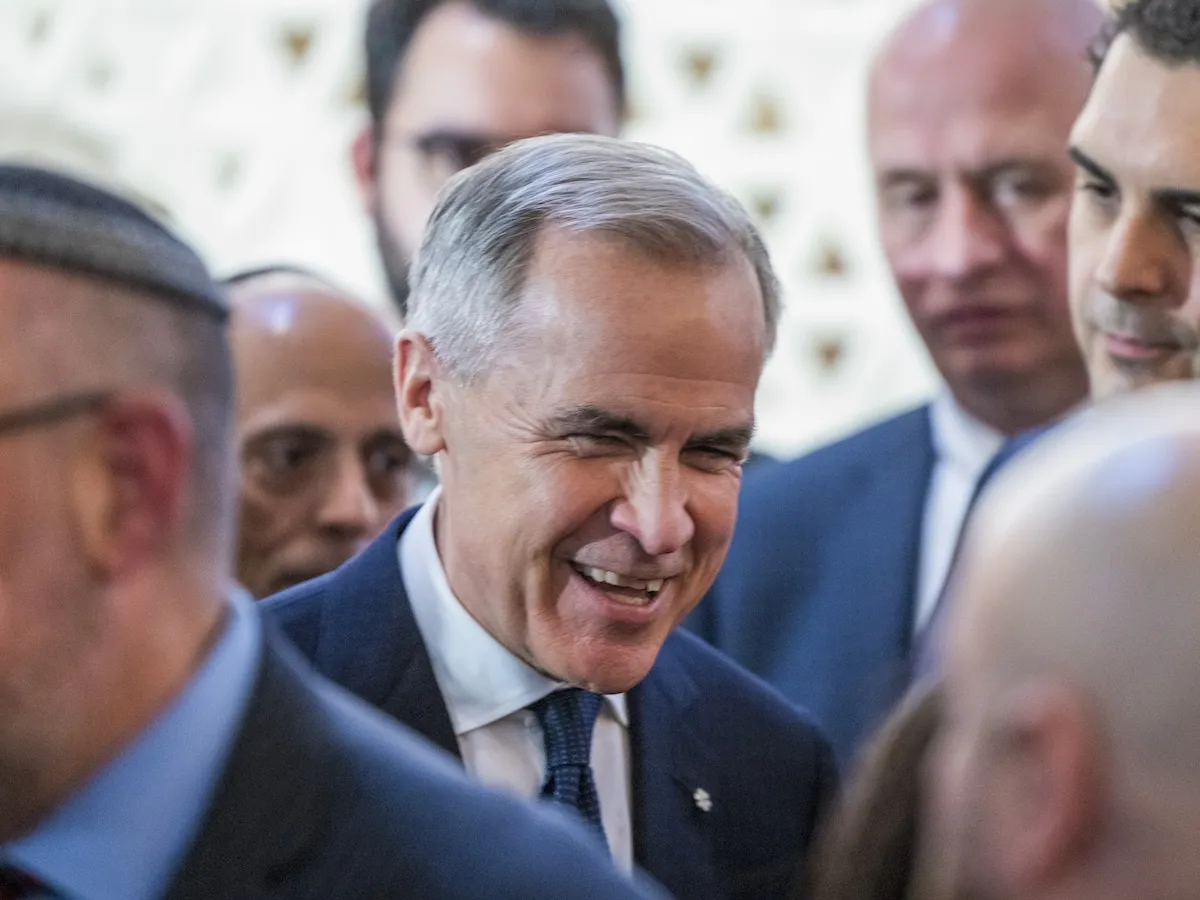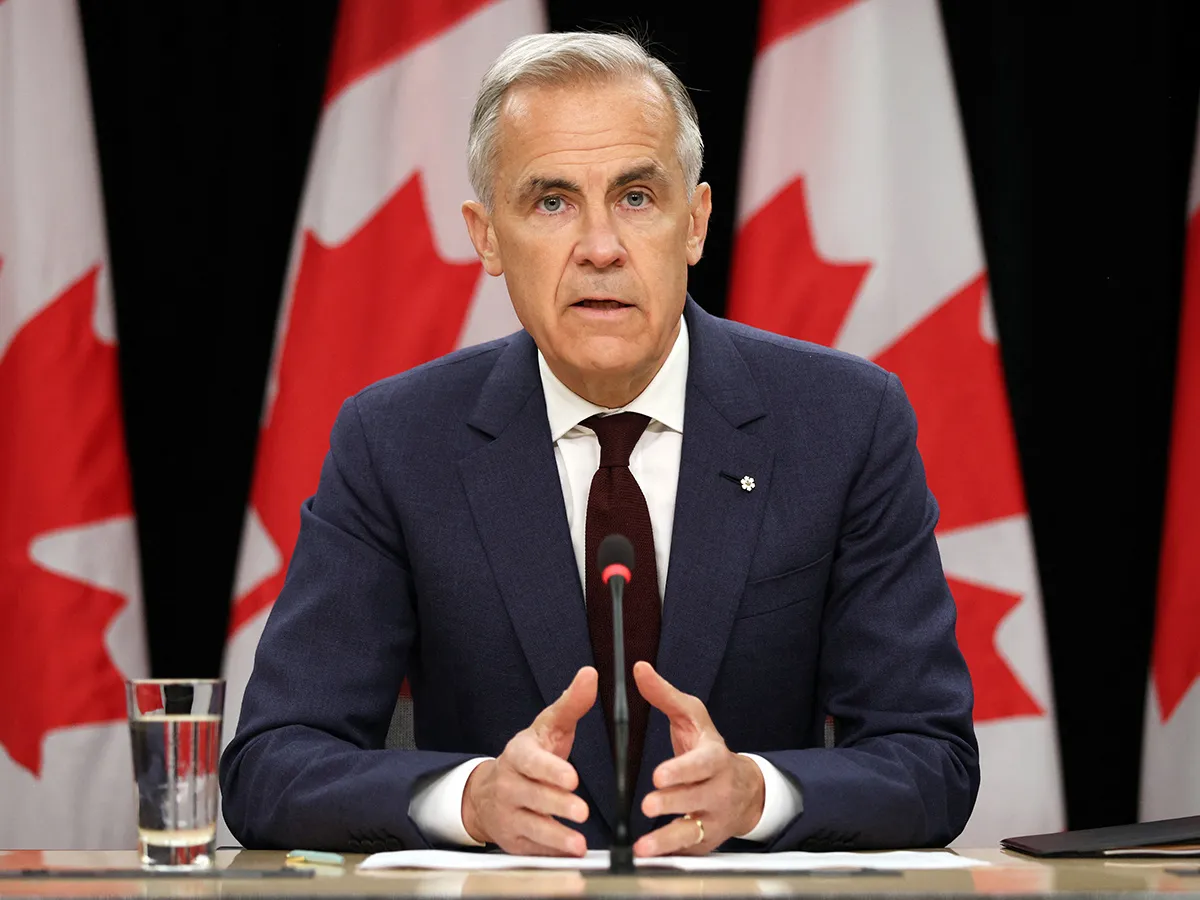
Skip to Content Subscribe Our Offers My Account Manage My Subscriptions FAQ Newsletters Canada Canadian True Crime Canadian Politics Health World Israel & Middle East Financial Post NP Comment Longreads Puzzmo Diversions Comics NP News Quiz New York Times Crossword Horoscopes Life Eating & Drinking Style Sponsored Play for Ontario Travel Travel Canada Travel USA Travel International Cruises Travel Essentials Culture Books Celebrity Movies Music Theatre Television Business Essentials Advice Lives Told Tails Told Shopping Buy Canadian Home Living Outdoor Living Kitchen & Dining Tech Style & Beauty Personal Care Entertainment & Hobbies Gift Guide Travel Guide Amazon Prime Day Deals Savings National Post Store More Sports Hockey Baseball Basketball Football Soccer Golf Tennis Driving Vehicle Research Reviews News Gear Guide Obituaries Place an Obituary Place an In Memoriam Classifieds Place an Ad Celebrations Working Business Ads Archives Healthing Epaper Manage Print Subscription Profile Settings My Subscriptions Saved Articles My Offers Newsletters Customer Service FAQ Newsletters Canada World Financial Post NP Comment Longreads Puzzmo Diversions Life Shopping Epaper Manage Print Subscription HomeNewsCanadaFake Mark Carney video cost elderly Ontario woman nearly $1 millionA deepfake of Prime Minister Mark Carney told Judy Skene her $350 investment was backed by the Bank of Canada. Months later, the 86-year-old had lost close to a million dollarsLast updated 22 minutes ago You can save this article by registering for free here. Or sign-in if you have an account.The real Mark Carney making a speech. Canadians should verify the claims made in a video through an independent source rather than trying to work out whether the video is real or not, says an official at the Canadian Anti-Fraud Centre. Photo by Dave Chan/AFP via Getty ImagesAn 86-year-old Sault Ste. Marie woman lost close to a million dollars to a deepfake of Prime Minister Mark Carney she saw on Facebook.Enjoy the latest local, national and international news.Exclusive articles by Conrad Black, Barbara Kay and others. Plus, special edition NP Platformed and First Reading newsletters and virtual events.Unlimited online access to National Post.National Post ePaper, an electronic replica of the print edition to view on any device, share and comment on.Daily puzzles including the New York Times Crossword.Support local journalism.Enjoy the latest local, national and international news.Exclusive articles by Conrad Black, Barbara Kay and others. Plus, special edition NP Platformed and First Reading newsletters and virtual events.Unlimited online access to National Post.National Post ePaper, an electronic replica of the print edition to view on any device, share and comment on.Daily puzzles including the New York Times Crossword.Support local journalism.Create an account or sign in to continue with your reading experience.Access articles from across Canada with one account.Share your thoughts and join the conversation in the comments.Enjoy additional articles per month.Get email updates from your favourite authors.Create an account or sign in to continue with your reading experience.Access articles from across Canada with one accountShare your thoughts and join the conversation in the commentsEnjoy additional articles per monthGet email updates from your favourite authorsSign In or Create an AccountorShe is one of a growing number of Canadians being defrauded by artificial intelligence. Scammers are using AI to fake the faces of people the public trusts, and selling investments that do not exist.Judy Skene, a retired pharmacist, saw a Facebook ad in July 2025 in which a deepfake of Carney told viewers to put $350 into a cryptocurrency platform, SooToday reported. The video claimed the money would be backed by the Bank of Canada, Skene told CTV News. Carney never made it.A deepfake is video or audio generated by AI to make a real person appear to say or do something they never did. They are being used to impersonate politicians, celebrities, financial experts and government officials, said Jeff Horncastle, client and communications outreach officer at the Canadian Anti-Fraud Centre.Get a dash of perspective along with the trending news of the day in a very readable format.By signing up you consent to receive the above newsletter from Postmedia Network Inc.A welcome email is on its way. If you don't see it, please check your junk folder.The next issue of NP Posted will soon be in your inbox.We encountered an issue signing you up. Please try again“The advertisement is usually only the first step,” Horncastle said.Once someone clicks or hands over their contact information, a fraudster may call posing as an investment advisor, Horncastle said. The victim may then be directed to a professional-looking trading platform, encouraged to buy cryptocurrency or asked to hand over remote access to their computer. The platform may display fabricated profits, he said.Skene’s case followed that pattern. She signed up and paid, and a caller told her the money had already tripled, CTV News reported. The scammers sent her a link that gave them access to her computer, where they found her investments, her longtime friend Pat Probert told SooToday.Over several months she cashed in a $650,000 registered retirement income fund, mortgaged her Bay Street condo for $300,000 and took a $35,000 cash advance on her credit card, according to SooToday. The scammers promised her $40,000 a month in dividends if she kept investing, SooToday reported.The deepfake supplies the credibility, but the fraud itself still runs on social engineering, Horncastle said. Fraudsters use the image and voice of someone Canadians recognize to lower their guard.A local CIBC branch told Skene she was being scammed, Probert told SooToday, and she stayed convinced. The scammers had told her not to tell anyone, because her friends would be angry that she was making so much money.“It’s not necessarily a new fraud that we’re seeing, it’s the existing types of fraud, but the tactics tend to change,” Horncastle said. The technology, he said, is easily available to almost anyone.Skene’s case is not unusual. A Toronto man lost $12,000 to a deepfake of former prime minister Justin Trudeau pushing a cryptocurrency platform. He started with $250, kept investing and believed it had grown past $40,000 before he tried to withdraw.Scams like Skene’s are classified as cryptocurrency investment fraud, part of a broader category that has cost Canadians more than $1.2 billion since 2022, SooToday reported. Most of those losses involve cryptocurrency, digital money that moves online without a bank.The Prime Minister’s Office referred questions about Carney’s likeness being used in the scams to the office of Evan Solomon, the minister responsible for AI and digital innovation.Solomon’s office said in a statement that AI can be misused to create “increasingly sophisticated frauds, including deepfake videos, voice cloning and fabricated articles.”“These scams exploit Canadians’ trust and can have devastating financial consequences,” the statement said. The office said the government is advancing measures on online safety, privacy law and fraud, and that it expects platforms operating in Canada to use emerging technologies responsibly.Horncastle’s advice is not to try to spot the fake.Some deepfakes still carry tells, unnatural mouth movements, unusual blinking, mismatched audio, strange lighting. But the technology keeps improving, and people should be careful about assuming they can catch every one, Horncastle said.“Canadians have to remember that seeing or hearing a trusted person in a video is no longer enough to prove that the message is genuine,” he said.The safer move, Horncastle said, is to verify the claim itself through an independent source rather than trying to work out whether the video is real. Research the company and the person offering the investment. Do not use the phone number or the link in the ad.Skene was left with $200, Probert told SooToday. Her mortgage, condo fees and credit cards bounced, and she lost her car.Cashing in the retirement fund also cost her Old Age Security and her dental coverage, SooToday reported. The benefit ended July 1, and cashing out the fund and her other investments left a tax bill of more than $80,000, with $47,000 still owing in early June, Probert wrote on a fundraising page he set up for her. SooToday reported her only income is a $1,150 monthly Canada Pension Plan payment against $2,300 in expenses.The Canadian Anti-Fraud Centre does not investigate but supports police who do, Horncastle said, and much of what it sees comes from overseas. Probert told SooToday in early June that Skene’s banks and local police were still investigating. He has been paying for her food and bills, SooToday reported, and his page had raised about $11,800 of a $20,000 goal as of Wednesday.Her main concern at her age, Skene told SooToday, is “trying to keep myself in this condominium.”Our website is the place for the latest breaking news, exclusive scoops, longreads and provocative commentary. Please bookmark nationalpost.com and sign up for our newsletters here. Join the Conversation This website uses cookies to personalize your content (including ads), and allows us to analyze our traffic. Read more about cookies here. By continuing to use our site, you agree to our Terms of Use and Privacy Policy.
Fake Mark Carney video cost elderly Ontario woman nearly $1 million
An 86-year-old Ontario woman lost close to a million dollars to a deepfake of Mark Carney promoting a fake crypto platform on Facebook.
1,469 words~7 min read