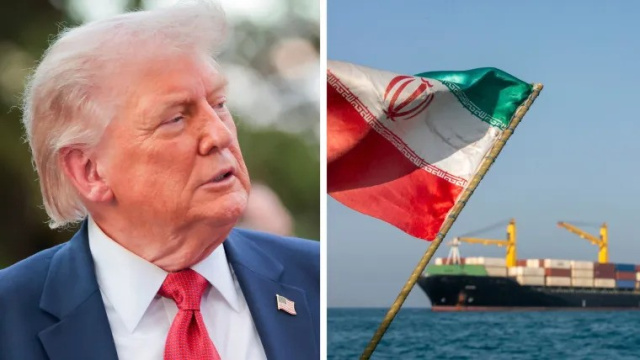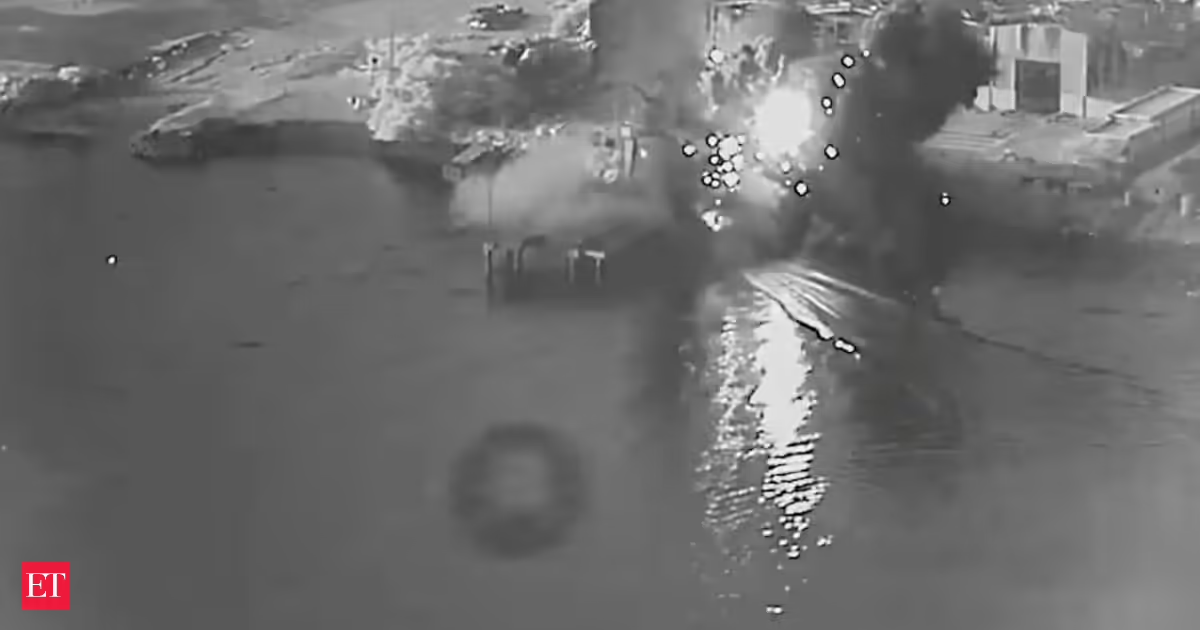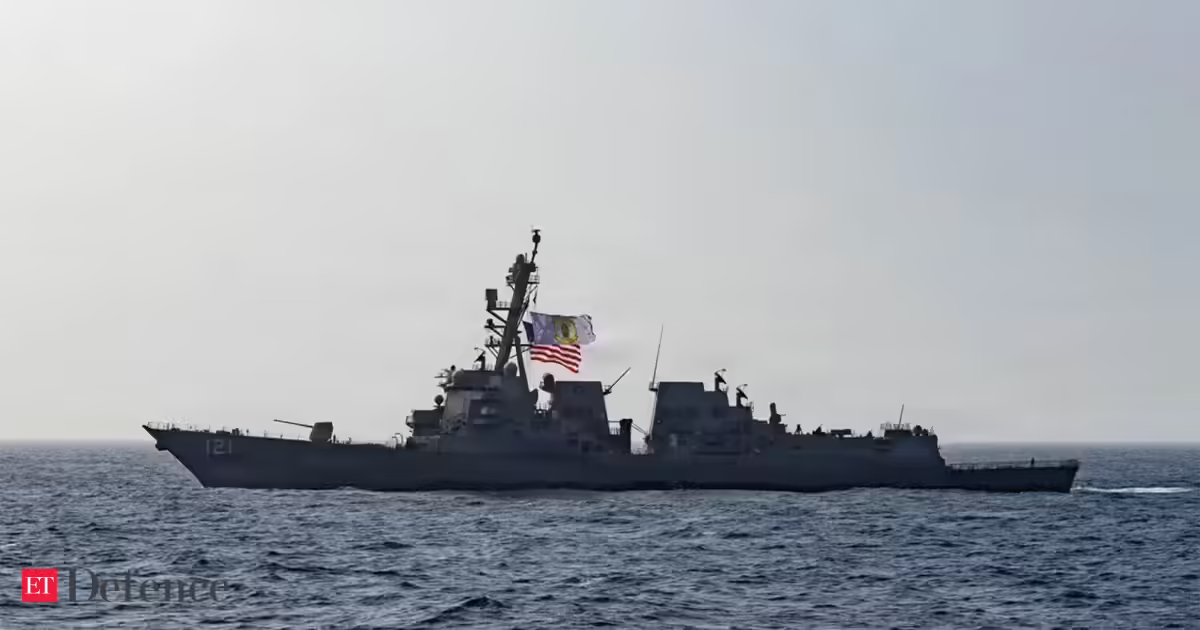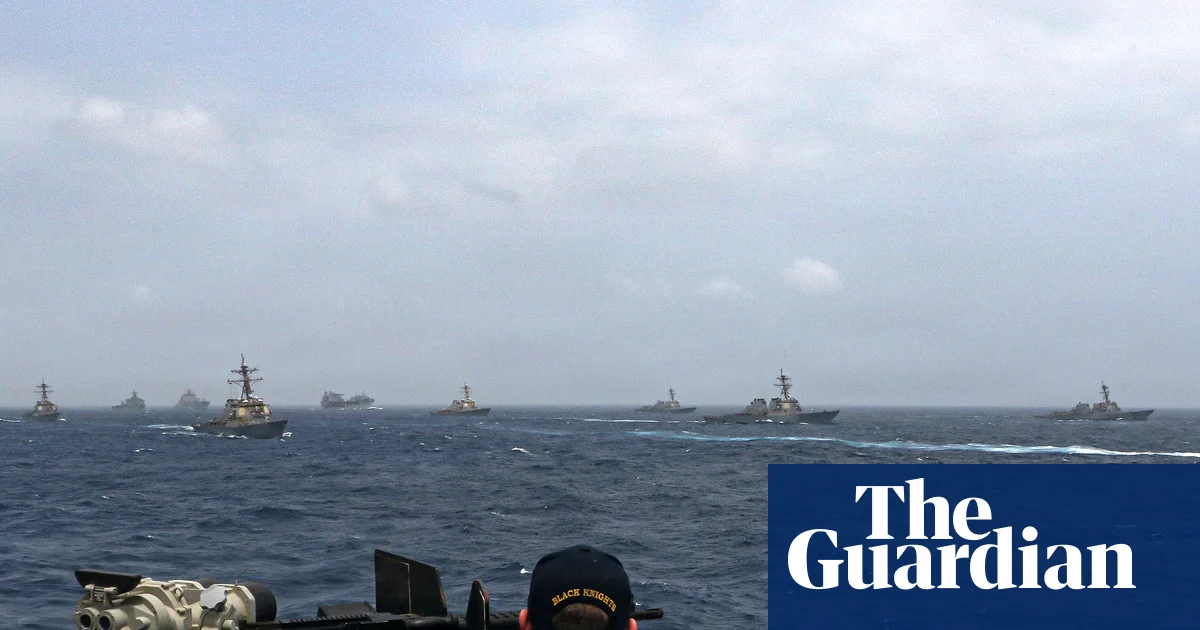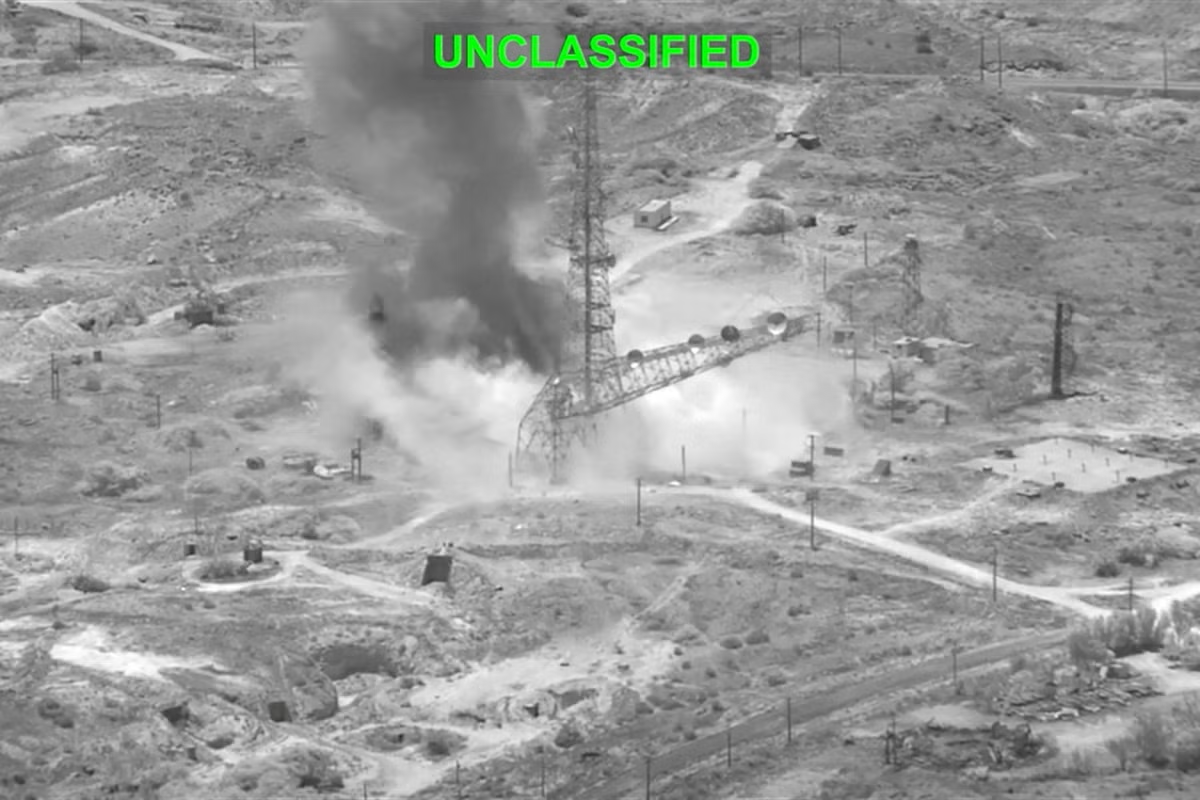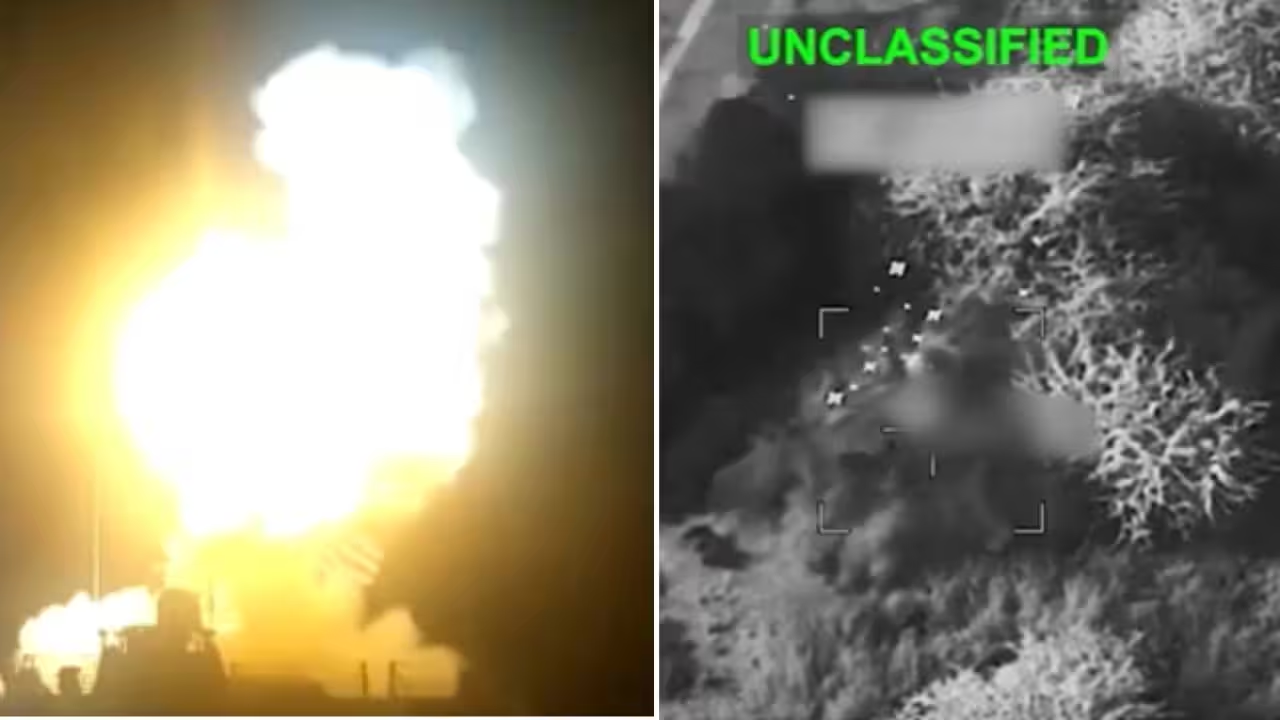
The United States intensified its military campaign against Iran on Thursday, expanding its strikes, for the first time since reimposing its naval blockade, attacking an oil tanker with Hellfire missiles headed for Tehran's main export terminal.Iran retaliated with missile and drone attacks targeting Bahrain, Jordan and Kuwait, escalating tensions across the Gulf and raising fresh concerns over global energy supplies.The latest exchange of attacks comes days after the collapse of an interim peace agreement, with fighting widening around the Strait of Hormuz.US disables oil tankerThe US military said it disabled the Curacao-flagged oil tanker M/T Belma, accusing it of attempting to violate Washington's naval blockade by sailing toward Kharg Island, Iran's main oil export hub.According to US Central Command (CENTCOM), the unladen tanker ignored repeated warnings before an American aircraft fired Hellfire missiles into its smokestack."The commercial vessel ignored multiple warnings as it attempted to violate the US blockade. A US aircraft disabled the vessel after firing Hellfire missiles into the ship's smokestack. The ship is no longer transiting to Iran," CENTCOM added.The operation marked the first direct attack on a commercial vessel since Washington reinstated its blockade of Iranian ports and coastal areas earlier this week.CENTCOM said that during the first 24 hours of enforcement, US forces redirected two vessels that complied with instructions while disabling one vessel that did not.The US also launched another wave of strikes overnight, targeting Iranian military infrastructure in several locations, including Bandar Abbas. The attacks also hit command centres, air defence systems, missile and drone facilities and coastal surveillance sites. "These strikes will continue imposing a heavy cost on Iranian forces and degrade their ability to attack innocent civilians and commercial shipping in the Strait of Hormuz," the US military said.Earlier in the day, US forces also struck coastal defence and cruise missile positions on Greater Tunb Island during a 90-minute operation.Iranian state media reported explosions around Tehran for the first time in this latest phase of fighting, along with attacks in Semnan, Hormozgan, Khuzestan, Hamedan, Lorestan, Markazi and Sistan-Baluchistan provinces, AP reported.Iranian officials said recent US strikes have killed more than 35 people and wounded over 300 others. Iran responded before dawn by launching missiles and drones toward Bahrain, Jordan and Kuwait, countries that host American military installations. Authorities in those countries confirmed the attacks but did not immediately report casualties or significant damage. Trump defends renewed blockadeUS President Donald Trump defended the renewed naval blockade on Iran, saying Washington would continue its military operations to protect commercial shipping in the Strait of Hormuz."We're hitting them very hard. And it'll continue, and we'll see what happens." "We're knocking out all of their offensive capability and we're controlling the straits. We're putting the blockade back."Trump also said the United States expected to be compensated by countries benefiting from American naval protection in the strategically important waterway.After announcing the blockade, Trump had initially said the US would impose a 20% toll on eligible cargoes passing through the Strait of Hormuz and that Iranian ships would not be allowed to use the route."We are reinstating the the Iranian blockade, so named because it is only stopping Iran's ships or customers from entering or leaving. All other countries will have fair and open use of the Strait." He had said the fee would cover "any and all costs necessary" to ensure security in the waterway.However, on Tuesday, Trump reversed that proposal, saying the US would instead seek trade and investment commitments from Gulf nations."Based on highly productive conversations with Middle East leadership, I have decided to replace the 20% United States Reimbursement Fee with Trade and Investment Deals that the various Gulf States will be making into the United States," Trump wrote on Truth Social.Before Iran asserted control over the Strait of Hormuz following the outbreak of the conflict, nearly one-fifth of the world's oil and gas supplies passed through the vital shipping route, making it one of the most strategically important waterways in the world.Iran warns of wider energy disruptionIran criticised the renewed blockade, warning it could trigger a broader energy crisis across the region. Parliament Speaker Mohammad Bagher Qalibaf accused Washington of trying to undermine what he called "Iranian arrangements" governing navigation through the Strait of Hormuz.Meanwhile, Iran's Islamic Revolutionary Guard Corps warned that, "The export of oil and gas from the region will be either for everyone or for no one." The escalating conflict has pushed oil prices higher amid concerns over disruptions to shipping through the Strait of Hormuz.Brent crude climbed above $85 per barrel, extending gains after a sharp rise earlier this week, as traders worried about supply disruptions and higher transport costs. Shipping activity through the strait remained limited, with several shipowners reviewing transit plans.The International Energy Agency has warned that prolonged disruption in the waterway could pose serious risks to the global economy if the conflict is not resolved soon.The escalation has raised concerns across the Gulf region, particularly for the United Arab Emirates, whose cities such as Abu Dhabi and Dubai have built their global reputation as stable financial and business hubs. A prolonged conflict could undermine investor confidence and disrupt regional trade, DW reported.Although the UAE has reduced some of its dependence on the Strait of Hormuz by exporting crude through the Abu Dhabi Crude Oil Pipeline to the Fujairah terminal on the Gulf of Oman, a prolonged conflict could still affect energy exports, shipping activity and broader economic stability across the region.The US had initially imposed the blockade in April before lifting it last month after signing an interim agreement with Tehran that paused hostilities and opened a 60-day window for negotiations on Iran's nuclear programme and regional security.Those talks have since stalled as fighting intensified.
Supertanker hit with Hellfire missiles: How US-Iran conflict is spreading across the Gulf
The United States intensified its military campaign against Iran on Thursday, expanding its strikes, for the first time since reimposing its naval blockade, attacking an oil tanker with Hellfire missiles headed for Tehran's main export terminal.
950 words~4 min read