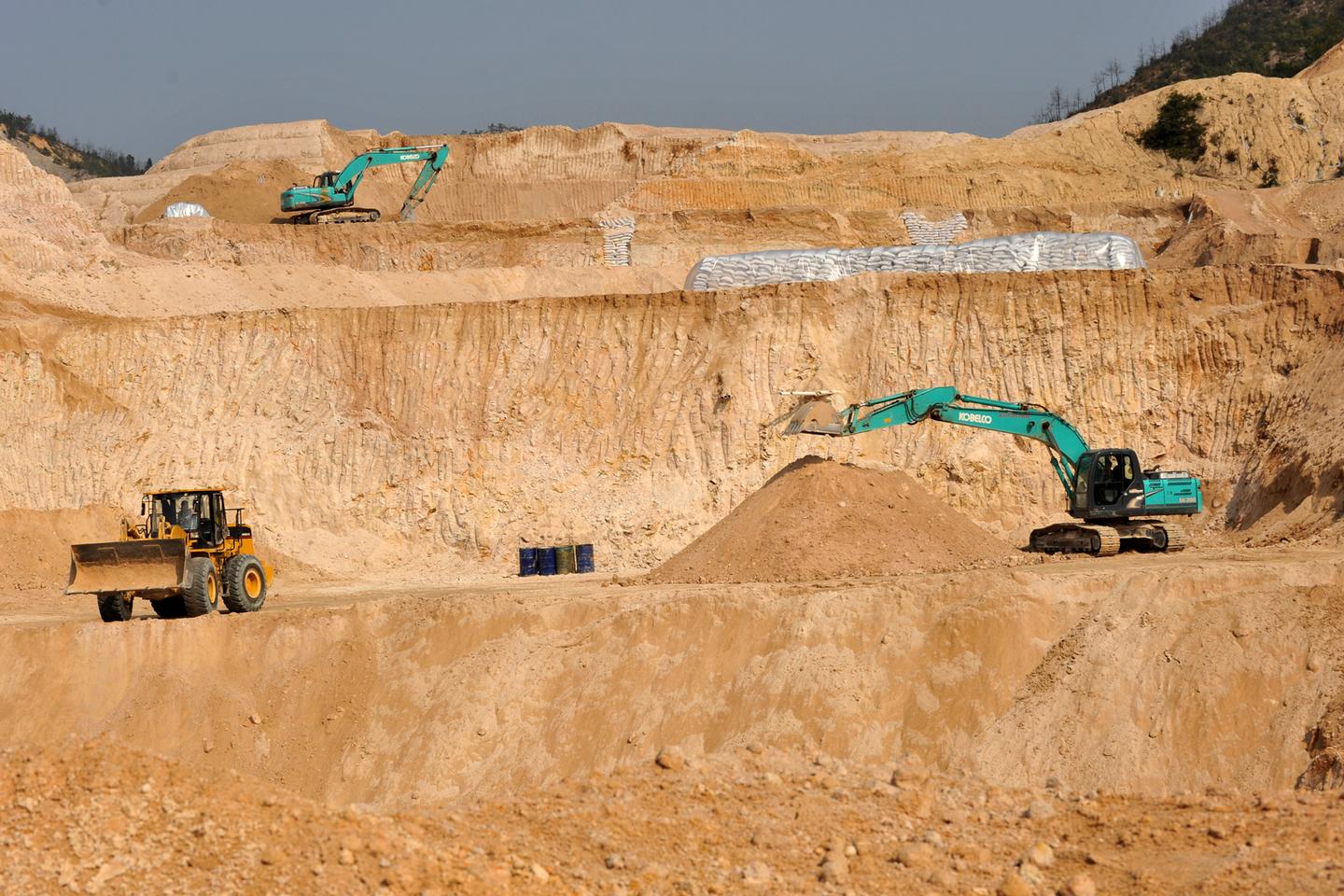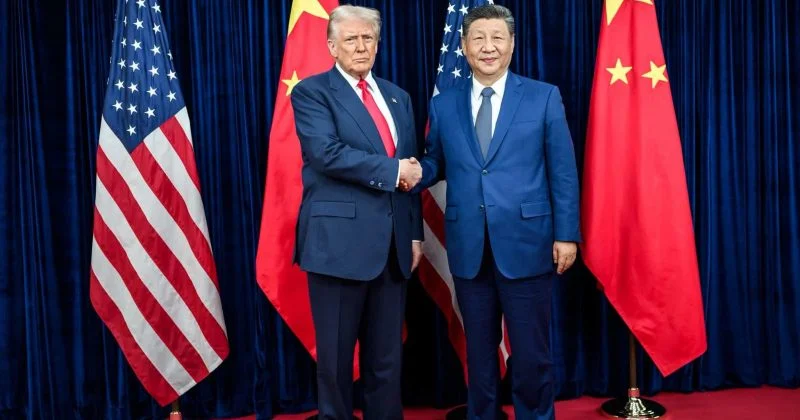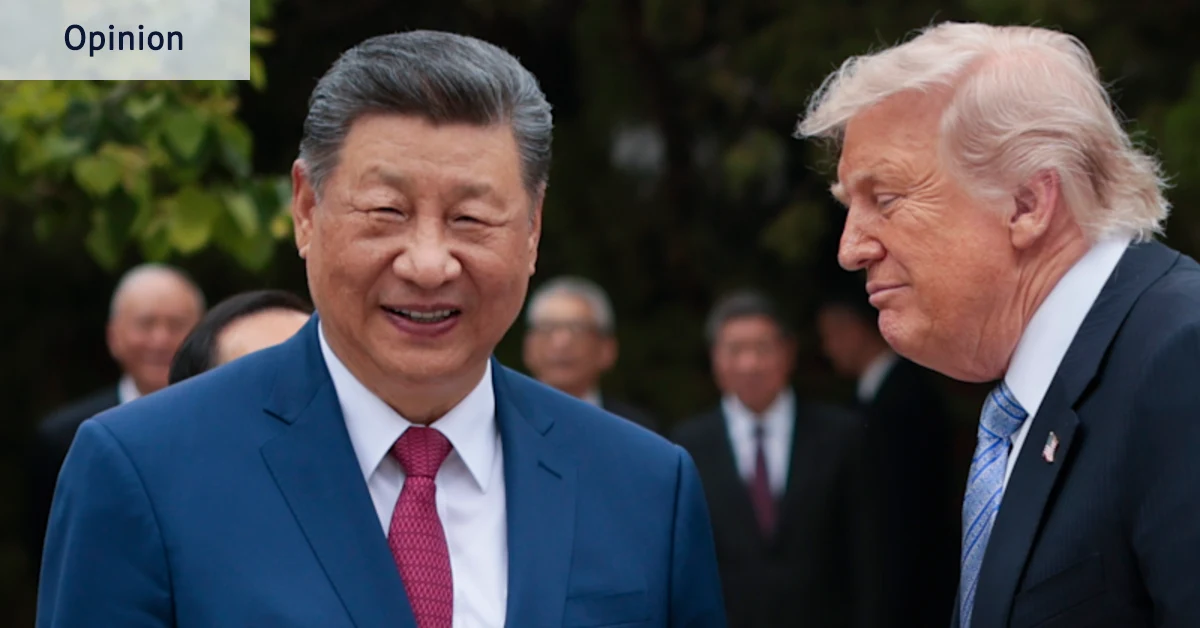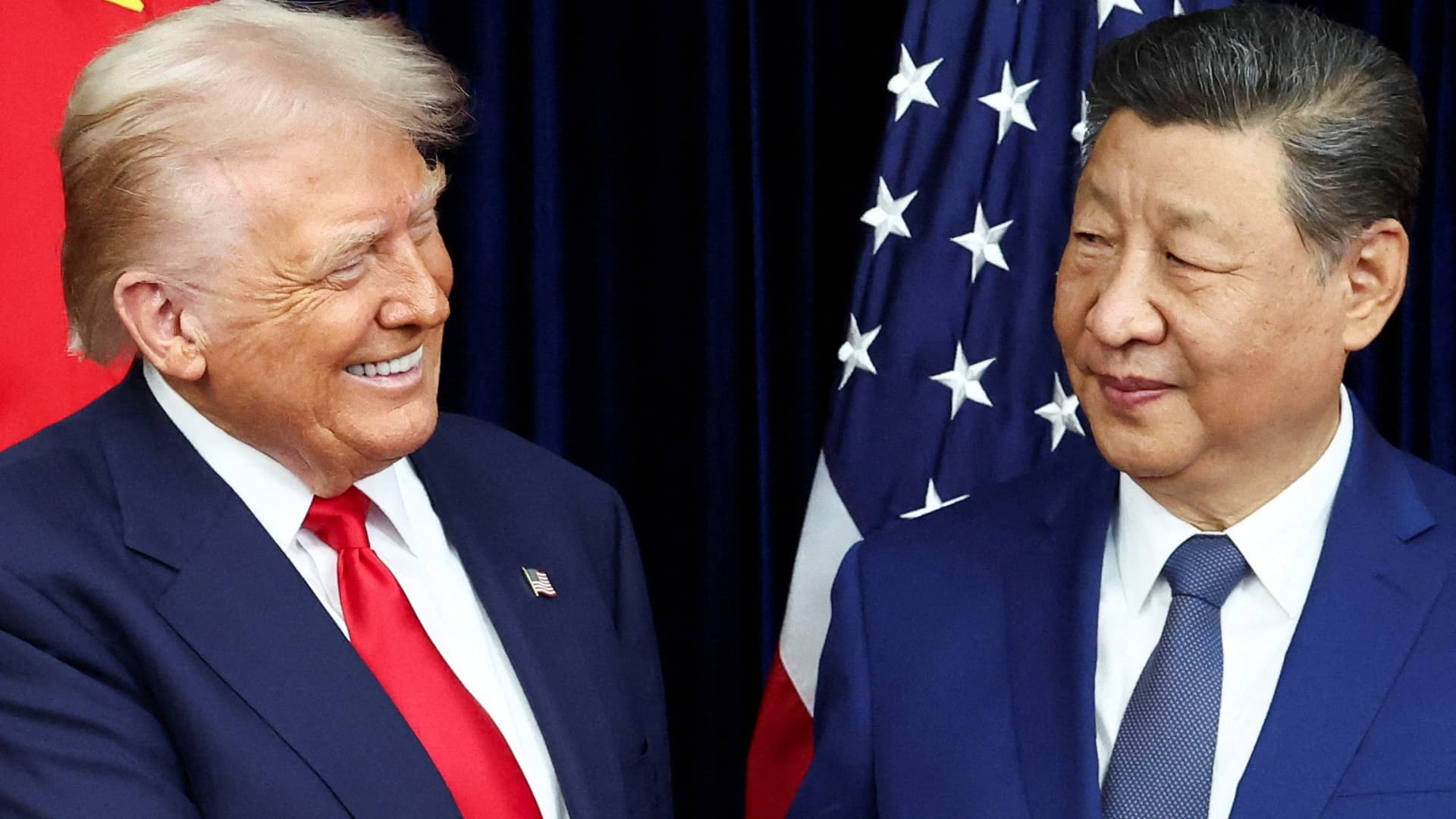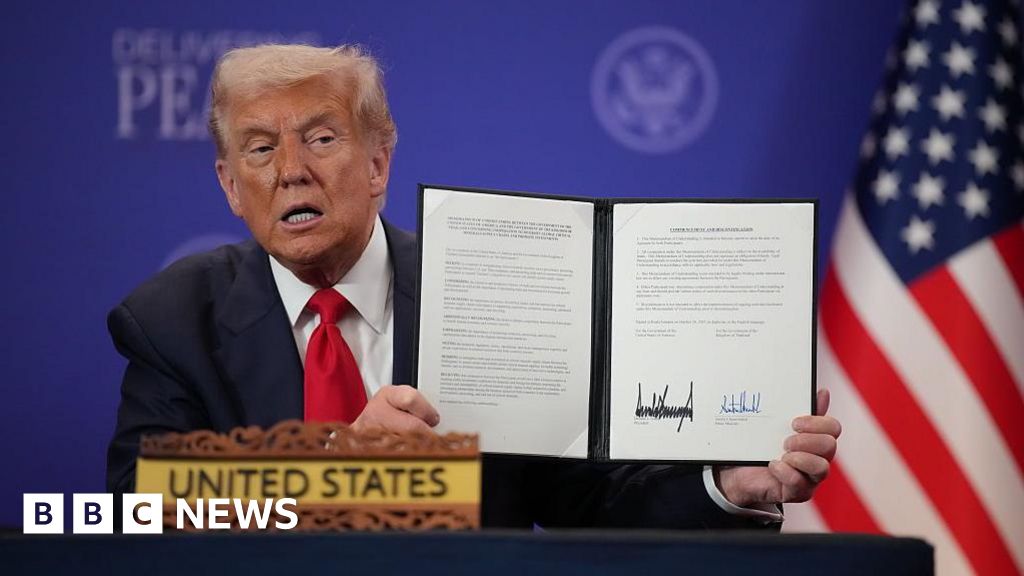
Within President Donald Trump’s trade team, two sobering conclusions are emerging: China is cheating on its trade deal. And the US isn’t going to do much about it.Reopening access to critical minerals and rare earths, crucial for US companies manufacturing a wide range of products including cars and fighter jets, was a central objective of the pact Trump struck with Chinese President Xi Jinping last year in South Korea.Yet in meetings and messages described by people who requested anonymity to detail internal discussions, staffers at the White House and Office of the US Trade Representative acknowledge Beijing simply isn’t abiding by the Trump administration’s understanding of the deal.Moreover, the people say, a code of silence has gripped the trade team since the Busan summit.While there’s plenty of internal grumbling and frustration voiced among Trump officials, those familiar with the situation describe a hush culture where the US government is reluctant to publicly admonish China and risk plunging the countries back into a trade war.Some officials believe Trump is particularly disinclined toward registering any objection that could endanger his plans to host Xi for a lavish state visit in September. There’s also concern that pushing back could prompt the Chinese leader to escalate retaliation in a way that could rock markets ahead of November’s midterm elections or fully turn off access to critical minerals.China rejects any notion it’s cheating, saying its export controls on rare earths comply with international rules, and has accused the US of violating the truce by putting restrictions on Chinese companies.When asked for comment, a US official said the administration is always monitoring the agreement and China’s compliance with some elements is better than with others. The official, who asked for anonymity to speak freely on the subject, said any compliance issues are raised with Chinese officials and being resolved. The official also indicated there were upcoming actions planned regarding Beijing’s supply chain rules, and dismissed sources for this story as uninformed.Still, the US did not proactively denounce those regulations when China’s Commerce Ministry announced them in April. The decrees vow punishment for countries and companies that attempt to shift supply chains away or engage in other de-risking efforts. Nor did the US publicly condemn China’s move to place trade curbs on dozens of US firms late last month.Treasury Secretary Scott Bessent and Jamieson Greer, who leads the trade office, have spent a half-dozen meetings with Chinese representatives over the course of a year attempting to iron out sourcing for the crucial inputs for American firms, only to be rebuffed.Greer, in an interview with Bloomberg Television on Wednesday night, said “China’s compliance with the rare earth elements of our agreements, it’s not perfect.”“That being said,” he added, “we are getting a flow of rare earths. We don’t have factories shutting down because they don’t have it.”Greer called the upcoming summit “an opportunity to take stock of Chinese commitments with respect to purchases of soybeans and other agricultural products.”“We’ll take stock on the rare earth issues,” he said. “So I think it’ll be a moment for stock-taking, you know, confirming the relationship, making sure that China is complying with what it’s agreed to do.”Private companies are launching their own diplomatic efforts to address the bottlenecks.California engineering giant Applied Materials Inc. sent executives directly to Beijing in recent weeks to ask why materials vital to its manufacturing processes aren’t flowing. Coherent Corp., which makes optical transceivers — a crucial input for data centers — sent Jim Anderson, its chief executive officer, with Trump during a visit to China earlier this year. The company is making the case for actually resuming shipments.Applied Materials and Coherent declined to comment.The US-China Business Council said in its member survey last month that access to rare earths from China “remains uneven amid operational challenges, including lengthy and opaque licensing processes, delays, and increasingly complex coordination with suppliers.” It said that some rare earths remained “nearly unobtainable.”Some inside the Trump administration say that September’s summit will offer an opportunity to right perceived wrongs, with one USTR official saying in an internal meeting that the status of rare earths would be the top issue at the summit, according to a person familiar with the matter.And the US hasn’t been totally unwilling to rock the boat.The Pentagon in June updated a list of entities it believes aid Beijing’s military to include firms such as Alibaba Group Holding Ltd., artificial intelligence company Baidu Inc. and carmaker BYD Co., all of which have opposed the designation. The move will bar the Pentagon from awarding contracts to the companies and will likely deter other federal agencies and US corporations from doing business with them. The Trump administration has also announced a number of Federal Communications Commission actions targeting Chinese firms.Still, other US officials are worried that China is testing how far it can go before it provokes a US response — and may interpret months of inaction as license to push Washington for even greater concessions.A major concern is that US negotiators have still been unable to convince Chinese officials to put anything specific in writing on critical raw materials access, leaving the commitments open to interpretation. That allows China to claim it’s adhering to the terms, even while violating their spirit.“Both sides need to act on the important common understandings reached between the two heads of state and inject more stability into bilateral economic and trade cooperation and the world economy,” said Liu Chang, spokesperson for the Chinese Embassy in Washington. “The Chinese side stands ready to work with the US side to act on the important common understandings reached between the two heads of state and continuously expand the list of cooperation and deliver for both sides in the spirit of equality, respect and mutual benefit.”While exports of military equipment were explicitly excluded from the Busan deal, defense contractors and subcontractors are also feeling the pinch. During one recent meeting at the Pentagon, military officials were informed that major contractors — and subcontracting partners — were struggling to deliver fully functional defense platforms on time because magnets aren’t being delivered from China at a reasonable pace.More broadly, the officials worry that the Chinese will interpret the relative silence by the US in response to provocations as a signal Trump lacks the appetite or attention span for a sustained trade fight, particularly as the Iran war resulted in higher energy prices.Since striking the Busan agreement, Trump in public comments has largely downplayed residual trade tensions with China, instead praising Xi and touting what the US president describes as a close personal relationship.Earlier this month, Trump marveled that “everyone wants to see” Xi during his upcoming visit to Washington. Days later, during a NATO summit in Ankara, Trump said he was a “big fan” of the Chinese leader. And this week, Trump posted a series of photos on social media showing him alongside Xi.Bessent and Greer have offered repeated concessions in their direct talks with the Chinese, only to find their counterparts unwilling to put to paper the terms of the Busan agreement.“We disarmed ourselves in that truce,” said Wendy Cutler, senior vice president of the Asia Society Policy Institute. “And now our options for action are sharply constrained.”Leverage will be essential heading into the Washington summit.China is expected to propose extending the trade truce through the remainder of Trump’s term, people familiar with the deliberations said. They believe Beijing’s intention is to exploit a moment where Trump is politically vulnerable and distracted to force a deal that would essentially paralyze US policymaking toward China.Of course, Trump has repeatedly shown a willingness to tear up agreements if he feels that the terms are unfair or if he has an opportunity to renegotiate them to his benefit. And the US president did raise his objection to China’s threats against US companies when he met with Xi in May, according to a person familiar with the matter.There’s also a logic to preserving the detente. The Trump team has been focused on establishing critical minerals supply chains outside of China, but those efforts aren’t likely to yield results for several more years. The US may see an advantage in pushing off tough conversations until after it’s out from under the thumb of China’s critical mineral monopoly.But outside observers are skeptical.“It’s not clear why President Trump wants to keep seeing Xi Jinping,” said Derek Scissors, a China expert at the American Enterprise Institute. “Each meeting puts more distance between where President Trump started on China and where he’s ending up.”More stories like this are available on bloomberg.com©2026 Bloomberg L.P.Published on July 16, 2026
Trump’s aides see China cheating on trade, but shun reprisal
Some officials believe Trump is particularly disinclined toward registering any objection that could endanger his plans to host Xi for a lavish state visit in September
1,429 words~6 min read