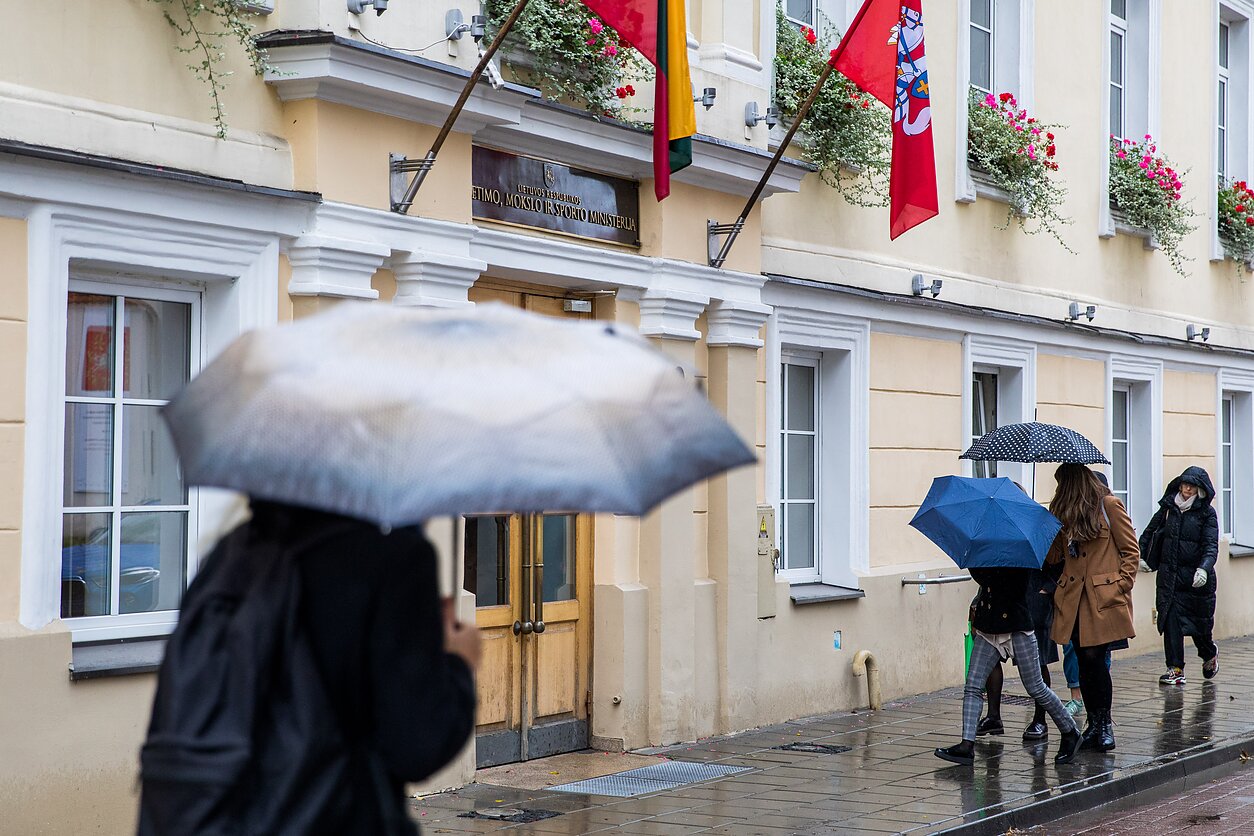
Lithuanian schools struggling with teacher shortages will be allowed to hire specialists from other fields, as well as foreign native speakers with a higher education degree, to teach European Union languages from this year, the country's education ministry has announced.
The Ministry of Education, Science and Sport said individuals holding at least a C1-level language proficiency certificate - broadly equivalent to an advanced, near-fluent standard under the Common European Framework of Reference for Languages - would be eligible to teach English, German, French, Spanish and Polish.
Under the new rules, these specialists will be required to obtain formal teaching qualifications within two years of starting work, while subject-specific competencies must be acquired within four years.
The ministry said the move is aimed at addressing shortages of foreign language teachers, particularly in regional areas, and at improving the overall quality of language instruction in Lithuanian schools.
From September 2026, Spanish will also be added to the list of primary foreign language options offered in schools, alongside English, French and German.