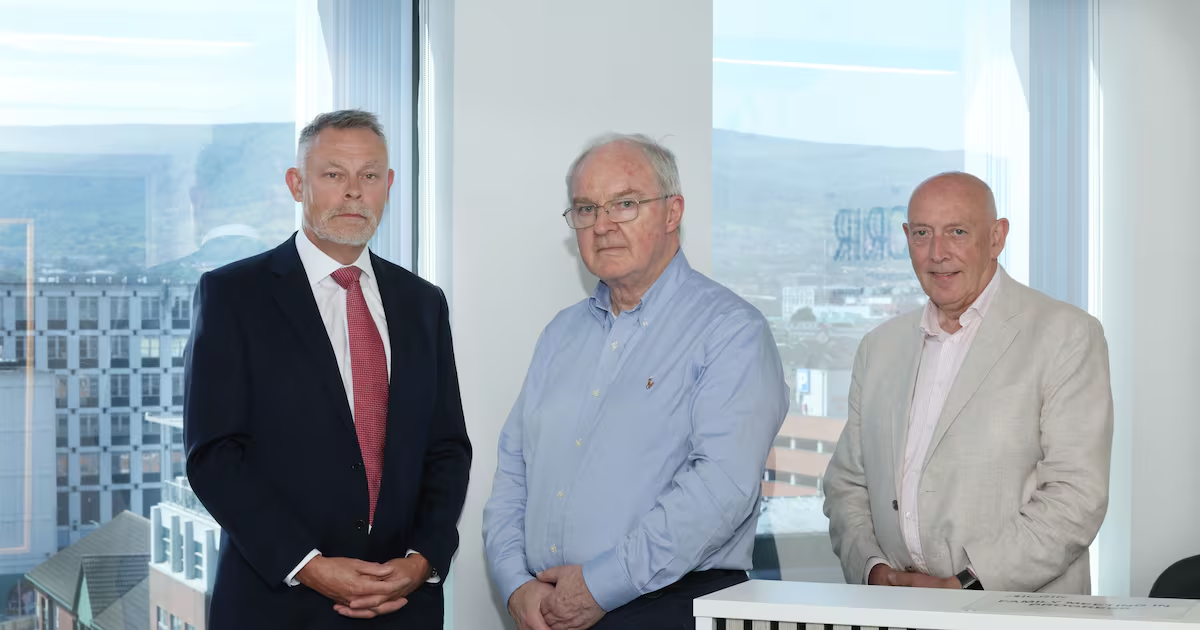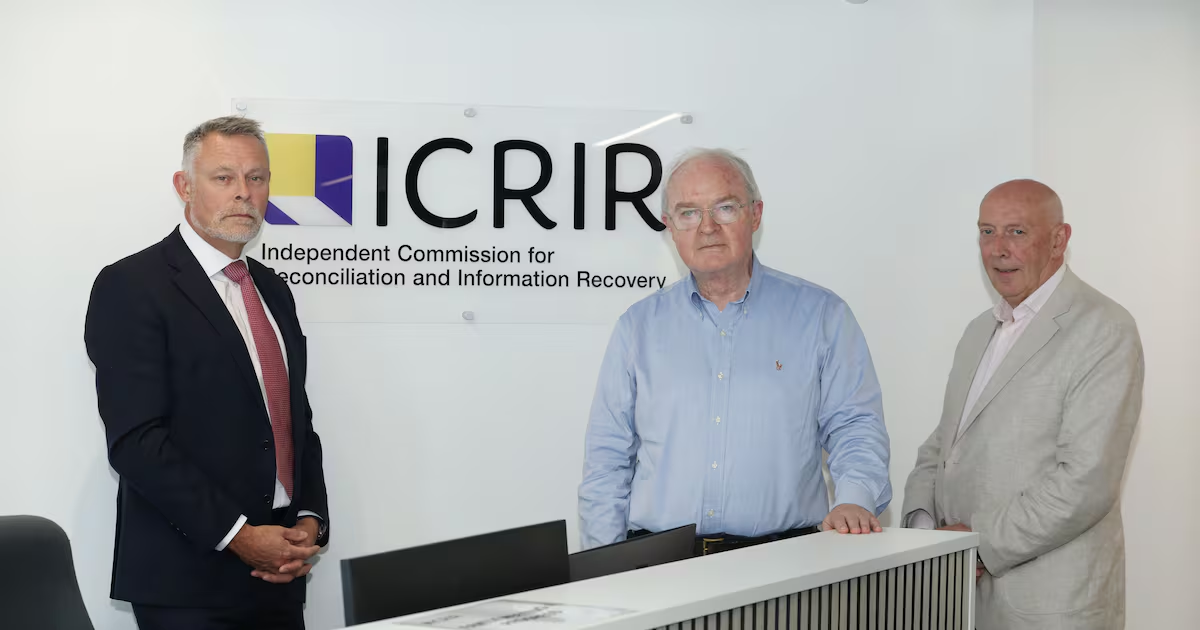
The Government has “not bought into” telling “the truth” about so-called legacy killings during the Troubles because the Republic suffered less than the North, the head of a commission set up to investigate such killings has said.Senior figures in the Independent Commission for Reconciliation and Information Recovery (ICRIR) criticised the Government for its lack of co-operation on several cases.The ICRIR has been refused sight of Garda or intelligence files held by the Republic’s authorities that could throw light on some Troubles killings.Despite its own “significant” trauma, especially the 1974 Dublin and Monaghan bombings, which killed 33 people, the head of the ICRIR, former chief justice of Northern Ireland Declan Morgan, said the Republic does not share the intergenerational trauma left by the Troubles.He said both the Irish and British governments have concerns that co-operation with the ICRIR will see them later face criticisms, especially for the way Dublin tackled the IRA along the Border.[ ‘It’s disappointing’: NI body investigating Troubles cases seeks co-operation with DublinOpens in new window ]The Republic’s authorities hold significant information that could throw light on Troubles killings, even though 95 per cent of the ICRIR’s investigations will not lead to criminal prosecutions, the commission says.So far, it has been refused information about nearly a dozen cases where gardaí arrested IRA members who had fled south across the Border minutes after killings, or bombings within hundreds of yards of the BorderSome of the IRA members were subsequently released by the Garda, while others were prosecuted for possession of firearms, but none were ever charged, prosecuted and convicted of any of the offences the ICRIR is now investigating. No case involves any allegation of collusion or improper action by the Garda, said ICRIR chief investigator Keith Surtees, a former senior Metropolitan Police officer.“If you have individuals who ran south into the arms of Garda officers, and we’ve then got an inability to actually even ask those Garda officers some of the most basic questions, we’ve got a problem,” he said.The Government has long been unhappy with how the ICRIR was set up by the last British Conservative government and insists that confidential information cannot be shared with it because it is not a police force.However, the ICRIR says Dublin’s refusal stands against day-to-day sharing that happens between with the UK’s Revenue and Customs and its National Crime Agency – and with Operation Kenova, the body set up to investigate the activities of British army informer in the IRA Freddie Scappaticci and British collusion with loyalist paramilitaries.Co-operation that was offered frequently by Dublin to Kenova now “has completely disappeared, it’s now off the agenda”, said Surtees, saying information held by Dublin “can help us”.The public on both sides of the Border should be “hugely concerned that we’re not able to actually get ourselves together and be able to resolve some of these issues, so that law and order can prevail”, he said.Up to 500 IRA killings happened along or near the Border where attacks were launched across the Border or where killers subsequently fled, ICRIR commissioner for investigations Peter Sheridan said.So far, 300 families have lodged cases with the commission. Sheridan said he believed many more would do so if they were convinced the southern authorities would share information they hold – but they do not believe authorities in the State will do so.
Troubles legacy body claims Government has ‘not bought into’ telling truth about conflict
Senior ICRIR officer says co-operation offered by Dublin to earlier investigation into Freddie Scappaticci ‘has completely disappeared’
555 words~3 min read