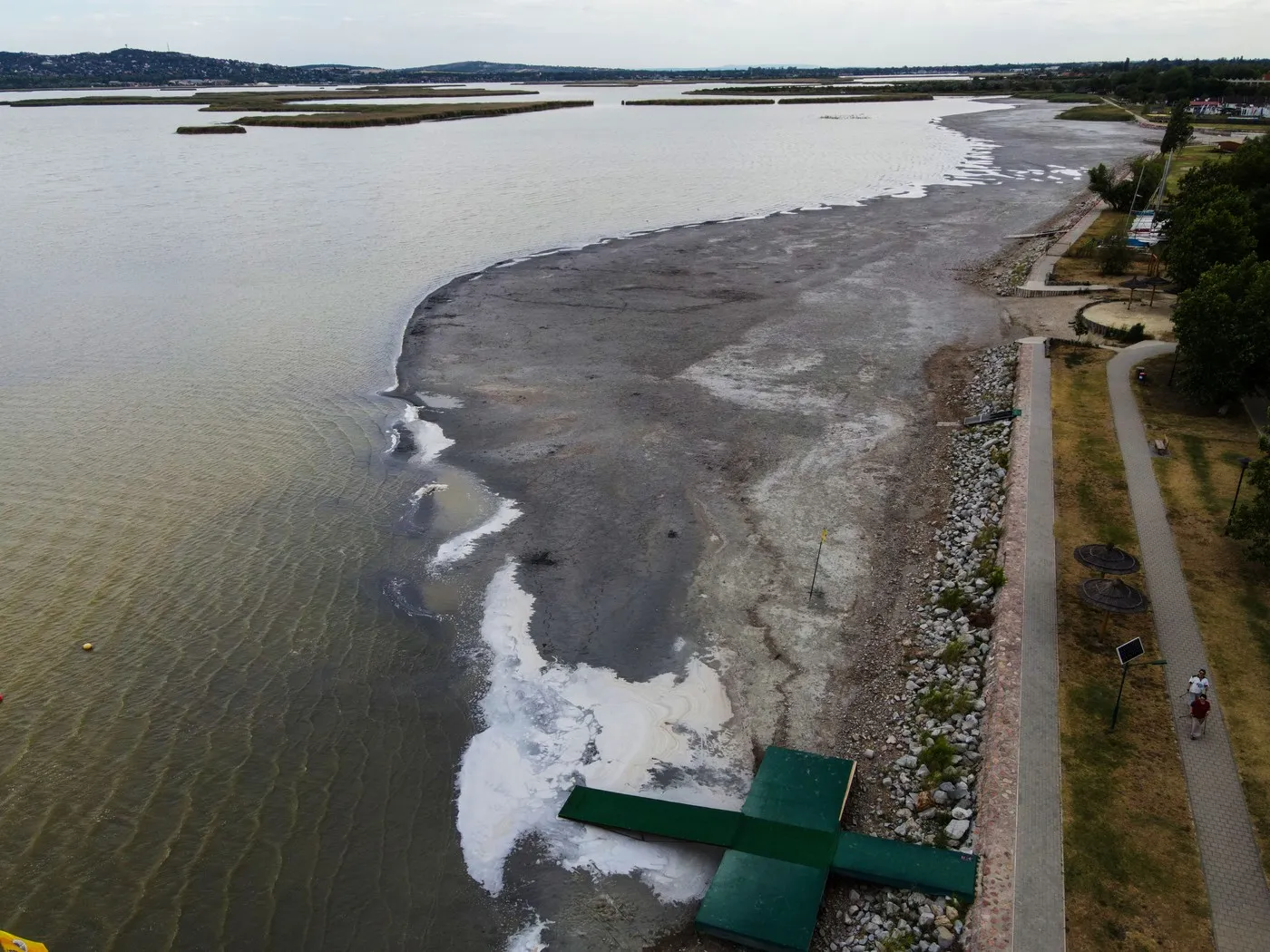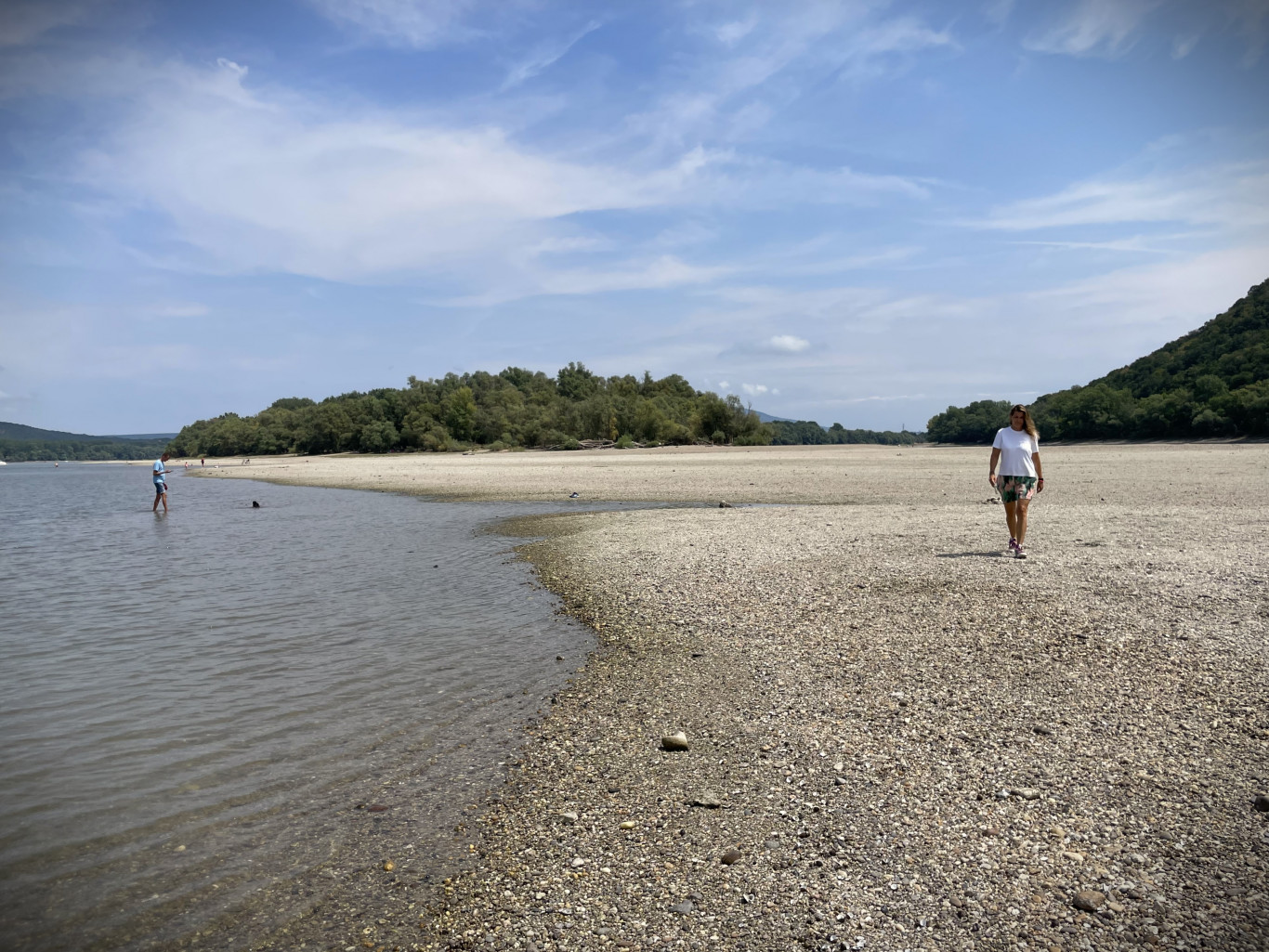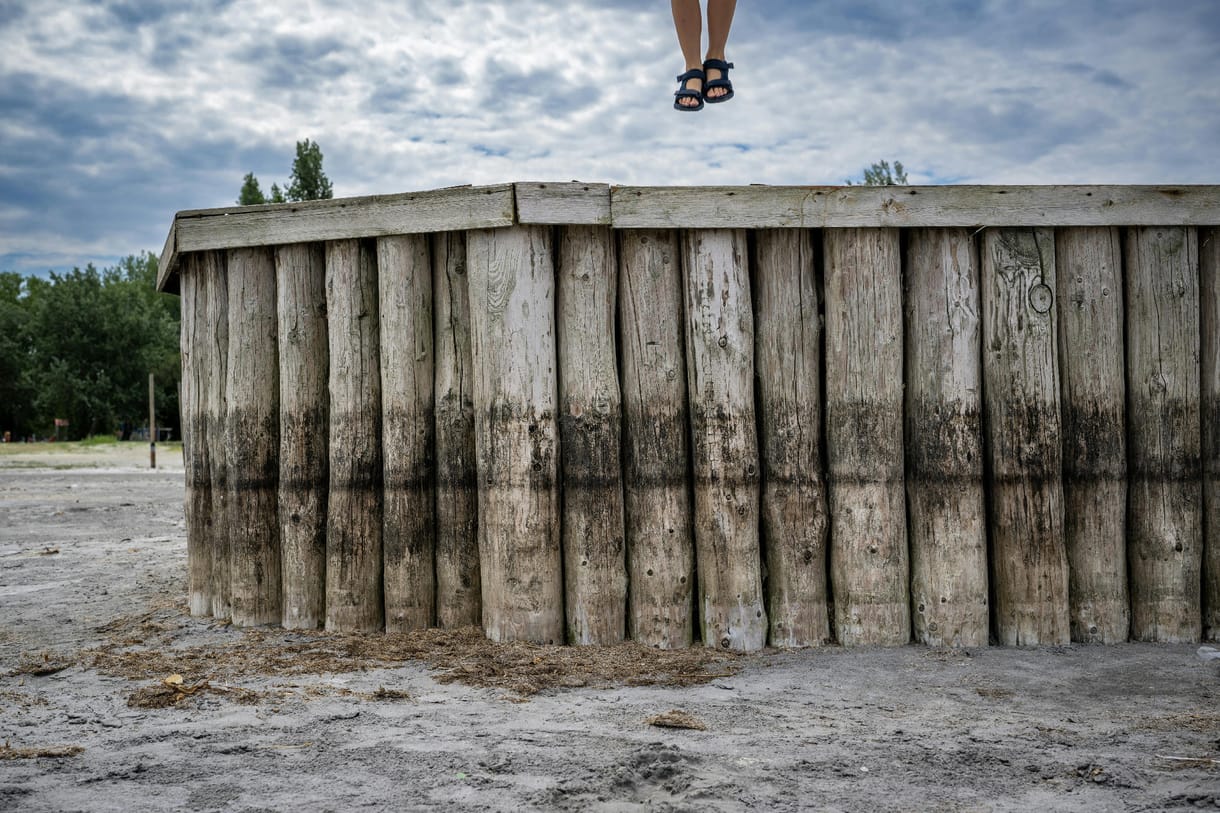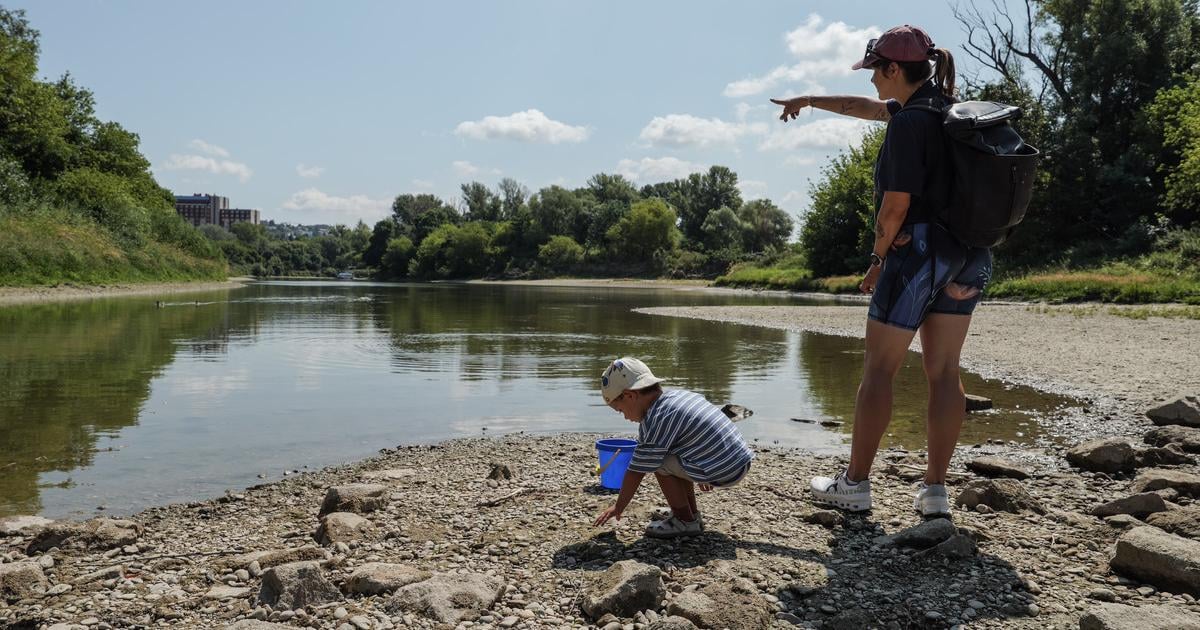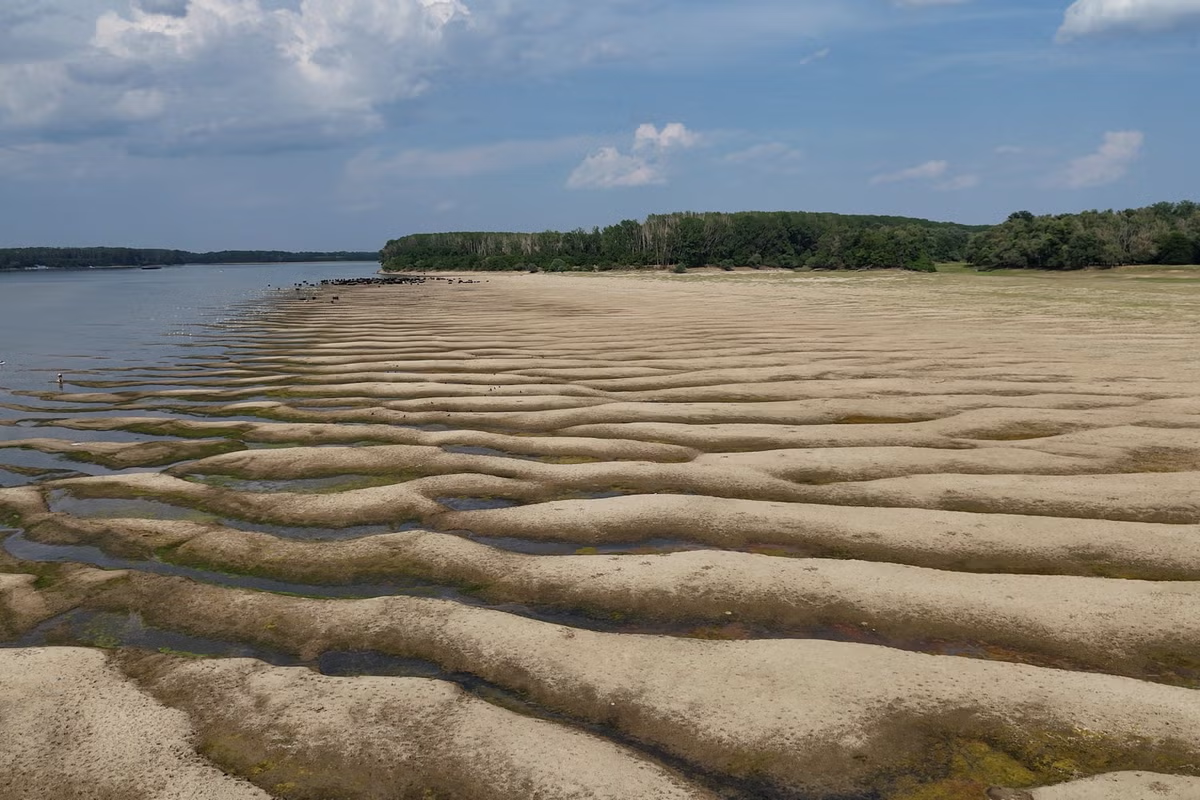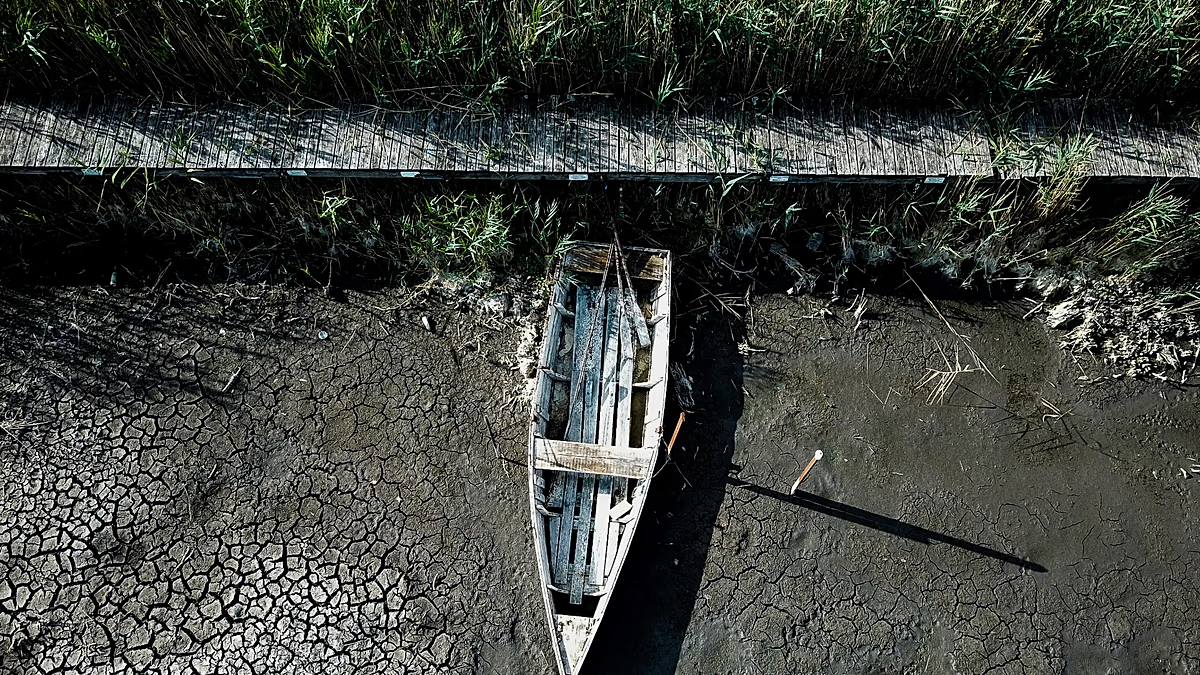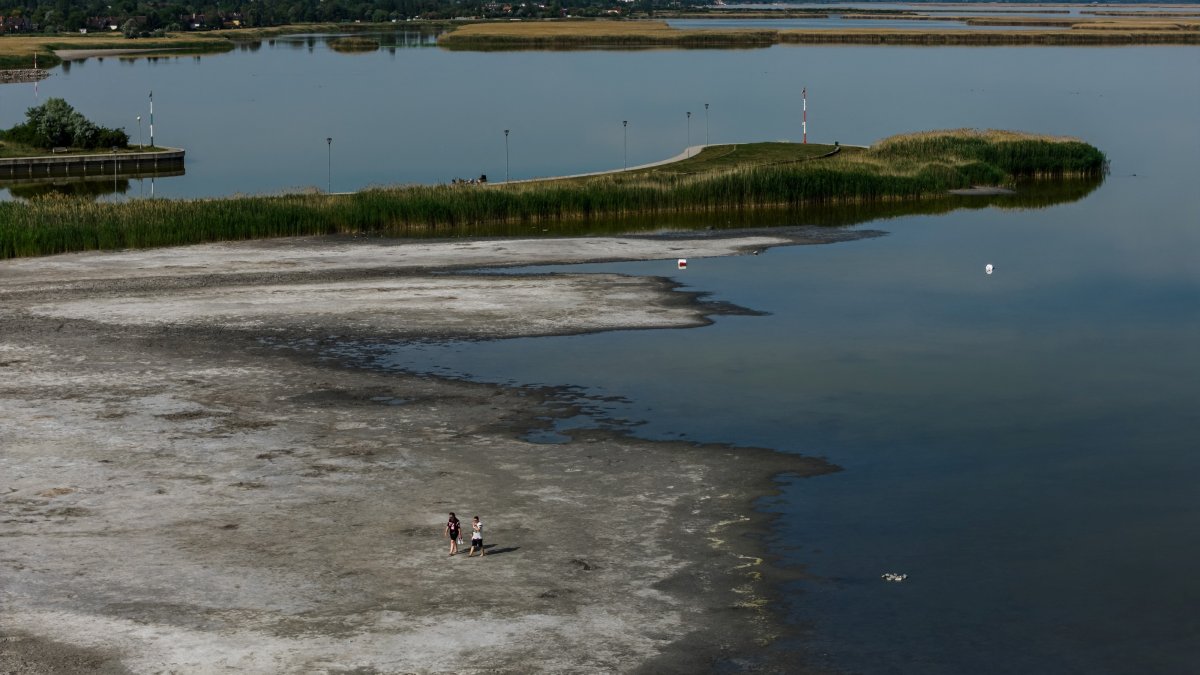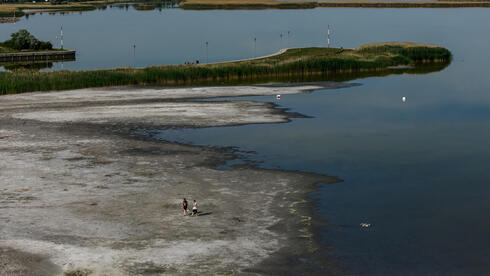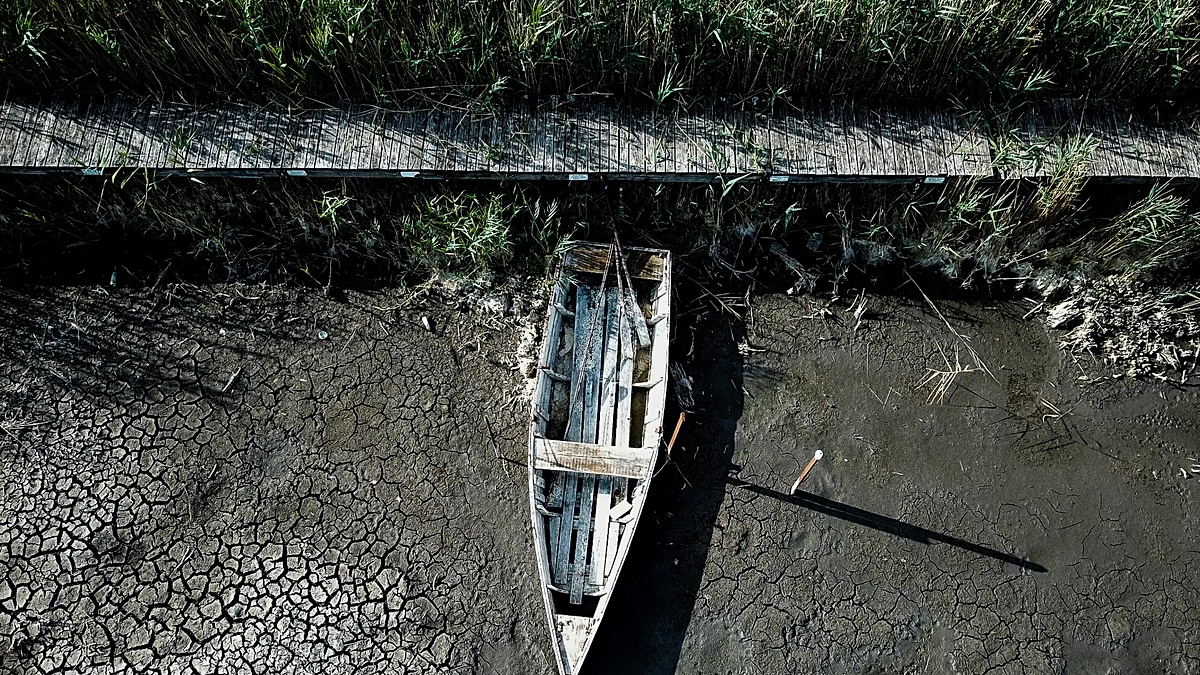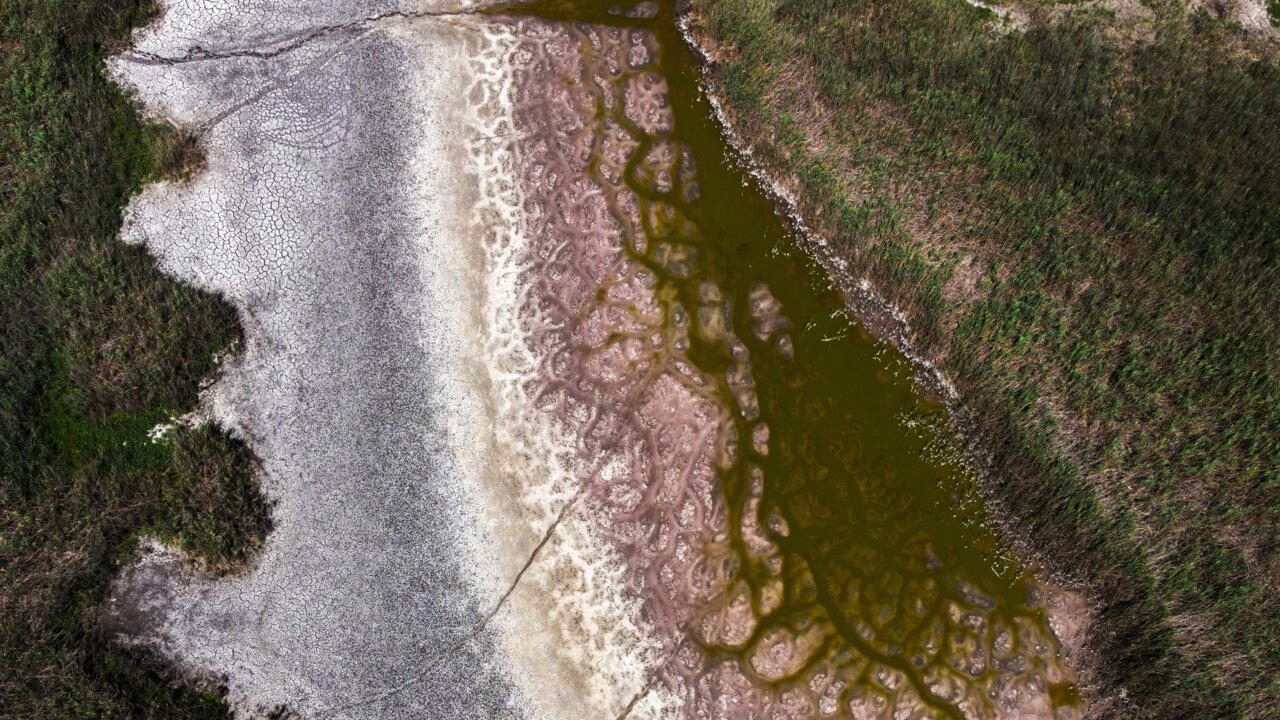
"We pray for rain, but we know the whole country is facing water scarcity," said Gyorgy Simon, whose lakeside leisure company was forced to suspend sightseeing cruises in late June.A shallow inlet where children once splashed beneath sunshades has turned into a weed-covered patch of dry land at one Velence beach, 45 kilometres (28 miles) southwest of Budapest in the town of Gardony.The only lifeline for the area's ailing businesses is the cyclists circling the 33-kilometre route around Hungary's third-largest lake, much of which has become a cracked or muddied expanse.
Many tourists have chosen to stay away as a result of the lake's low ebb © Attila KISBENEDEK / AFP
"The lake's entire tourism sector is suffering, with angling facing its worst year in decades," said Imre Palinkas, the local representative of the MOHOSZ national fishing association."The low water level also puts the lake's ecosystem in an extremely vulnerable state. An adverse weather event... could lead to collapse," he added.Hungary is among the countries worst affected by central and eastern Europe's recurring droughts, which scientists have long warned are being worsened and lengthened by human-driven climate change.But environmental activist Tibor Horanyi of the Great Lakes and Wetlands Association also blames decades of flawed policies that focused on removing water from the landscape rather than retaining it.'Damage control'"Over the past five years, the country accumulated one year's worth of rainfall deficit," Attila Szegi, spokesman for the National Directorate General for Water Management (OVF), told AFP.He said the authorities were focusing on "damage control" for Lake Velence, which risks splitting into separate bodies of water if it evaporates further.Last week, the OVF measured a water level of 41 centimetres (16 inches) at Gardony, the lowest since measurements began in 1931.That said, historical documents record that the lake has previously disappeared, most recently in 1866.