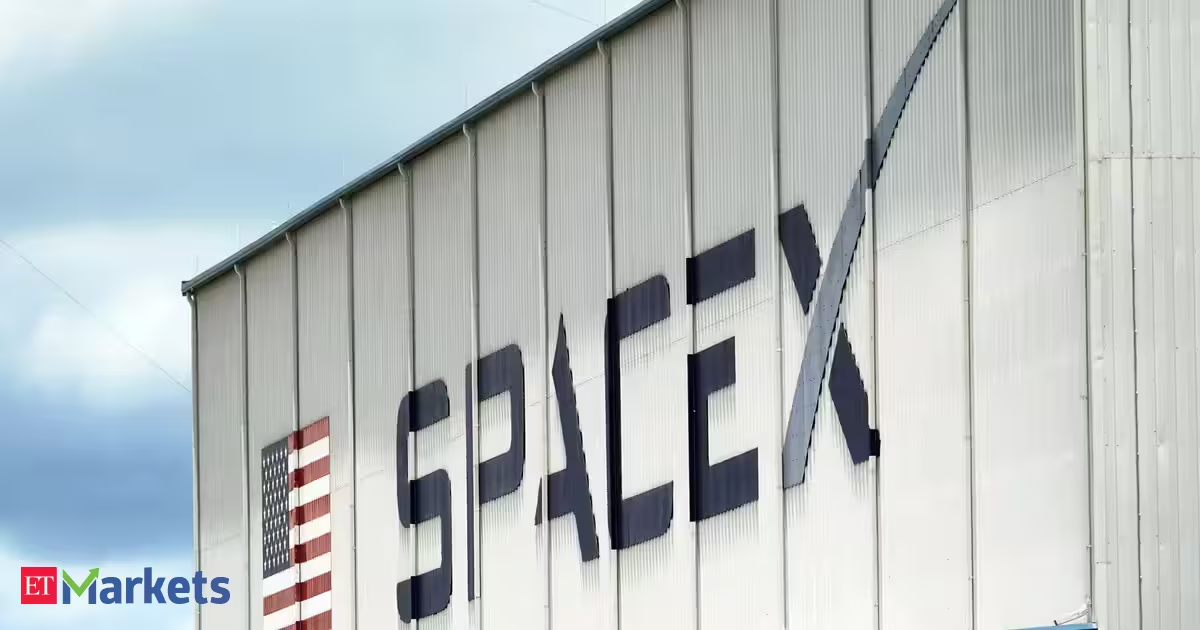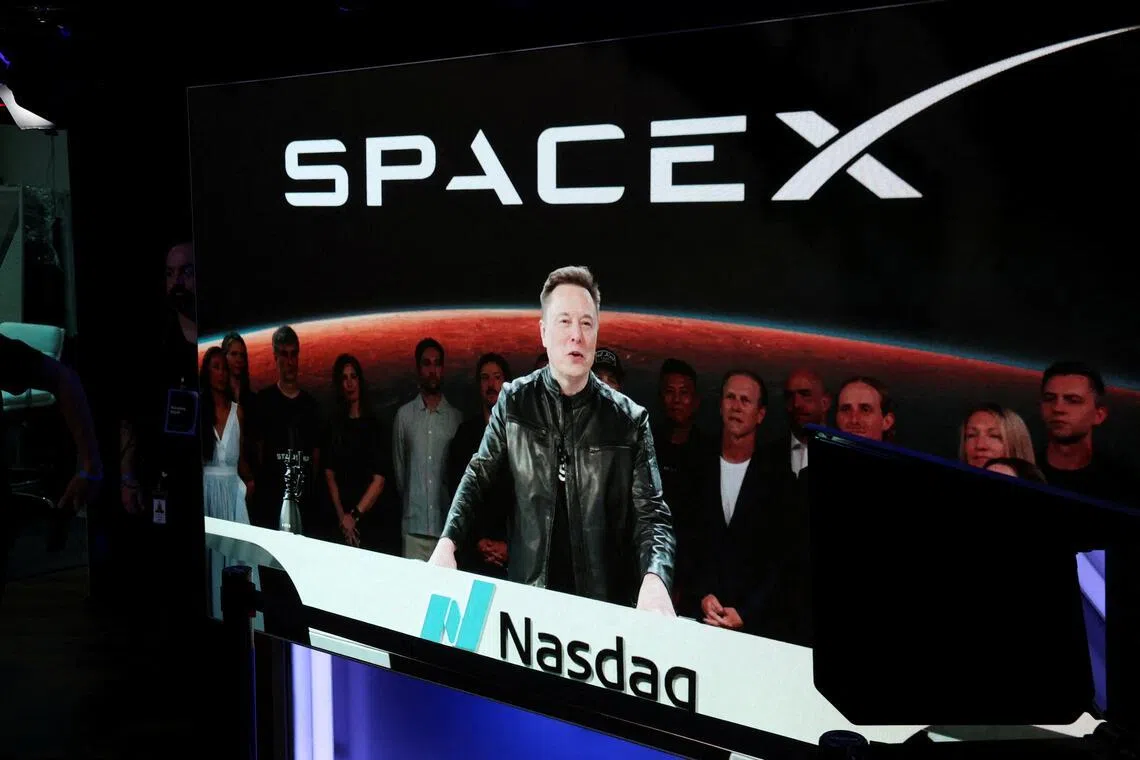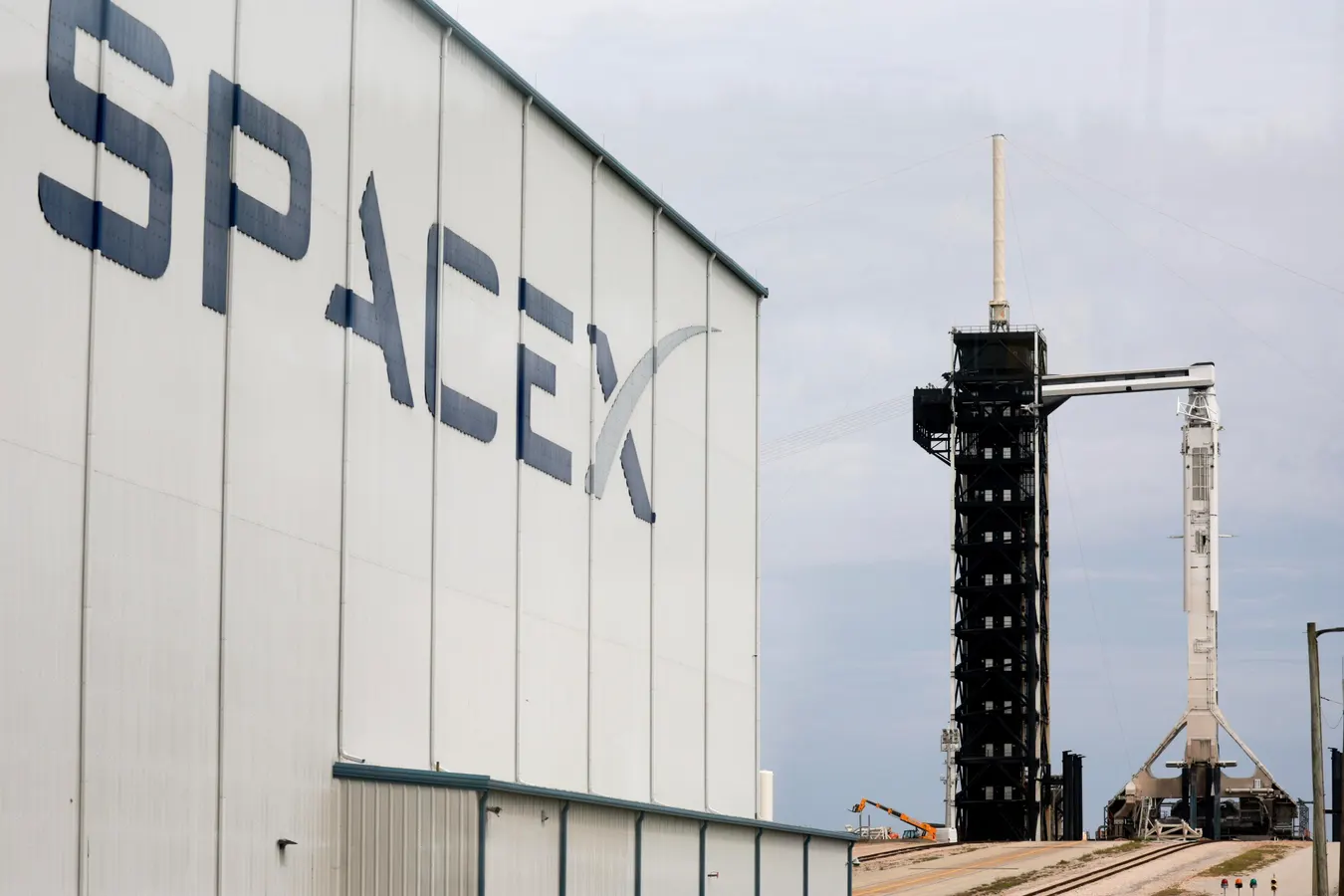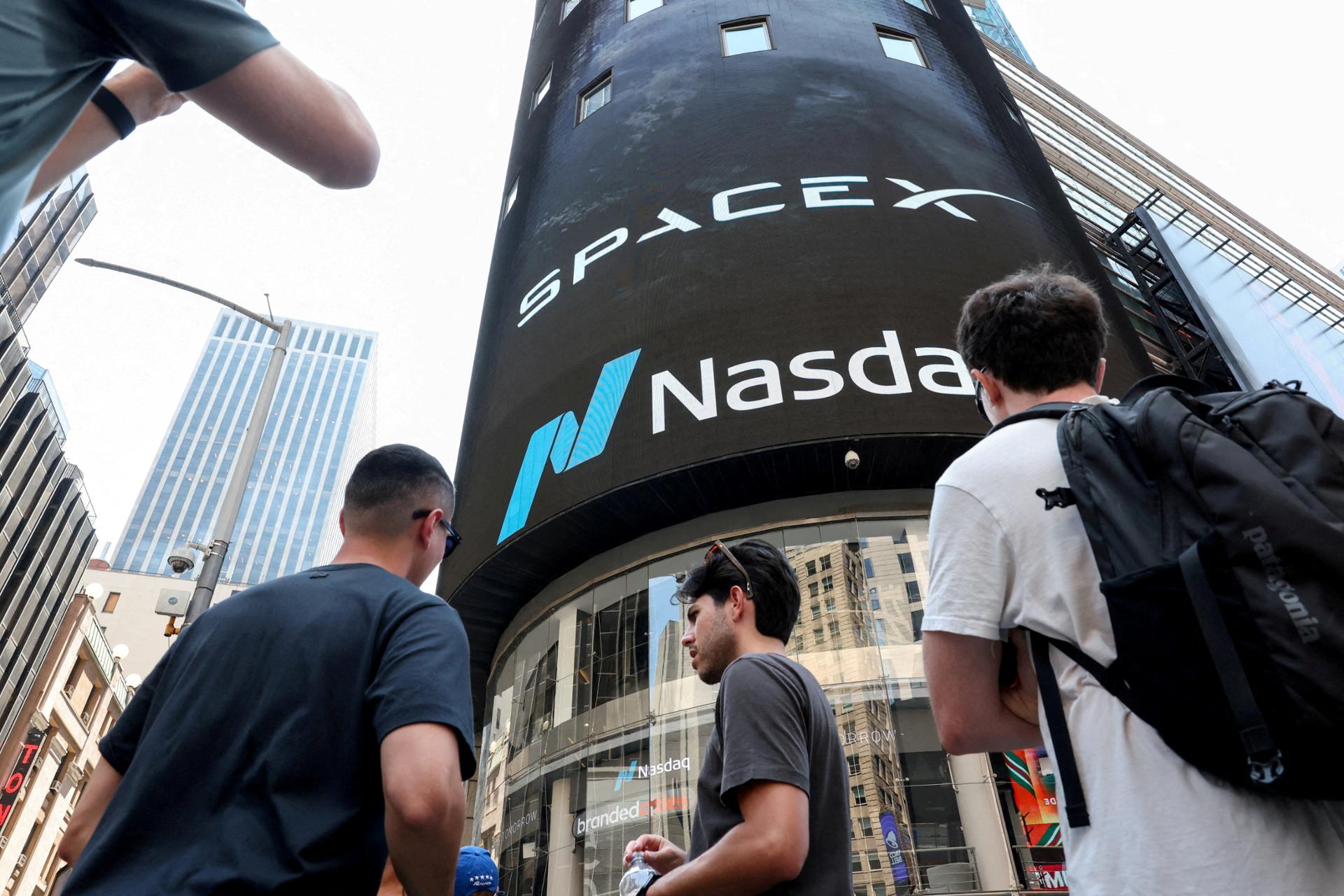
People gather near a SpaceX advertisement outside the Nasdaq MarketSite, on the day of their initial public offering (IPO) in New York City, U.S., June 12. Reuters-YonhapNEW YORK — SpaceX's slip below its initial public offering price risks turning a marquee stock-market debut into a confidence test, potentially unsettling retail investors and complicating decisions for other companies weighing high-profile listings. Elon Musk's company, spanning rockets to AI, debuted on June 12 and soared in the ensuing days, at one point valuing the company at well above $2 trillion. Since its debut, trading has been rocky. The stock slipped below its $150 opening price in late June with concerns about lofty tech stock valuations weighing on global indexes. The stock slid below its $135 IPO price for the first time on Wednesday, touching an intraday low of $132.15 before recovering to trade down 0.6 percent at $135.27 — just over a month after the record-breaking IPO made Musk the world's first trillionaire. SpaceX shares started trading as part of the Nasdaq 100 index about a week ago.A break below the IPO price is a psychological blow for SpaceX shares, said Matthew Maley, chief market strategist at Miller Tabak."It raises the narrative that the stock is up on fluff, on speculation, on froth, and not on real fundamentals," Maley said.Investors who bought into the excitement around SpaceX's listing, "hoping to 'make a killing' will be disappointed," said Greg Halter, director of research at Carnegie Investment Counsel.He said weakness in SpaceX would put it more in line with 30 years of heavily hyped IPOs, where average and median returns over the first month are often negative.SpaceX did not respond to a request for comment.Price discovery not panic? A drop below the IPO price is not unusual for a newly listed company. Shares of Cerebras Systems, which went public in May, have dropped below the IPO price, and Meta, formerly known as Facebook, fell similarly after its debut.Investors often fixate on IPO prices and early trading, said Ryan Lee, senior vice president of product and strategy at financial services firm Direxion."The reality is, (SpaceX) is still undergoing some of this price discovery process," Lee said.A fall for SpaceX below $135 reflects "normal, albeit painful" market mechanics, especially as investors, venture capitalists and employees sell shares after lockups expire, said Gabriel Shahin, CEO at Falcon Wealth Planning."A near-term dip below the $135 threshold would not fundamentally alter our current positioning or cause us to panic-sell," he said.Caution or green light for next IPOs Some investors think SpaceX's stock performance could influence the market for future public listings. OpenAI and Anthropic are eyeing the public markets. Neither company responded to a request for comment.Carnegie's Halter said companies and investment banks considering large IPOs this year are watching SpaceX closely. "No one wants an IPO to flop or have the initial price be ratcheted down," Halter said. He suspects some IPOs would be pulled rather than priced at lower valuations.But Direxion's Lee said SpaceX's capital raise could encourage some companies with large funding needs to move faster."If I'm OpenAI or if I'm Anthropic and I'm in this true arms race to build the frontier AI model and I need capital, I'm going to try to beat the other one out the door," Lee said.Risking retail traders' skepticism A drop below the IPO price could hit retail investors, who received about 20 percent of the allocation, hard."Many novice investors have approached SpaceX with a 'meme stock' mentality, buying in with capital they cannot afford to lose," Shahin said, warning that losses could fuel perceptions that markets favor insiders. "The market needs to understand that post-IPO volatility is normal."SpaceX's first earnings report will be a major test for the stock. Underwriters typically support stocks in the first 30 days and may do more for SpaceX given the deal's size, the public attention and the fact other high-profile offerings are imminent, said Maria Llerena, director of financial research at Domini Impact Investments."Loss-making companies without a clear path to profitability are typically volatile and can fall below their IPO price," said Llerena.
SpaceX's slide below IPO price risks turning blockbuster IPO into confidence test - The Korea Times
NEW YORK — SpaceX's slip below its initial public offering price risks turning a marquee stock-market debut into a confidence test, potentially uns...
681 words~3 min read