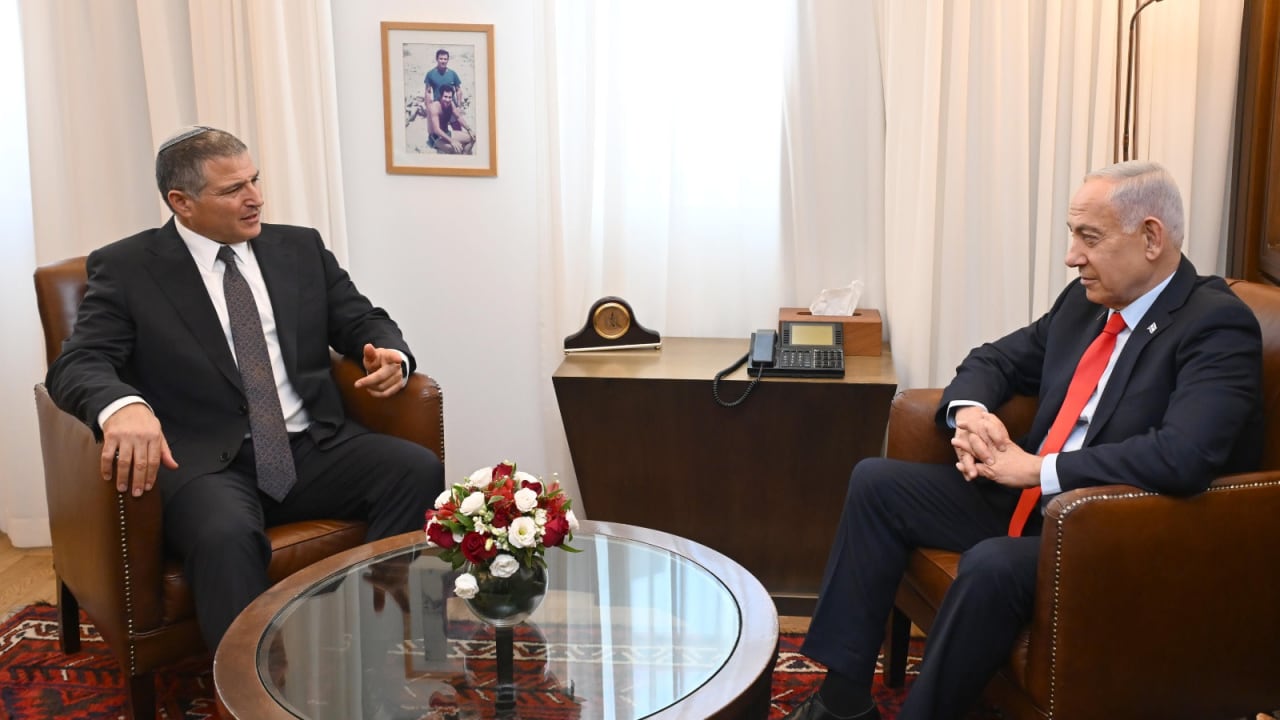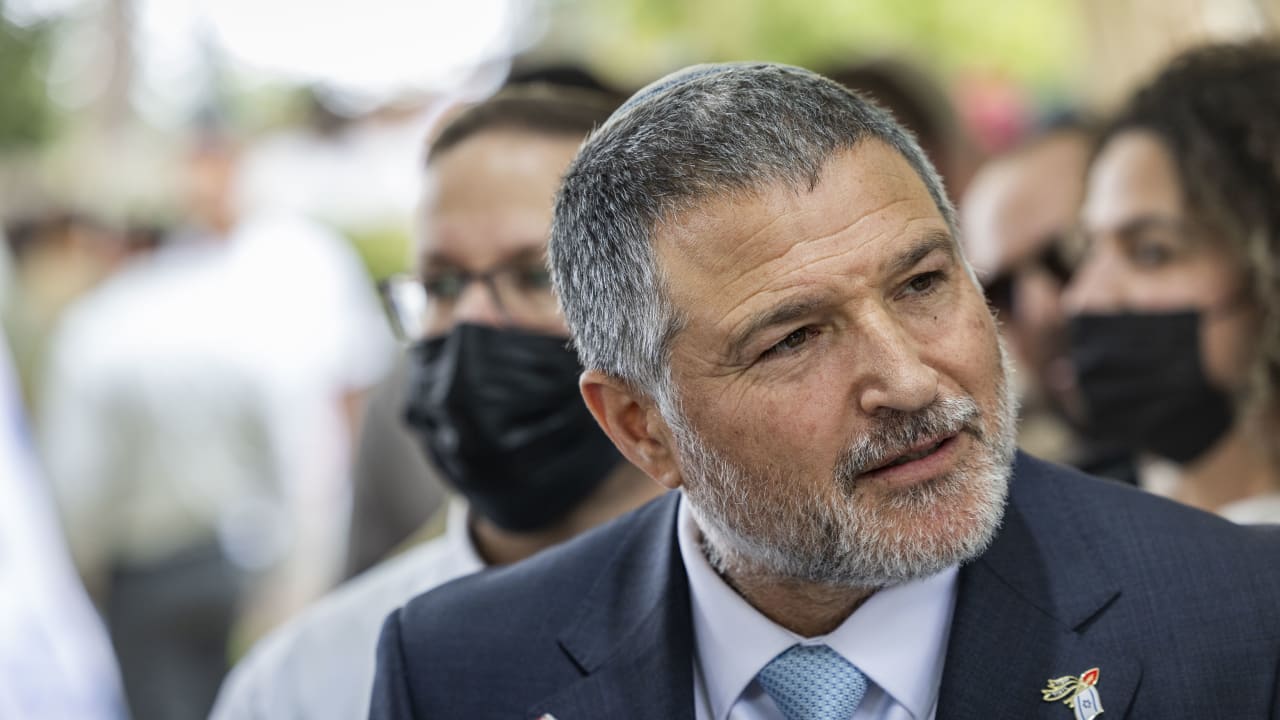
Government to redirect nearly 500 million shekels from an Arab community development plan to fund new Shin Bet and police units targeting weapons trafficking and criminal networks, drawing criticism from ministries and civil rights groupsShira Kadri-Ovadia|The government approved late Wednesday a plan to expand the Shin Bet domestic security agency's role in combating organized crime in Arab communities, reallocating nearly 500 million shekels ($165 million) from a multiyear socioeconomic development program to fund intelligence and law enforcement operations.The plan authorizes the Shin Bet to establish a dedicated unit to combat weapons smuggling and illegal arms trafficking while strengthening its intelligence and operational capabilities. It also provides funding for a new national police unit focused on organized crime in Arab communities.GalleryShin Bet chief David Zini (Photo: Olivier Fitoussi, Efi Sharir)The decision comes as violent crime in Israel's Arab sector has reached record levels in recent years, with criminal organizations blamed for a surge in homicides, extortion and illegal weapons trafficking. Arab citizens make up about 21% of Israel's population and have long complained of under-policing, while critics have accused successive governments of failing to curb organized crime.Under the plan, about 364.5 million shekels ($120.3 million) will be allocated to the Shin Bet, while another 132.4 million shekels ($43.7 million) will go to the Israel Police to establish a nationwide unit dedicated to fighting organized crime in Arab communities, including investments in advanced technology and operational equipment.The government also approved funding for 130 additional Shin Bet positions to support the initiative.Despite the announcement, a senior government official familiar with the plan told ynet that the Shin Bet would not replace the police in combating organized crime."If anyone thinks the Shin Bet will take over fighting the crime organizations themselves instead of the police, that's nonsense," the official said. "What the Shin Bet will do is focus on weapons smuggling and illegal arms trafficking, because some of those weapons end up in terrorist organizations."The official acknowledged that smuggled weapons also flow to criminal organizations but described that aspect as only one part of the broader crime problem.Prime Minister Benjamin Netanyahu described the move as a "dramatic step" against what he called a national scourge."Integrating the Shin Bet's intelligence, operational and technological capabilities alongside the Israel Police and other law enforcement agencies will allow the state to use its best tools to reach the heads of criminal organizations, dismantle their infrastructure and restore personal security to Israel's citizens," Netanyahu said.National Security Minister Itamar Ben-Gvir, Prime Minister Benjamin Netanyahu (Photo: Shalev Shalom, Alex Kolomoisky)National Security Minister Itamar Ben-Gvir also welcomed the decision, saying it marked "great news" for Israeli citizens and "bad news" for organized crime groups.Ben-Gvir criticized former Shin Bet director Ronen Bar for opposing the agency's involvement in fighting organized crime and praised current director David Zini for supporting the initiative.Social Equality Minister May Golan, whose ministry led the budget reallocation, said the government had redirected public funds that she alleged had previously benefited criminal organizations through inadequate oversight, although she provided no public evidence for that claim.The funding will come from Government Resolution 550, a five-year development plan launched in 2021 by the previous government to reduce socioeconomic disparities in Arab communities through investments in employment, education, infrastructure, transportation, housing and local economic development.The decision drew criticism from several government ministries, which argued that the budget transfer lacked sufficient justification and would undermine existing development programs.Social Equality Minister May Golan (Photo: Alex Kolomoisky)A legal opinion prepared by the Ministry for Social Equality raised concerns that the government had not established an adequate factual basis for the budget reallocations or demonstrated why the chosen approach was preferable to existing anti-crime initiatives.The opinion also noted that the government had already approved a separate anti-crime program, known as Government Resolution 549, and warned that the new initiative would operate alongside it without any coordination mechanism.The Justice Ministry was not consulted before the budget transfer, according to the legal opinion, raising concerns that additional resources would be directed to police and intelligence agencies without corresponding increases for prosecutors and other parts of the criminal justice system. That imbalance, the opinion warned, could create bottlenecks that undermine enforcement.The Labor Ministry also opposed the decision, arguing that it effectively eliminates funding for employment programs established under Resolution 550."The budget allocated under Government Resolution 550 is the primary source for promoting employment among the Arab population," the ministry said. "A 100% cut amounts to turning off the tap for these programs."The ministry said approximately 10,000 people currently participate in the employment initiatives, which provide job training and workforce skills. Suspending or reducing the programs would immediately affect current participants and limit opportunities for future applicants, it said.The Culture and Sports Ministry also objected, saying it had already begun implementing projects financed under the development plan and, in some cases, had signed contracts with service providers.The ministry criticized the government for advancing the decision without meaningful consultation and warned that the compressed timetable raised significant legal concerns.Arab civil society organizations also condemned the move, arguing that it redirects funds intended to address the root causes of crime.The Mossawa Center, an advocacy group for Arab citizens of Israel, said the reallocated funds had been designated for at-risk youth, job training, industrial development, public transportation and urban planning."Instead of promoting equality, the government is deepening discrimination," the organization said.The Abraham Initiatives, a Jewish-Arab nonprofit focused on equality and public safety, argued that the government was treating Arab citizens as a security threat rather than addressing criminal violence through conventional policing."Crime is not terrorism," the organization said. "Instead of investing in effective policing, criminal investigations and civilian prevention, the government is weakening Arab society and harming democracy."Sikkuy-Aufoq, another joint Jewish-Arab advocacy group, warned that reducing investments in economic, social and cultural development would ultimately strengthen organized crime by weakening the foundations of Arab communities.The organization urged lawmakers on the Knesset Finance Committee, which must approve much of the budget reallocation, to reject the proposed cuts.
Israel expands Shin Bet role in fight against Arab organized crime
Government to redirect nearly 500 million shekels from an Arab community development plan to fund new Shin Bet and police units targeting weapons trafficking and criminal networks, drawing criticism from ministries and civil rights groups
992 words~5 min read