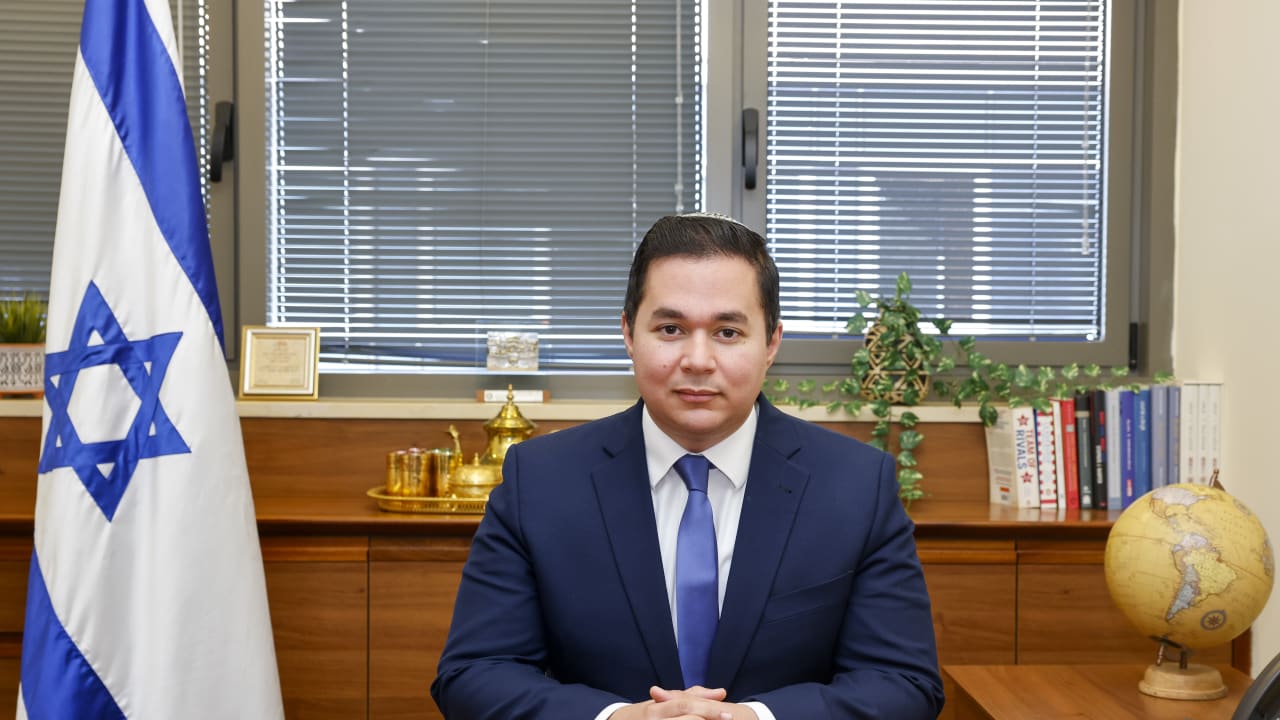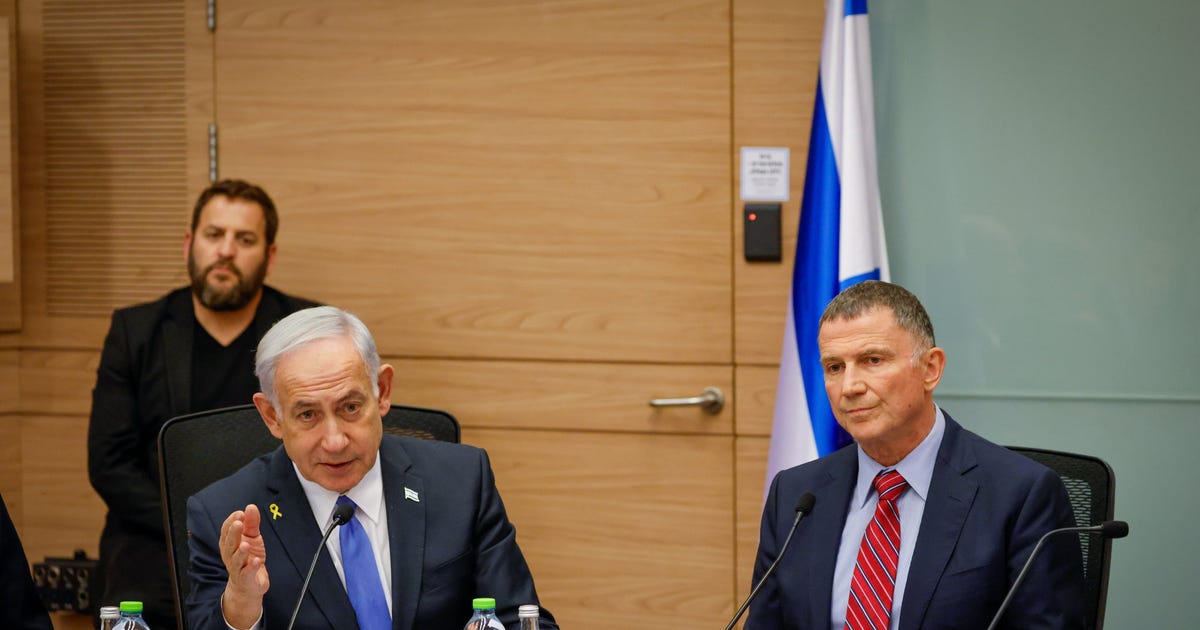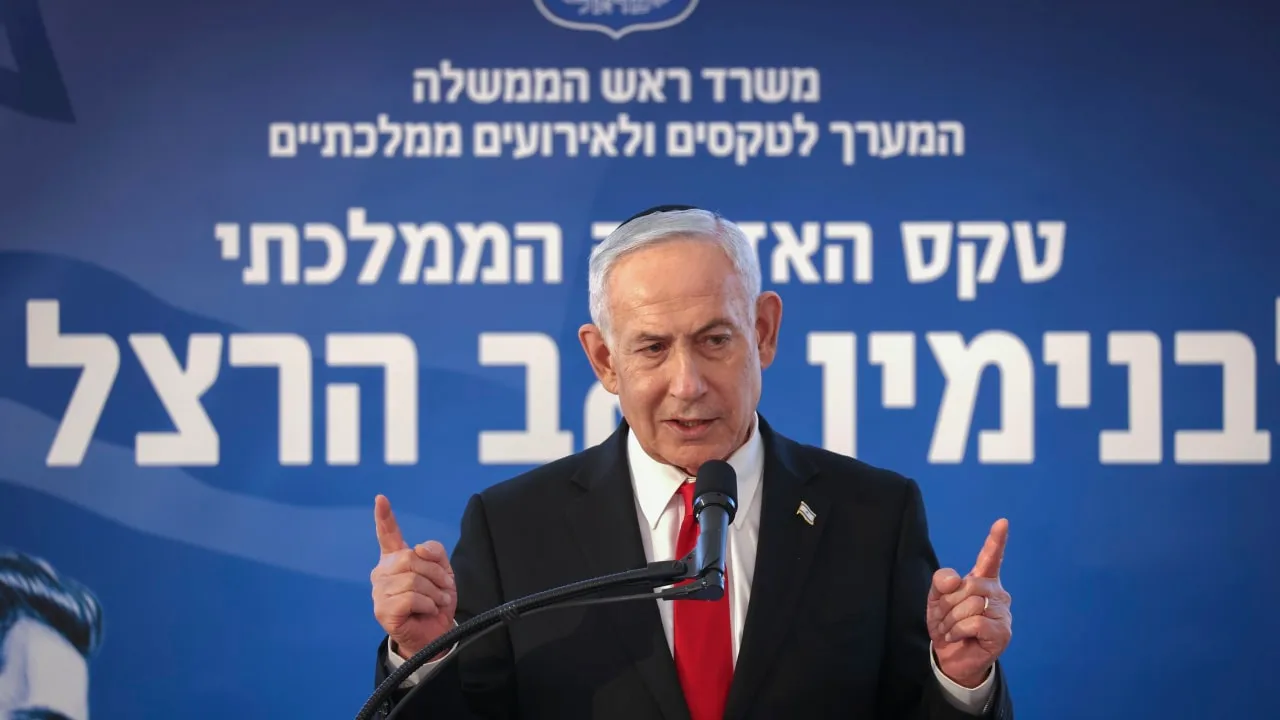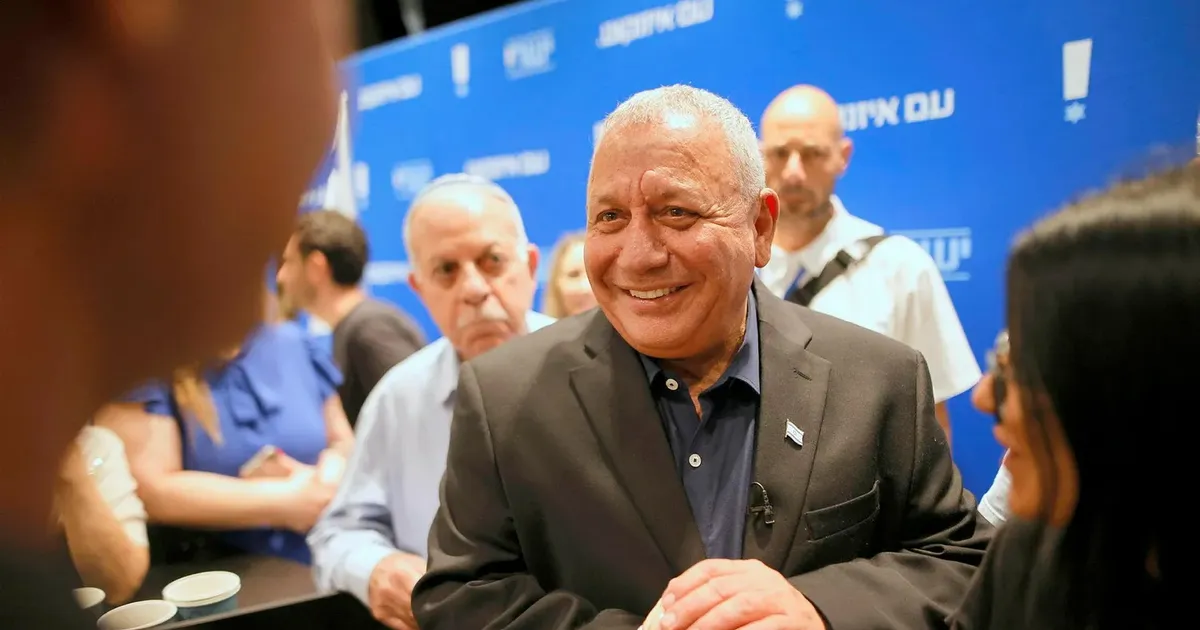
Dan Illouz says at least one-third of Likud lawmakers backed replacing the prime minister after Hamas' 2023 attack, criticizes military draft exemptions for ultra-Orthodox men and says the coalition has abandoned its conservative principlesA departing lawmaker from Prime Minister Benjamin Netanyahu's Likud party says a significant bloc of party legislators discussed replacing Netanyahu in the weeks following Hamas' Oct. 7, 2023, attack, but internal rivalries prevented the effort from moving forward.In an interview with the ynet's Hebrew-language political podcast 120 VeAhat ("121"), Dan Illouz, one of the few Likud lawmakers to publicly criticize Netanyahu's coalition, said at least one-third of the party's parliamentary faction believed Israel's leadership should change after the deadliest attack in the country's history.GalleryDan Illouz (Photo: Lior Sharon)Illouz, who announced he would leave Likud ahead of the next election after opposing legislation to exempt many ultra-Orthodox men from military service, said the initiative ultimately failed because potential successors could not agree on who should replace Netanyahu."We're talking about the weeks after the massacre, not immediately afterward," Illouz said. "Right after Oct. 7, nobody was dealing with anything except the tragedy."Asked whether there had been an organized effort within Likud to replace Netanyahu, Illouz replied: "Absolutely.""I think at least one-third of the Likud faction knew the right thing for the State of Israel was for the leadership to change," he said. "Not through elections, because we were in the middle of an intense war, but through a vote of no confidence. The only reason it didn't happen wasn't because there weren't enough numbers. It was because they argued over who should go first, who should be the person to replace him."Netanyahu has repeatedly rejected calls to resign over the Oct. 7 attack, arguing that leadership changes during wartime would undermine Israel's war effort. His coalition has remained intact despite internal disagreements over issues including military conscription, judicial reform and hostage negotiations.Illouz said his decision to leave Likud was deeply personal. "I joined the party on the day I immigrated to Israel," said Illouz, who moved from Canada in 2009. "I received my identity card, and one of the first things I did was join Likud because I believed in the values the party said it stood for: a free-market economy, the integrity of the Land of Israel and military service for everyone.""I came to the Knesset under what was called a 'full-right government.' That was our dream. I thought we would advance those goals. At the end of the term, I see we did exactly the opposite. We completely failed to advance our values."Illouz has emerged as one of the coalition's most outspoken critics of legislation that would formalize exemptions from compulsory military service for many ultra-Orthodox men, arguing the policy contradicts Likud's longstanding principles.Asked when he lost faith in the party, Illouz said the decisive moment was Hamas' Oct. 7 attack. "The breaking point was much deeper than the ideological issues. It was Oct. 7."Prime Minister Benjamin Netanyahu (Photo: Alex Kolomoisky)Illouz said he was visiting family in Canada when the attack began. "My aunt, who isn't religiously observant, came to me in tears and said, 'There's been a terrible terrorist attack in Israel,'" he recalled. "At first I thought she meant an attack on the scale of what we used to think was terrible. That evening I started to understand what had really happened, and we rushed back to Israel.""I realized I was an elected official during the term in which this happened. There is no way to escape responsibility."Illouz said he continues to ask himself whether, as an alternate member of the Knesset Foreign Affairs and Defense Committee, he could have done more before the attack."Every day I ask myself whether I could have done something differently, asked the right question, visited the Gaza border communities and seen things differently," he said. "At the same time, I saw my colleagues trying to avoid responsibility. I couldn't be part of that.""When something like Oct. 7 happens, a country that wants to live cannot simply continue business as usual. That should also be reflected in changing the leadership."Asked whether lawmakers who discussed replacing Netanyahu later became some of his closest allies, Illouz declined to identify anyone by name."I don't want to give hints or names," he said. "But today you see the entire Likud faction competing over who is closest to Netanyahu to gain support in the party primaries.""At the time, after Oct. 7, and they're welcome to deny it as much as they want, at least one-third of the faction was prepared for a dramatic move."He said the discussions largely ended after former Netanyahu rival Gideon Sa'ar joined the governing coalition in September 2024, making any leadership challenge significantly more complicated.Asked whether Netanyahu would likely have been replaced had lawmakers agreed on a successor, Illouz replied: "Probably, yes."He added, however, that "it also means two-thirds of the faction remained loyal to Netanyahu even then."Illouz said he believes Netanyahu was aware of at least some of the maneuvering inside the party but "not all of it."Illouz also criticized what he described as Likud's increasing accommodation of its ultra-Orthodox coalition partners.Coalition members celebrate the passing of a law equating the status of yeshiva students and IDF soldiers (Photo: Knesset)"The ongoing surrender to the ultra-Orthodox is part of the problem," he said. "Most of the party list is simply willing to go along with it. In the next Knesset, 100% of the Likud list will be willing to do so."He argued that Likud's political direction, rather than the composition of its candidate list alone, has contributed to declining support in opinion polls.On the debate over responsibility for Oct. 7, Illouz rejected efforts to place the blame exclusively on the IDF and intelligence services."I think the army bears responsibility. I think the Shin Bet bears responsibility. And I think the government of Israel also bears responsibility."Asked how responsibility should be determined, he replied: "Let's establish a commission of inquiry and find out.""I cannot accept the attempt to avoid all responsibility and say, 'It's only the others,'" Illouz said."Netanyahu has been prime minister for a very long time. He cannot say this is only the fault of the security establishment. These were processes that developed over many years. So yes, the Shin Bet bears responsibility, the army bears responsibility and the government bears responsibility as well."Illouz said the prime minister angrily confronted him after he opposed legislation benefiting ultra-Orthodox draft evaders, accusing the coalition of sacrificing its ideological principles to remain in power.He described a tense phone call with Netanyahu, defended his decision to break ranks and argued that the Netanyahu bloc's alliance with ultra-Orthodox parties has become "an existential danger" to the country.Illouz said Likud leaders realized early in the current Knesset term that he would continue pushing for universal military service and loosening the party's political dependence on ultra-Orthodox coalition partners, making efforts to persuade him largely futile."I was at a conference of reservists' wives who opposed the bill and wanted to propose solutions for drafting the ultra-Orthodox," he said. "Someone told me the prime minister wanted to speak with me."Illouz declined to disclose the substance of the conversation but acknowledged it was contentious. "It was a very difficult conversation," he said. "Parts of it later leaked to the media—not by me."At the time, Illouz said, he was accused of trying to bring down the right-wing government. "I told him we don't need to surrender to the ultra-Orthodox to preserve the principles of the right. On the contrary."Asked whether it was difficult to speak during such a conversation, Illouz said he made clear that his responsibility as a member of parliament was to represent the values on which he had been elected."One of the things that leaked from the conversation was, 'Who do you think you are?'" Illouz said. "Well, I'm a member of the Knesset, and my job is to oversee the government's work."When the interviewer remarked that such a view seemed outdated in today's Likud, Illouz replied: "I'm probably old-fashioned. That's why I no longer have a place there."Coalition lawmakers have accused Illouz of acting as a political "Trojan horse" within Likud and abandoning the party after realizing he would struggle in future party primaries.Illouz rejected that characterization. "Let someone point to one thing I did that contradicted Likud's declared values," he said.Coalition whip Ofir Katz (Photo: Alex Kolomoisky)He criticized coalition whip Ofir Katz and Netanyahu for, in his view, prioritizing political survival over policy. "The coalition whip boasts that we're completing a full term in office, as if survival is everything," Illouz said. "You see the same thing with Netanyahu—a tremendous desire to stay in power as long as possible."He argued that recent coalition legislation, including measures strengthening protections for Torah students and limiting enforcement against ultra-Orthodox draft evaders, was designed primarily to preserve the governing coalition.Asked whether such legislation was necessary to maintain the governing bloc, Illouz replied: "Then I think this bloc has become an idol.""It prevents us from advancing right-wing economic and security policies," he said. "A strong national defense also means having enough soldiers. We see the chief of staff pleading for more troops, and we tell him, 'We heard you, but we've decided otherwise.' That's not the political right."Illouz said he has not yet decided whether to join another political party ahead of the Oct. 27 election. "I didn't want to commit myself to another political framework before finishing my term," he said. "Now that there won't be any more votes, I can begin thinking about other options."He said he would like to remain in politics but was also open to returning to the private sector. "If Netanyahu really knew me," he added, "he would understand I could have been an asset."Although Illouz has become closely associated with the debate over military service exemptions for ultra-Orthodox Jews, he said economic issues have been equally central to his political agenda.A supporter of free-market policies who was active in the conservative Kohelet Policy Forum before entering politics, Illouz said he entered the Knesset committed to reducing the high cost of living."When I arrived at the Knesset's Economic Affairs Committee and tried to fight monopolies and special-interest groups, I noticed the people standing against me weren't from the opposition," he said. "They were members of my own party."He singled out what he described as the powerful agricultural lobby, arguing that import protections contribute to high supermarket prices. "I believe agriculture is very important and should be supported," he said. "But not by closing the market and raising prices."Illouz reserved some of his strongest criticism for Likud's partnership with ultra-Orthodox parties. "The partnership with the ultra-Orthodox parties has become an existential danger to the State of Israel," he said.He stressed that his criticism was directed at the political parties, not at the ultra-Orthodox community itself. "The parties are doing everything they can to prevent the population they represent from integrating into the economy and the military," he said.He argued that Israel faces growing shortages of both soldiers and workers. "Without soldiers, there is no State of Israel," he said. "Without enough workers and a functioning economy, there is no State of Israel."Illouz said his views hardened after Hamas' Oct. 7, 2023, attack. "Before Oct. 7, I viewed military service primarily as a matter of values," he said. "Afterward, it became clear that this is also an urgent national security issue. We can't pretend that event never happened."Illouz, whose family immigrated to Israel from Morocco via Canada, also criticized politicians who invoke Mizrahi Jewish identity while employing confrontational rhetoric."There is a magnificent Mizrahi culture of poetry, art, cuisine, Torah scholarship and philosophy," he said. "In the end, people reduce it to someone shouting insults from the Knesset podium and say, 'That's your culture.'"Shas leader Aryeh Deri (Photo: Alex Kolomoisky)He rejected assertions by some politicians that aggressive public behavior reflects Mizrahi traditions. "Insulting people isn't speaking with your hands," he said. "That's not the culture of my family or the rabbis of North Africa."He also criticized the ultra-Orthodox Shas party, which draws much of its support from Mizrahi Jews. "There's nothing less Mizrahi than Shas," Illouz said, arguing that the party had adopted Ashkenazi ultra-Orthodox norms rather than preserving traditional Sephardic religious culture.Asked what kind of government he hopes emerges after the October election, Illouz said he wanted a broad coalition made up exclusively of Zionist parties.He said he would prefer Likud to remain part of the next government—but not under Netanyahu's leadership. "I would very much like Likud to be part of the government," he said, "but not with Netanyahu as prime minister."
Likud tried to oust Netanyahu after Oct. 7 attack, party dissenter says
Dan Illouz says at least one-third of Likud lawmakers backed replacing the prime minister after Hamas' 2023 attack, criticizes military draft exemptions for ultra-Orthodox men and says the coalition has abandoned its conservative principles
2,096 words~10 min read