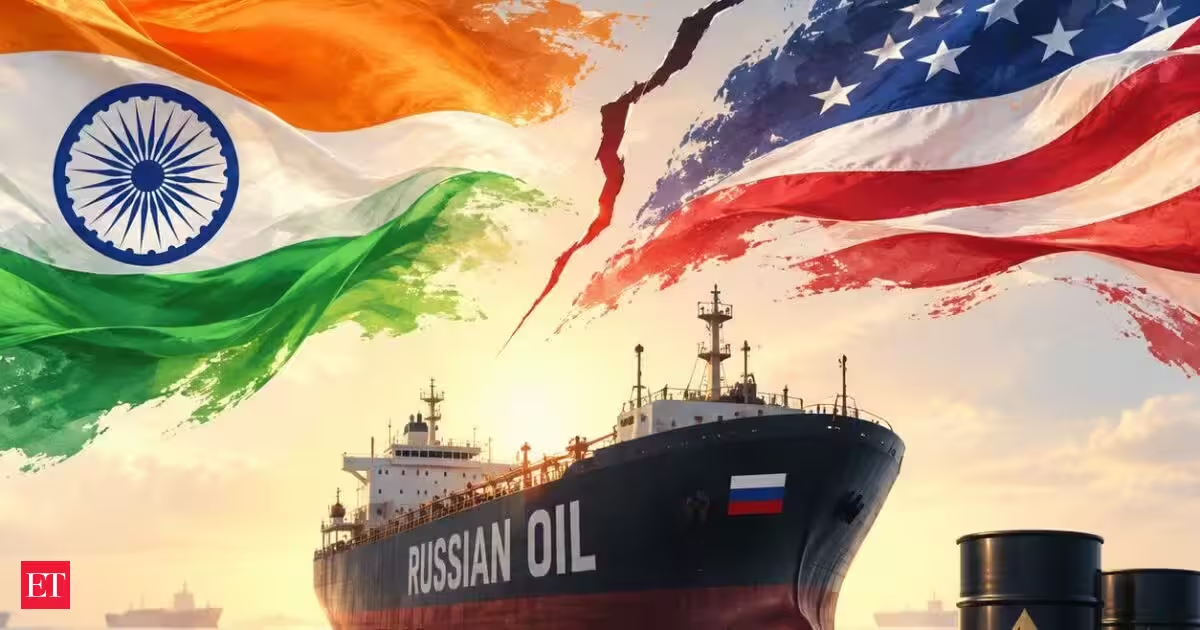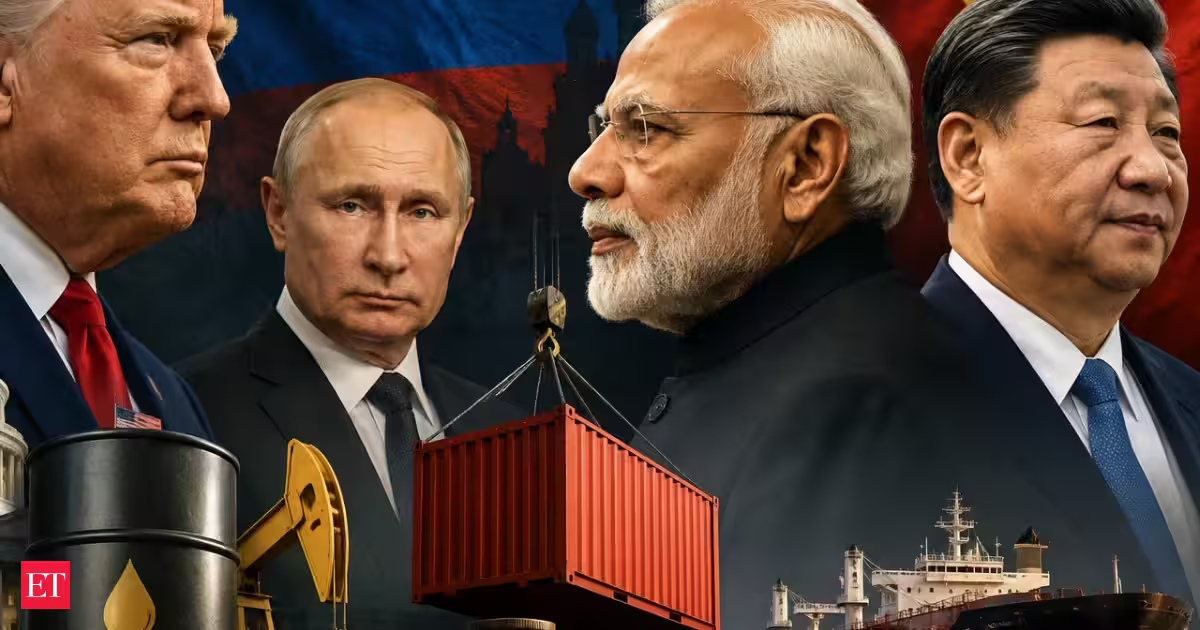
US senators have unveiled a revised sanctions bill backed by president Donald Trump that would impose a 100 per cent tariff on the top five major buyers of Moscow’s oil and gas, specifically targeting China and India in a bid to pressure Moscow.The bill, spearheaded by the late Senator Lindsey Graham, has been revised to lower the maximum tariff from the blanket 500 per cent to 100 per cent, a significant reduction from the previous limit envisaged in the original bill.It, however, exempts countries that import less than 15 per cent of Russia’s natural gas exports, likely benefitting European nations, arguing that the purchases are only a fraction of their total requirement and these countries were taking steps to reduce dependence on Moscow.The bill also proposes sanctions targeting Russia's defence, energy and financial sectors, as well as its "shadow fleet" of ageing vessels used to evade international sanctions, lawmakers said.“It took painstaking, sometimes painful negotiations and discussions. But it meets a pivotal moment, said Senator Richard Blumenthal, a Connecticut Democrat, who drafted the bill with Graham and travelled with him to Ukraine several times.“Ukraine is at a crossroads. It is turning the tide on the battlefield.”A picture taken on July 10, 2026 shows U.S. Senator Lindsey Graham (R-SC) speaking to the media after his meeting with Ukraine's President Volodymyr Zelensky (Reuters)Last year, the top five importers of Russian natural gas were China France, Japan Hungary and Belgium. But countries other than China would be exempt from the tariffs under the clause that spares those buying less than 15 per cent of Russian gas.The five largest purchasers of Russian crude were China, India, Slovakia, Hungary and Azerbaijan.This is not the first time the US has tried to single out China and India for purchasing Russian energy. The US imposed an additional 25 per cent tariff on India last year to punish the country for buying Russian oil but later removed it.A temporary US treasury wavier that allowed Indian purchases of Russian crude without triggering sanctions lapsed on 17 June this year. This has further complicated the situation for India, leaving its current purchasing position in a legal grey zone. The final tariff rate will be determined by the US Trade Representative and set at a level intended to discourage countries from buying Russian oil, Mr Blumenthal said.U.S. Senator Richard Blumenthal (Reuters)The bill got momentum after Graham died on Saturday at the age of 71 from an aortic dissection, a tear in the inner layer of the body's main artery. Many senators from both parties support it and want to pass it in Graham's honour as he was the leading force behind the legislation before he died.Before his sudden passing, Graham had announced during a trip to Ukraine that he had reached an agreement with President Trump to move forward with the bill, more than a year after it was introduced.When asked about the bill, Mr Trump said “there is a good chance that it gets done” and it is in honour of Graham, who championed the bill."This is in honour of Lindsey. This was his thing. He wanted this more than anything. You know how he felt, and there's a good chance that it gets done," Mr Trump said. Senate aides said there were 26 co-sponsors for the bill, both Republicans and Democrats, and they expected more within several hours, expressing optimism about its chances of passage. "We're pretty confident on its path," one aide said.File - An oil tanker is moored at the Sheskharis complex, part of Chernomortransneft JSC, a subsidiary of Transneft PJSC, in Novorossiysk, Russia, on Oct. 11, 2022, one of the largest facilities for oil and petroleum products in southern Russia (AP)A bipartisan group of senators and the White House spent more than a year negotiating the Russia sanctions bill, considering several tougher proposals, including one that would have imposed 500 per cent tariffs on imports from countries buying Russian oil, gas, uranium and other products.The White House opposed making such penalties mandatory, preferring to give Mr Trump maximum flexibility as he seeks to negotiate an end to the war in Ukraine, The Wall Street Journal reported, citing people familiar with the discussions.The final bill represents a compromise that won support from Republicans, Democrats and the White House, the people said.
China and India facing 100% tariff for buying Russian oil under new US sanctions bill
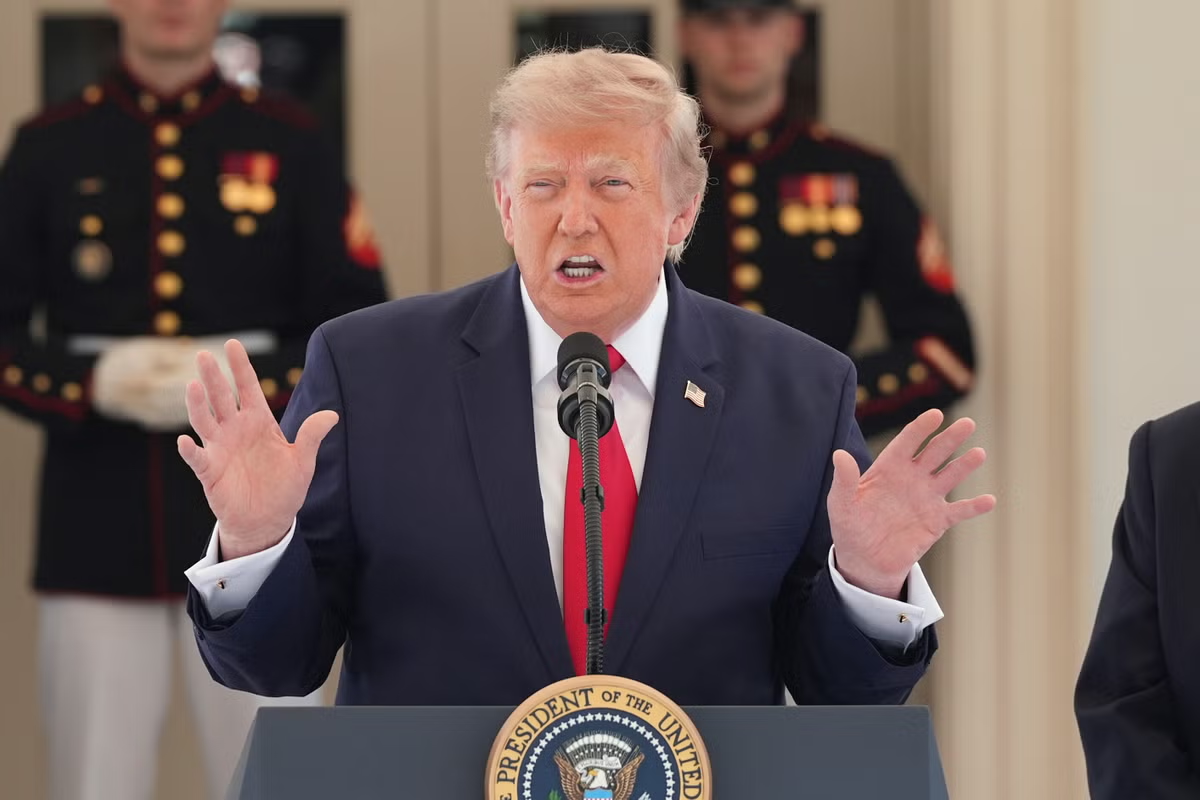
Donald Trump says there is a ‘good chance’ that this bill passes
714 words~3 min read