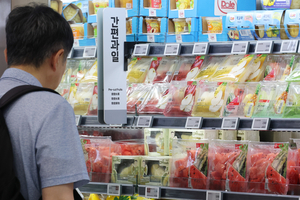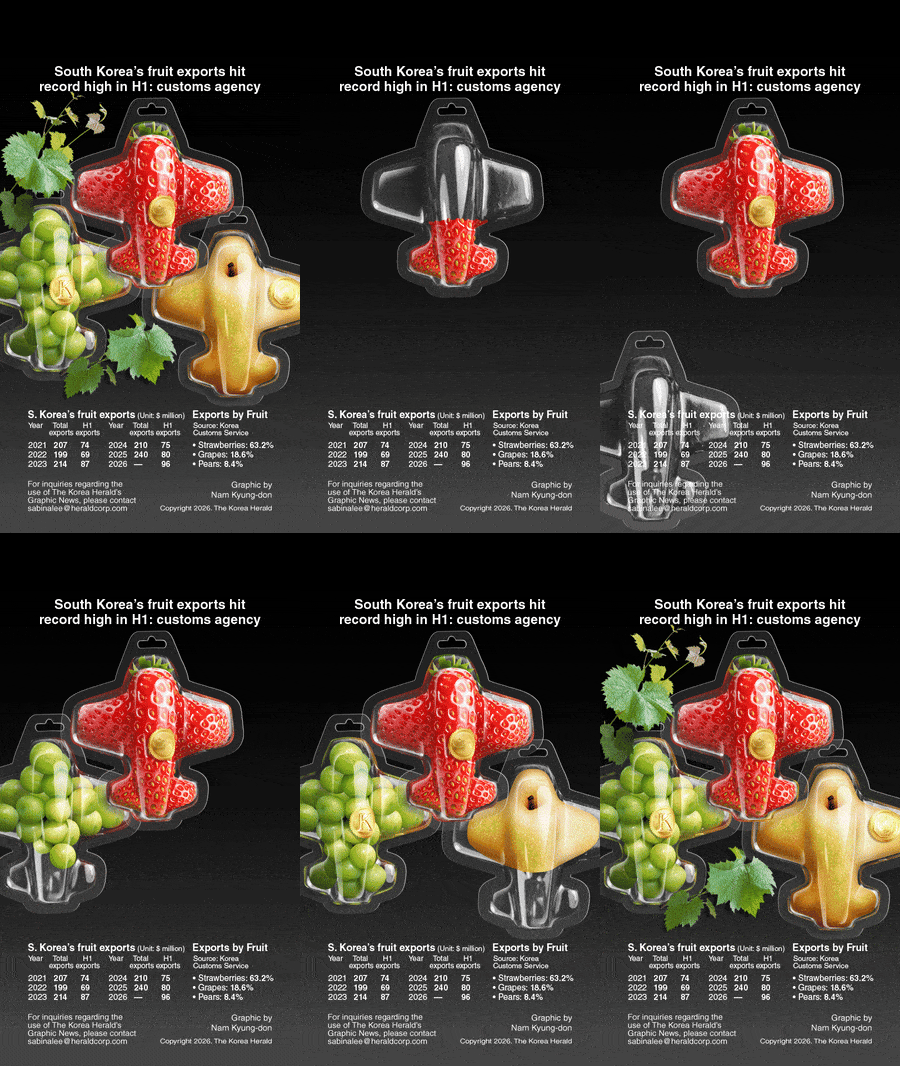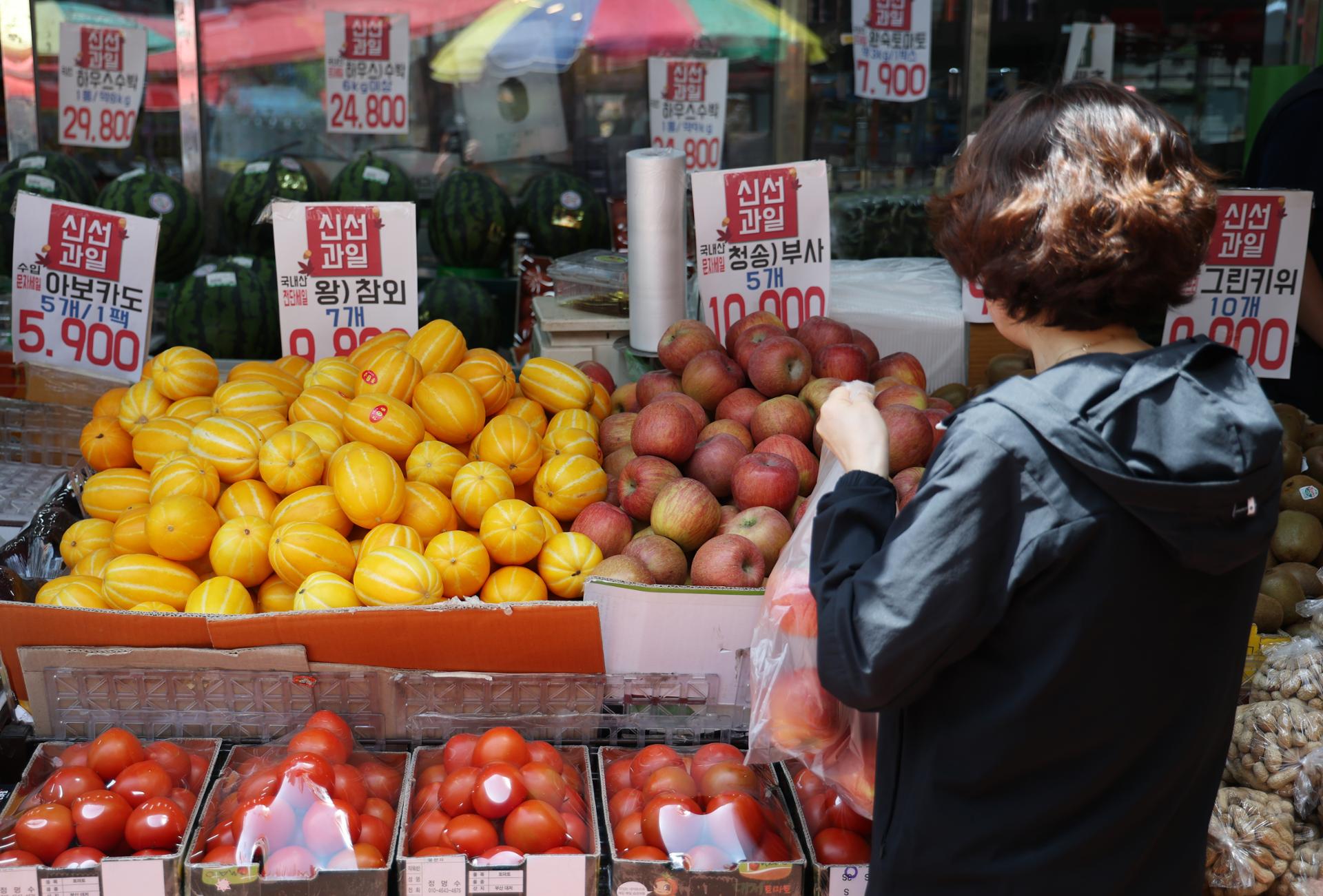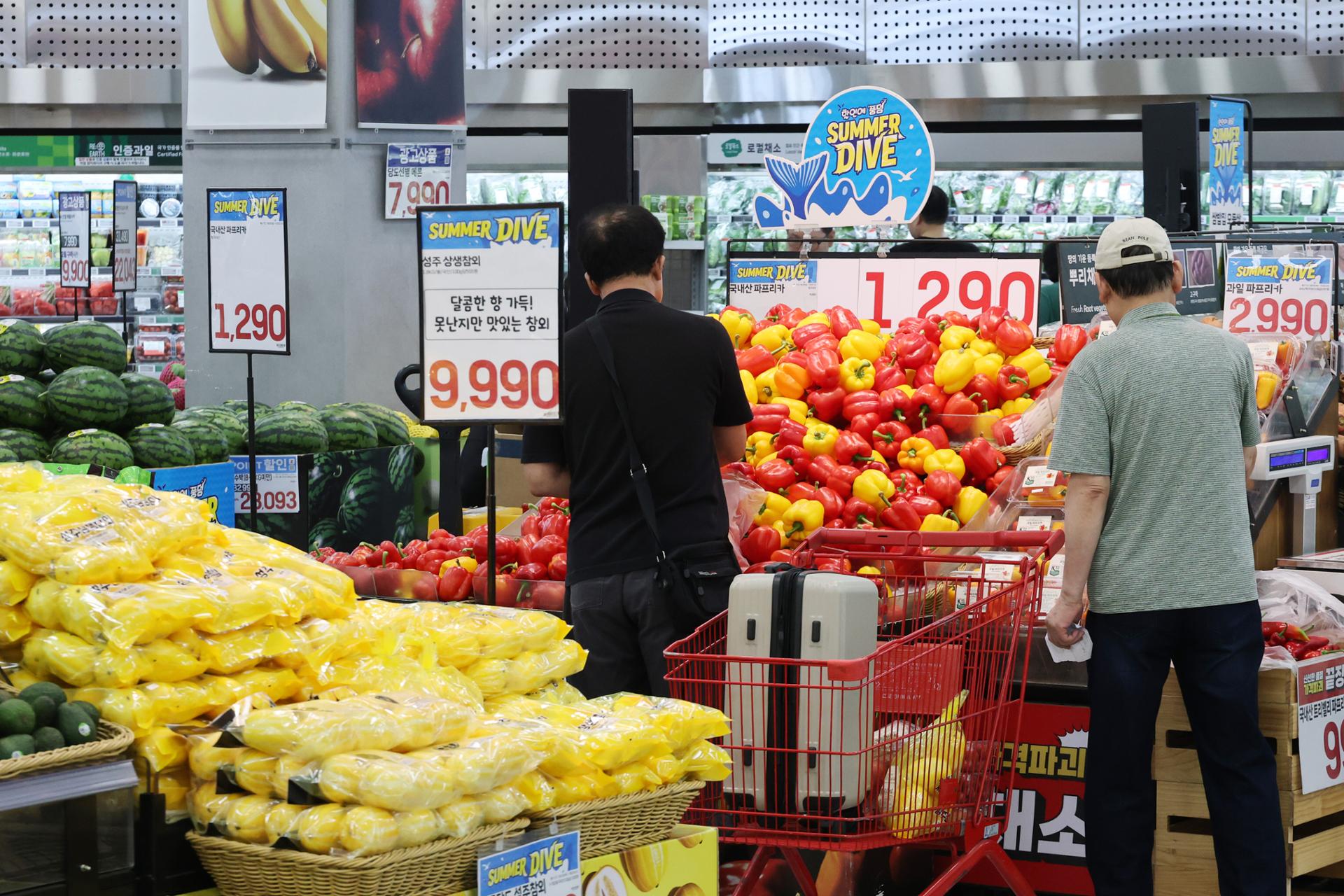
Customers browse vibrant piles of bell peppers and packaged yellow melons under a "Summer Dive" sales display at a grocery store in Seoul in this undated photo. Yonhap Korea’s premium agricultural sector is witnessing an unprecedented export boom, with fruit shipments hitting a record-breaking $95.7 million in the first half of 2026. This represents a stellar 19.7 percent surge compared to the same period last year.According to newly released trade data, the mid-year milestone follows last year’s historic annual peak of $240.5 million. Because Korean agricultural patterns typically see harvests heavily skewed toward the autumn and winter seasons, government economists and trade analysts fully expect total exports for 2026 to comfortably shatter annual records for the second consecutive year.The driving force behind this agricultural gold rush is a deliberate shift from mass-market volume to uncompromising luxury.Industry watchers point to a three-pronged catalyst: a strict high-sweetness premium strategy, rapid technological improvements in global cold-chain logistics and the widespread popularity of Korean cultural content, which has organically elevated the profile of Korean food among international consumers."Local distributors and global consumers are increasingly treating Korean fruits as luxury boutique products," a spokesperson for the agriculture ministry said. "They consistently choose them over cheaper competitors for their superior sweetness and freshness."Among the varieties captivating overseas palates, three key products stand out.Strawberries remain the undisputed crown jewel, commanding over 63 percent of total fruit exports at $60.5 million — a 15.8 percent increase. Southeast Asian hubs like Singapore ($19.2 million) and Thailand ($16.5 million) continue to serve as primary consumer markets.Grapes follow closely, generating $17.8 million with a remarkable 26.5 percent growth rate. Taiwan remains the dominant destination for luxury grapes — particularly the famed, expensive Shine Muscat variety — absorbing over half of all grape exports. Meanwhile, pear exports have skyrocketed by 62.4 percent to $8 million, driven largely by robust demand in the United States, which imports over 55 percent of Korea's premium pears.On a regional level, the agricultural powerhouses of North and South Gyeongsang provinces are leading the charge, collectively orchestrating over 80 percent of the nation's total exports. By continuously expanding their reaches, Korea now successfully exports its high-end seasonal fruits to an all-time high of 61 countries, according to the ministry.This article was published with the assistance of generative AI and edited by The Korea Times.
Korea's premium fruits find sweet spot abroad - The Korea Times
Korea’s premium agricultural sector is witnessing an unprecedented export boom, with fruit shipments hitting a record-breaking $95.7 million in the...
386 words~2 min read