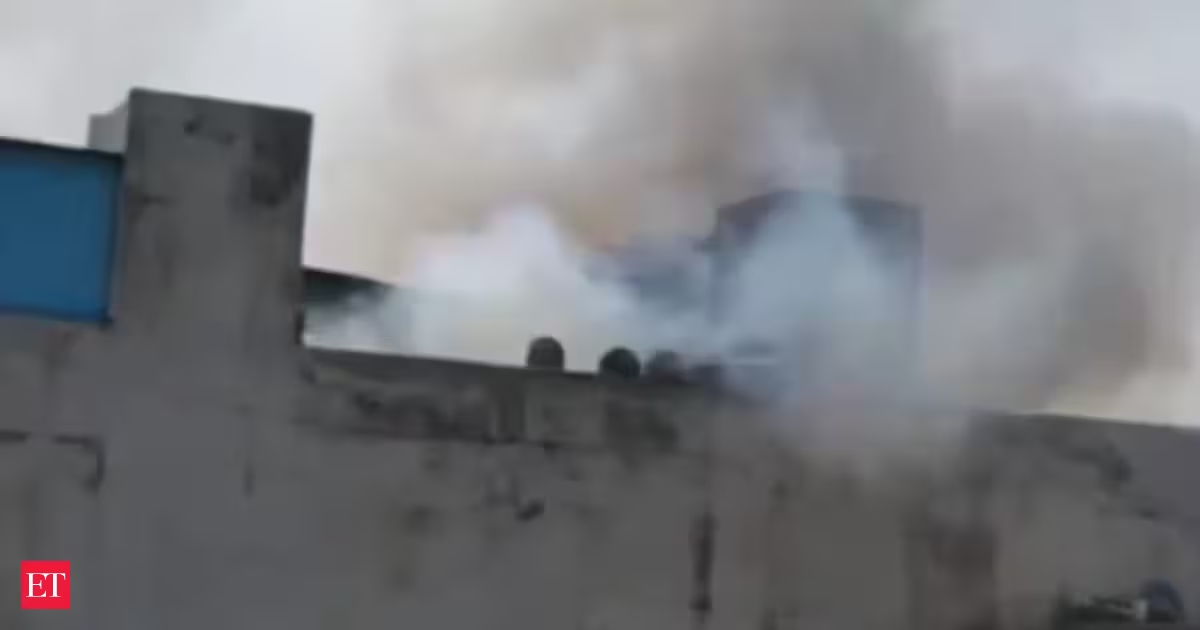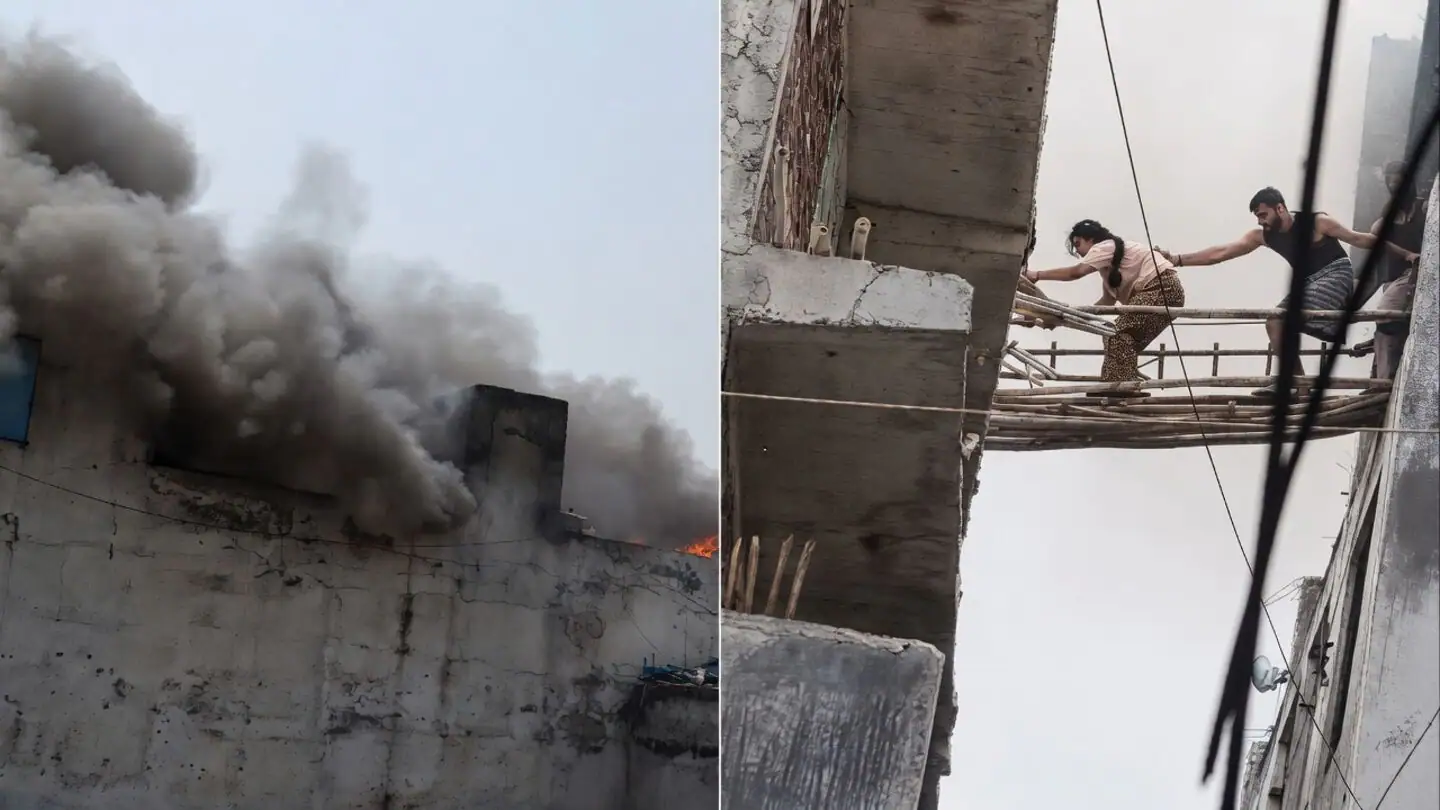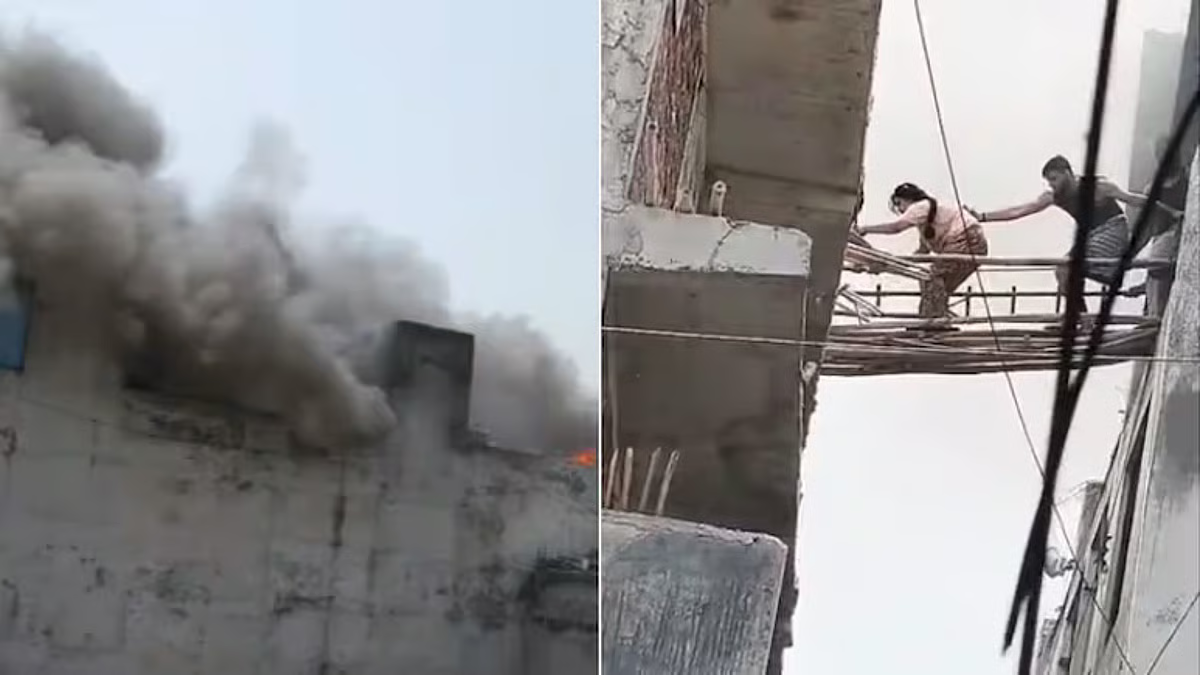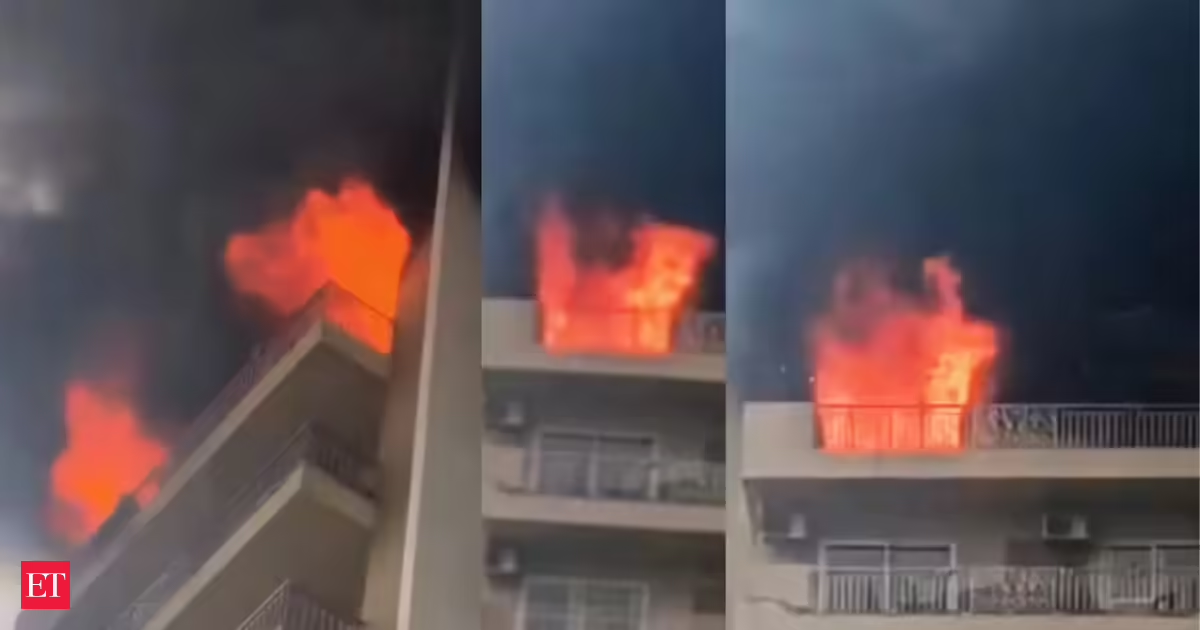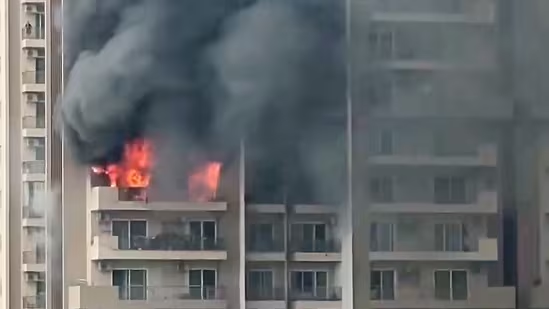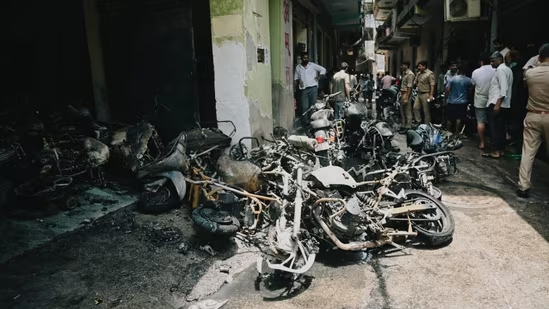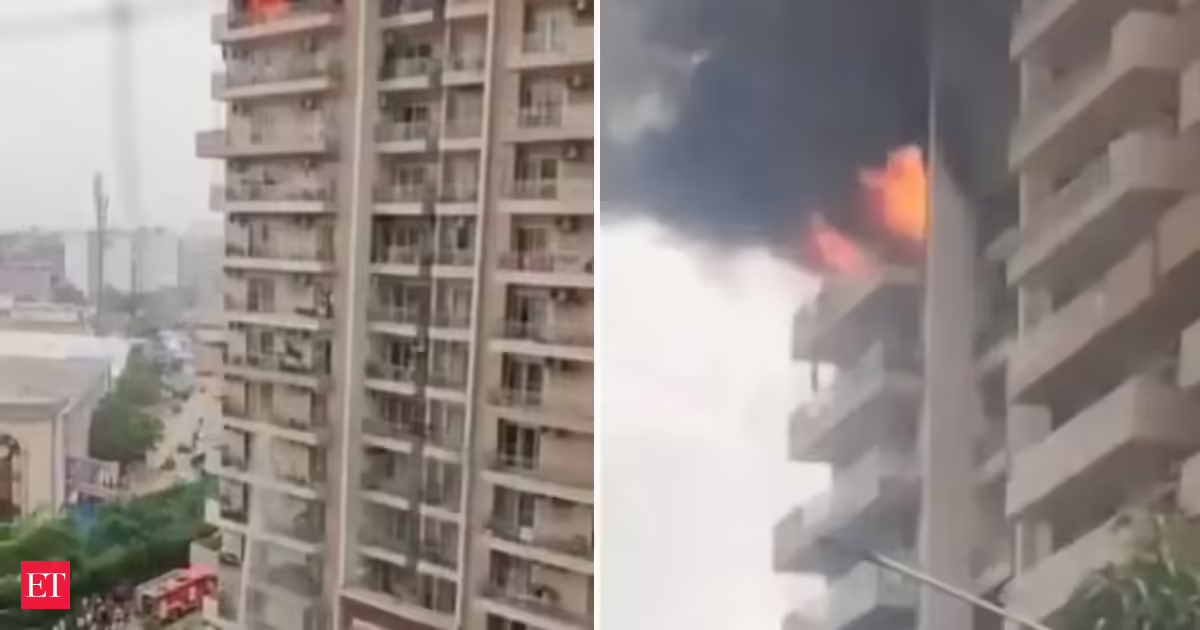
As smoke billowed out of the multi-storey building in Mamura village, Noida, on Wednesday morning and cries for help from upper-floor windows filled the air, firefighters grappled with the challenge posed by the narrow lanes of the locality. Experts say the deadly blaze once again highlights the cost of unplanned and rapid urban expansion.“The biggest challenge was access. We had to lay hoses from wherever the vehicles could reach and gradually advance while extinguishing the fire,” the chief fire officer told HT. (Sunil Ghosh/HT Photo)Also read: 2 killed after fire breaks out at building in Mamura village in Noida's Sector 66, EV spark likely causeFirefighters faced access hurdlesThe first response vehicle reached the area within eight minutes, said chief fire officer (CFO) Pradeep Chaubey. But the narrow approach roads meant the fire engines could not reach the building directly. Firefighters stretched hoses from the nearest accessible point and moved forward on foot.“The biggest challenge was access. We had to lay hoses from wherever the vehicles could reach and gradually advance while extinguishing the fire,” Chaubey told HT.The fire, police suspect, was triggered by a spark from an electric scooter battery being charged on the ground floor. At least two people were killed and dozens of residents were rescued.Then came the next challenge: the four-storey structure with a stilt parking was housing around 50 families in nearly 80 one-and two-room accommodations being used as rental units.“The building consists of 1-BHK and 2-BHK flats. The entire surrounding area is similarly developed,” he said.The changing information also complicated operations.“Initially, local residents told us that no one was trapped inside. About half an hour later, we were informed that some people were still trapped,” said the CFO.Police later said more than 100 residents were brought out safely. Ladders were used to shift stranded residents to neighbouring rooftops.Also read: Noida Fire:Deaths At Residential Building In Blaze Allegedly Sparked By EVBuilding owner booked, probe underwayPolice have registered a case against the building owner and leaseholder under relevant provisions of law and taken the accused into custody. Investigators are examining whether fire safety norms were violated and whether the building was being operated without mandatory approvals.Also read: Delhi fire: Hotel under scanner, owner detained, 18 foreign nationals killed | Top points on Malviya Nagar blazeExperts blame unplanned urban growthWhen asked about the legal status of the building, Chaubey said, “All the buildings in Mamura are illegal.”Urban planning experts said the incident reflects long-standing regulatory ambiguities surrounding village settlements in Noida. “There has been extensive unauthorised construction in villages, and there has long been a controversy over which authority should regulate these areas,” said Rajpal Kaushik, former chief town planner, Noida.“When village land was acquired, the Noida authority tried to bring it under its control. However, abadi areas are different. Whenever the authority attempted to exercise control over them, it faced opposition,” Kaushik said.While village lands acquired by the Noida authority gradually came under its planning control, abadi areas have remained a grey area, resulting in prolonged disputes over enforcement, Kaushik added.These areas earlier fell under the zila panchayat before planning control became a subject of dispute. Regardless, compliance with building regulations is mandatory. “Even if a building falls under the zila panchayat, compliance with building norms is mandatory. Once an authority grants occupancy permission, a fire NOC is also issued wherever it is required,” he said.Fire safety compliance under scannerHowever, just possessing a NOC is not enough. “Obtaining statutory certificates and maintaining compliance with their conditions are two different aspects,” Kaushik said.“Further, obtaining a fire NOC does not guarantee that casualties will never occur. We have seen fires even in buildings that do not require a fire NOC. Such incidents often happen because people become careless and buildings are not properly maintained,” he added.Also read: Why were victims trapped inside after big fire in Delhi? 5 big revelationsNational Building Code norms explainedSK Dheri, former chief fire officer, Delhi Fire Service, said, “The biggest problem with such buildings is that the sanctioning authority often approves the structure without ensuring that the prescribed fire safety systems have been installed. During an emergency, residents do not know how to respond, putting lives at risk.”There are prescribed norms linking the permissible height of a building to the width of the approach road because fire tenders require adequate access during emergencies. If a building is around five storeys and within 15 metres in height, the fire safety measures prescribed under the National Building Code should have been provided. In Delhi, buildings exceeding 15 metres cannot get their plans approved without meeting the prescribed fire safety requirements, but such practices are not uniformly followed everywhere. “If the building was never approved in the first place, then that itself is the problem,” Dheri added.
Narrow lanes hampered firefighting during deadly Mamura blaze in Noida
The blaze exposed access challenges in Mamura's narrow lanes, with experts blaming unplanned construction and poor fire safety compliance.
790 words~4 min read