Story audio is generated using AI
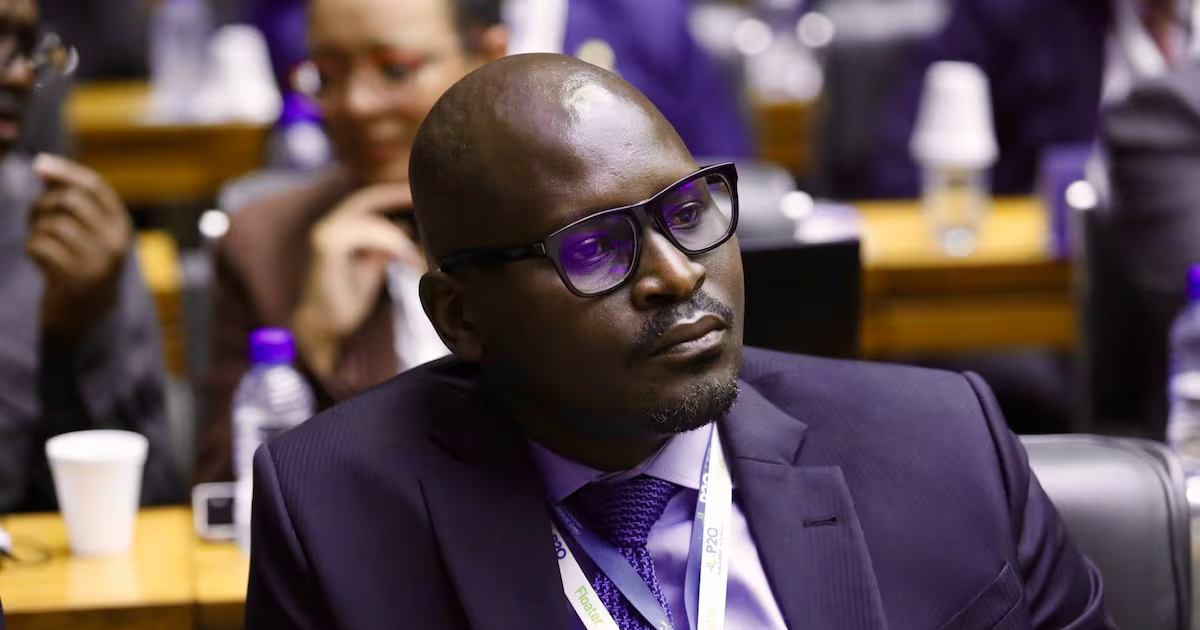
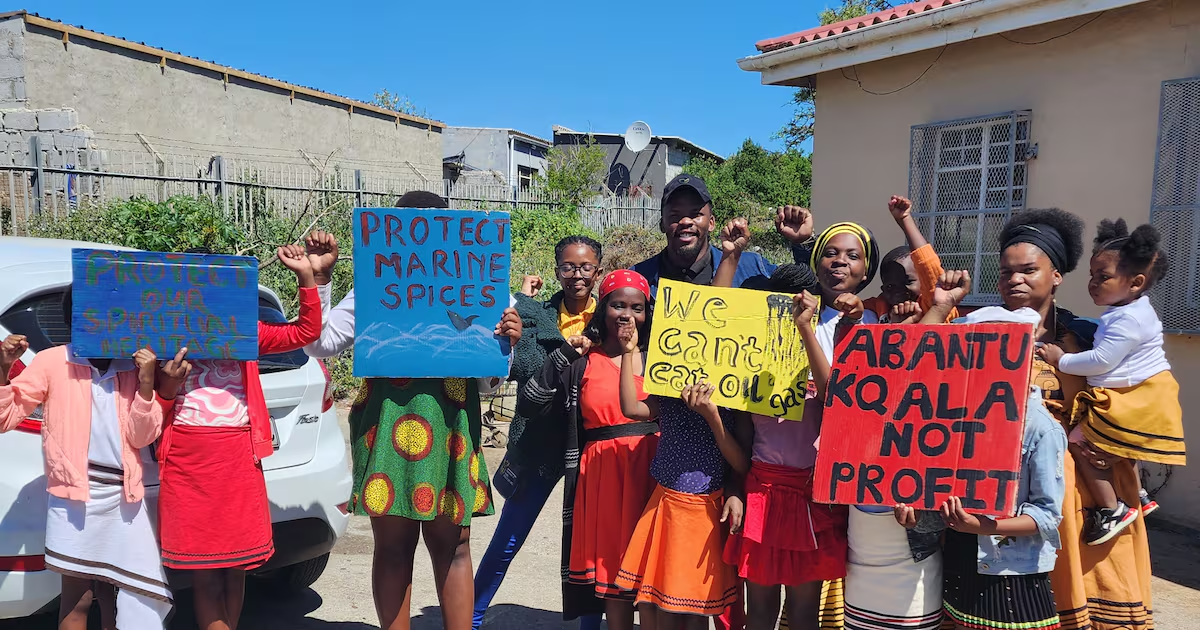
The Offshore Petroleum Association of South Africa (Opasa) has called for specialised courts to fast-track regulatory appeals and approvals, saying protracted legal processes have left the country with no active offshore oil and gas exploration despite big discoveries in the past decade.Opasa says while approvals for offshore exploration can take as little as three to nine months in some African jurisdictions, comparable processes in South Africa can take as long as five years due to lengthy appeals and court proceedings. It says the delays have become one of the biggest obstacles preventing further exploration off the country’s coast, while discoveries are not being developed either.South Africa has no active offshore oil and gas exploration, with no drilling or seismic surveys taking place anywhere in its waters, Opasa spokesperson Niall Kramer told Business Day.Despite several exploration campaigns in the past decade, including the Brulpadda and Luiperd gas discoveries off the Southern Cape coast, he said long approval processes, environmental litigation and regulatory uncertainty have brought activity to a standstill.Kramer contrasted South Africa’s progress with neighbouring Namibia, saying a more predictable regulatory environment had helped attract billions of dollars in offshore investment following big discoveries in the Orange Basin.Among Opasa’s members are Sasol, PetroSA, Shell, TotalEnergies, Africa Energy Corp, Impact Oil & Gas, Eco Atlantic Oil & Gas, Sunbird Energy, NewAge African Global Energy and Sezigyn.According to Kramer, South Africa’s offshore sector has drilled only three exploration wells since 2014.“Somebody appeals one issue, waits until the last day, then appeals the next issue, and so on,” he said, explaining how successive appeals can delay projects. “That accumulates into the five-year delay I’m talking about.”Kramer said investor interest in South Africa’s offshore potential remains but has weakened as projects continue to face delays.“There is still interest from major global companies,” he said. “However, it is not at the same level seen previously.”Opasa spokesperson Niall Kramer. Picture: SUPPLIED (SUPPLIED) He said several companies have exited the sector over the past eight years.“What will be key for these companies is to see tangible, positive signals from government that they are welcome and supported,” he said.To address these challenges, Opasa is proposing specialised courts to deal with disputes affecting offshore activity.Kramer said the courts would operate in a similar way to South Africa’s specialised competition and labour courts, bringing together judicial expertise to deal with the complex legislative framework governing the projects.“Specialised courts could untangle this Gordian knot of uncertainty around the National Environmental Management Act, the Climate Change Act, the Integrated Coastal Management Act, and how these are woven together,” he said.He stressed, however, that the proposal is not intended to weaken environmental protections.“South Africa has one of the most stringent environmental impact assessment systems anywhere, and for good reason. We’re not fighting that at all,” Kramer said. “Our issue is with the speed of approvals.”Environmental approvals for offshore exploration are governed by several pieces of legislation, and decisions may be challenged through administrative appeals or judicial review.Projects including Shell’s proposed seismic survey off the Wild Coast and developments involving TotalEnergies have faced legal challenges over environmental authorisations, consultation processes and exploration rights, contributing to delays and uncertainty across parts of the industry.He said South Africa has big offshore resource potential but risks losing investment if regulatory processes remain slow.The size of the prize is simply too big not to pursue as quickly as we can.— Niall KramerAccording to Kramer, South Africa has about 32-trillion cubic feet of discovered gas resources, while substantially larger prospective resources remain to be explored, though further exploration is required to determine their commercial viability.“The size of the prize is simply too big not to pursue as quickly as we can,” he said.In light of Eskom’s recent agreement with the Zululand Energy Terminal to develop liquefied natural gas (LNG) import infrastructure in Richards Bay, as well as plans for a gas-to-power plant, Kramer said the developments represent an important step towards building South Africa’s gas market.However, he said imported LNG should be viewed as a bridge rather than the end goal.“LNG is the first step,” he said. “It helps us develop a gas economy.”He said the proposed LNG import infrastructure would help establish the gas transmission pipelines, technical skills, industrial demand and broader market needed to support domestic offshore gas production if commercial discoveries eventually proceed to development.Looking ahead, Kramer said improving regulatory efficiency, providing policy certainty and strengthening co-ordination across government are critical if South Africa is to realise the economic potential of its offshore oil and gas resources.“We have to become more attractive and more user-friendly,” he said.Business Day