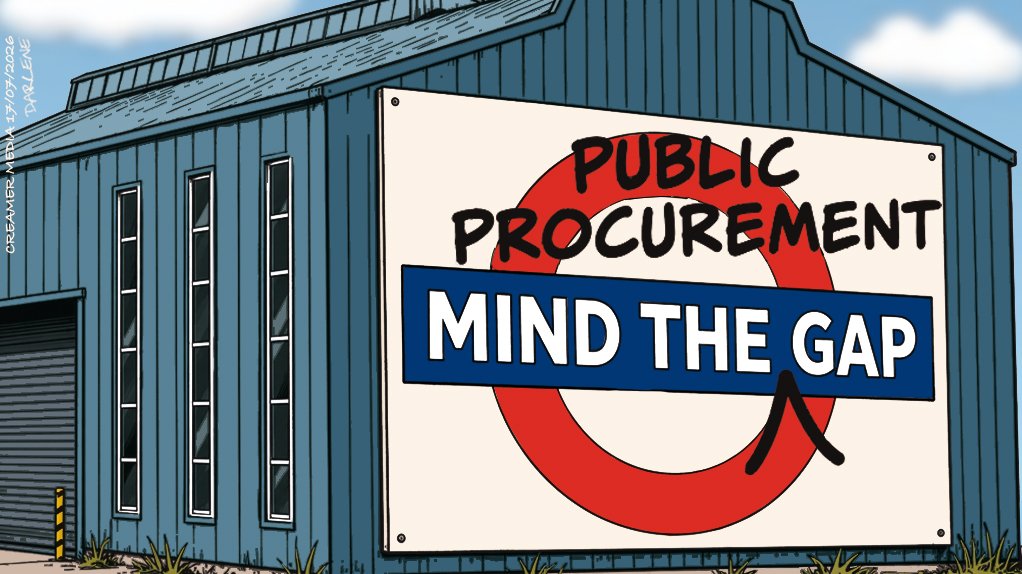
There is no authoritative estimate of the value of goods and services procured by government departments and state-owned entities from the private sector each year, but it is considerably more than R500bn. And yet, South Africa’s public procurement system is one of the country’s great institutional weaknesses. Service delivery failures, though driven by bad policies, are amplified by a procurement system that sometimes cannot buy the goods, services and infrastructure government needs. Even when the goods are procured, the government generally cannot buy them at the right price and have them delivered on time.This is why the Treasury’s new draft procurement regulations matter. Procurement is not a technical back-office function. How procurement money is spent determines whether citizens have access to the water, electricity, roads, textbooks, healthcare and policing they need. Getting even a small percentage of this spending wrong results in large financial losses. Getting it as badly wrong as we have been costs much more. Procurement failures weaken service delivery, destroy trust in government and expand the space for corruption. The proposed regulations have some good features. Greater transparency and better central reporting are welcome steps in the right direction. These reforms should be retained and strengthened. But the core preferential procurement mechanisms in the regulations — set-asides, prequalification and compulsory subcontracting — are likely to make procurement more expensive, less efficient and more vulnerable to abuse.Broadening economic participation is legitimate and necessary. The problem is not the goal but the instrument. The proposed regulations try to drive transformation by restricting who may compete for public contracts. For contracts up to R20m, certain tenders may be set aside for bidders meeting certain designated category tests. For contracts between R20m and R100m, bidders may have to meet procurement or subcontracting conditions in favour of businesses that are wholly owned by designated groups. For contracts above R100m, tender rules may impose compulsory subcontracting requirements. In effect, the regulations move from a system that relies on giving preference points to certain bidders to one that is premised on excluding some bidders altogether.That shift is bound to be expensive. And dangerous. Efficient procurement depends on competition. The more capable bidders there are, the more likely it is that the government will pay a competitive price and receive what it ordered. Restricting the pool of eligible bidders has the opposite effect. It reduces competition and increases the likelihood that the state will pay a premium. The regulations try to mitigate this risk by requiring that preferential procurement can happen only when there are at least three qualifying potential suppliers. But the existence of three potential suppliers is not enough to guarantee a competitive price (even assuming they all bid on the tender). Restricting entry to a small group of qualifying bidders is guaranteed, on average, to make the state pay more than it needs to.Efficient procurement depends on competition. The more capable bidders there are, the more likely it is that the government will pay a competitive price and receive what it ordered.This risk is greatly magnified by the provision that the new rules will apply across the public sector irrespective of differences in institutional capacity. A small municipality, a provincial department, a major state-owned enterprise and a specialised public entity will all have to navigate the same complex regulatory architecture. But these institutions do not have the same skills, markets, operating pressures or operational needs. Eskom and Transnet need to procure specialised equipment and services in global markets, often under severe operational pressure. A small municipality may struggle to prepare basic specifications and monitor performance. A one-size-fits-all system will not improve the performance of either. In weak institutions, it will encourage mechanical compliance, delays, audit anxiety and reliance on consultants. In commercially orientated entities, it will make procurement slower, less flexible and more expensive. The set-aside provisions are particularly troubling. They require, in many cases, 100% ownership by members of designated groups. This requirement excludes firms that may be substantially transformed but not perfectly aligned with the prescribed ownership formula. A company that is 90% black-owned would be excluded because the rule requires 100% ownership. A company that has spent years complying with broad-based BEE codes could find that its hard-earned empowerment credentials are now irrelevant. This is economically costly. It also undermines the pursuit of non-racialism: if even 90% black-owned firms are excluded from these opportunities, how can we expect a non-racial commercial culture to emerge?The prequalification rules for tenders between R20m and R100m create another layer of difficulty. Bidders may need to show that at least 40% of prior procurement was spent on enterprises that are at least 51% black-owned and managed. This requirement doesn’t align with the existing broad-based BEE framework, under which firms have long measured their own preferential procurement spending according to broad-based BEE contributor levels of their suppliers, which are not determined by ownership levels. Many firms may know the broad-based BEE level of their suppliers but not their precise ownership structure. Why should firms that comply with existing rules be penalised if it should turn out that their suppliers’ high broad-based BEE scores were not determined by black ownership level but by compliance with other elements of the codes? Compulsory subcontracting (for tenders over R100m) is perhaps the most dangerous mechanism of all. For large contracts, the regulations contemplate subcontracting at least 25% of contract value to firms that are wholly owned by members of designated groups, albeit this must be preceded by a feasibility study.This sounds developmental, but in practice it may create a new class of gatekeepers. If there are only a few qualifying subcontractors, those firms will have enormous bargaining power. Main contractors will have to partner with them not because they are the best subcontractors but because they are necessary for compliance. The result will be higher prices, weaker accountability and greater opportunities for politically connected intermediaries to extract rents. The corruption risks of all of this are obvious. South Africa’s procurement system is already vulnerable to manipulation, fronting, inflated prices and politically connected intermediaries. The regulations would add many new discretionary decision points: whether qualifying suppliers exist, whether preferential procurement is feasible, whether ownership structures of bidders’ suppliers comply, whether subcontracting plans are acceptable, whether feasibility studies are reliable, and whether substitutions of subcontractors should be allowed. Every additional test creates another place where insiders can shape outcomes.This is the central paradox of the regulations: they respond to corruption risk by making procurement more complicated, but complexity is corruption’s friend. The more opaque and technical a process is, the easier it is for insiders to manipulate. The result is not cleaner procurement, but procurement that is slower, more expensive and harder to police.Most importantly, procurement reforms should build institutions, not bury them under rules. South Africa needs skilled procurement professionals, open contracting data, stronger contract management, and real-time monitoring of cost overruns and delays. The proposed regulations should therefore be substantially redrafted. By restricting competition and overloading weak institutions, they are likely to generate exactly what South Africa can least afford: more waste, more inefficiency and more corruption. The fastest way to empower the largest number of black South Africans is to have a state that works, not one mired in corruption and complicated, time-consuming regulations. South Africa’s government needs value for money, which will help all citizens.• Bernstein is head of the Centre for Development & Enterprise. This article is based on CDE’s submission to the National Treasury, Buying Badly: How the draft procurement regulations will raise costs and deepen corruption.
ANN BERNSTEIN | Procurement reforms risk making the state less effective
Real reform needs skilled professionals and streamlined oversight, not more red tape
1,252 words~6 min read