A data engineering team at a global logistics company submits a query: "Identify all shipments delayed by more than 48 hours in the last quarter, cross-reference with weather events and carrier performance data, calculate the financial exposure by customer tier, and flag any patterns that correlate with specific port congestion events."
On a monolithic system, this query would run for 40 minutes, consume enormous compute resources, and likely time out. On a naive LLM-powered assistant, it would either hallucinate an answer from partial data or refuse due to context limits.
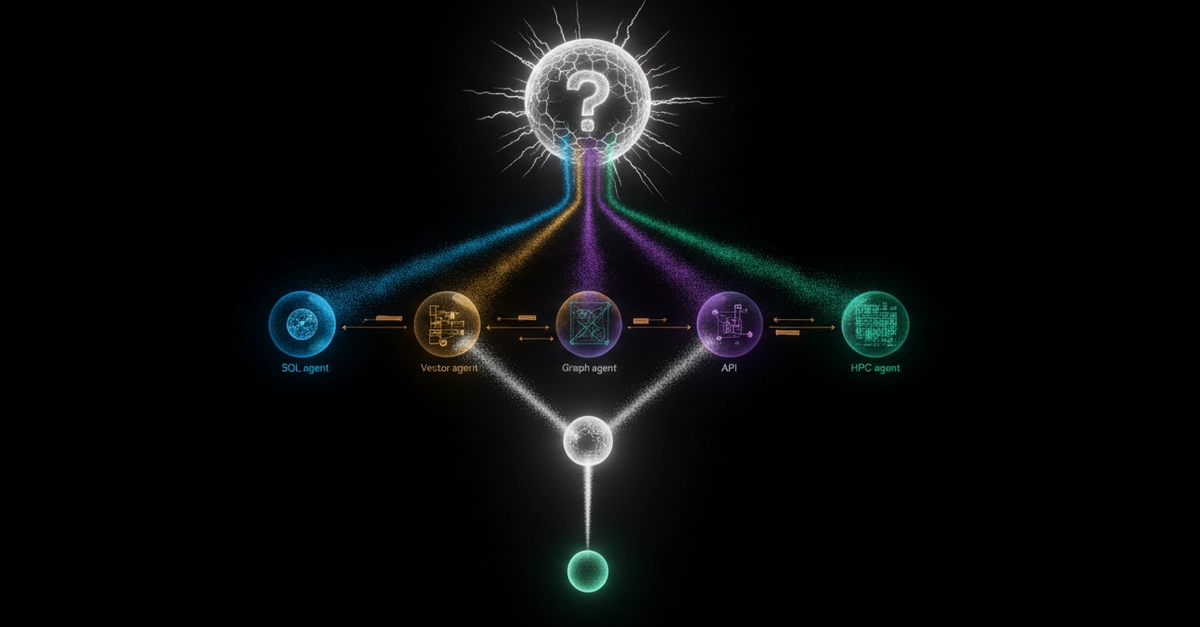
On a well-designed agentic distributed query system, it completes in under 90 seconds — decomposed across specialized agents, executed in parallel across distributed data sources, synthesized into a coherent result with full provenance.
This is the engineering problem that 2026's most capable AI systems are solving. Not by making single models smarter, but by making the architecture around those models intelligent enough to handle the queries that no single model or single database could ever process alone.
This is the complete engineering guide.