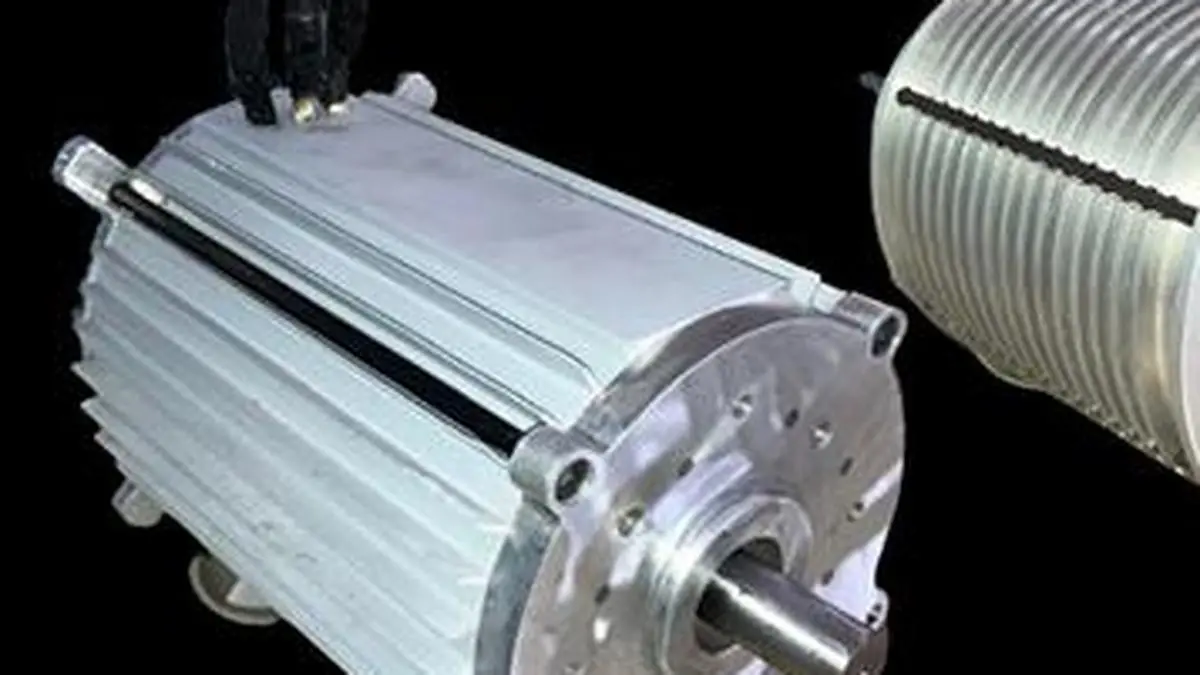
Can software replace the permanent magnets inside an electric vehicle motor? Vimag Labs believes it can—but industry experts say the road to widespread adoption depends on proving performance, reliability and cost advantages. (A representative image)
Can software replace the permanent magnets inside an electric vehicle motor? That’s the question Bengaluru-based startup Vimag Labs has thrust into the spotlight with its Virtual Magnet Synchronous Motor (VMSM). The claims have sparked widespread interest but also raised a broader question: Is this a fundamentally new way of building EV motors, or another approach to a problem the industry has been trying to solve for years?The debate isn’t really about software. It’s about reducing dependence on a handful of materials that underpin most electric vehicle motors.Why do rare earths matter?The spotlight on Vimag comes against the backdrop of China’s export restrictions on rare earths—17 metallic elements —including the 15 lanthanides, along with scandium and yttrium—that few outside the mining and manufacturing industries paid much attention to until China tightened export restrictions in 2025, citing national security. Despite the name, rare earth elements are not particularly rare. They are relatively abundant in the Earth’s crust but are seldom found in economically viable concentrations and are difficult and expensive to extract and process, giving China a dominant position in the global supply chain.In electric vehicles, rare-earth elements such as neodymium and dysprosium are used to manufacture the powerful permanent magnets in Permanent Magnet Synchronous Motors (PMSMs)—the most widely used motor architecture in modern EVs. These magnets enable motors to deliver high torque, high efficiency and compact packaging.The supply chain uncertainty, however, has accelerated efforts to find alternatives. Indian startups, including Chara Technologies, Conifer, Viridian Igni Propulsion, and now Vimag Labs, are all seeking to reduce or eliminate reliance on rare-earth magnets, though through different engineering approaches.So what makes Vimag different?The companies are pursuing the same objective but with different technologies.Chara Technologies has developed Synchronous Reluctance Motors (SynRM) that eliminate permanent magnets altogether. Instead, the rotor is made from magnetic steel, while copper windings generate the rotating magnetic field. Performance is achieved through rotor design and sophisticated motor control algorithms.Conifer, meanwhile, replaces expensive rare-earth magnets with ferrite magnets, which are made from iron oxide and other metallic oxides. While less powerful than rare-earth magnets, ferrite magnets are significantly cheaper and more readily available.Vimag’s approach is different. Rather than embedding permanent magnets in the rotor, the company says it generates the required magnetic field electronically, creating what it calls a “virtual magnet.” According to Vimag, the rotor is excited wirelessly—without brushes or slip rings—while electronics and software continuously control the magnetic field, enabling the motor to operate similarly to a conventional PMSM without permanent rare-earth magnets.In simple terms, Chara redesigns the motor to eliminate magnets, Conifer substitutes them with ferrite, while Vimag attempts to recreate the function of a permanent magnet electronically.Will rare-earth-free motors become mainstream?Not immediately, say industry experts.According to Ishank Kataria, Partner at EY-Parthenon, permanent magnet motors are expected to remain the dominant technology over the next decade, particularly in passenger EVs, owing to their superior power density, efficiency and established supply chains. Rare-earth-free alternatives are more likely to gain traction first in applications where supply-chain resilience, sustainability or lower costs outweigh the need for peak performance.Commercial success, however, will depend on much more than technical innovation. Kataria says companies will have to demonstrate compelling total cost of ownership, long-term reliability, scalable manufacturing, and the ability to meet automotive-grade quality standards before OEMs adopt these technologies at scale.Published on July 16, 2026