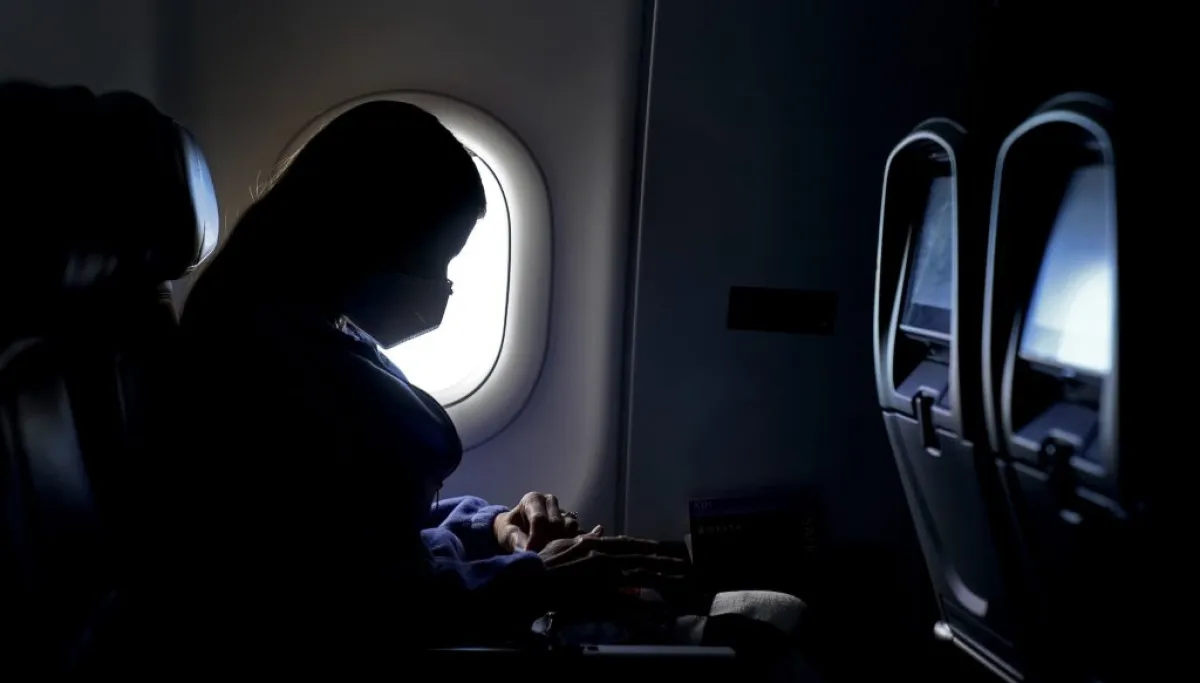
In his Open Questions column, Joshua Rothman has tackled some of the biggest and most controversial conundrums plaguing modern life: Do older Americans have too much power? Should you be religious? Are we getting stupider? Recently, though, he finally got around to examining the big one: Is it ethical to recline your seat on an airplane?We recently chatted about what he learned while unpacking the social science and philosophy behind the reclining question, and the feedback he’s received since publishing the column.Our conversation has been edited and condensed.Have you approached another subject with such trepidation?I did a column a little while ago asking whether it was morally permissible to “write” a book with A.I. assistance, and I concluded that, for many kinds of books, the answer was that it was. As soon as I realized where my argument was headed, I started anticipating the angry e-mails. That was scary!Reclining didn’t rise to that level. But I knew people were passionate about it. Every time I asked anyone about it, they responded immediately, decisively, and with total conviction.You write that “reclining is a social act in an environment of social stress.” Is that the central conflict here?That’s a big part of it. Another aspect is that reclining is a zero-sum game—if one person gains space, the other loses. But I think the fundamental issue is just that we’re all different. One person may never feel the need to recline, while another may always be uncomfortable upright. Two people with divergent intuitions about what’s normal, or endurable, can end up tussling over the same territory.Several of my prior assumptions were upended right from the start of the piece—including the idea that the reclining wars are all just the greedy airlines’ fault. But I also learned about the concepts of “social licensing,” “peripersonal space,” and “reactive attitudes.” What was your favorite discovery during your research?I was pretty fascinated by the trade-off between one person’s physical comfort and another’s psychological comfort. Sometimes, being reclined upon actually hurts. It can put pressure on some peoples’ knees, for example. But in other cases the suffering is in the head, not the body. If Person A reclines, her back might feel better, but at the cost of an uptick in Person B’s stress, because she feels more hemmed in. (That’s her peripersonal space—the space around her personal space—getting invaded.) It’s physical stress versus mental stress. Is one kind of discomfort worse than the other?While you were working on this column, someone told you, “If you lean back on the plane, you’re a terrible person.” Have you encountered any similarly strong reactions from readers in the past week after the story was published? Have you heard a particularly rousing defense of the recline?I’ve heard a lot of strong reactions, but not what I’d call a rousing defense of reclining. I have noticed a pattern, though. If you debate the question in a big group, the anti-recliners will seize the floor first, denouncing the recliners, and you’ll get the impression of unanimity; then, afterward, people will come up and quietly reveal that, actually, they often recline, and think everyone has the right to do so—especially if they’ve been reclined upon.So my suspicion is that there are more recliners out there than there appear to be. That’s not a defense of reclining, in itself—but it does suggest that people who claim there’s a rule about reclining, or who claim to cite some social norm or consensus, are overstating their case.So, if you dare answer, are you a recliner or a refrainer?I will recline, but with conditions. I never recline during meals. I only recline very, very slowly. And I always turn around first and evaluate the situation. If I get a “don’t recline on me” vibe from the person behind me, I don’t.My ideal scenario is one in which I turn around and find that the person behind me is already reclined. Then I feel I have carte blanche.Read or listen to the column »What about you? Is reclining your seat a God-given right, or a crime against humanity? Share your thoughts by reaching out to themail@newyorker.com. We’ll share some of the best takes soon.Editor’s PickChristopher Nolan’s “The Odyssey” Leaves the Gods in the OuttakesThe moviegoers who are likeliest to enjoy the latest adaptation of the Odyssey are those who haven’t read Homer, Richard Brody argues in his review: “Nolan advances his vision, however crowd-pleasing and anachronistic, with vigorous confidence and unimpeachable clarity. The dialogue, terse and contemporary, puts his distinguished cast of actors in their comfort zone and turns ancient, iridescently complex figures crystalline and hard-edged.” Read the full review »More Top StoriesGraham Platner’s unpolished social-media presence helped him appeal to voters. But that lack of digital savviness was also part of his undoing.
To Recline or Not to Recline?
From the daily newsletter: Joshua Rothman on the airplane-seat debate.
795 words~4 min read