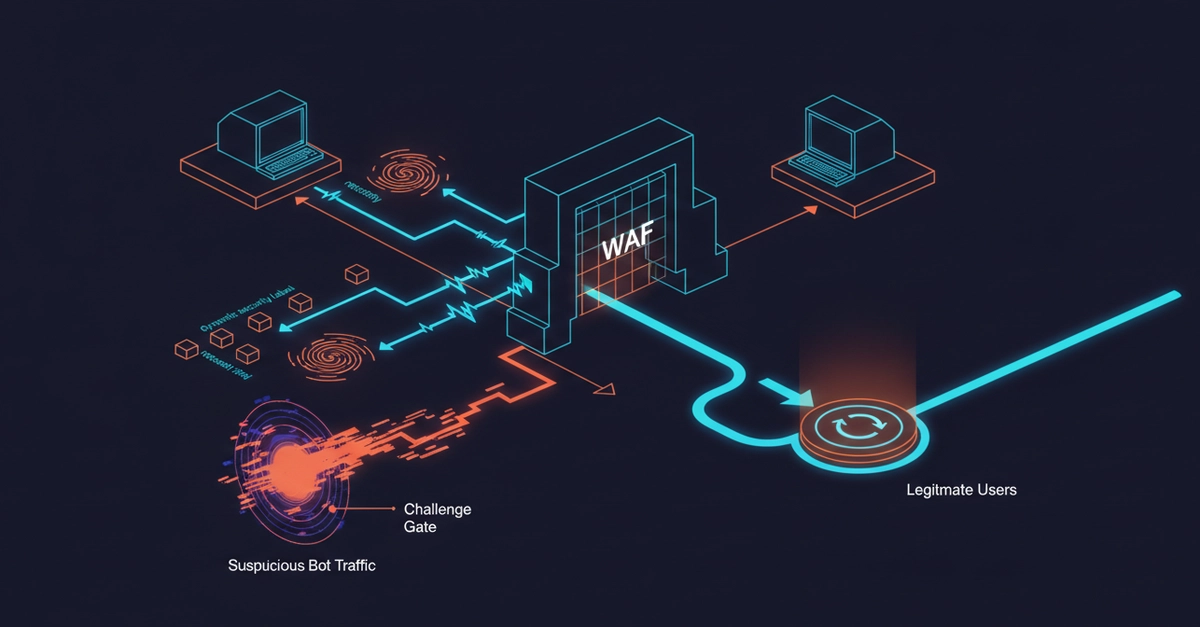
In May 2026, AWS WAF introduced a feature called dynamic label interpolation. Did you catch the announcement?
It may look like a small addition at first, but I think it offers an elegant way to address one of the hardest parts of operating bot defenses: dealing with false positives.
In this article, I’ll show how to use dynamic label interpolation to build a challenge architecture that gives legitimate users caught by a false positive a self-service way to report the issue and regain access.
Anyone who operates bot protection with a WAF has probably wrestled with false positives. Legitimate users can occasionally be misclassified as bots, which often leads teams to avoid enabling blocking altogether.
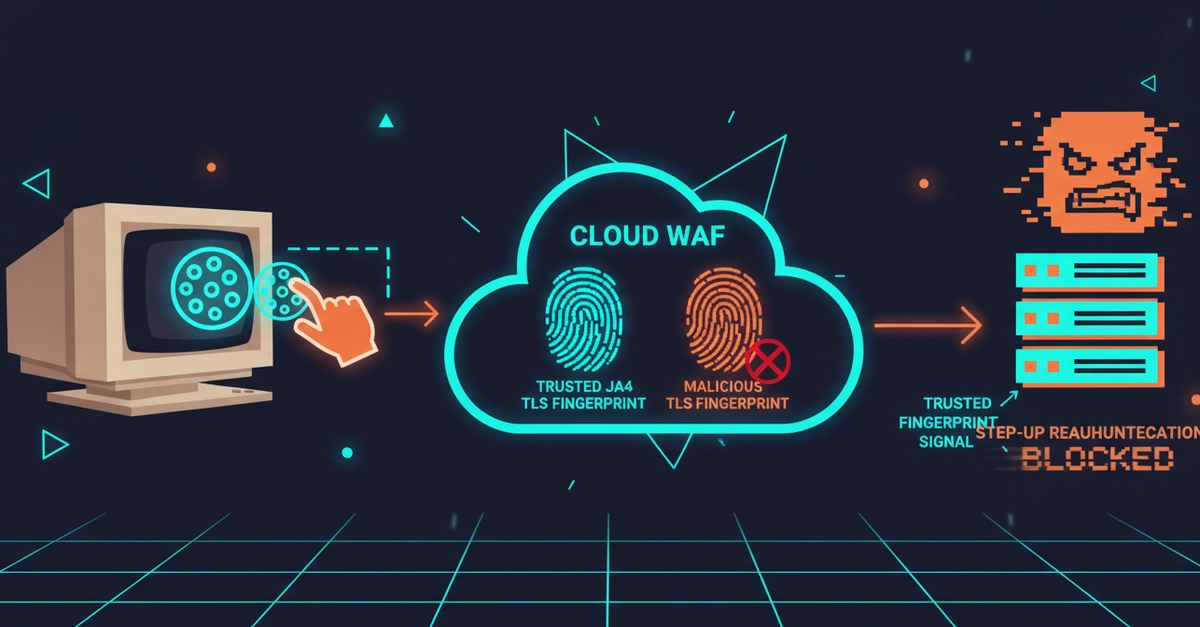
The architecture described in this article takes a different approach: instead of treating a bot-detection signal as a final verdict, it redirects suspicious clients to a challenge and allows legitimate users to recover on their own. In practice, this can virtually eliminate false-positive blocking caused by bot detection, even when the underlying detection is not perfect. This design extends the architecture from my previous article, in which clients flagged by JA4H-based detection are redirected to a challenge page rather than blocked immediately. However, this article is written to stand on its own.