CDC survey data showed a 27% decline in healthcare-associated infections in U.S. hospitals from 2015 to 2023.The drop was driven primarily by declines in C. difficile infections, central catheter-associated bloodstream infections, and catheter-associated urinary tract infections.Meanwhile, the researchers said there was still room for improvement regarding surgical-site infections and infections not associated with devices or procedures.
Americans were less likely to have a healthcare-associated infection (HAI) in 2023 than in 2015, though reducing surgical-site infections and non-ventilator-associated pneumonia in hospitals remained a challenge, CDC survey findings suggested.
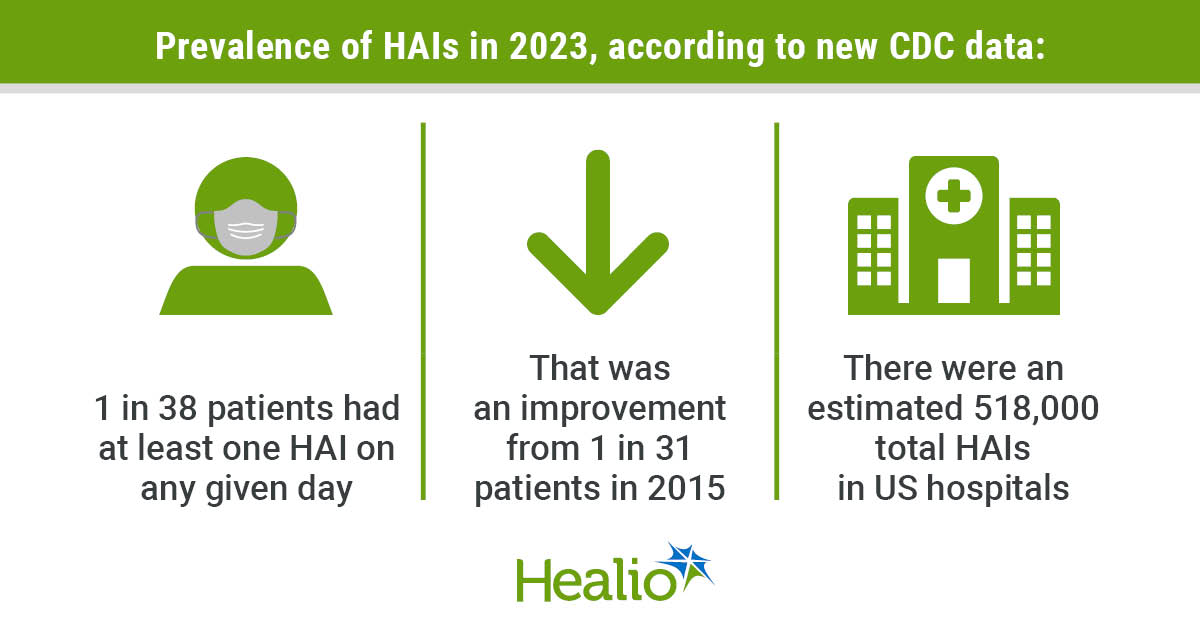
Among roughly 200 U.S. hospitals, the proportion of patients with at least one HAI on any given day dropped from 3.2% to 2.6%, according to Nora Chea, MD, of the CDC's Division of Healthcare Quality Promotion in Atlanta, and colleagues.
In the 151 hospitals with data for both years, adjusted analyses found that patients were 27% less likely to have an HAI in 2023 (risk ratio 0.73, 95% CI 0.63-0.85), the researchers detailed in the New England Journal of Medicine.
The drop from 2015 to 2023 was driven primarily by declines in:Clostridioides difficile infections: 0.54% vs 0.22%, respectivelyCentral catheter-associated bloodstream infections: 0.30% vs 0.16%Catheter-associated urinary tract infections: 0.20% vs 0.09%