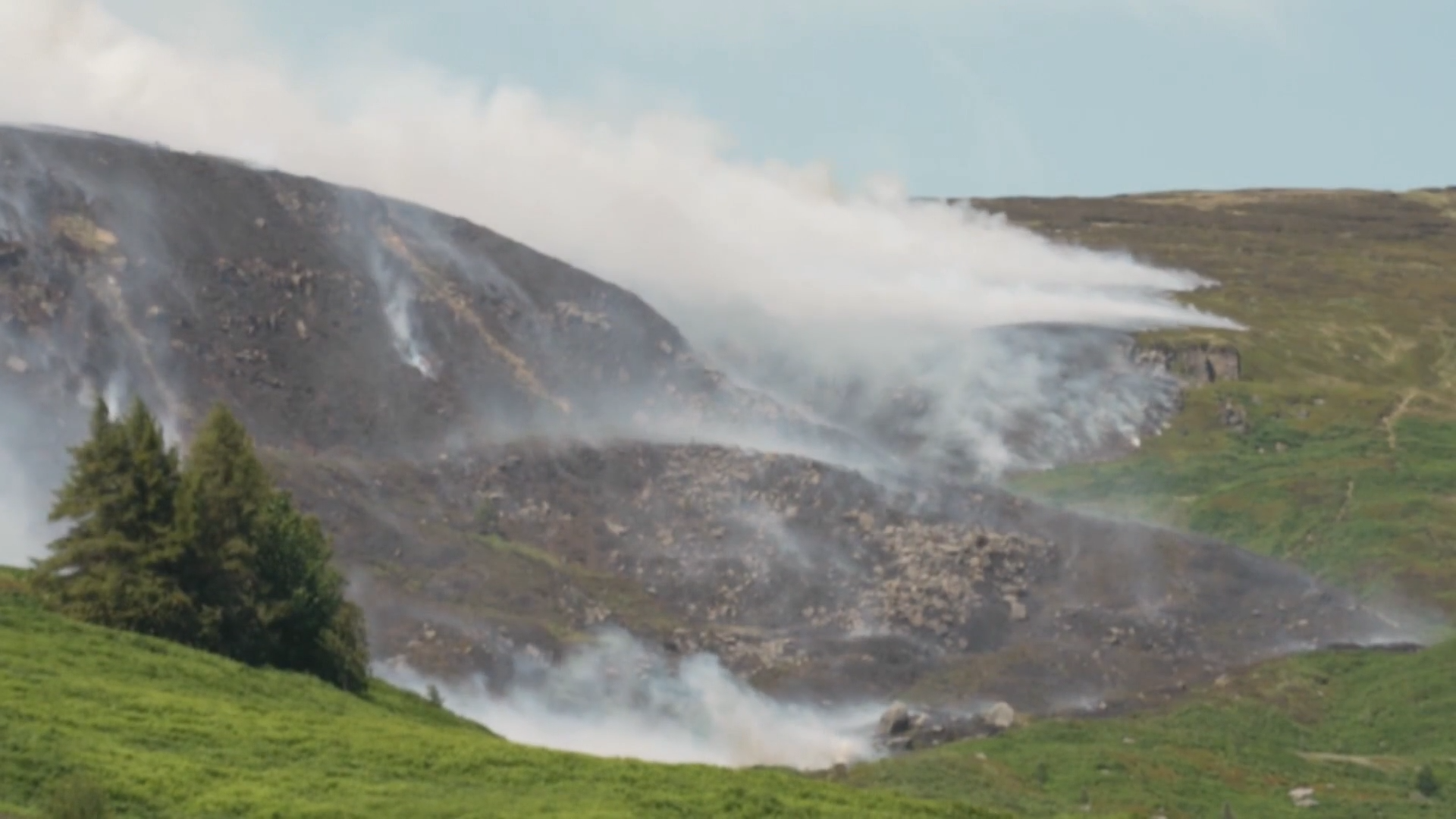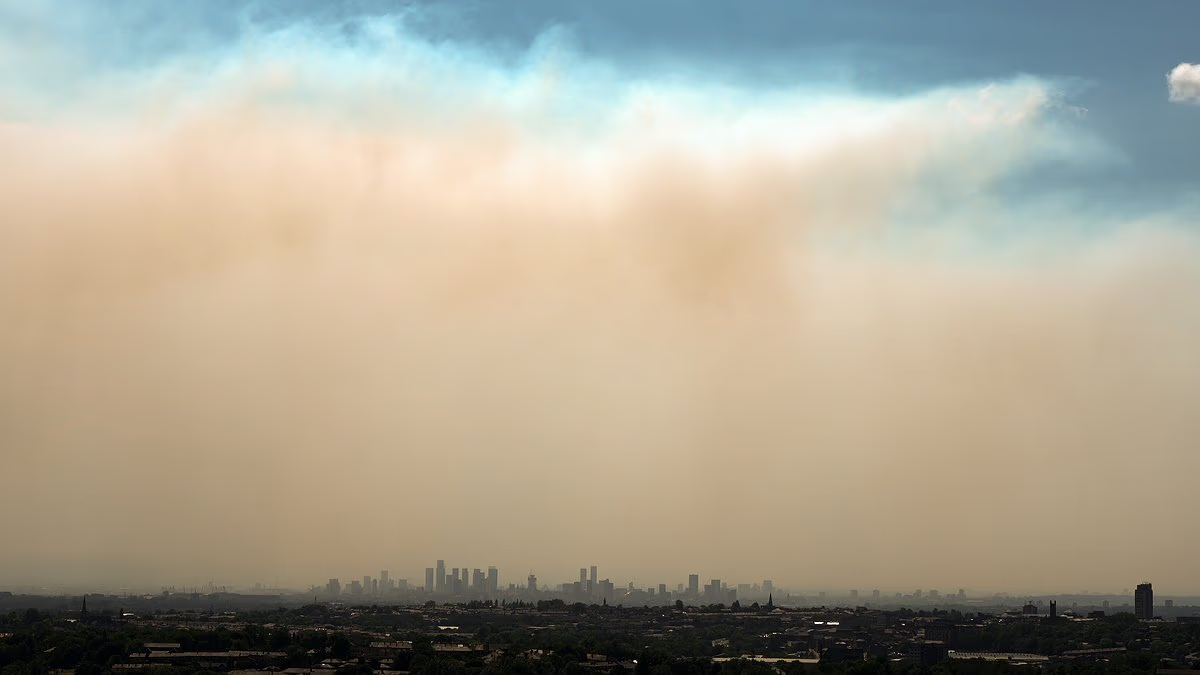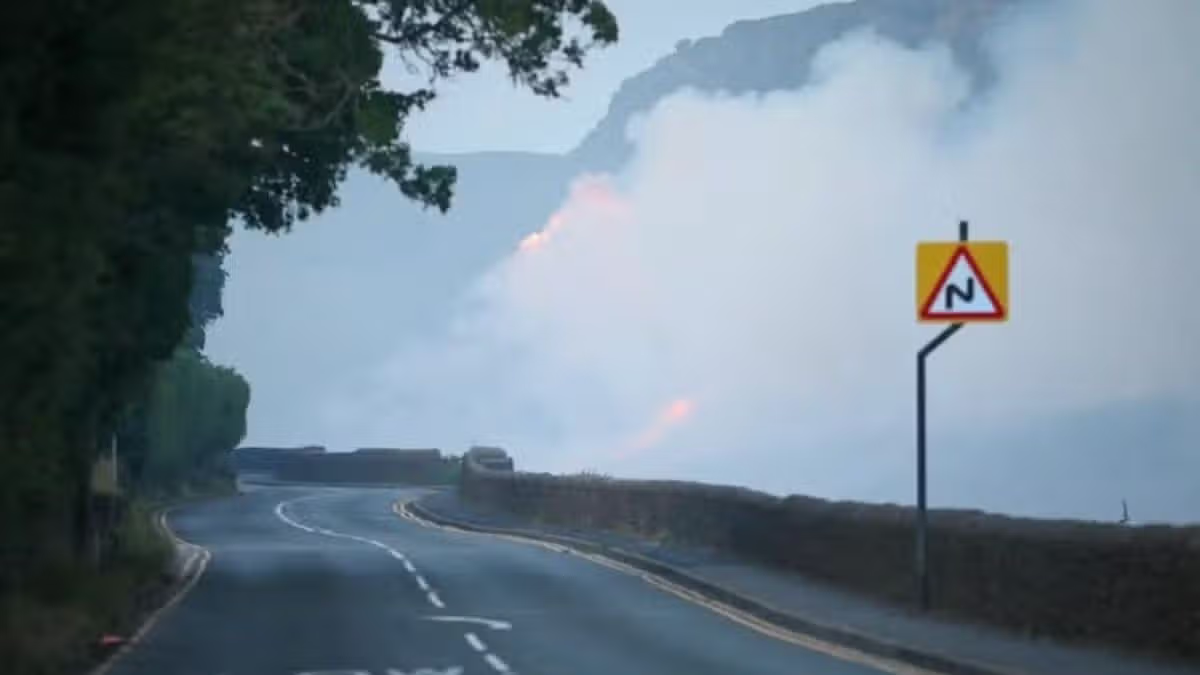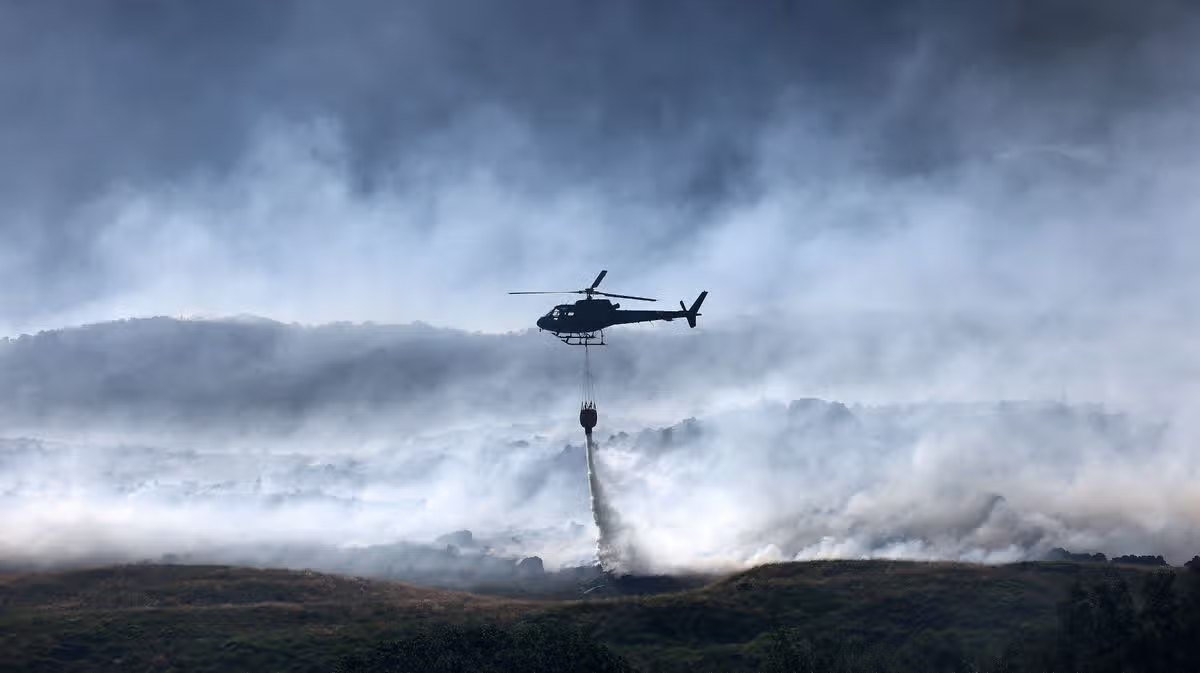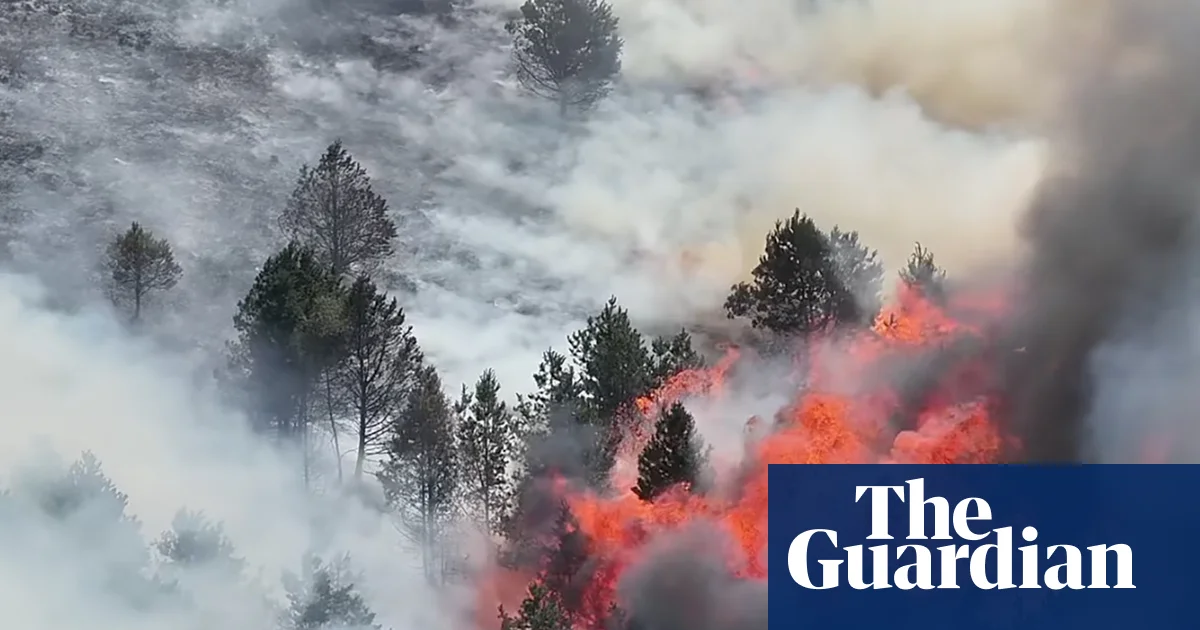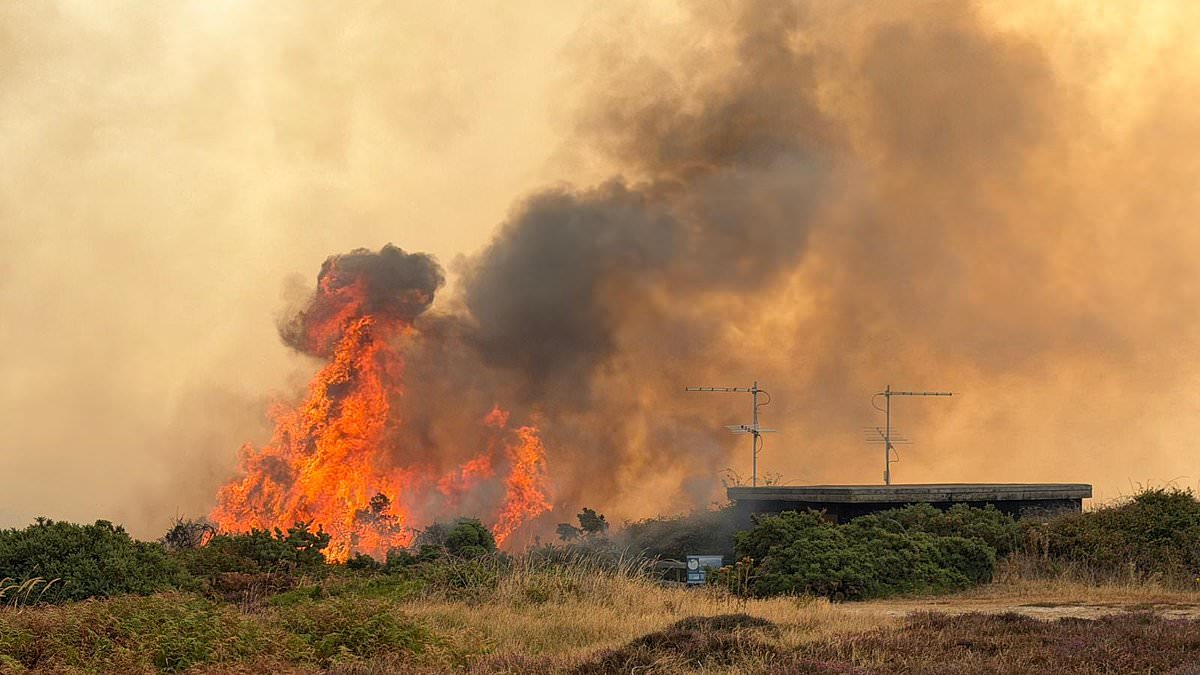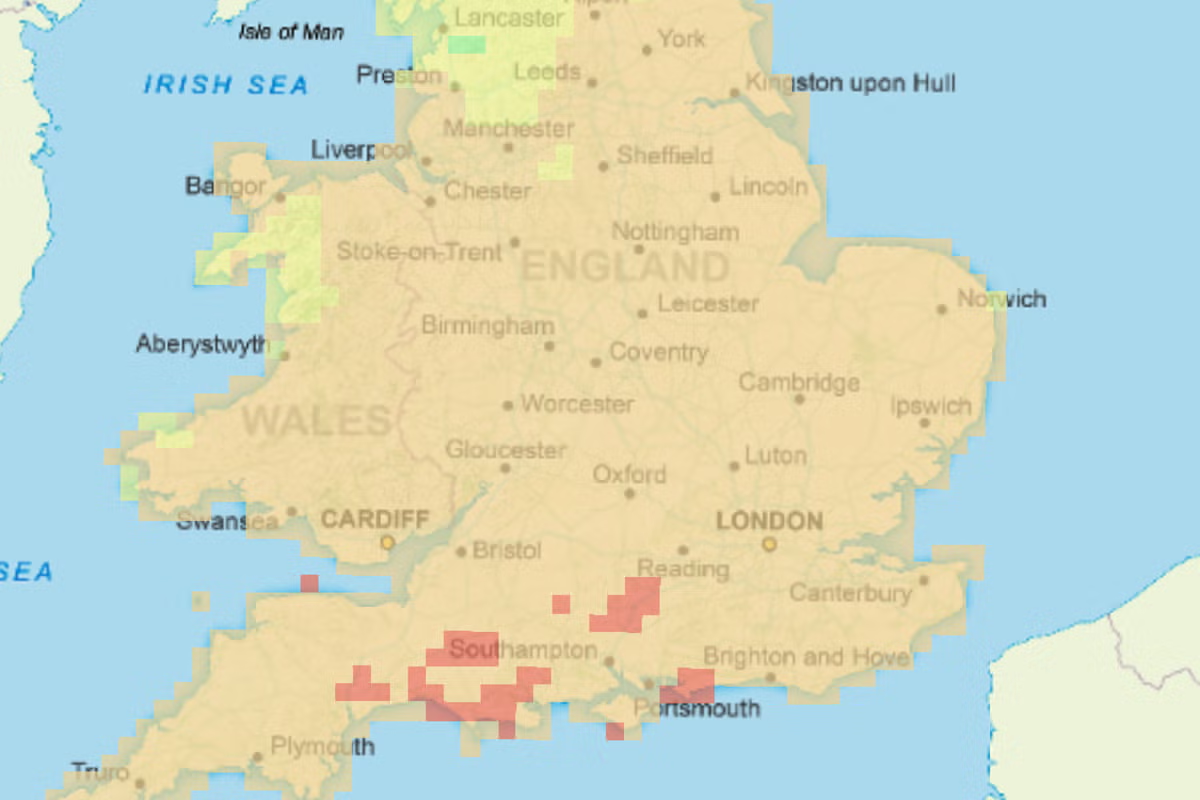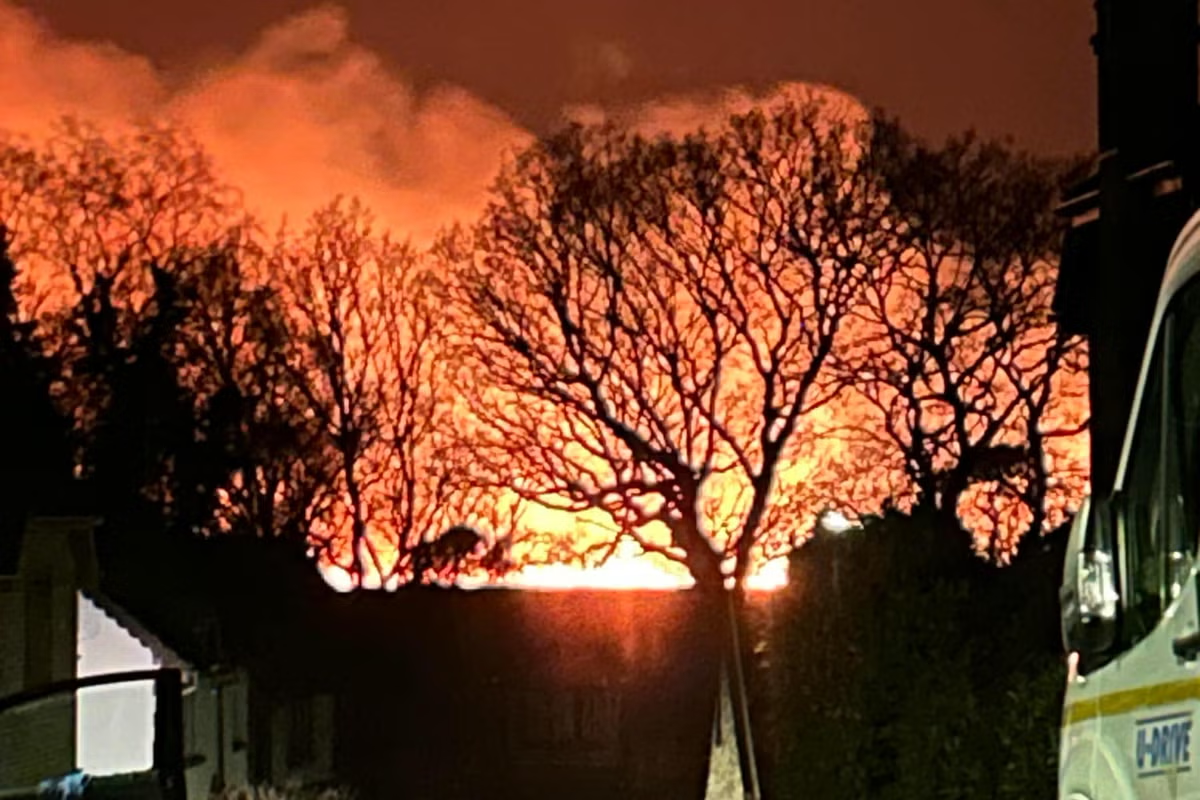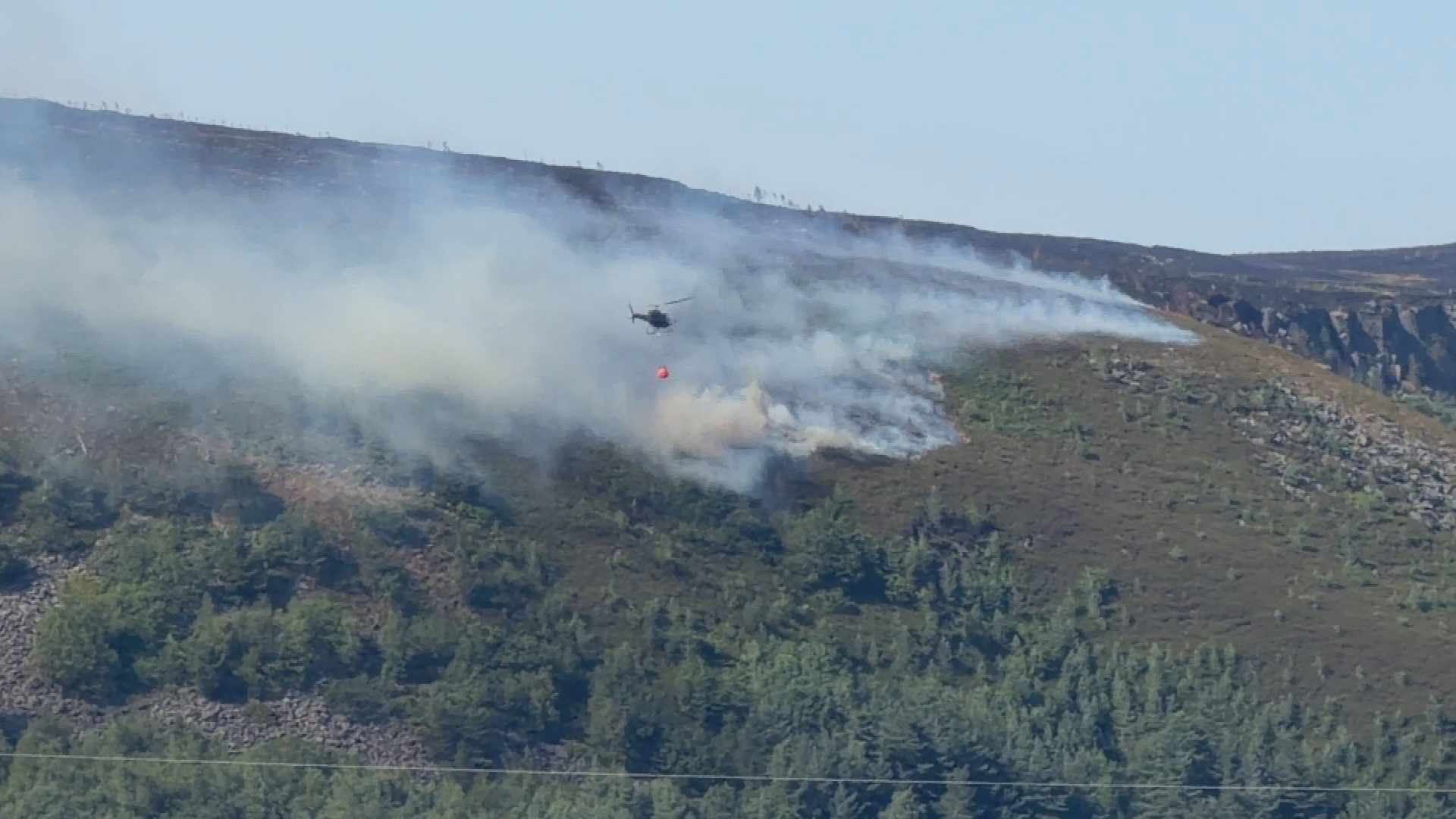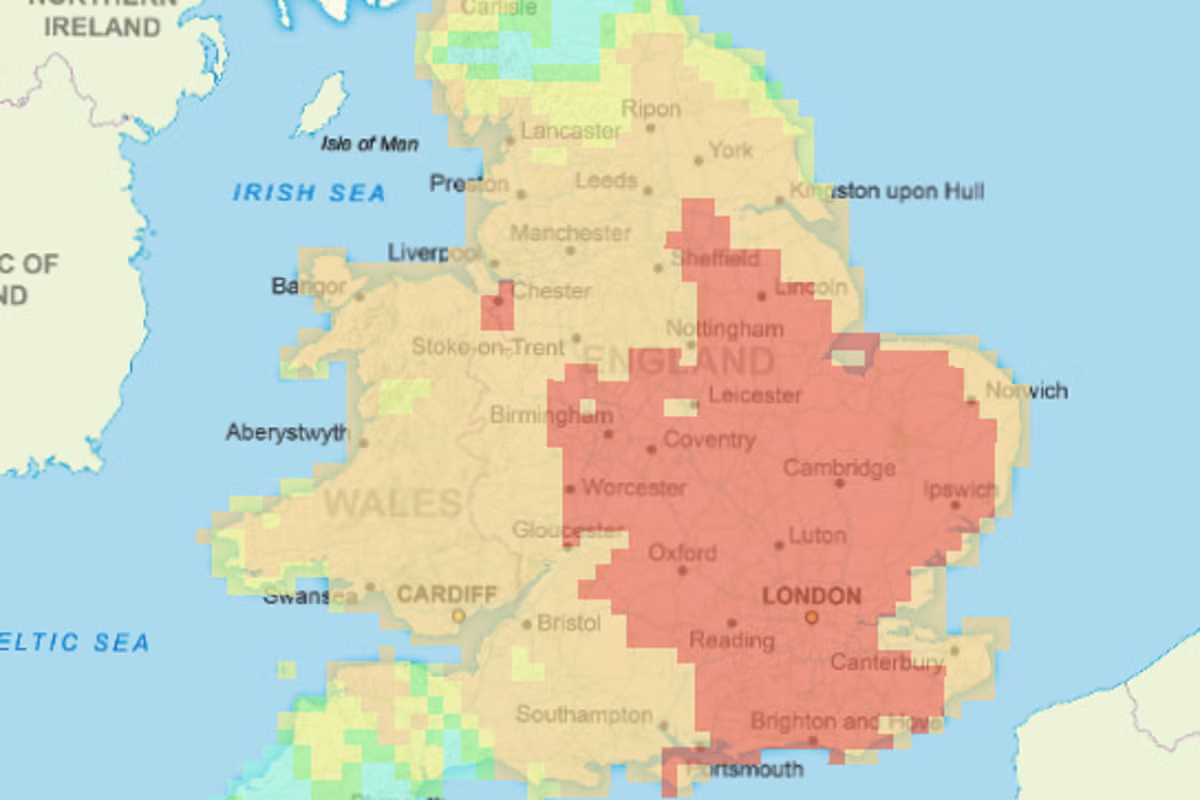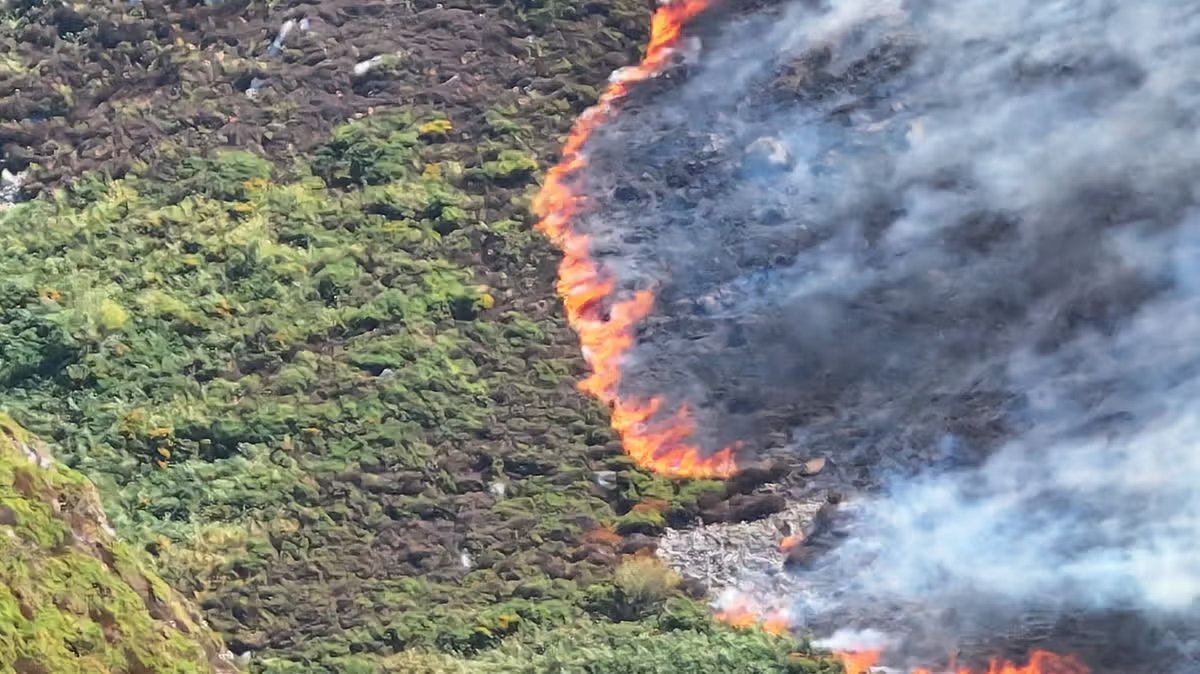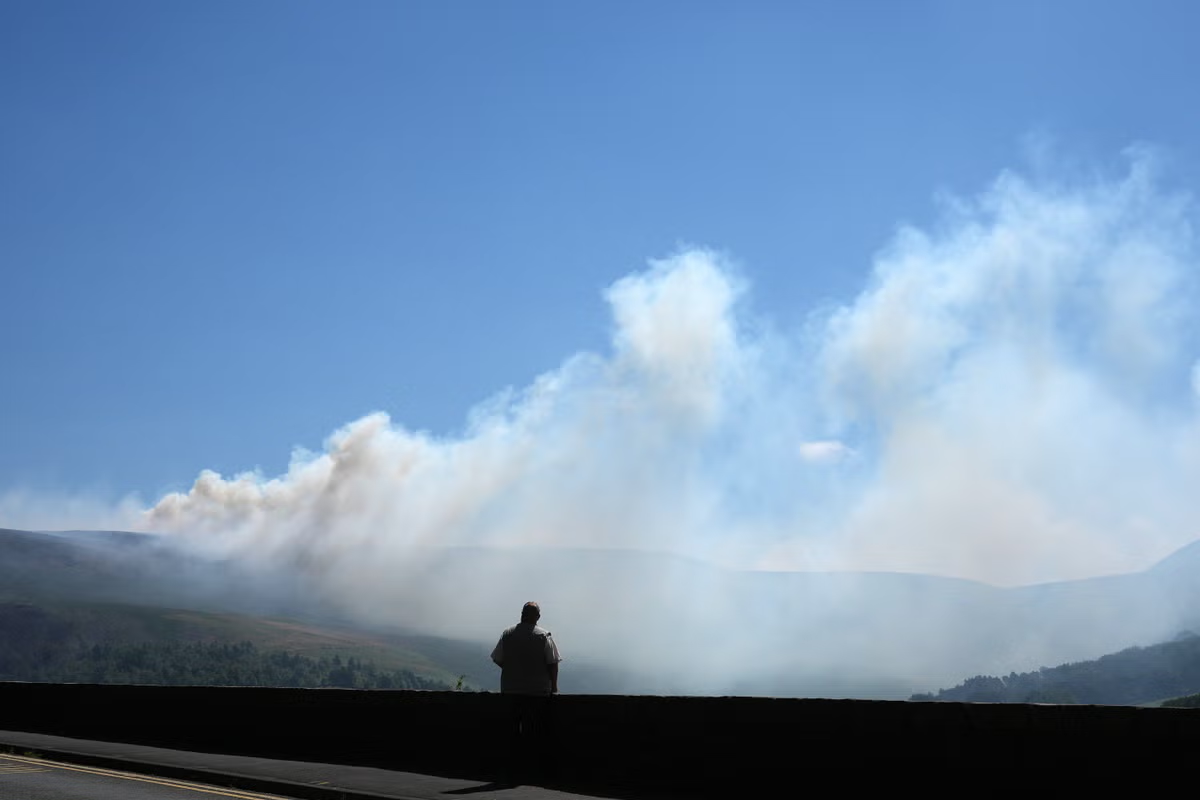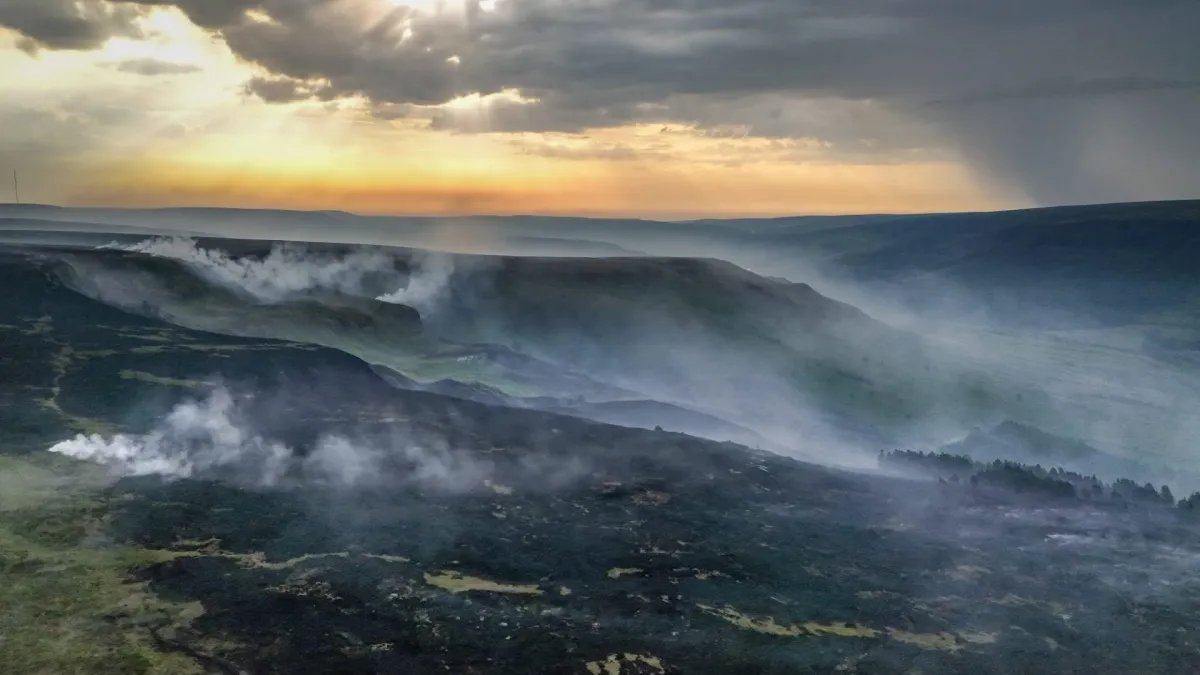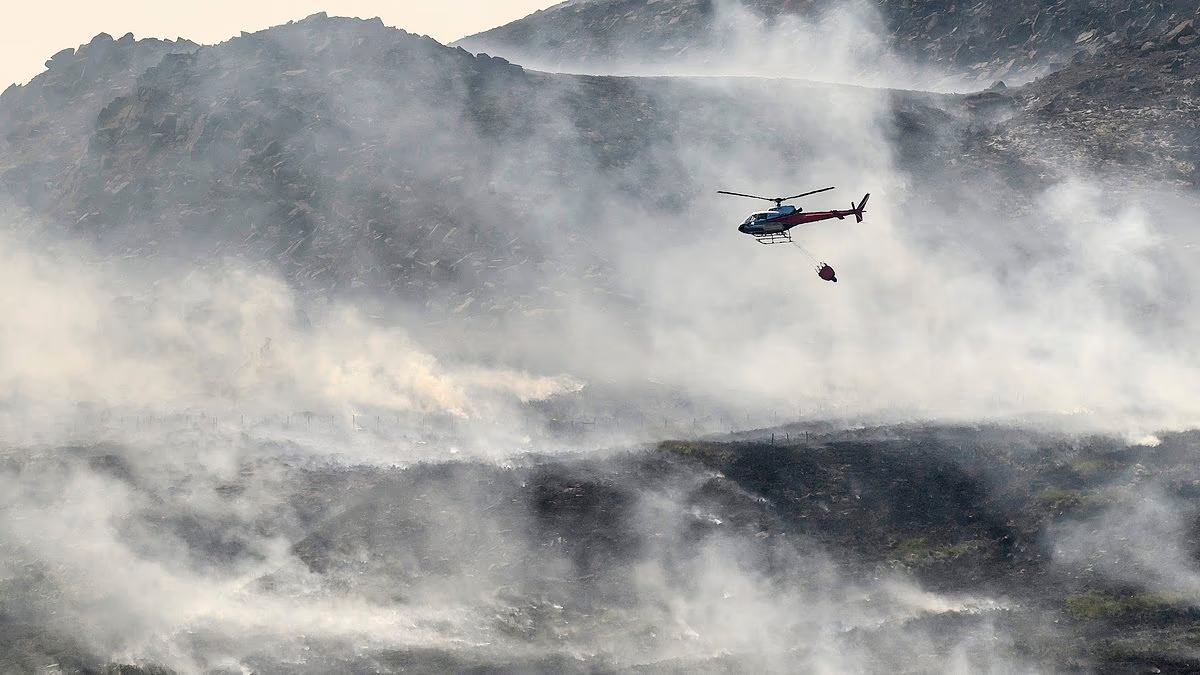
Wildfires are feared to last for days as they continue to rage across the UK with no end in sight for the nation's blistering temperatures.Firefighters have warned it could take days to extinguish a huge blaze that broke out on Saturday on the moorland in Greater Manchester.The wildfire started at Dove Stone Reservoir in Greenfield, Saddleworth, but has spread rapidly and now merged with one miles away at Tintwistle Moor.It has been said the quick rate of the spread is a result of the dry temperatures and the 'ever-changing winds'.Ben Levy, the area manager for Greater Manchester Fire and Rescue Service said: 'I envisage our firefighters are going to be on these moors for a number of days, I am sure of it - there is no significant rainfall forecast, the temperatures are due to remain high.'Some 70 firefighters, 11 fire engines and four wildfire units were at the scene on Tuesday as they carry out reconnaissance and several helicopters are dropping water.Shania Care-Slede, 20, has been charged with arson in connection with the moorland fire and appeared at Manchester Magistrates' Court on Tuesday.She was remanded in custody and charged with one count of arson, while being reckless as to whether life was endangered, and one count of dangerous driving. Firefighters have warned it could take days to extinguish a huge blaze that broke out on Saturday on the moorland in Greater Manchester The wildfire started at Dove Stone Reservoir in Greenfield, Saddleworth, but has spread rapidly (pictured) It has been said the quick rate of the spread is a result of the dry temperatures and the 'ever changing winds'Fire crews are also tackling a large wildfire in the Cairngorms National Park, in northeast Scotland, with 'large volumes of smoke' travelling towards nearby towns.Four appliances and specialist wildfire resources were dispatched to the blaze at Ryvoan Bothy, near Nethy Bridge, at about 11.50am on Wednesday.There are no reported casualties.The Scottish Fire and Rescue Service has advised residents in Aviemore, Glenmore and the surrounding communities to keep doors and windows closed.Hillwalkers and other visitors to the national park have also been advised to avoid the area.Experts fear the fires are presenting an increased risk to homes and health given more appear to be burning near urban areas than in remote countryside.Wildfires have impacted London, Greater Manchester, North Yorkshire, County Durham, East Sussex, West Sussex, Devon and Somerset in recent days.Claire Belcher, director of the Wildfire Lab at the University of Exeter, said the latest firewave in England and Wales was the 'most widespread that the UK has seen'.She said climate change is causing wet winters leading to more vegetation growth which is then dried by long heatwaves, adding: 'We've had lots of fires in certain regions before, but we've never seen fires burning right across the country like this.'Ms Belcher also said: 'We must manage our land better to reduce risks and stop fires spreading. The impact of wildfires on wildlife can be devastating.' Fire crews are also tackling a large wildfire in the Cairngorms National Park (pictured), in northeast Scotland, with 'large volumes of smoke' travelling towards nearby townsTemperatures in the UK on Tuesday peaked at 30.4C at Heathrow in London, the Met Office said, making it the tenth day in a row when 30C has been exceeded somewhere in the country.Cardiff, London, Liverpool and Plymouth are expected to reach 28C over the coming days, while the north is set to reach highs of 26C in areas like Sheffield and Scotland.A 2025 climate report by the Met Office concluded scorching temperatures are the new normal and '20th century climate has now gone'.Mike Kendon, Met Office climate information scientist, said: 'What is particularly concerning is how temperature extremes are being affected, as these cause the greatest impacts – a pattern we've seen again in 2026 so far. 'In parts of the south-east, the hottest day of the year has warmed by 4.5C, three times that of annual mean temperature, and we are now coming to expect 35°C at some point in a hot spell in summer. 'Yet, despite historic heatwaves like 1976, overall temperatures as high as this were comparatively unusual in the 20th Century – back then we did not reach even 30C, anywhere in the UK, in approximately one year in every five. As an illustration, the number of days of over 30C has quadrupled in areas such as Greater London.''We are right now living in a time of historic and unprecedented change and in terms of temperature, on annual, seasonal, monthly and daily timescales, this evidence shows the climate of the 20th Century has now gone.'He added that warming is moving up north, with areas like the Vale of York and Lancashire now having similar temperatures to London.The latest 10-year period (2016-2025) is 1.33C warmer than the period from 1961-1990. In June, heatwave temperatures peaked above 30C for seven days in a row.There have now been 25 days in 2026 – consecutive and non-consecutive – when 30C has been exceeded somewhere in the UK: seven in May, eight in June and 10 in July.This surpasses the 24 days of 30C-plus temperatures in the punishingly hot year of 1976, when drought conditions forced people to use standpipes in the street, hit crops and parched landscapes.The record for the number of 30C-plus days in a calendar year is 34, which was set in 1995.
Wildfires rage across UK as officials warn they could last for days
Firefighters have warned it could take days to extinguish a huge blaze that broke out on Saturday on the moorland in Greater Manchester.
894 words~4 min read