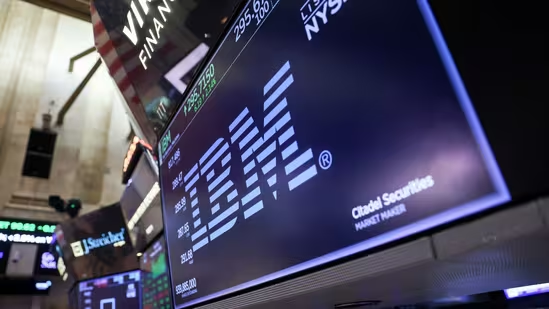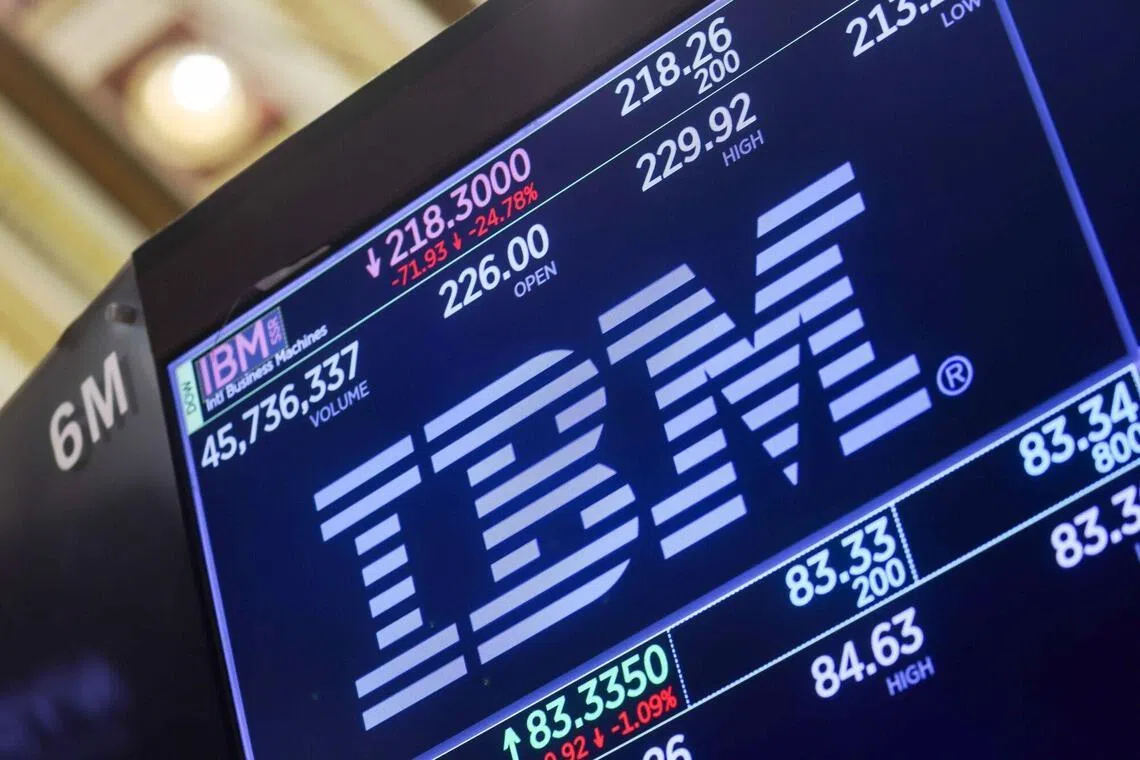
Data centers are a massive, major, inescapable factor in this economy right now. AI companies are spending billions on them, and chip and server makers are earning billions because of that. So are contractors, shipping companies, manufacturers of heavy equipment and generators, property developers, and more.All of that money has to come from somewhere. In many cases, that somewhere is businesses that have shifted the money they used to spend on other technologies over to buying AI chips, servers, and so on — which has been terrible for older tech companies.Case in point: IBM, which reported a pretty lousy second quarter yesterday.It missed Wall Street's expectations because its customers have shifted away from buying IBM products and toward AI. Its shares fell by a little over 25% yesterday, which dragged down a whole bunch of other old-school tech companies, too.All that is making some people nervous that the AI boom is — almost literally — suffocating companies that aren't part of it. It’s not just an IBM problem: A lot of its competitors have seen 20-50% drops in their stocks this year, like Oracle, Microsoft, and Accenture.“Almost no software name has escaped the sell-off,” said Daniel Newman, CEO of The Futurum Group.When IBM warned that its second-quarter report would be pretty ugly, “the immediate reaction to the market was, ‘This is the validation point the market had been waiting for that AI is eating software,’” Newsman said.Even companies making big tech investments have only so much money to invest. Peter Cohan teaches management practice at Babson College and authored a book on generative AI.“And since they're spending so much money on that, they are finding themselves not spending so much money on software,” said Peter Cohan, a management professor at Babson College who authored a book on generative AI. “That’s sort of going by the wayside.”Cohan said whether AI investment actually pays off is still a big question.“But this is what is really happening now, and it appears as though that trend is going to continue,” he said.So, capital is finite, but so is the stuff that these AI investors are investing in.“Demand is higher than we expected,” said Michael Smith, an information technology and public policy professor at Carnegie Mellon University. “We can't ramp up supply that quickly, and so the prices of chips are going up faster.”And Smith said that makes them more expensive. But companies will invest in them anyway, partly because buy low plus sell high equals profit, but also, nobody wants to get left behind.“The market's kind of nervous about what's going to happen next,” Smith said. “We've never seen a technology that has doubled in capacity as fast as this one is.”But it’s not Armageddon. Yes, yesterday’s stock drop was one of the largest in IBM’s history. But Smith says context is important: the drop just brought the stock back down to where it was two months ago.
IBM and other old-school tech companies feel the AI pinch
Big Blue’s shares tumbled after it indicated its second-quarter performance was weak.
484 words~2 min read