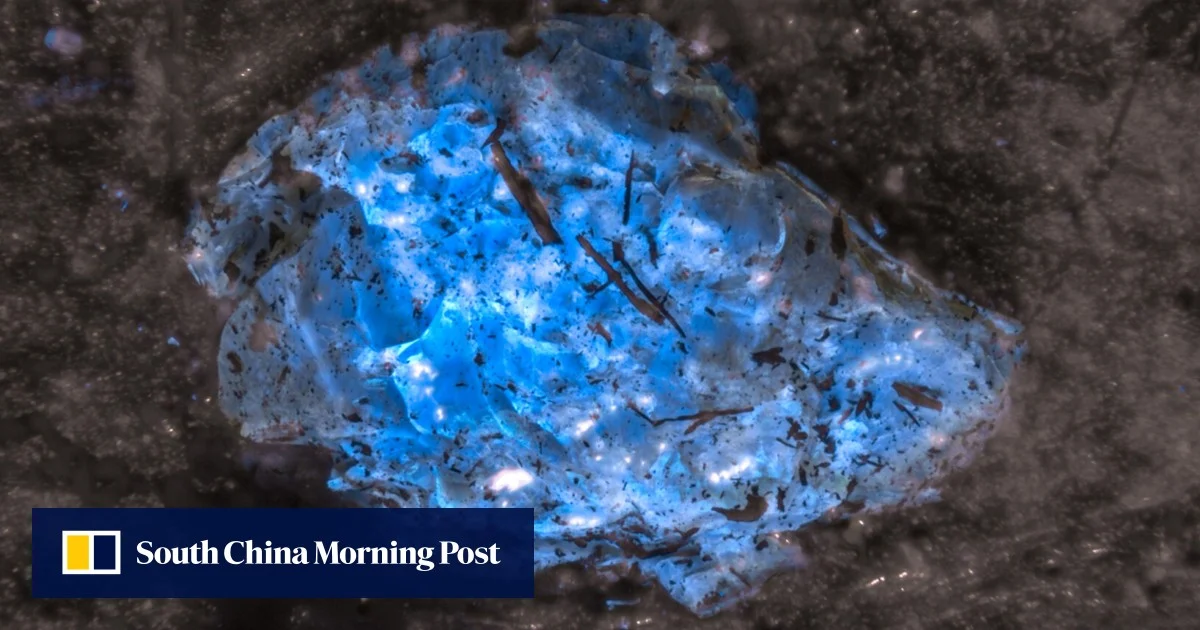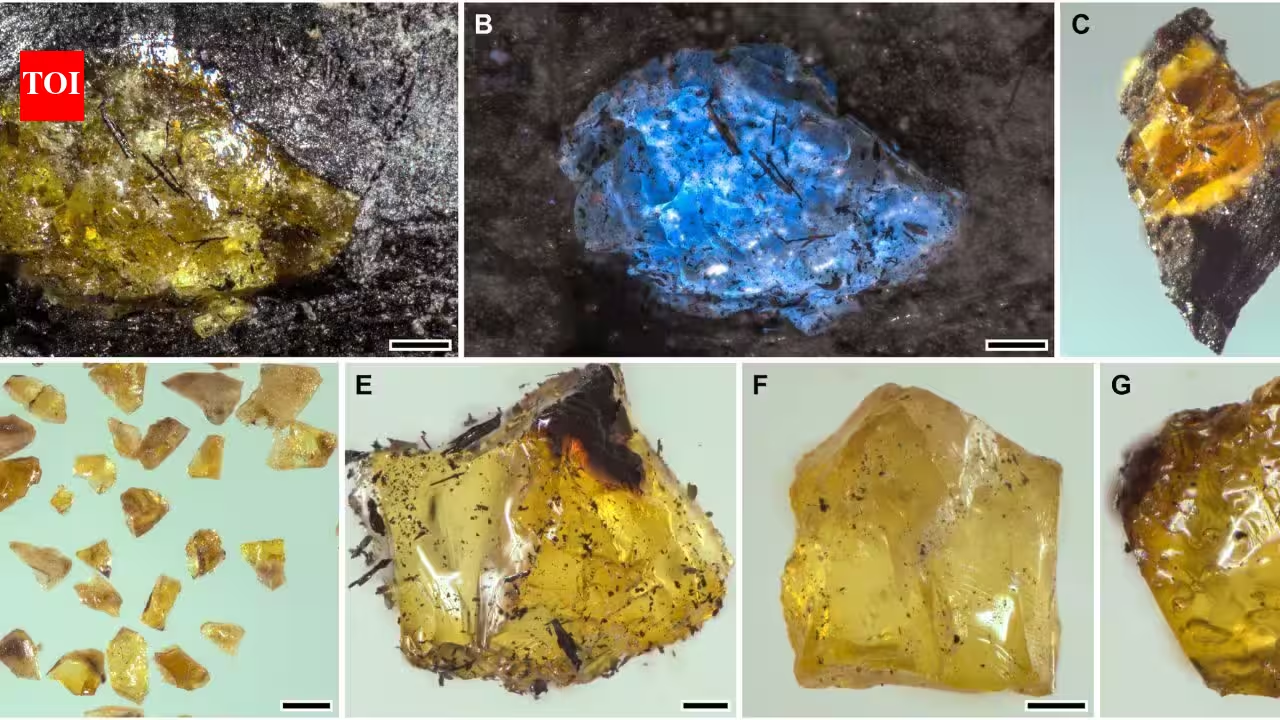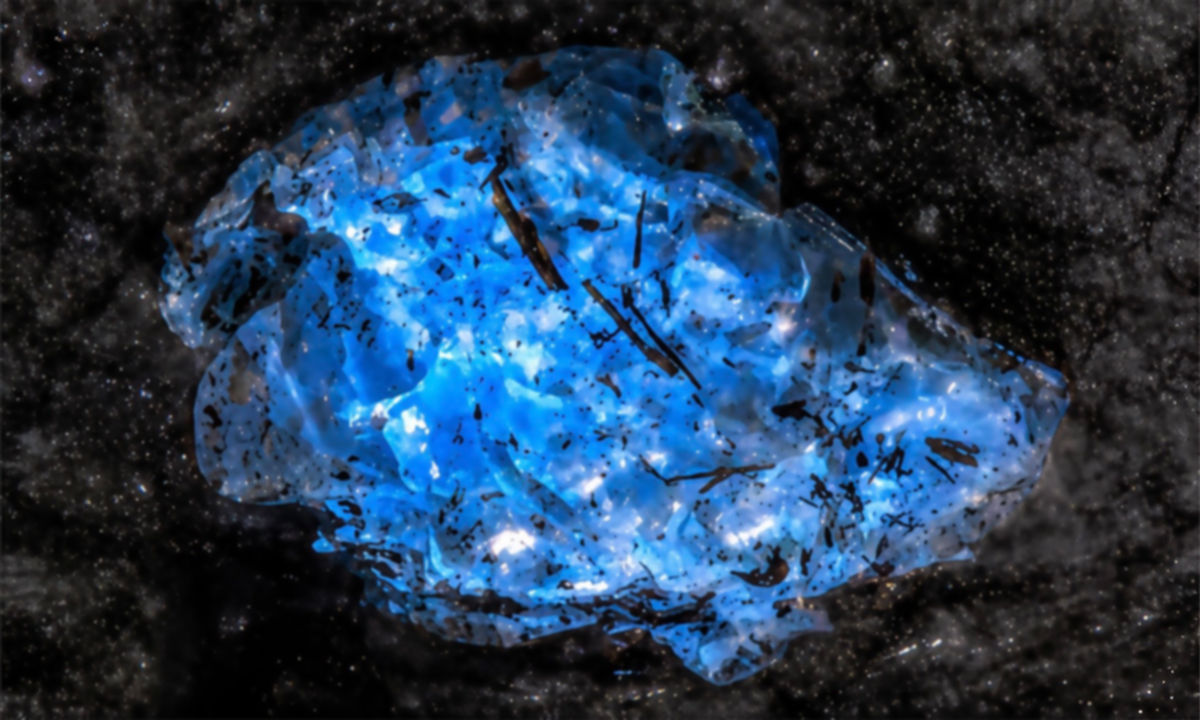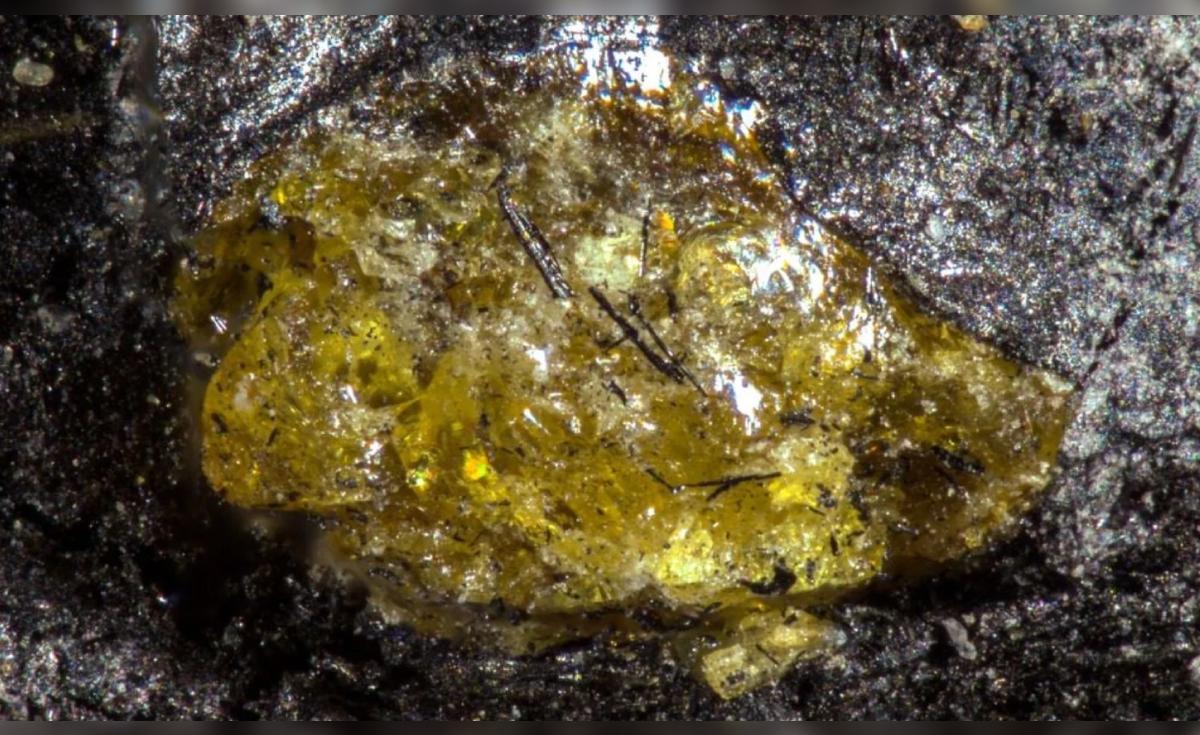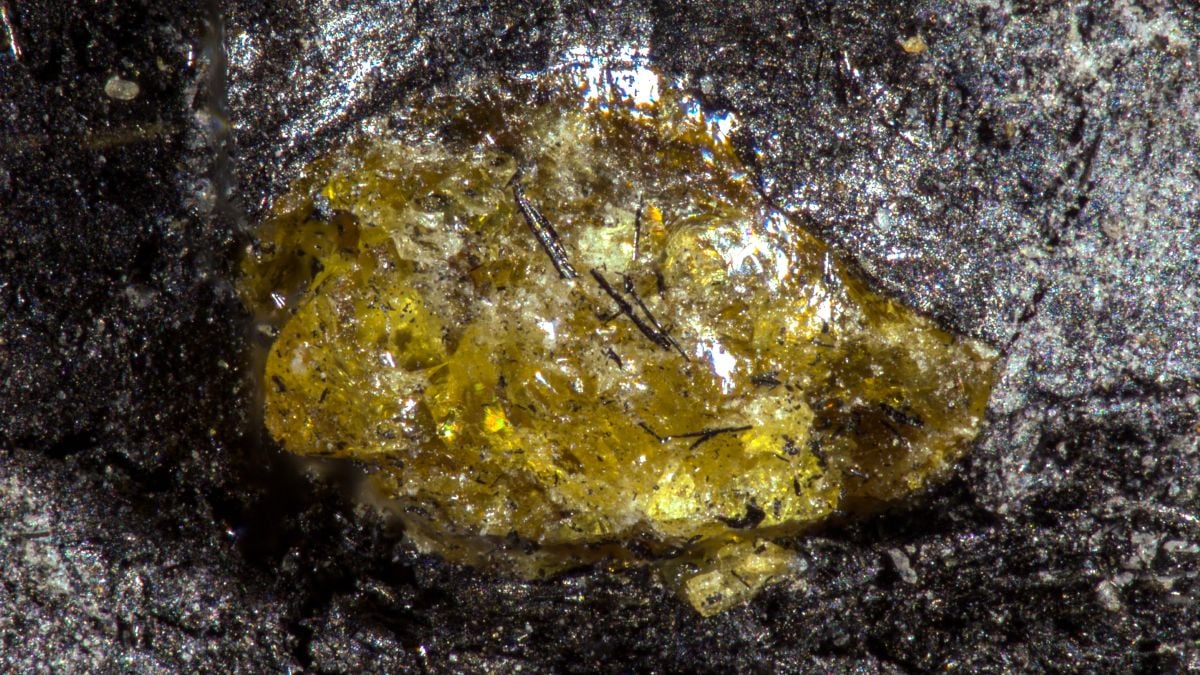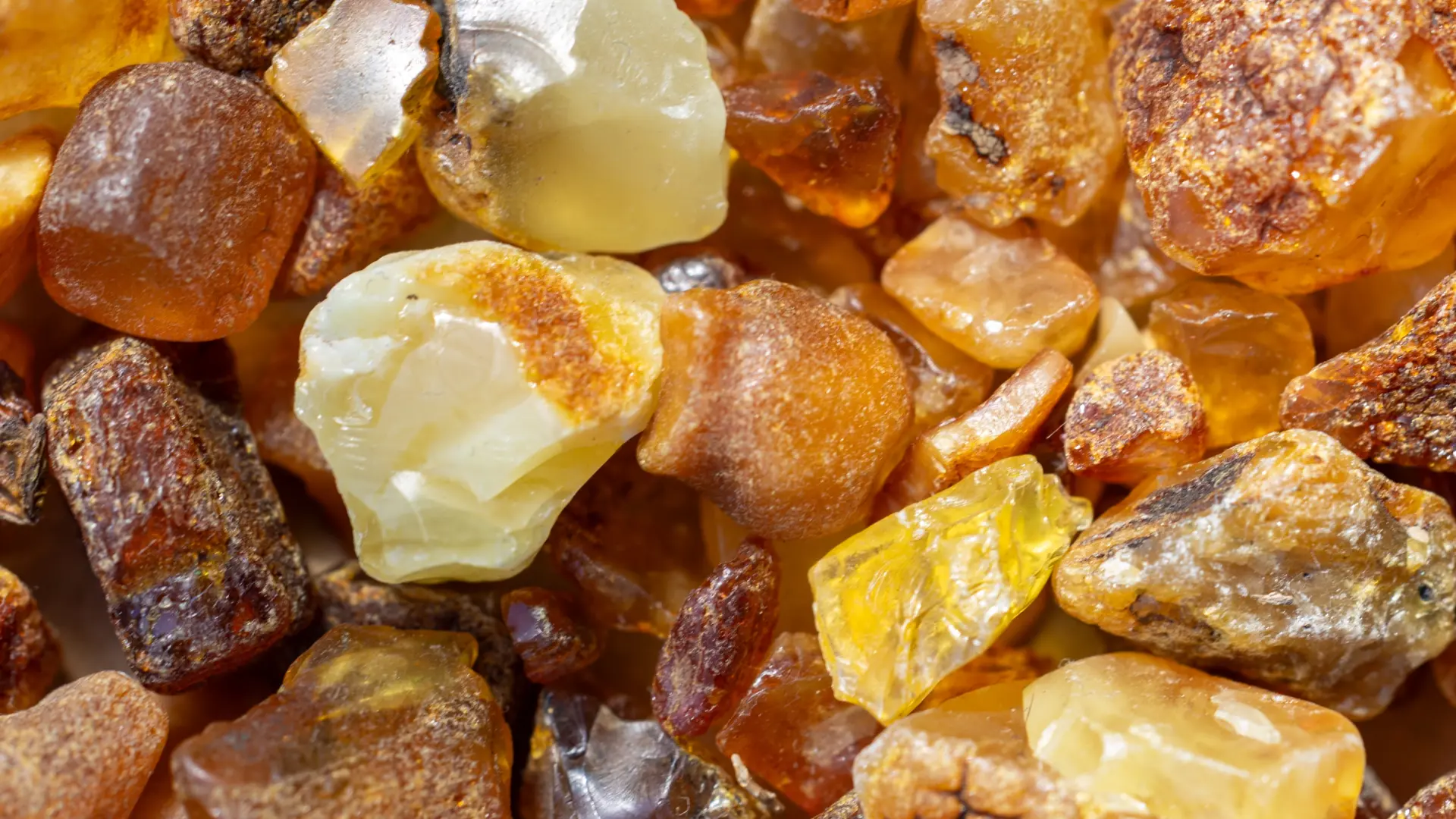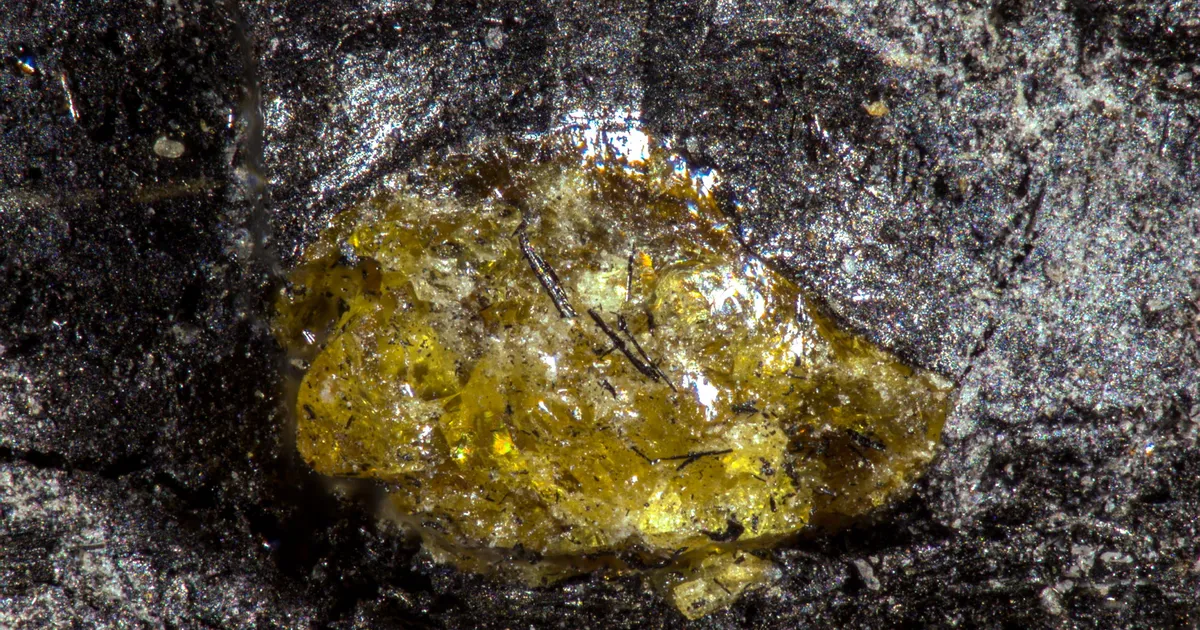
Current sectionArchaeologyFlecks of true amber detected in Xinjiang date to the Middle Devonian, pushing back the origin of resin secretion by at least 65 million yearsShare to FacebookShare to XArticle printing is available to subscribers onlyPrint in a simple, ad-free formatSubscribeComments: Zen reading is available to subscribers onlyAd-free and in a comfortable reading formatSubscribeAmber embedded in coal, extracted from the Hujiersite Formation. Credit: Cihang Luo et al., Sci. Adv. 12, eaeh1266 (2026)Amber embedded in coal, extracted from the Hujiersite Formation. Credit: Cihang Luo et al., Sci. Adv. 12, eaeh1266 (2026)July 15, 2026Microscopic particles of amber discovered in coal seams in northwest China are the earliest in the world, and by a vast gap. Dated to about 385 million years ago, the Middle Devonian, the particles of fossil resin in the Hujiersite Formation are 65 million years older than the previously known early amber and profoundly change our understanding of plant evolution.The amber mini-nodules in the Chinese coal are sparse, but they're definitely there, Cihang Luo and Bo Wang of the Chinese Academy of Sciences with colleagues report in Science Advances on Wednesday. Hitherto, the oldest known amber came from coal beds in Nova Scotia and Illinois that dated to the Late Carboniferous, about 320 million years ago.How does that stunning difference in time change our understanding of our green friends? It means that the plant protection by resin emerged far earlier in their story than we had realized, before the rise of seeding plants.Coal seam in the Hujiersite Formation, China, where the Middle Devonian amber was found. Credit: Cihang Luo et al., Sci. Adv. 12, eaeh1266 (2026)Coal seam in the Hujiersite Formation, China, where the Middle Devonian amber was found. Credit: Cihang Luo et al., Sci. Adv. 12, eaeh1266 (2026)In other words – resin production likely began in a common ancestor to plants that produce seeds and those that do not.What is amber anyway, and why is it associated with coal? Certain (not all) plants produce resin to seal wounds, for instance where a branch breaks off, and to protect themselves from pathogens. Resin hardens after secretion and if unmolested over millions of years, can fossilize into a stone called amber that can range in color from pale yellows to orange, red or brown. Amber is found in coal because coal was created by plants dying in anoxic swamps hundreds of millions of years ago.Progymnosperms from the Middle Devonian Hujiersite Formation: Aneurophyton doui and Tetraxylopteris sp., which could have been resin producers Credit: Cihang Luo et al., Sci. Adv. 12, eaeh1266 (2026)Progymnosperms from the Middle Devonian Hujiersite Formation: Aneurophyton doui and Tetraxylopteris sp., which could have been resin producers Credit: Cihang Luo et al., Sci. Adv. 12, eaeh1266 (2026)When secreted, the resin is sticky and any small living creature that tries to pass over it can get caught. Hence amber may feature inclusions, such as insects and arachnids, small lizards and even, wondrously, the tiny head of a dinosaur or unusual lizard from about 99 million years ago. Another piece contains a feathered dinosaur tail, from the same time period. Who could ask for more?Well, we could ask that the Chinese amber from 385 million years ago to include some fascinating early life form that crept out of the sea, but it doesn't."At present, we have not found any biological inclusions in the Middle Devonian amber specimens," Cihang told Haaretz by email. "Most of the amber pieces are extremely small, typically only 0.1–0.5 millimeters across, and many are translucent to opaque, which makes the search for microscopic inclusions challenging. Nevertheless, we will continue to look carefully for possible inclusions as additional material is examined."Amber pieces handpicked from the coal. Credit: Cihang Luo et al., Sci. Adv. 12, eaeh1266 (2026)Amber pieces handpicked from the coal. Credit: Cihang Luo et al., Sci. Adv. 12, eaeh1266 (2026)In the depths of the DevonianIn the beginning, land was colonized by the meek: tiny proto-arthropods, including proto-arachnids, bless them, starting at least from the Ordovician Period about 485 million to 443 million years ago. The earliest terrestrial plants began to emerge from algae stranded on shorelines at about the same time.As for We, you could say that our origins lie deep in the Devonian, a time that began 420 million years ago. The land consisted of the supercontinents Laurasia and proto-Siberia in the Northern Hemisphere, and Gondwana in the south, plants were starting to colonize the terrain, and the oceans were exploding with life.The Devonian is dubbed the "Age of Fishes" because of their intense diversification. Primordial jawless fish, of which only hagfish and lampreys survive, began to be supplanted by jawed fish such as the great placoderms, and our ancestors, the lobe-finned fish that would crawl onto land and beget the reptiles. By this time, land plants reproducing by spores began to spread across dry land where the supercontinents weren't mortally inhospitable. Later the land plants began to strike root and develop stems and vascular systems, specialized tissues that transport water and produce bark.Dunkleosteus, a placoderm that was an early vertebrate predator. Note the eyebones Credit: Mitternacht90 / wikimediaDunkleosteus, a placoderm that was an early vertebrate predator. Note the eyebones Credit: Mitternacht90 / wikimediaBut what didn't exist yet? Seeds. Even the earliest resin production had been thought to be confined to seeding plants; and whatever vascular plants were emerging in the Middle Devonian 385 million years ago weren't procreating by seed. True seeding plants only appeared in the Late Devonian.So resin shouldn't predate seeds, but it did, the new paper shows. Middle Devonian plants were primitive non-seeding species, such as Bryophytes (aka moss), yet now amber from the Middle Devonian is reported at the Hujiersite Formation in Xinjiang, northwest China.What are we to make of that? That apparently, early plants predating procreation by seed were already producing true resin. The amber has been chemically verified, they add. The Hujiersite amber wasn't in great gobs that could be turned into jewelry, for instance. The pieces are mostly microscopic, ranging from a tenth of a millimeter to 0.5 millimeters (0.02 of an inch).Amber embedded in coal, extracted from the Hujiersite Formation. Credit: Cihang Luo et al., Sci. Adv. 12, eaeh1266 (2026)Amber embedded in coal, extracted from the Hujiersite Formation. Credit: Cihang Luo et al., Sci. Adv. 12, eaeh1266 (2026)While seed plants exude resin from specialized tissues, how the non-seed plants did it in the Devonian remains to be elucidated.So what have we? The evolutionary emergence of metabolic systems that make protective sticky goo before the rise of the seed. The extraordinarily old amber reveals chemical signatures comparable to conifer-type amber, the team adds.Plants from the Middle Devonian Hujiersite Formation, Xinjiang, China: Tree-like lycopsid Hoxtolgaya robusta, Zosterophyll Serrulacaulis spineus and a bunch of other lycopsids. Credit: Cihang Luo et al., Sci. Adv. 12, eaeh1266 (2026)Plants from the Middle Devonian Hujiersite Formation, Xinjiang, China: Tree-like lycopsid Hoxtolgaya robusta, Zosterophyll Serrulacaulis spineus and a bunch of other lycopsids. Credit: Cihang Luo et al., Sci. Adv. 12, eaeh1266 (2026)From whom were the non-seed plants defending themselves? From the pathogens that plants would have face from day one as they spread from the seas onto land – from viruses to fungi to bacteria. (Archaea aren't known to be pathogenic.)The confirmation of Middle Devonian amber from vascular plants predating the deity's invention of seeds may validate earlier reports of organic films suggested to be externally secreted surface resins on the cuticles of Devonian plants, which is nice, though the team adds that in the new case, they have stand-alone isolated amber particles. The team adds the Middle Devonian secreters were possibly progymnosperms or arborescent lycopsids, which were known to exist at the time; and add that one of the amber specimens contained abundant bubbles. That is exciting.To be clear, the tetradomorphs from which all vertebrates, including Us, arise would diverge from fish in the Devonian, but would only develop feet in the Late Carboniferous – their ancestors having weathered the terrible Late Devonian extinction 375 million years ago that did for the trilobites, and the End-Devonian extinction that put paid to the placoderms 359 million years ago. And it is plausible to think, as the team suggests, that one reason for the survival and success of Devonian-Carboniferous terrestrial plant life was the early emergence of resin, protecting participating plants from horrible nasties.In the NewsEngraved Reed Found From Middle Bronze Age: Did It Have Meaning?Archaeologists Reveal More Massive Beams From Babylonian Attack on Ancient J'lemThe Original Ozempic Society of Ancient RomeEarliest Amber Found in China Changes Story of Plant EvolutionDid Breakoff Ancient Jews Really Use a 'Divine' 364-day Calendar?Remembering and rebuilding two years laterICYMIThe Most Optimistic Israeli in Jerusalem Is Leaving the CountryAs Ground Invasion Looms, U.S. and Iran Want Wild-card Israel Out of the FightBetween Messi and Milei: How Argentina Became Israel's Team at the World CupDemocrats Rejected U.S. Aid to Israel, and AIPAC Couldn't Stop Them'Choose Hope': Natalie Portman Backs Arab-Jewish Party Ahead of Israeli ElectionHélène Cixous: 'I Accept Israel's Existence, but I Don't Identify With It'
Earliest amber found in China changes story of plant evolution
Flecks of true amber detected in Xinjiang date to the Middle Devonian, pushing back the origin of resin secretion by at least 65 million years
1,495 words~7 min read