As the NCERT’s new syllabus textbooks reach students across the country, debate continues over the removal of the Preamble to the Constitution from the Class 9 social science textbook. The NCERT has responded by clarifying that the Preamble remains part of the new civics curriculum but has been redistributed across different classes.
This claim is factually correct—but it tells only part of the story.Whenever school textbooks become the subject of public debate, the first responsibility is to return to the source. It is important to examine what the textbooks actually contain and then ask a deeper question: Will these changes help children become informed, thoughtful, and active citizens?
Looking beyond the headline
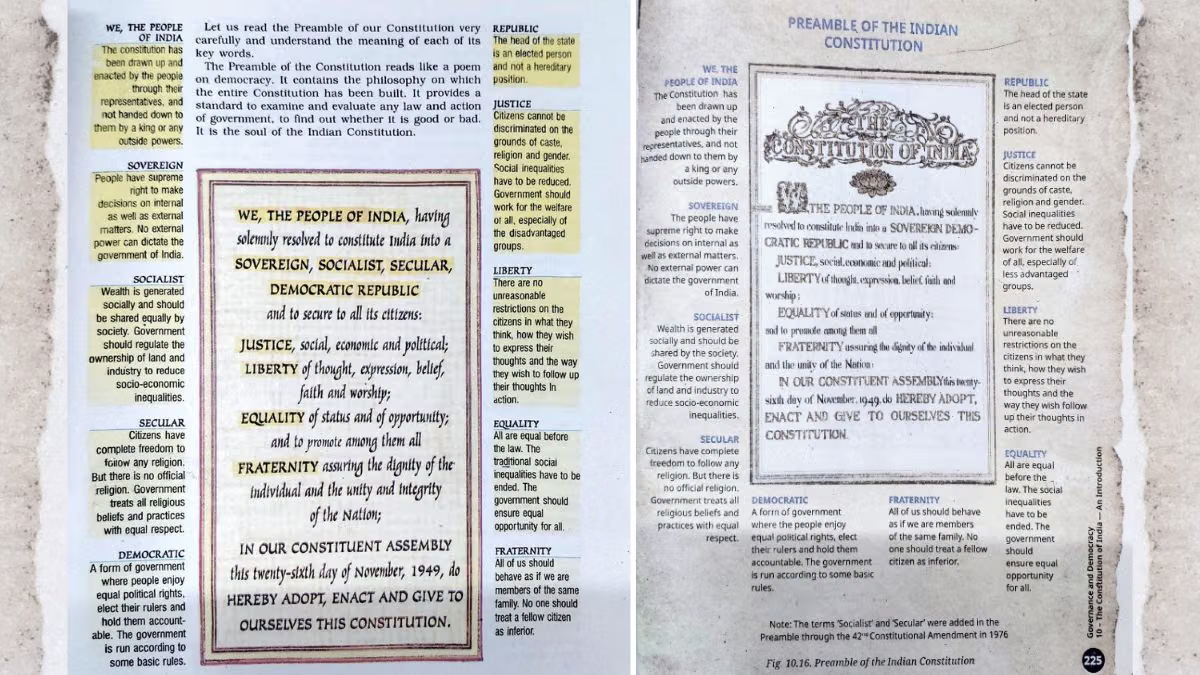
A comparison of the previous and the new NCERT textbooks reveals that the Preamble has indeed disappeared from the Class 9 textbook. It has found a place in the Class 7 textbook on page 225. In fact, the chapter, “Constitutional Design”, in which the Preamble appeared in the old syllabus, is no longer included in the Class 9 textbook. The Preamble is now part of a chapter in Class 7 titled “The Constitution of India – an Introduction”.This is an important distinction.The Constitution has not been removed from the curriculum. Along with it, the Preamble and the discussion of constitutional values and principles have been introduced two years earlier.From the perspective of civics education, this is potentially a positive shift.Children need not wait until adolescence to encounter ideas such as justice, liberty, equality, and fraternity. These are values they can begin to recognise in everyday life—in classrooms, playgrounds, families, and neighbourhoods. Introducing constitutional values earlier creates opportunities to nurture democratic habits and ethical reasoning from a younger age.However, the Constitution is more than a statement of values.The Preamble also describes the nature of the Indian State through concepts such as ‘sovereign, socialist, secular, democratic, and republic’. These are institutional design concepts. Even many adults struggle to explain them accurately. Teaching these ideas meaningfully requires careful sequencing, strong examples, and clear conceptual explanation.This raises an important educational question: Does the new curriculum provide enough support for Class 7 students to understand these ideas in depth? To achieve this, NCERT must ensure that supplementary learning materials enable teachers to explain these concepts effectively, as they deliver the curriculum in classrooms across the country.