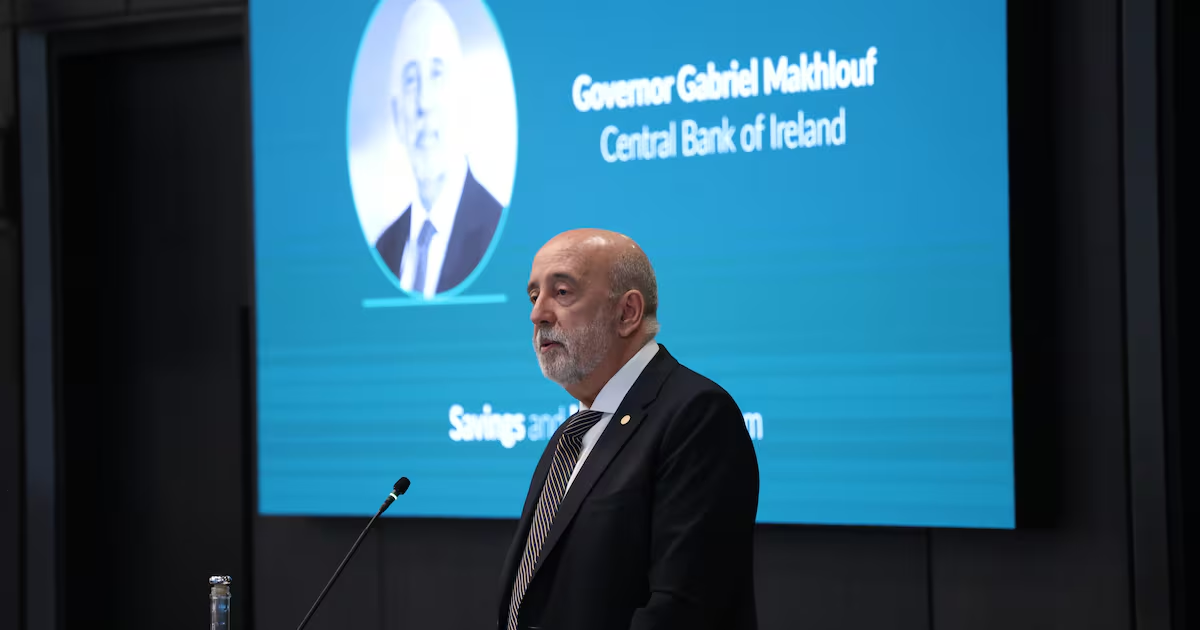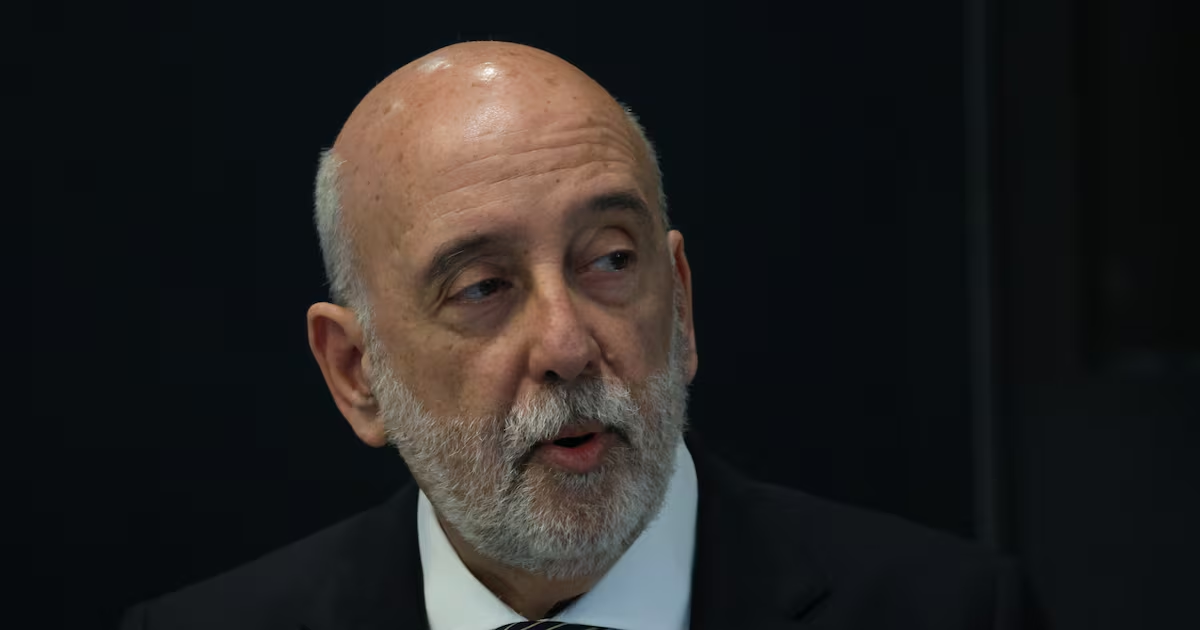
Central Bank governor Gabriel Makhlouf said his organisation is taking a scathing High Court judgment on its handling of a fitness and probity investigation into a fund manager “very seriously” and will “fully” implement the findings. Speaking to members of the Oireachtas finance committee on Wednesday, Makhlouf added that he has also ordered a broader external review of the bank’s wider enforcement activities, and expects the person carrying this out to assess the judgment as part of their work. High Court president Judge David Barniville said in his ruling, published on April 17th, that the investigation into the funds industry executive was “irretrievably tainted” by errors.The man – who was not named in the ruling and who wished to retain anonymity in an interview with The Irish Times in April – was an executive director of an Irish investment fund management company that oversaw sub-funds that fed into master funds managed by a sister company in the UK. The court refused to confirm the bank’s plan to prohibit the individual for a year, albeit with the ruling coming four years after the application was made in 2022. “The High Court found that the individual’s entitlement to natural and constitutional justice and basic fairness of procedures was not observed by the Central Bank in this case. I acknowledge that investigations and prohibitions carry serious implications for individuals and take the High Court’s judgment very seriously,” Makhlouf said. Will the State’s plan for the Carlton Cinema site revitalise O’Connell Street? Listen | 25:33Makhlouf noted that the bank has made a number of changes to its procedures since its officials decided in February 2022 that the individual should be prohibited, including that a ban does not now take effect until either agreed with an individual under investigation or confirmed by the High Court. He said the bank has adopted more broadly “specific recommendations around fairness, efficiency and transparency of process” made by the European Central Bank’s former banking supervisory chairman, Andrea Enria, in 2024 after he reviewed the regulator’s executive vetting system. That was after the Irish Financial Services Appeals Tribunal criticised the bank’s decision-making process in another case, where a funds sector executive was stopped from taking on a role. The Central Bank also plans to publish fresh guidance later this year on its approach to prohibition decisions. “We are also going to do a much more broad review of our enforcement activities across the bank,” Makhouf said, noting that the system has seen a lot of changes in recent decades, both as a result of legislation and court rulings. Meanwhile, Makhlouf insisted – under intense questioning from committee members – that the Central Bank has acted lawfully in its handling of controversial Israeli bonds. The Central Bank handed over the authority last September to Luxembourg to approve a prospectus for Israeli bonds – a debt-raising programme that has been marketed in the context of the country needing funds to fight the Gaza war.However, with Ireland still the so-called home member state for the purposes of Israeli bond prospectus regulation, the Central Bank may face being asked by Israel to approve a fresh prospectus or another transfer of authority when the current document expects in September. Makhlouf declined to comment on whether any discussions about this have taken place. “I want to repeat what I have said before to this committee that I am appalled and saddened by the horrific loss of life and destruction we have seen in Gaza and the wider Middle East. I speak for everyone at the Central Bank when I say that we want to see an end to hostilities by all parties,” he said. “We are required to approve a prospectus if it meets the standards of completeness, comprehensibility and consistency imposed by the regulation.”
Central Bank to review enforcement regime after scathing High Court judgment
Governor also insists that regulator has acted lawfully in its handling of controversial Israeli bonds
629 words~3 min read