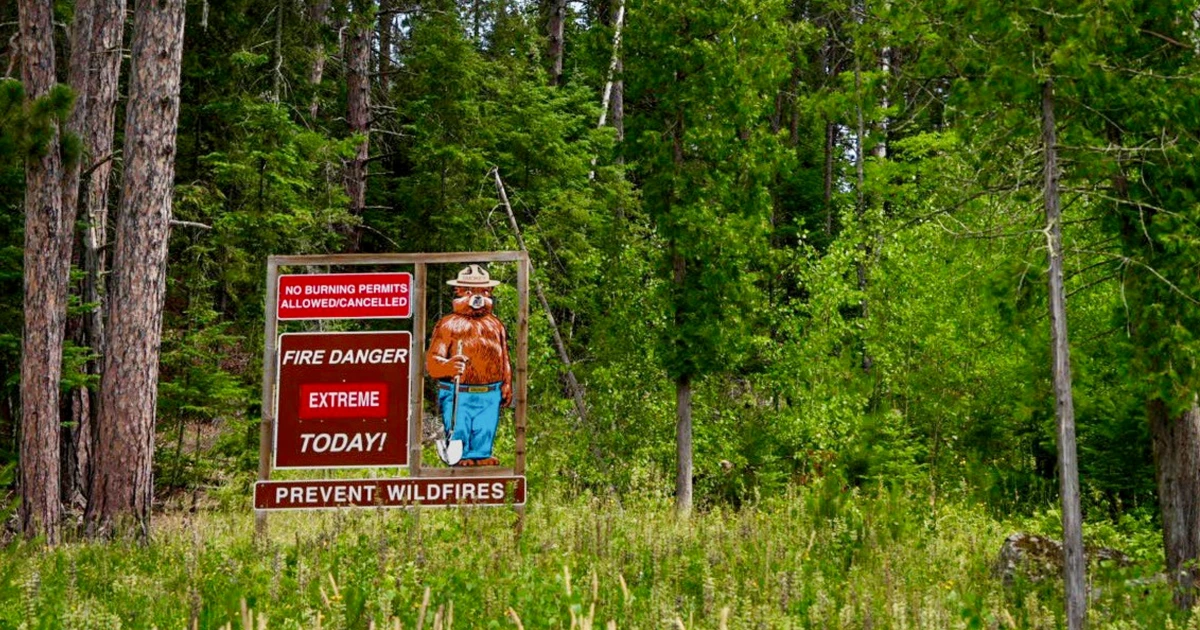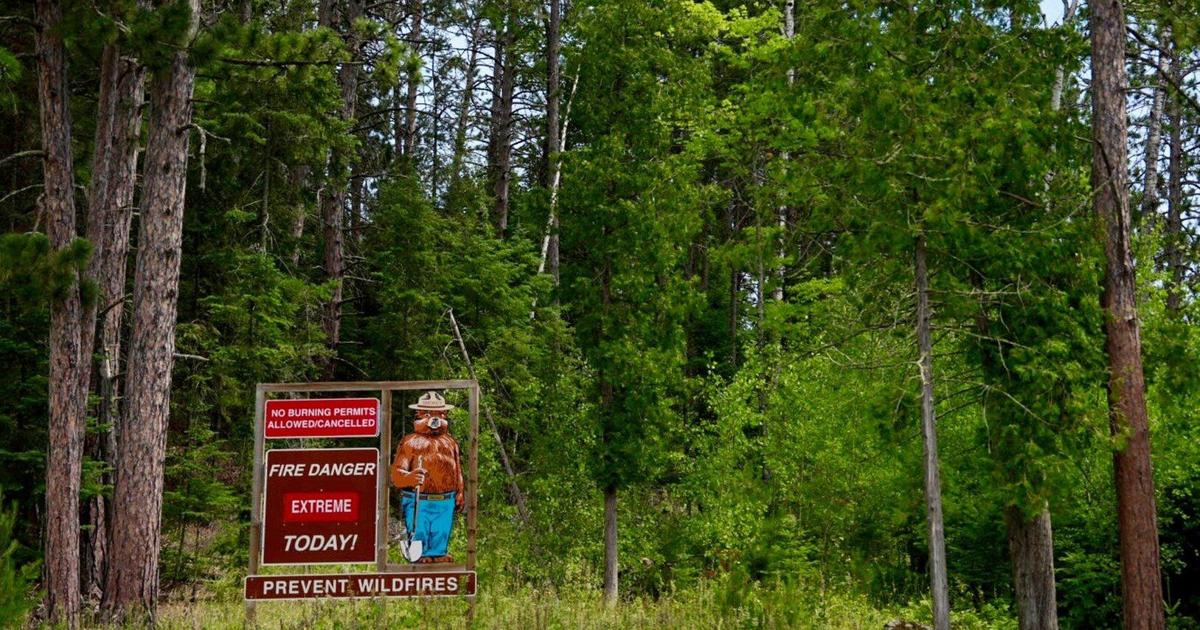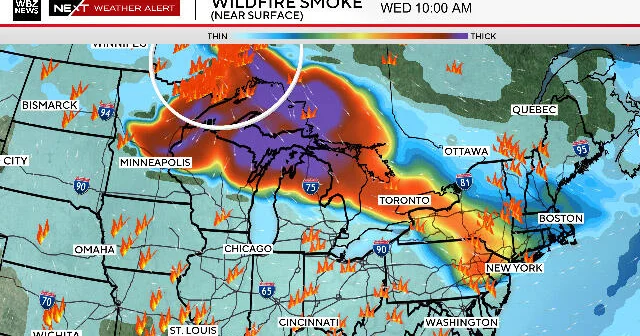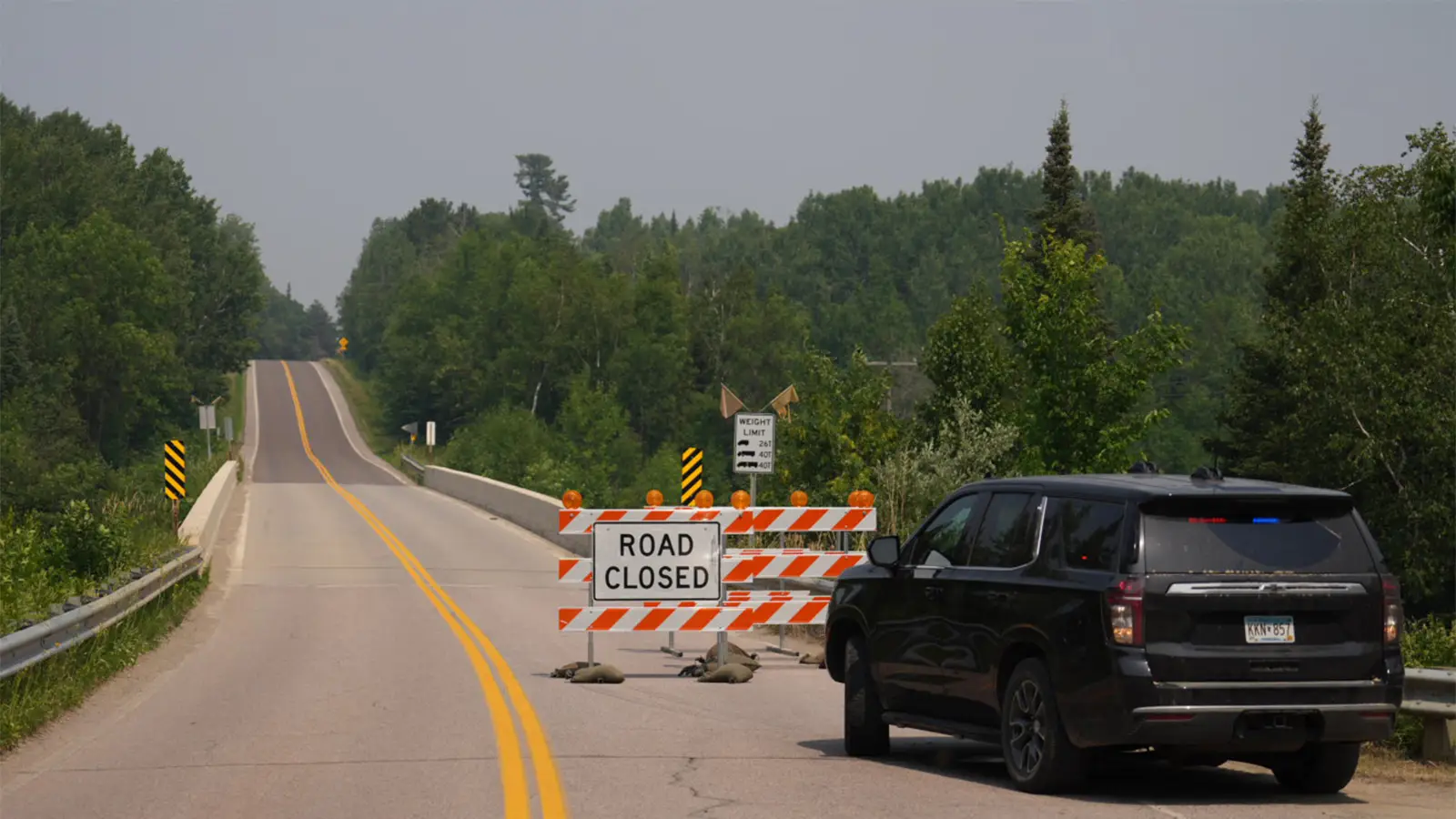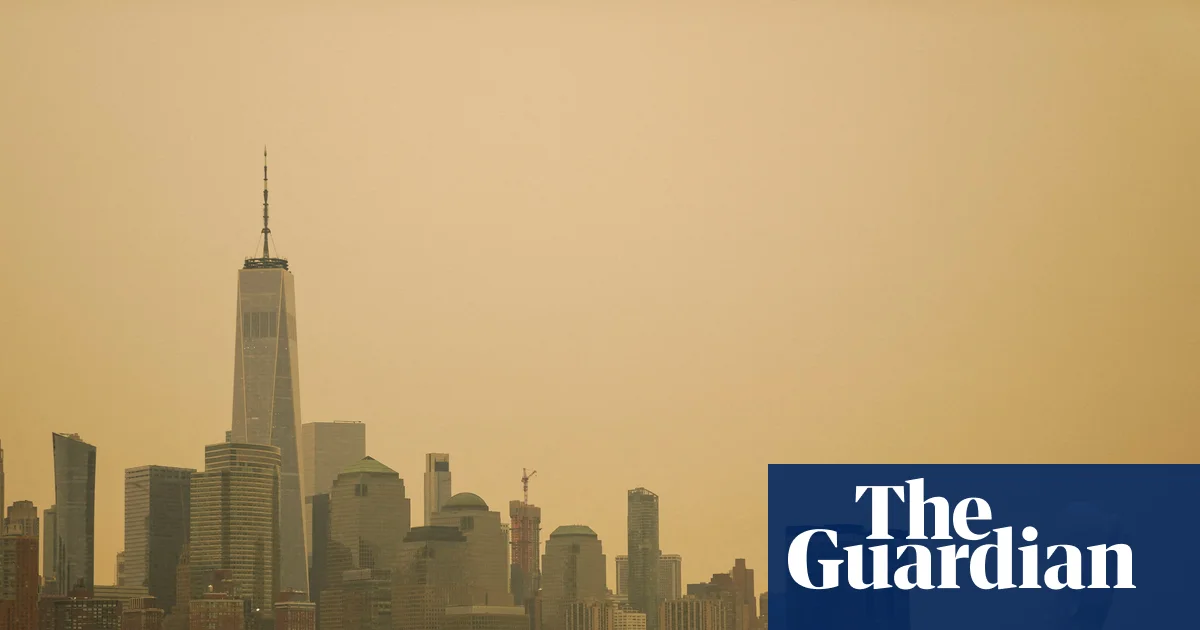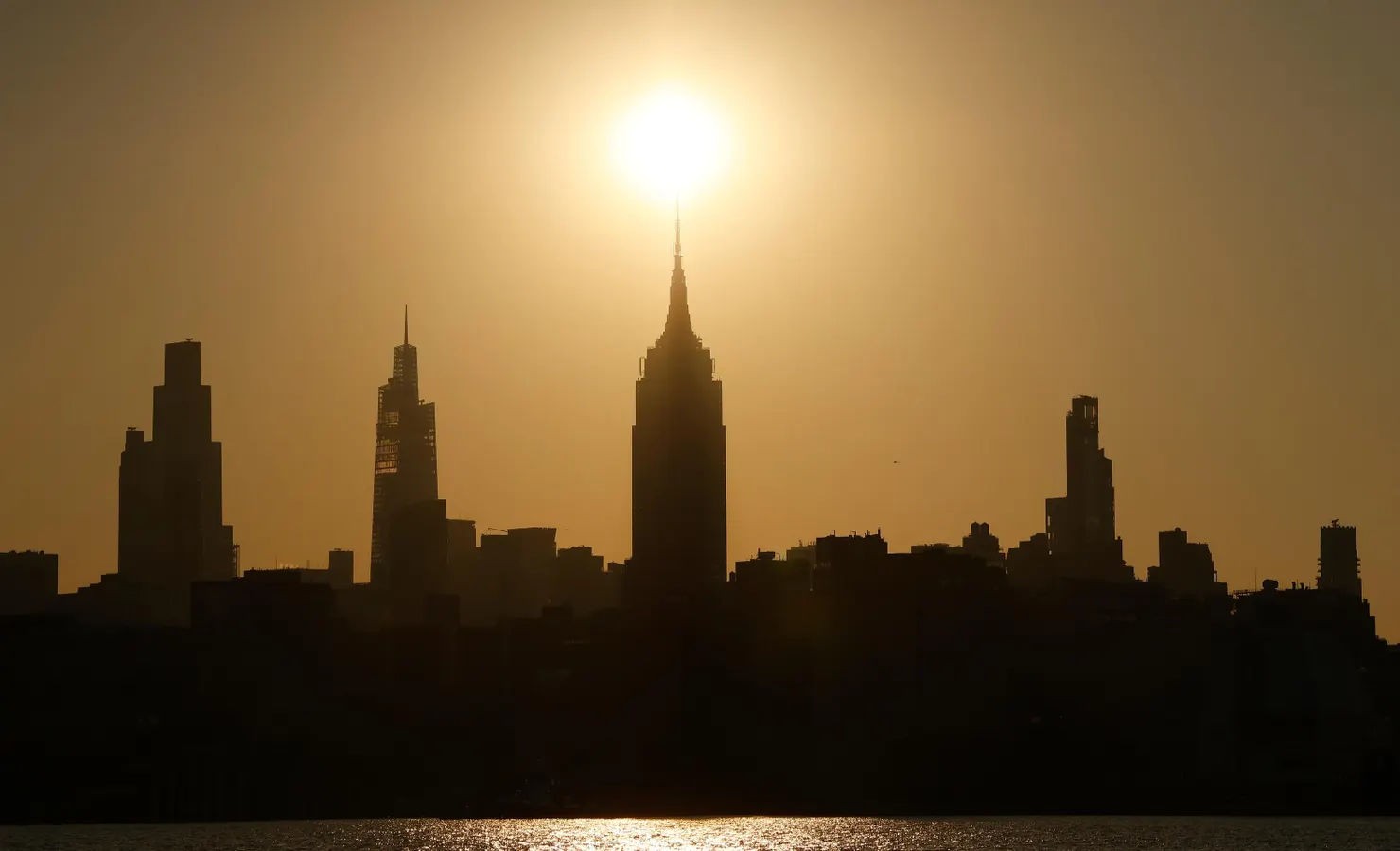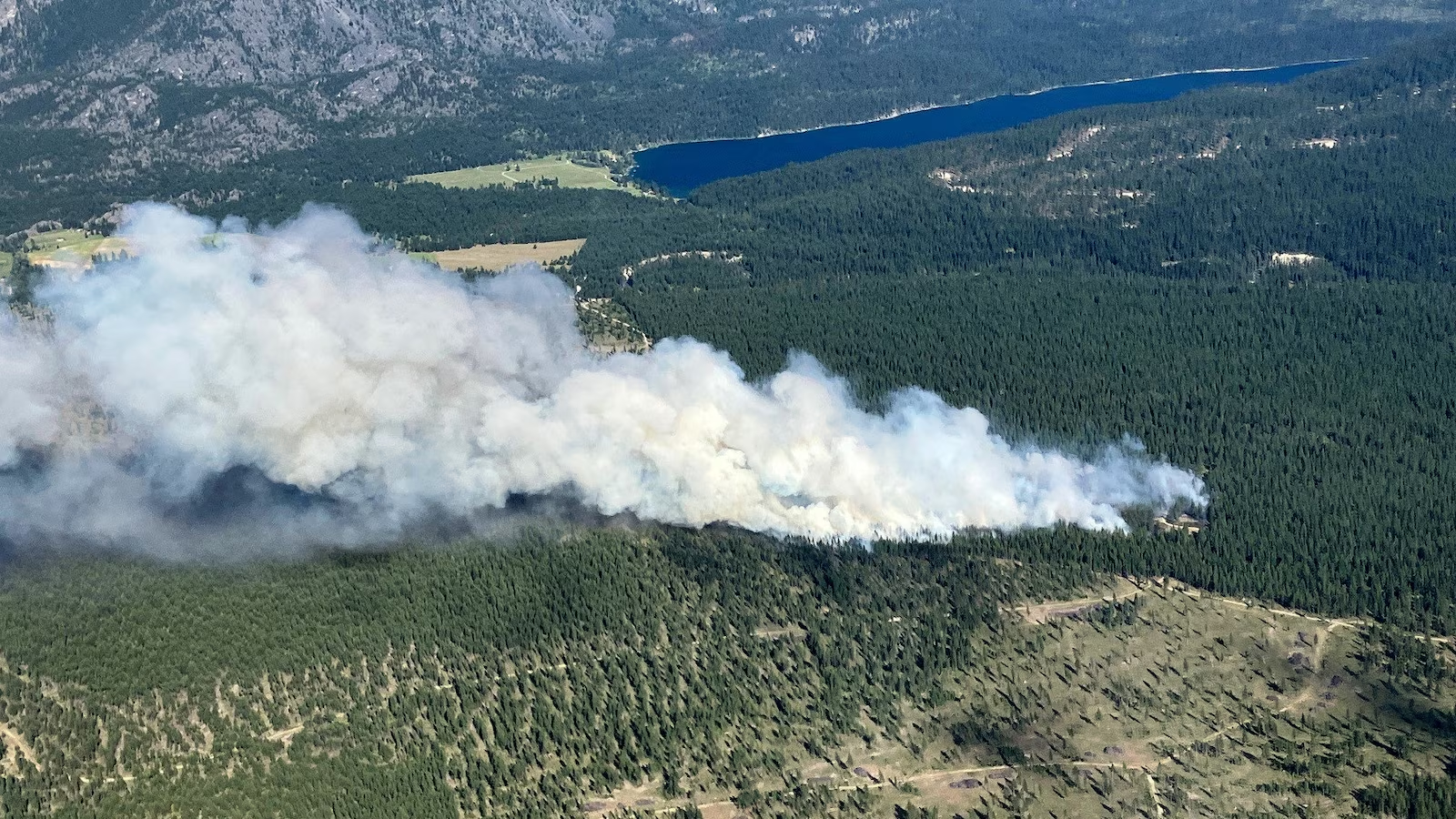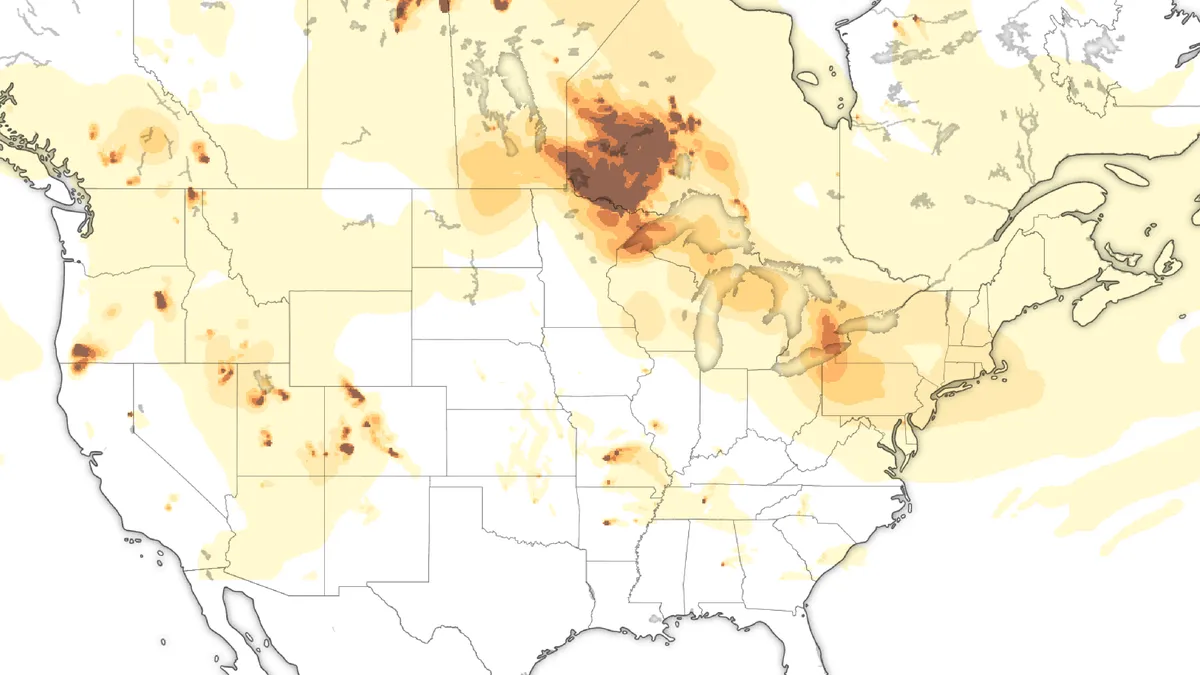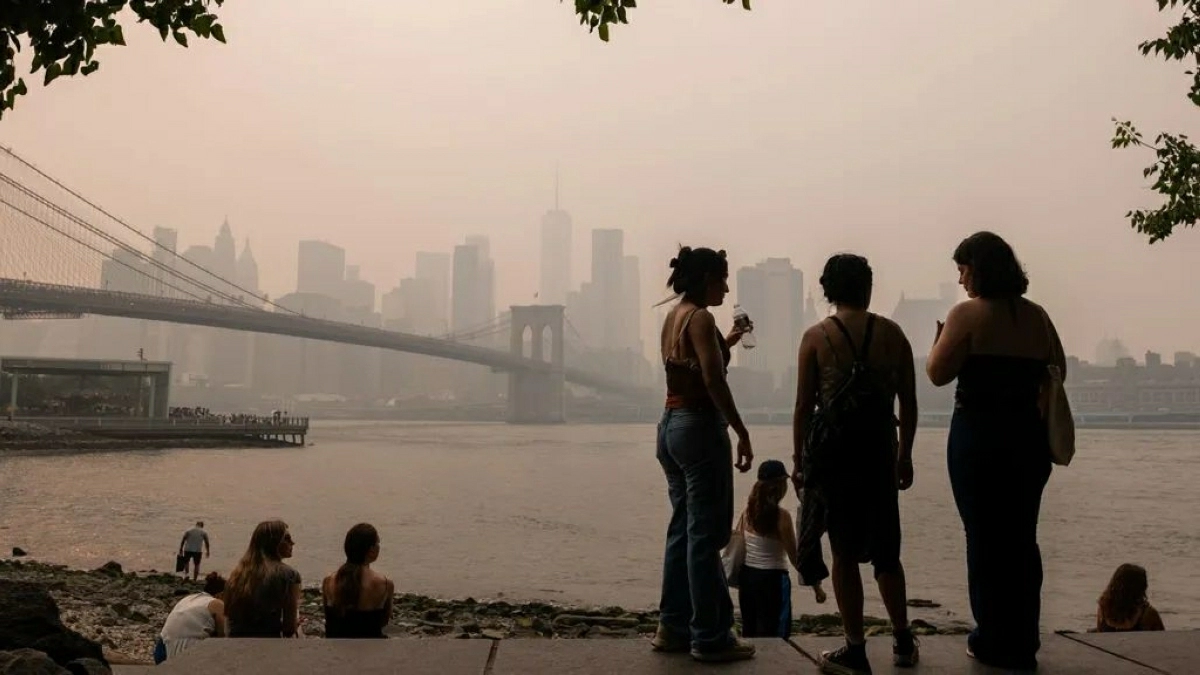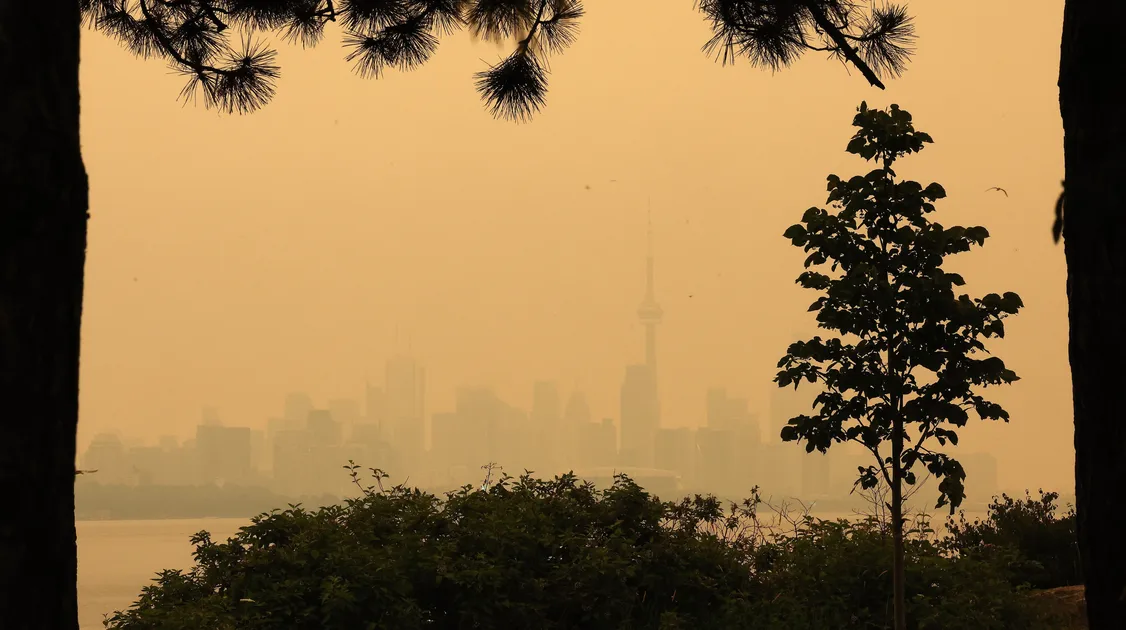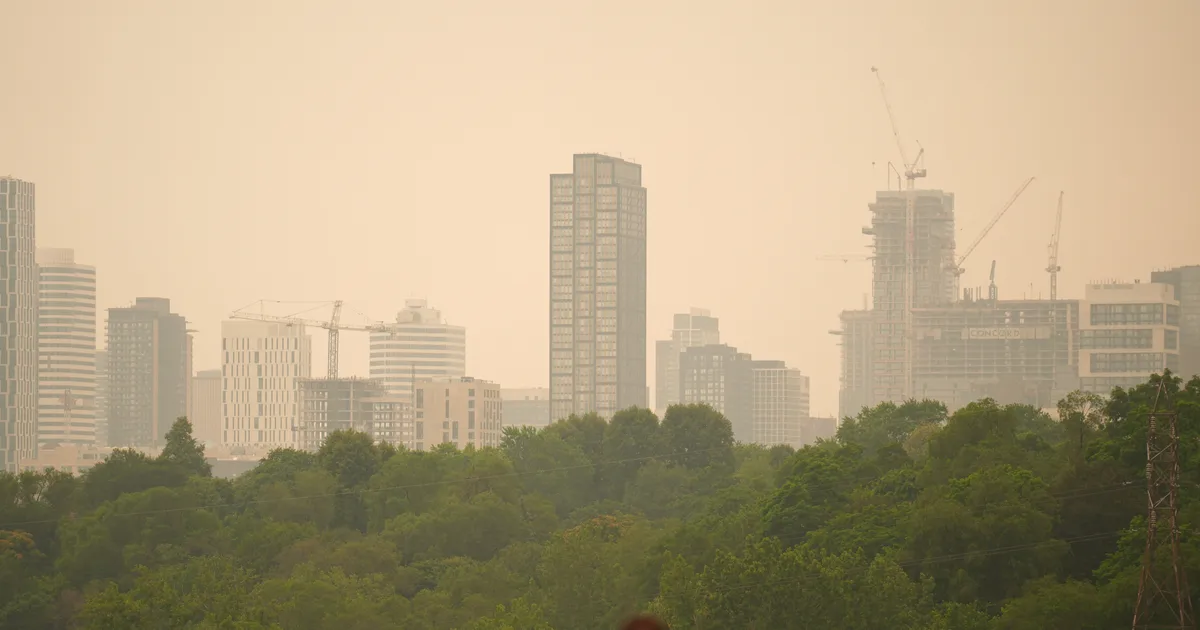
Heavy smoke from several large wildfires blazing in Canada and Minnesota is expected to engulf large swaths of the Midwest and Northeast U.S. this week, exposing millions of people to dangerous air pollution.Over 100 wildfires currently are burning in Canada and winds are carrying the smoke southeast. Warnings about dangerous, unhealthy air extended Wednesday from Minnesota through Toronto and into New York. Unusually hot summer temperatures were expected too.The best advice is to stay indoors to avoid both the smoke and the extreme heat, said Tyler Hasenstein, meteorologist with the National Weather Service in Chanhassen, Minnesota.“Those two things coinciding with each other is not good from a health perspective,” he said.The hazy Toronto skyline is seen as smoke from wildfires continue to impact air quality in Toronto, Ontario on July 15, 2026. (Photo by Mert Alper Dervis/Anadolu via Getty Images)Anadolu via Getty ImagesRangers try to get thousands of campers out of remote Minnesota wildernessIn far northeast Minnesota, rangers were trying to warn people that the Boundary Waters Canoe Area Wilderness was closed because about 17 fires caused by lightning were burning around the vast wilderness accessible primarily by canoe.The area was closed Tuesday and rangers estimated anywhere from 6,000 to 10,000 people were still inside the 1.1-million-acre (445,000-hectare) wilderness, which is almost the size of Delaware, Superior National Forest spokesperson Joy VanDrie said.“It’s an arduous job,” VanDrie said of rangers and campers having to canoe for hours or even carry their boats over land to evacuate.VanDrie didn’t know when the area might reopen. Minnesota officials said some fires in the Boundary Waters will be allowed to burn indefinitely but will be monitored to ensure they don’t threaten people or property.Even the Canadian Air Force pitched in. They were rescuing two groups of youth campers Wednesday who had crossed the border and appeared to be safe, Minnesota Gov. Tim Walz said.HERE COMES THE SMOKE 🔥Massive wildfires erupted in Ontario & northern Minnesota on Monday. NW winds will carry that smoke across the Great Lakes, Northeast, & Mid-Atlantic today & tonight. Reduced visibility & degraded air quality may persist through the end of the week. pic.twitter.com/6peZ14PX29— NWS State College (@NWSStateCollege) July 15, 2026The view of the smoke from Northern Ontario forest fires that has the City of Toronto skyline shrouded in haze as viewed from Humber Park West in Toronto on July 15, 2026. Steve Russell/Toronto Star (Steve Russell/Toronto Star via Getty Images)Steve Russell via Getty ImagesSevere drought and heat have led to a busy wildfire seasonDan Westervelt, associate professor at Columbia University’s Climate School, said severe drought conditions combined with heat in Canada and the U.S. have created “a perfect storm for really dry conditions to provide a lot of fuel for these wildfires to burn.” Research shows warming temperatures from burning coal, oil and gas are making fires more frequent and intense.High levels of fine particulate matter in the air from wildfire smoke may be unhealthy for sensitive groups, such as children and people with heart or lung conditions. The particulates can cause shortness of breath, coughing, dizziness or fatigue and aggravate heart and lung diseases and other chronic health issues.Experts suggest wearing a N95 mask if you have to be outside and keeping your indoor air cleaner by closing windows and running an air purifier or air conditioner.The sun rises behind the skyline of midtown Manhattan and the Empire State Building in New York City as smoke from wildfires from Canada moves into the region on July 15, 2026, as seen from Jersey City, New Jersey. (Photo by Gary Hershorn/Getty Images)Gary Hershorn via Getty ImagesIt’s been a particularly busy and deadly fire season in the U.S. About four dozen large fires are currently burning across 15 states, from Minnesota and North Carolina to Colorado, Utah, Idaho, Oregon and California, according to the National Interagency Fire Center.Prolonged drought and record-low snowpack levels combined to make conditions ripe for rapid fire growth. More than 16,800 people are assigned to fighting blazes across the county. The fires have burned over 5,678 square miles (9,138 square kilometers) — more than the size of Yellowstone and Grand Canyon national parks combined, the agency said.Smoke spreads as officials warn wildfires could burn for monthsIn Minnesota, officials warned large fires could burn for months. In Minneapolis, the high Wednesday was expected to be 96 degrees F (36 C) and temperatures above 90 F (32 C) were expected the rest of the week.“It could well be we’re having significant fires throughout the summer until we have snow. Snow would be a good thing,” said Patty Thielen, director of the state Department of Natural Resources.Officials in Michigan and Wisconsin warned residents about air quality issues that could last for days and the problems extended even to Maine, where residents were reporting a yellowish and brownish color in the sky.The most intense smoke could spread as far south as Washington, D.C., by midday Thursday.___Associated Press writers Susan Montoya Bryan and Jeffrey Collins contributed to this report.___The Associated Press receives support from the Walton Family Foundation for coverage of water and environmental policy. The AP is solely responsible for all content. For all of AP’s environmental coverage, visit https://apnews.com/hub/climate-and-environment.RelatedU.S. NewsCanadawildfireExtreme WeatherWildfires
Canada, Minnesota Wildfires Exposing Millions In U.S. To Dangerous Smoke
Warnings about dangerous, unhealthy air extended Wednesday from Minnesota through Toronto and into New York.
861 words~4 min read