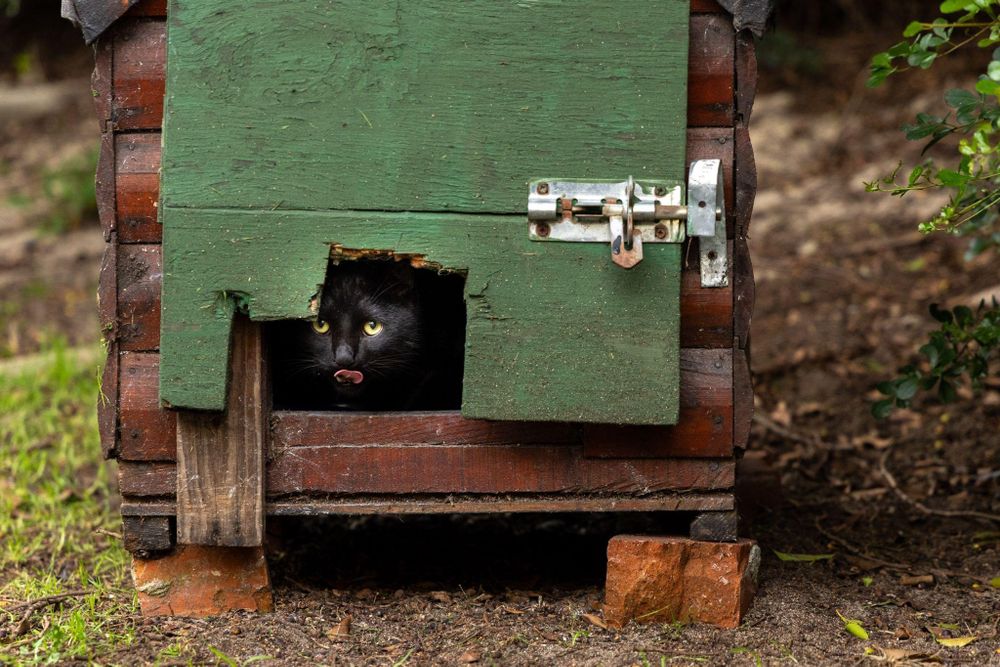
Tom Jones licks his lips as Patrick Lupuzi arrives with his food. He earned his name because of his loud cries whenever it’s feeding time.
Patrick Lupuzi walks across campus, making a distinct clicking sound. Within moments, cats emerge from beneath parked cars and from the shelter of shrubs to greet him. He offers them wet cat food to draw them closer so he can check on them and give them affection. Some are content with gentle grooming, while others eagerly wait for a scratch behind the ears.
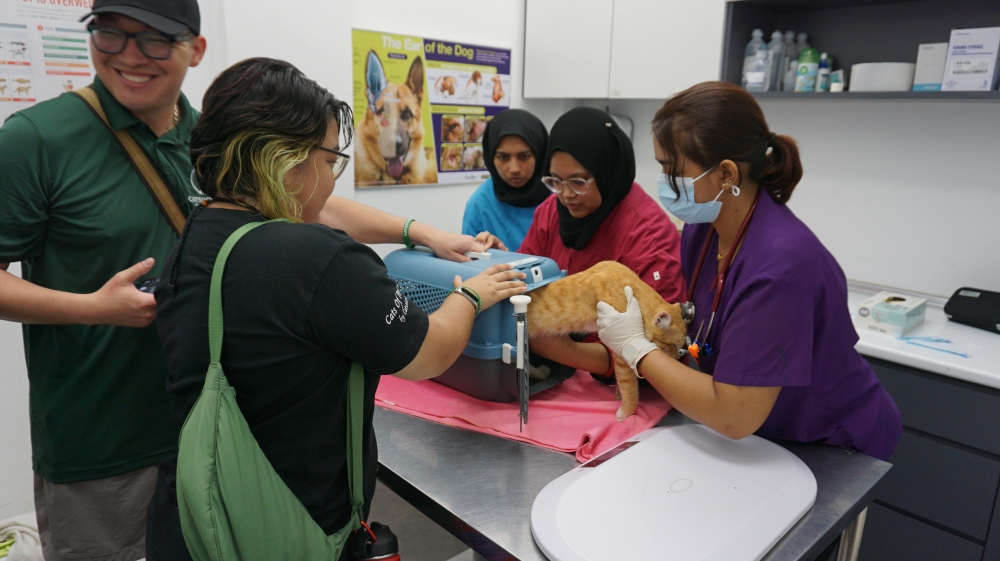
About 113 feral cats call the University of the Western Cape (UWC) home, along with one dog named Meisiehond that wandered onto campus one day and never left. The UWC Feral Cat Project (TUFCAT) was founded in 1997 by Dr Sharyn Spicer and the late Andre Oppelt to ensure that the resident cats are fed daily and receive sterilisation, veterinary care and check-ups when needed. During the project's first cat audit in 1999, there were about 165 cats on campus. Through its trap-neuter-return (TNR) programme, the cat population has been stabilised and gradually reduced over the years.
Lupuzi made the kennel entrances smaller to keep Egyptian geese from stealing the cats' food.
The cats also give back to the campus by preventing potential rodent problems.