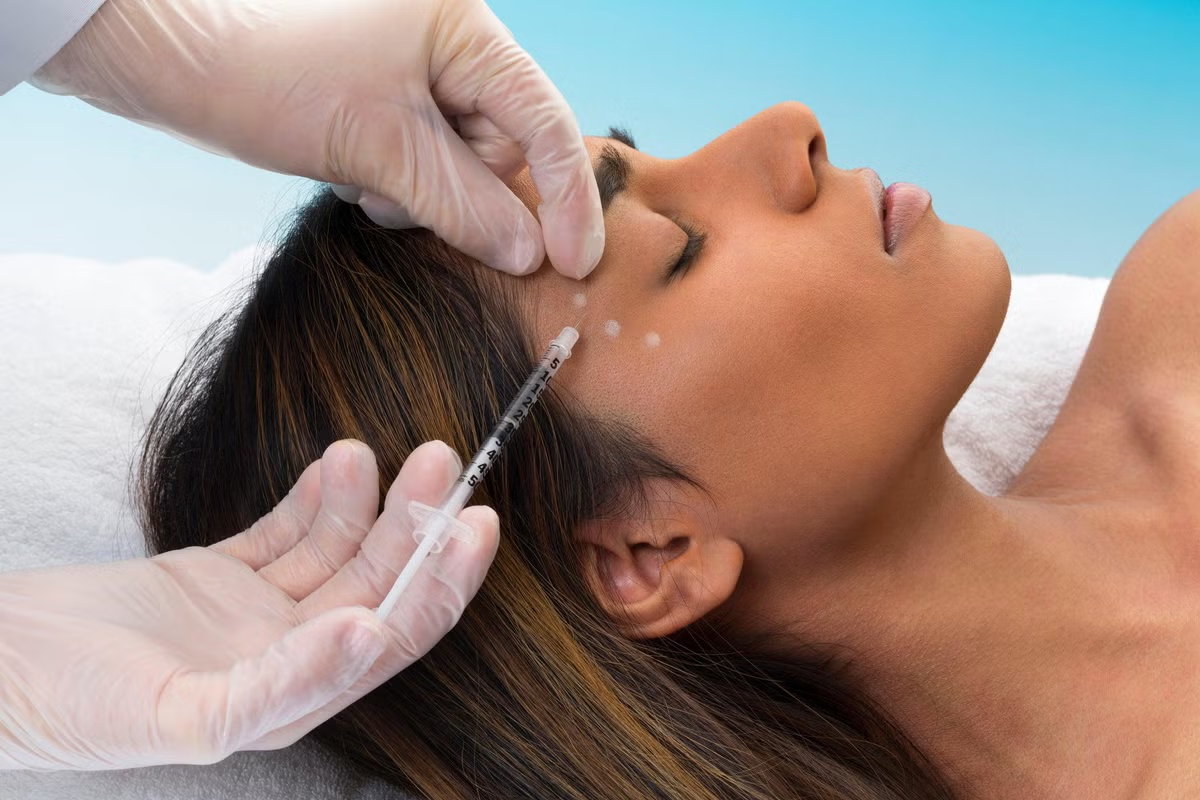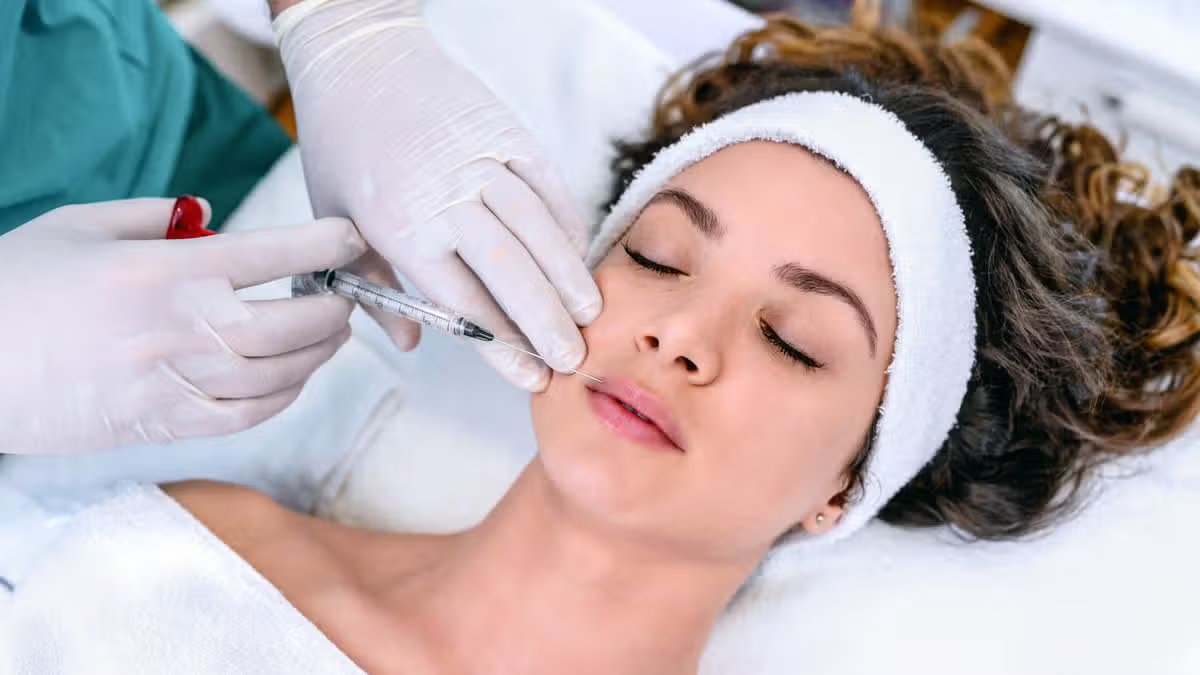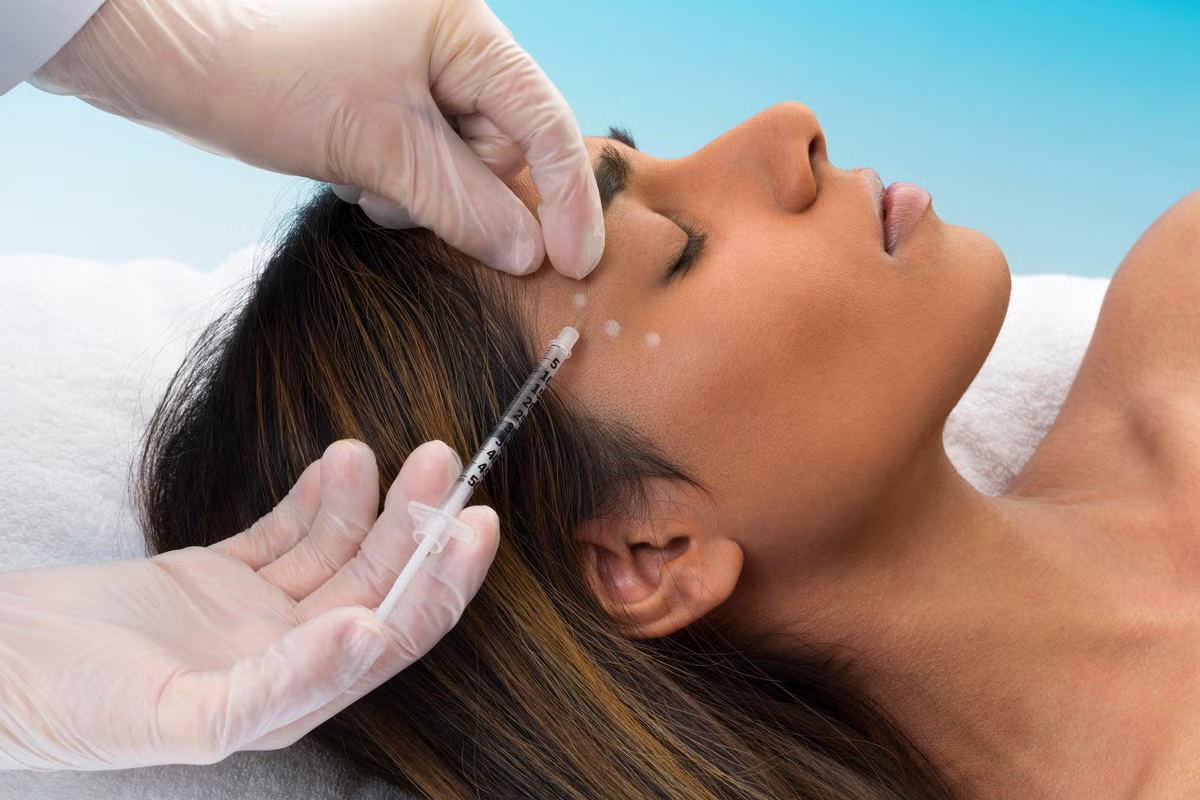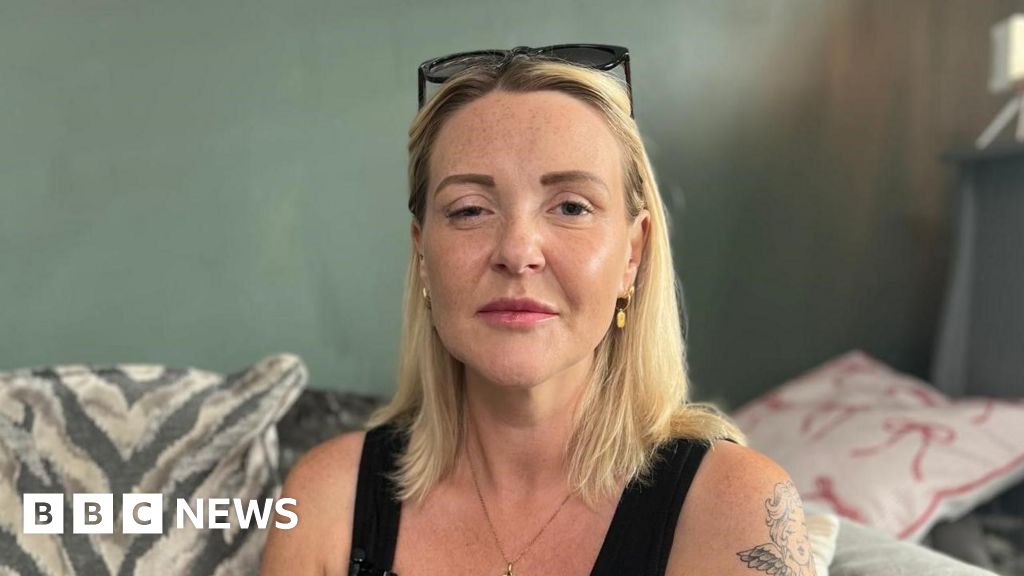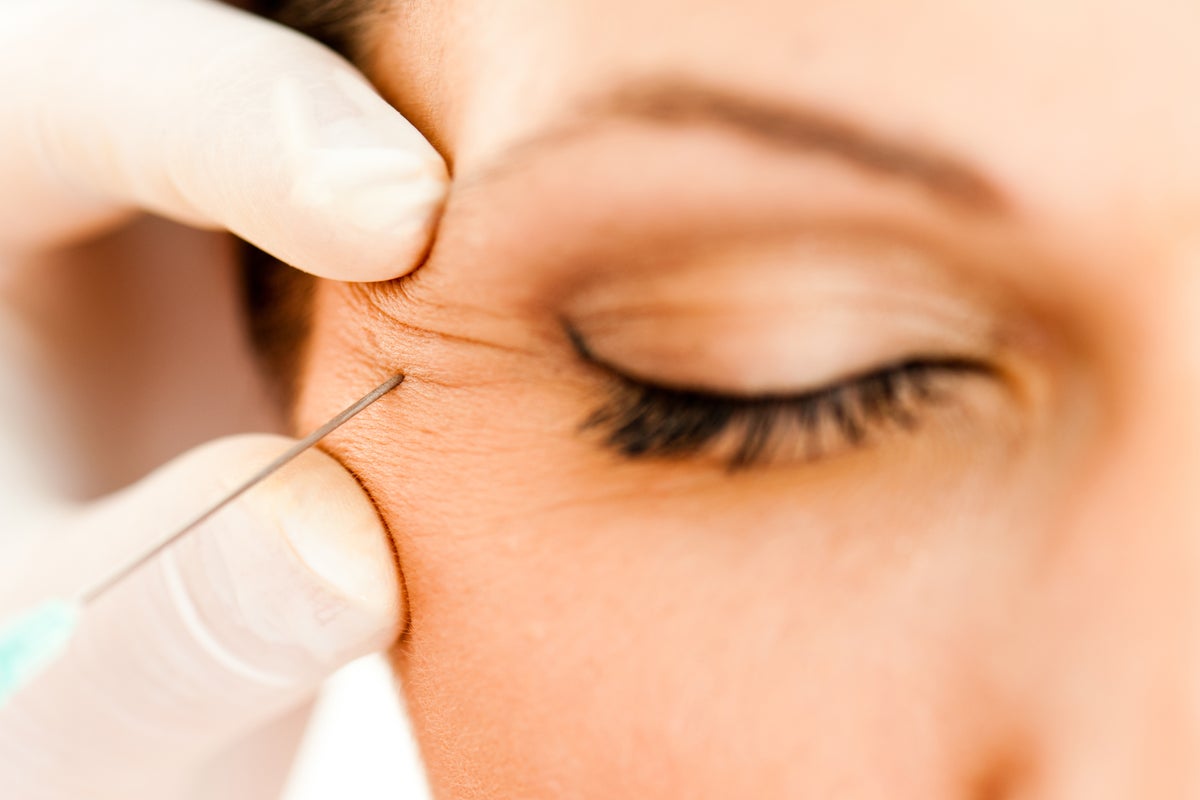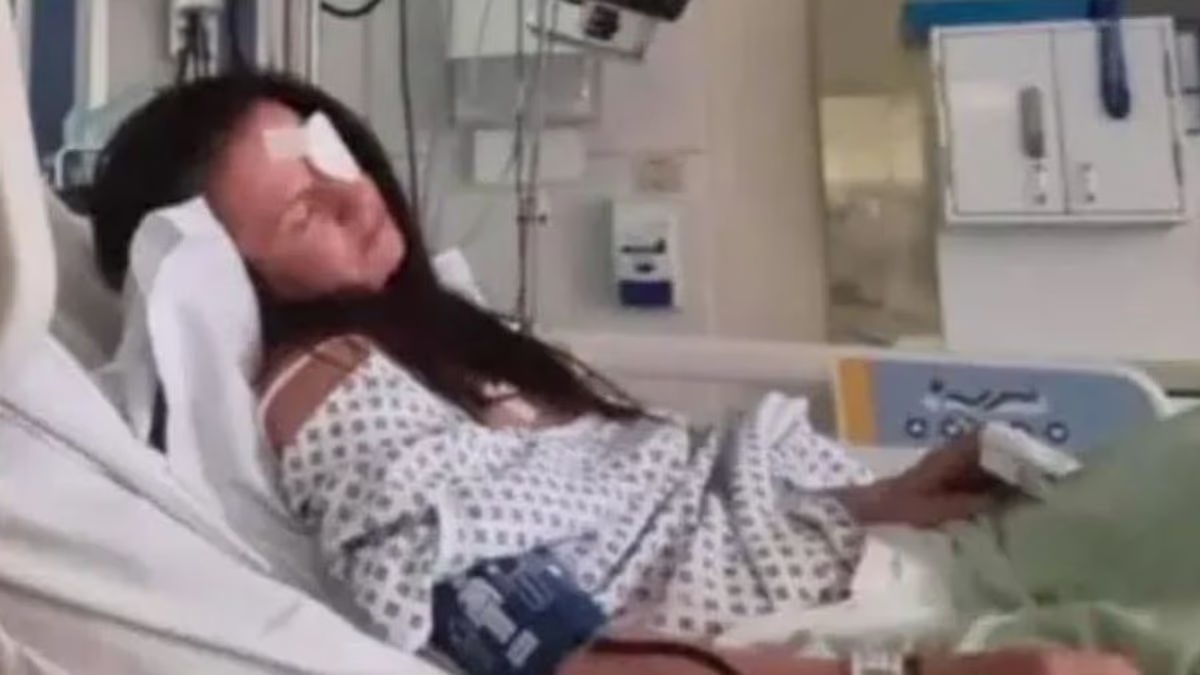
Health chiefs have issued fresh safety warnings over anti-wrinkle injections after a spate of life-threatening reactions caused by counterfeit jabs of Botox and other botulinum toxin a type products. The Medicines and Healthcare products Regulatory Agency (MHRA) today announced a crackdown on the treatment following 'a spike in hospitalisations'. When administered incorrectly, Botox is known to cause botulism - a paralysis-triggering bacterial infection that can cause muscle paralysis, difficulty breathing and even death.The MHRA announced that safety warnings on packets of the drug and patient leaflets would now be explicit following a string of botulism cases. The body added that patients should watch out for difficulty swallowing, slurred speech, breathing difficulties, or muscle weakness that develop up to a month after having the treatment. In May, it was reported that two patients had suffered suspected botulism in Leeds after undergoing an aesthetic treatment. And last year, a 36 year-old mother-of-three became critically ill after receiving the injections.There are an estimated 900,000 Botox procedures in Britain each year. Kaylie Bailey said she almost died last year after receiving allegedly fake Botox treatmentsBotox is the most recognised brand containing the ingredient botulinum toxin, which is typically used to paralyse facial muscles with the aim of reducing wrinkles. But, in some instances, the jab may spread beyond the point of injection and enter the bloodstream, triggering the dangerous infection. This is particularly likely if the product used is counterfeit.One victim is Kaylie Bailey from Peterlee, County Durham, who paid £75 for three anti-wrinkle injections, which was half of what it had cost on a previous visit.Within days of receiving the bargain treatment, Ms Bailey suddenly began to struggle to see, the BBC also reported at the time.Initially doctors at Sunderland Royal Hospital, diagnosed her with the eye condition ptosis – which is when the upper eyelid droops – and told her to rest before sending her home.According to the Hospital Trust, medics told Ms Bailey it was likely related to the beauty treatment, and advised to see a GP if her symptoms worsened.In the subsequent days her condition did deteriorate, and she was rushed back to hospital where she was told she had botulism.Due to her serious condition, Ms Bailey spent three days on the Intensive Care Unit and was treated with an anti-toxin. At one point she stopped breathing and had to be resuscitated by medics. There are an estimated 900,000 Botox procedures in Britain each year. However, in some instances, the jab may spread beyond the point of injection and trigger the dangerous infection.'I remember lying on the bed thinking 'I'm dying here, and I don't want to',' Ms Bailey later recalled.It was later revealed by the BBC that she was injected with Toxpia, an illegal Botox-type anti-wrinkle treatment.Dr Alison Cave, MHRA chief safety officer, has now warned that people should be aware of the risks of unlicensed products.The UK Health Security Agency (UKHSA) last year recorded at least 38 cases of botulism poisoning linked to the use of unlicensed products.Ms Bailey was one of the 28 reports in the North East of England, with five victims visiting A&E in Durham on one night in June. The cases were all linked to fake anti-wrinkle injections.Dr Cave said: 'Botulinum toxin products are effective for a number of different medical and cosmetic purposes when used correctly.'However, these strengthened warnings are an important reminder that, in rare cases, serious side effects can occur.'It is vital that healthcare professionals and patients are aware of the symptoms of botulism and act quickly if they arise as this is a medical emergency. 'We also strongly urge the public to avoid unlicensed products and seek treatment only from appropriately qualified practitioners.'The MHRA continuously monitors the safety of these medicines, including side effects and emerging evidence.'Dr Martin Bewley, consultant in health protection at the UKHSA said: 'While botulism is a rare infection, it can be serious.'There are effective treatments available and we recommend seeking immediate medical advice if you have had a recent treatment and are having symptoms such as difficulty swallowing.'Contact NHS 111 (or local equivalent in Northern Ireland) for further advice and seek immediate medical attention.'It is important to get checked out so you can have peace of mind and treatment if needed. Given the risks, it is also important to go to a licensed practitioner.'
Urgent warning over deadly fake Botox that can trigger paralysis
Health chiefs have issued fresh safety warnings over the popular anti-wrinkle injection Botox , after a spate of life-threatening reactions caused by counterfeit jabs.
719 words~3 min read