The author has taken a new job building electronics after months of unemployment.
Javier Zayaz/Getty Images
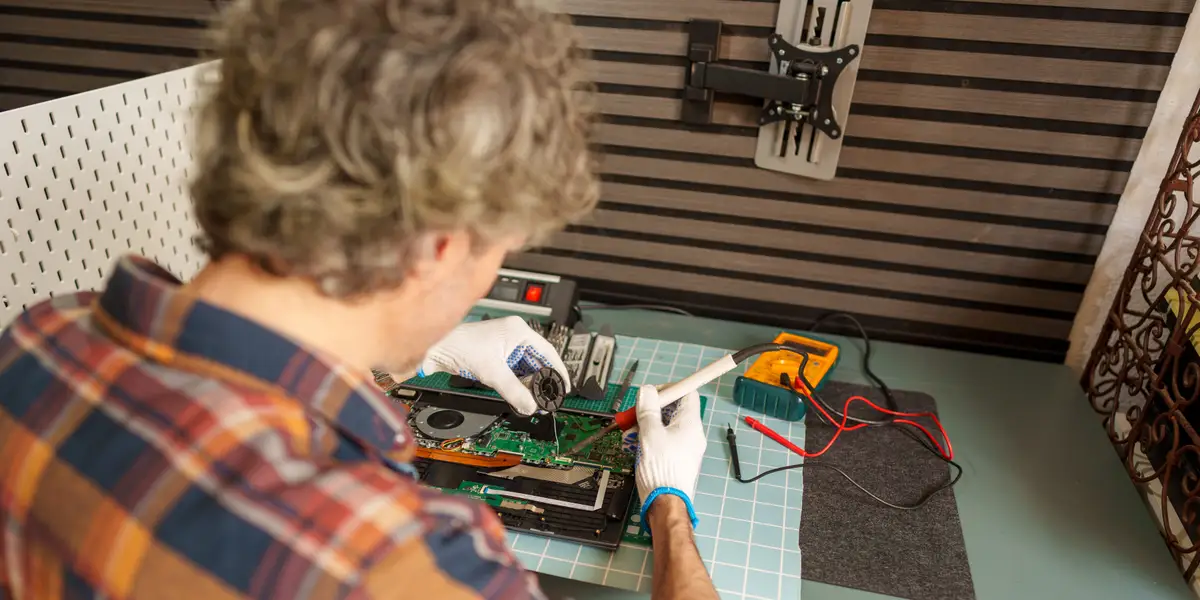
When I was 20, I spent a summer working as a maid, cleaning houses.The hours were long, the pay was terrible, half the day was spent in traffic, and the work was frequently unappreciated by our clients.But the job did have one excellent benefit: I learned a lot about cleaning houses and commercial spaces, skills that have paid dividends for the last two decades by allowing me to maintain a clean and healthy home. Every time I dust, I remember to start with the ceiling fan and work my way down the walls. I know steel wool does wonders for old bathtub soap scum. And I know that cinnamon covers any odor.So, as I struggle to find a new job in my field of public service after losing my position last year, I remembered how unusual skills and non-traditional career paths have helped me in the past. That's why when my engineer friend offered me a gig assembling electronic parts, I jumped at the chance.I'm learning to read a BOMBefore this job, the only machine I regularly operated was the office printer. But in the last year, I've used 3D printers, laser markers, compressor-powered wire crimpers, industrial-grade milling machines, and circuit board ovens.But the first thing I learned was how to read a circuit board's bill of materials, or BOM. Created by the designer, a BOM lists every component necessary to create a functional circuit board.BOMs I work with are listed in an Excel spreadsheet in ascending order so the assembly machines can be programmed to place the tiny components on a circuit board in the correct order.