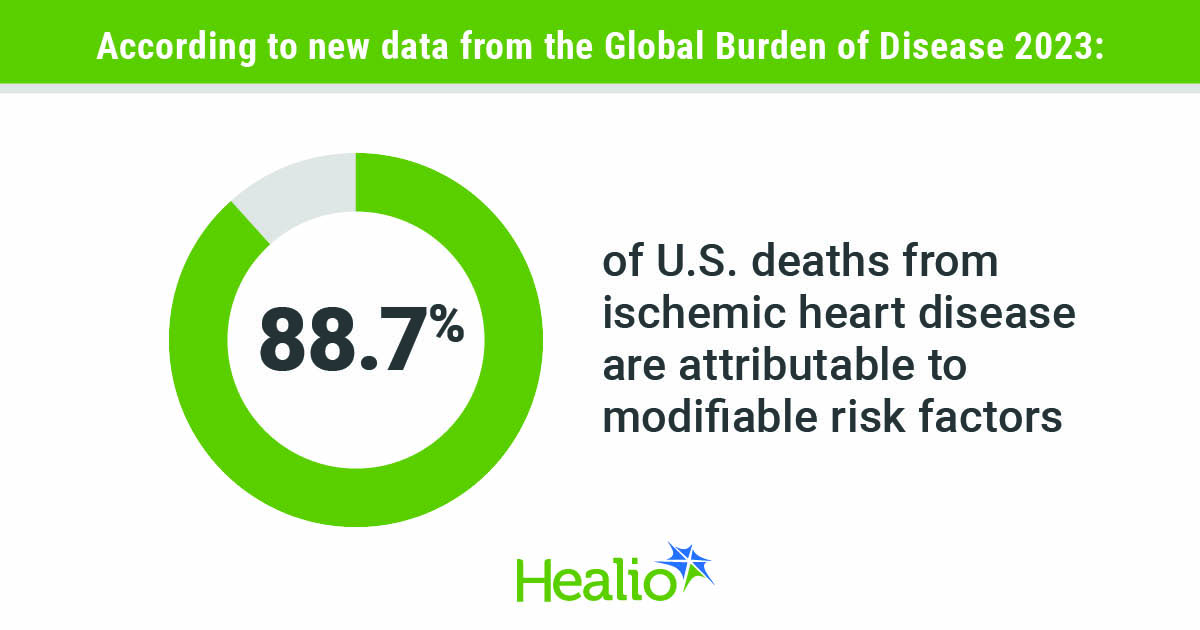
Here’s the good news: Deaths due to ischemic heart disease — when coronary arteries are blocked — fell by more than half from 1990 to 2023 in the United States, thanks to better control of up to a dozen risk factors. What’s still on the table: Almost 9 out of 10 of the most recent deaths could have been prevented by better managing those risk factors.
Much of the progress recorded since the start of the Global Burden of Disease study, published Wednesday in JAMA Cardiology, stemmed from drops in deaths from smoking (down 33.3%) and particulate air pollution (down 74.9%). But in the last year of the study, 419,000 of the estimated 473,000 coronary artery disease deaths — or 88.8% — were still linked to modifiable risk factors.
The warning signs for coronary artery disease in 2023 are familiar ones. Higher body mass index (up 12.5%) and higher blood glucose levels (10.5%) since 1990 are singled out as growing problems that align with greater prevalence of diabetes as well as development of the newly recognized cardiovascular-kidney-metabolic syndrome, an umbrella term that includes heart disease, kidney disease, diabetes, and obesity.
“I think it bears repeating that coronary artery disease is preventable,” study co-author Gregory Roth, professor of cardiology at the University of Washington, told STAT. “For those of us who are in the health space, that sounds maybe obvious, but I see patients every week who are not aware that for the leading cause of death in the United States, we know how to modify risk factors so that we could potentially remove 80% or 90% of it.”