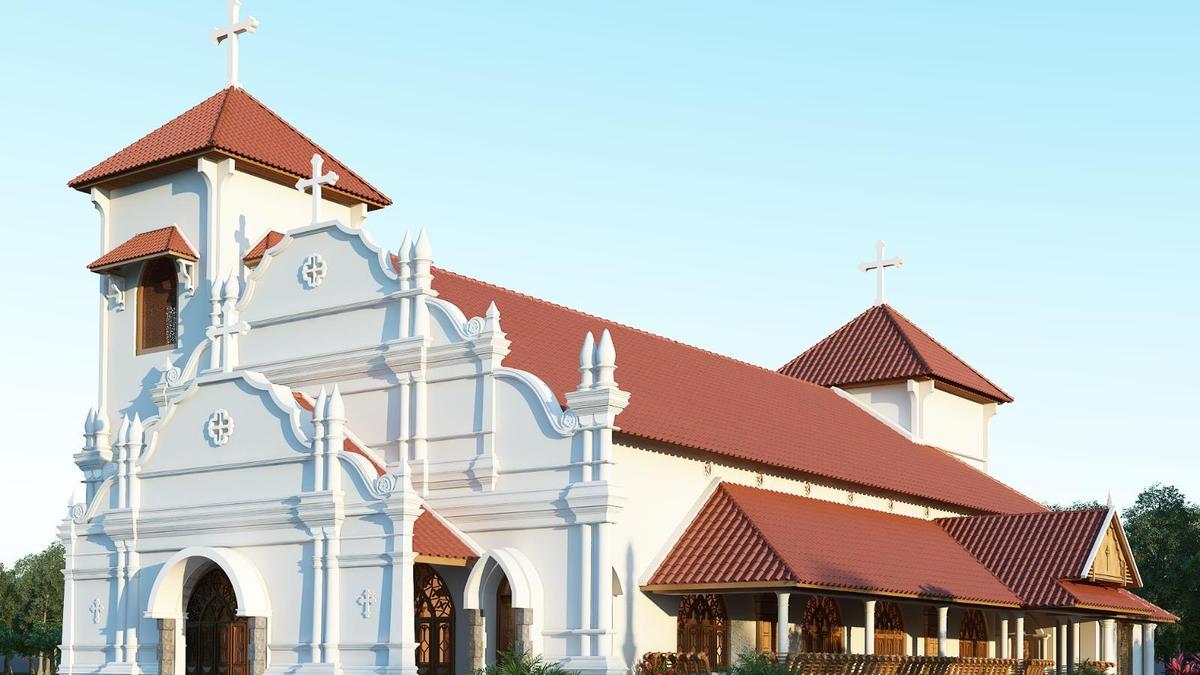
A sketch of the renovated cathedral.
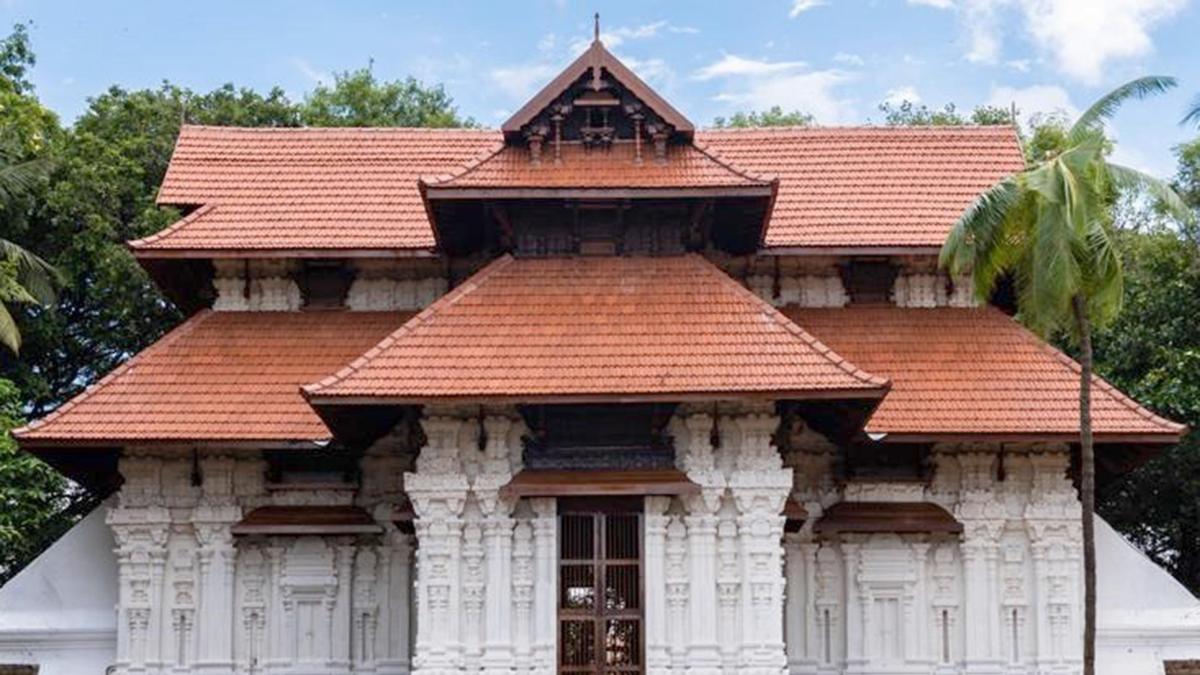
As the renovated St. Mary’s Orthodox Cathedral at Puthiyakavu in Mavelikara (established in AD 943) prepares for its consecration on July 17 and 18, the event has ignited a quiet but profound debate: what should a Kerala church look like? The answer, as the cathedral’s own renovation shows, is a living chronicle of 2,000 years of Saint Thomas Christians’ cultural negotiation — and a community grappling with how to honour its past while building for the future. The newly renovated cathedral is a study in contrasts. Its majestic white façade, crowned by a commanding bell tower and cross, features symmetrical Baroque-inspired curves and decorative finials and pinnacles — hallmarks of Portuguese ecclesiastical influence. Yet the arched doorways (a blend of the Kerala concept of nadasala and Portuguese porta), the steeply sloping terracotta-tiled roof, broad verandas and projecting eaves soften these European lines with distinct Kerala sensibilities, creating a balanced symmetry that draws the eye naturally towards the main entrance. Inside, the long nave and lofty proportions open into an atmosphere of prayerful serenity (which the East and West Syriac traditions always lay emphasis on) that feels both timeless and contemporary.