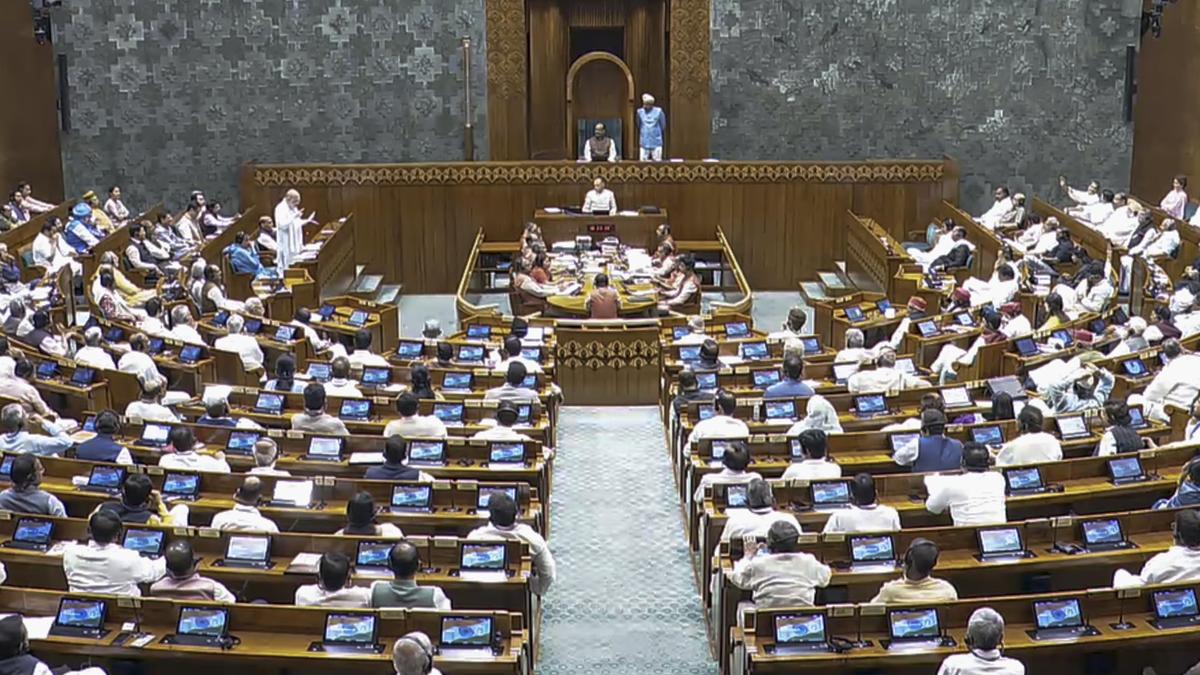
Alongside the supplementary spending approvals, the Ministry is also expected to introduce three key bills for consideration and passage.
After a five-year interval, the Finance Ministry is likely to table the Supplementary Demands for Grants (SDG) during the upcoming Monsoon Session of Parliament, an official source told BusinessLine. Alongside the supplementary spending approvals, the Ministry is also expected to introduce three key bills for consideration and passage.The last time SDG was introduced during a Monsoon Session was in FY22, a fiscal year that ultimately saw three such supplementary demands. Since then, the government has typically stuck to a two-SDG schedule, presenting one in the Winter Session and the second in the Budget Session. However, escalating fiscal pressures, primarily driven by higher expenditures linked to the West Asia conflict and mitigation efforts for a below-normal monsoon, are believed to be the key reasons for reviving a monsoon-session SDG this year.SDG is a statement presented to Parliament outlining the estimated additional expenditure required for a fiscal year, over and above the outlays already authorised in the Annual Financial Statement (Budget). Depending on the nature of the allocation, these supplementary demands can be categorised as token, technical, or substantive (cash) grants.For FY27, the total budget size is pegged at ₹53.47 lakh crore. However, early fiscal indicators show widening pressure; according to data from the Controller General of Accounts (CGA), revenue receipts dipped by over 1 per cent during the first two months of the current fiscal compared to the same period last year. Meanwhile, expenditure surged by over 18 per cent, causing the fiscal deficit to swell by more than 12 times during the period under review.Key LegislationsSources indicated that the Finance Ministry is expected to introduce three key pieces of legislation: the Securities Market Code (SMC) Bill, the Corporate Laws (Amendment) Bill, and a Bill to replace the ordinance that exempted Foreign Portfolio Investors (FPIs), overseas investors, and the Bank for International Settlements (BIS) from capital gains tax on interest and trading gains from government securities. Notably, the SMC Bill proposes the establishment of a dedicated ombudsman to streamline and resolve investor grievances.Beyond investor grievance redressal, the Code is designed to ease compliance for regulated market entities and enhance institutional coordination among financial regulators. Once enacted, the Bill, which is presently being vetted by a Select Committee, will replace three legacy laws: the Securities Contracts (Regulation) Act, the SEBI Act of 1992, and the Depositories Act of 1996.The Corporate Laws (Amendment) Bill introduces enabling provisions that will allow companies and Limited Liability Partnerships (LLPs) operating within International Financial Services Centres (IFSCs) to conduct transactions and maintain their books of accounts in permitted foreign currencies. Additionally, the Bill establishes a regulatory framework for converting specified trusts into LLPs. A Parliamentary panel is expected to submit its report during the upcoming Monsoon Session, after which the legislation will be cleared by the Cabinet before being introduced in the House.Published on July 15, 2026