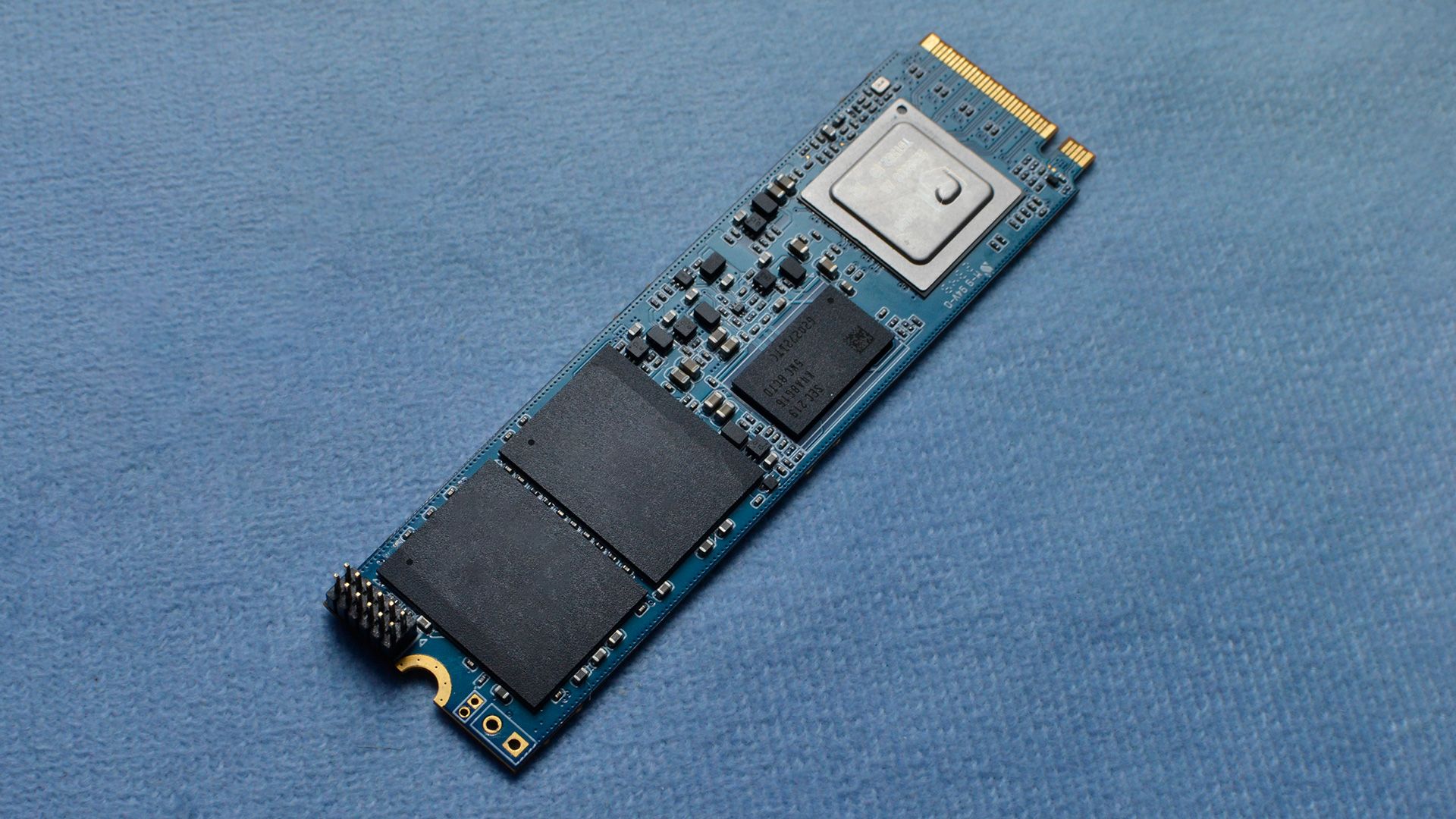
(Image credit: Silicon Motion)
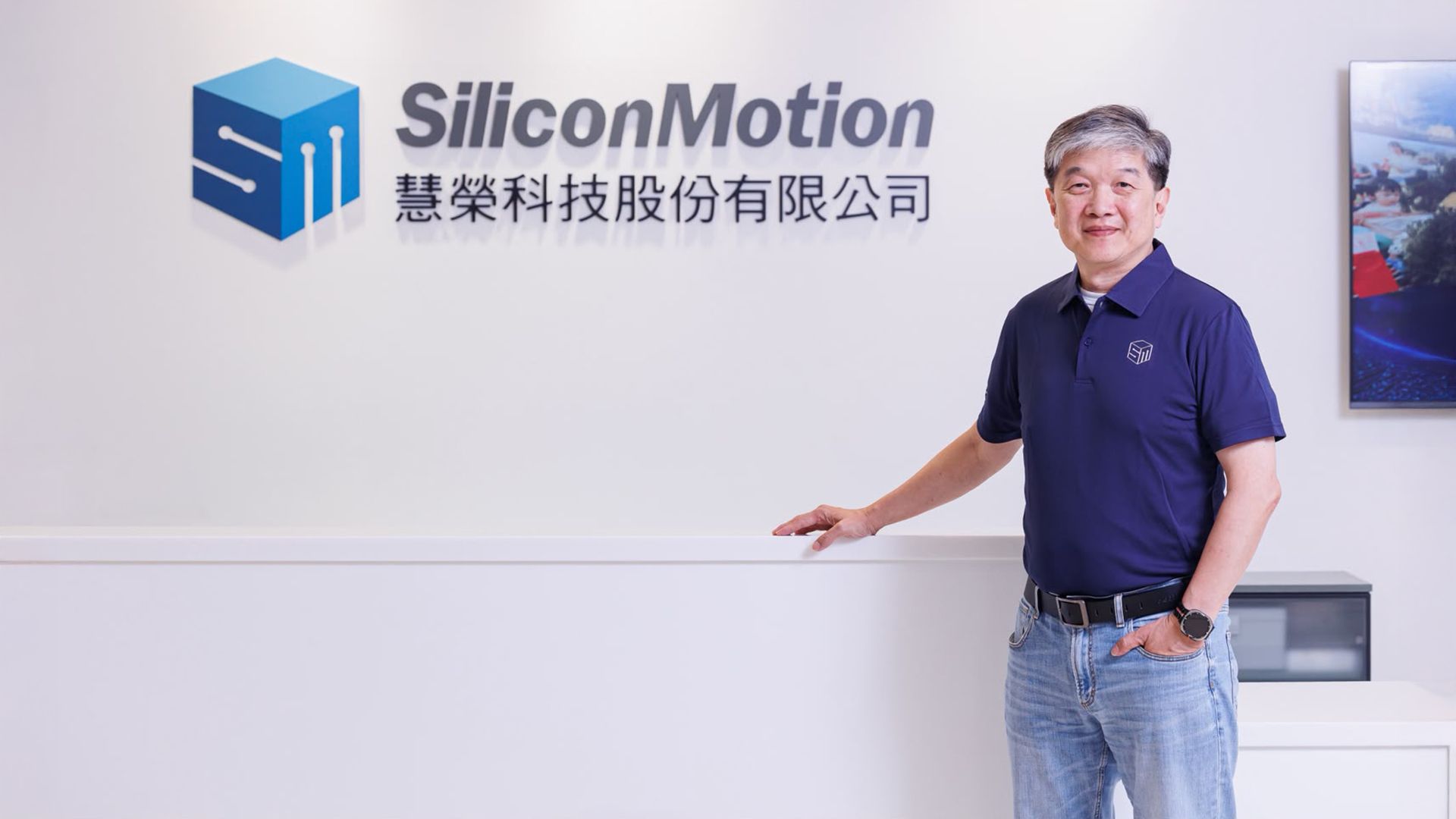
Nowadays, storage devices for consumer and data center applications differ rather dramatically, as do approaches to product design as well as go-to-market strategies. Therefore, to get a more or less comprehensive overview of the storage market in general, you must observe both ends of the spectrum. To complement our interview with Nelson Duann at Computex, we also sat down with his colleague Alex Chou, who is in charge of Silicon Motion’s enterprise storage business.Alex Chou is an interesting person to talk to. Before joining Silicon Motion, he spent some 18 years at Broadcom, where he led the wireless connectivity business, also initiating the Enterprise Switch, PoE, and 10-G Base-T PHY business with a product marketing focus. Before that, he worked at UMC Capital, ARK Logic, and Western Digital, where he developed graphics accelerators. He deeply understands the industry and uses his knowledge to expand SMI's business into the data center segment. As he is the first general manager of Silicon Motion's enterprise business unit, it is safe to say that all the success that the company has faced in the new segment so far can be attributed to Alex Chou.Anton Shilov: Can you introduce yourself to our readers, please?Alex Chou: My name is Alex Chou. As you know, Silicon Motion has two business units: the client business and the enterprise business. I am responsible for the enterprise business unit. My responsibilities include defining new products, leading development teams, bringing products to market, and working with OEMs, cloud service providers, and other customers to promote our technology and differentiation.Getting into enterprise SSD business Historically, Silicon Motion was focused on NAND controllers for client applications as well as embedded graphics processors and USB display controllers. Following the restructuring in the early 2020s, SMI formed a separate business unit to offer enterprise-grade SSD controllers, though it took the company some time to land its first tangible orders. By now, the company has yet to grab a 10% market share, yet it has clients among cloud service providers (CSPs), hyperscalers, and OEMs, significant achievements given Silicon Motion is a relatively new market entrant.Anton Shilov: It has been a challenging year for much of the industry, particularly for memory-related segments. Yet Silicon Motion reported first-quarter revenue of $342.1 million, up 23% sequentially and 105% year-over-year, while SSD controller sales increased by roughly 40% to 45%. Can you explain what drove those results, particularly on the enterprise side?Alex Chou: It depends on how you define a difficult year. If you look at the results, I would argue that this has actually been one of the best years the storage industry has seen.Silicon Motion is fundamentally a controller company. We build controllers that work with NAND from all major memory suppliers. On the enterprise side, we are still relatively new compared to some established competitors, but we have secured a number of new projects and have started delivering products to customers.Get Tom's Hardware's best news and in-depth reviews, straight to your inbox.We have invested heavily in PCIe Gen5, Gen6, and Gen7 enterprise SSD controllers. Today, our Gen5 products are beginning to ramp into volume production with multiple OEM customers. That ramp is contributing to our growth.Anton Shilov: Do you have an estimate of your market share in the enterprise SSD controller market?Alex Chou: That depends on how you define the market. Some people measure market share by unit shipments, while others look at exabytes shipped because SSD capacities continue to increase.We have only recently begun shipping enterprise products in volume. If you listened to our CEO's comments during the earnings call, we expect enterprise shipments to increase significantly in the second half of the year. We are still in the early stages of our ramp, but we are making good progress with several key customers.If you look beyond the initial ramp and think about the full-year run rate, I believe we can build from there and target a much stronger position next year. Longer term, our goal is to exceed 10% market share in the $4B enterprise SSD controller market, but this year is really about getting through qualification, customer testing, and the early production ramp in 2 half of this year.Our goal is to continue expanding our share. We are only beginning the ramp [of our data center-grade SSD controllers] today, but we expect our share to increase meaningfully as deployments grow.Anton Shilov: Who are your primary customers? SSD manufacturers, OEMs, or hyperscalers?Alex Chou: We primarily work with OEMs. We sell controllers and firmware solutions to SSD manufacturers and OEMs. Some customers use our complete controller-and-firmware solution, while others develop their own firmware.At the same time, we work directly with hyperscalers and cloud service providers to explain the advantages of our products and ensure they understand our technology roadmap.Enterprise SSDs are used in several different segments. Traditional compute servers represent one market. High-density storage systems used for AI and large-scale data storage are another. We also see growing interest in storage systems located near GPUs, where latency becomes particularly important.One area where we differentiate ourselves is quality of service. We have developed a patented traffic-shaping engine that helps maintain latency consistency under heavy workloads and multi-tenant environments. That capability is particularly attractive to hyperscalers and cloud service providers.Anton Shilov: Do you see the enterprise SSD market splitting into different categories depending on workload?Alex Chou: Yes. We see at least three major categories emerging.The first is traditional compute-attached enterprise SSDs, which are used in conventional servers and storage systems. The second is very high-density storage for AI and hyperscale environments, where capacity, throughput, and cost efficiency are critical. The third is storage located closer to GPUs, where the requirements are very different because latency and quality of service become much more important.That third category is particularly interesting. In AI systems, the storage subsystem is no longer just feeding CPUs. It increasingly has to support GPUs directly, especially for workloads involving very large datasets or KV-cache offload. In those environments, low latency and predictable performance matter much more than they did in traditional storage deployments.Storage Next, PCIe 6 and PCIe 7 SSD controllers Anton Shilov: Is that where Nvidia's Storage Next vision comes in?Alex Chou: Yes. Storage Next is one of the major industry developments we are watching very closely.The idea is that storage will move closer to the GPU and become part of a much more tightly integrated data path. In some cases, the goal is not just to maximize bandwidth, but to ensure that latency remains low and deterministic enough for AI workloads that continuously move data between accelerators, system memory, and storage.This is one of the reasons we have invested heavily in QoS and latency control. Through our traffic-shaping technology, we can manage access patterns and reduce latency spikes when multiple tenants or applications share the same SSD. In a cloud environment or an AI storage environment, that becomes very important.