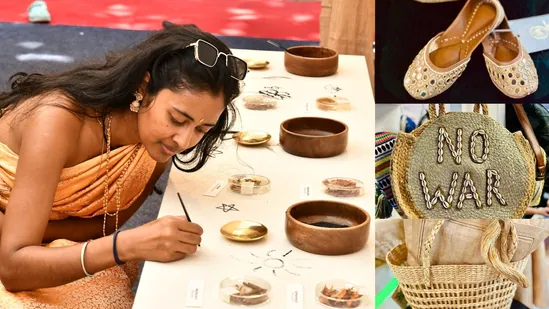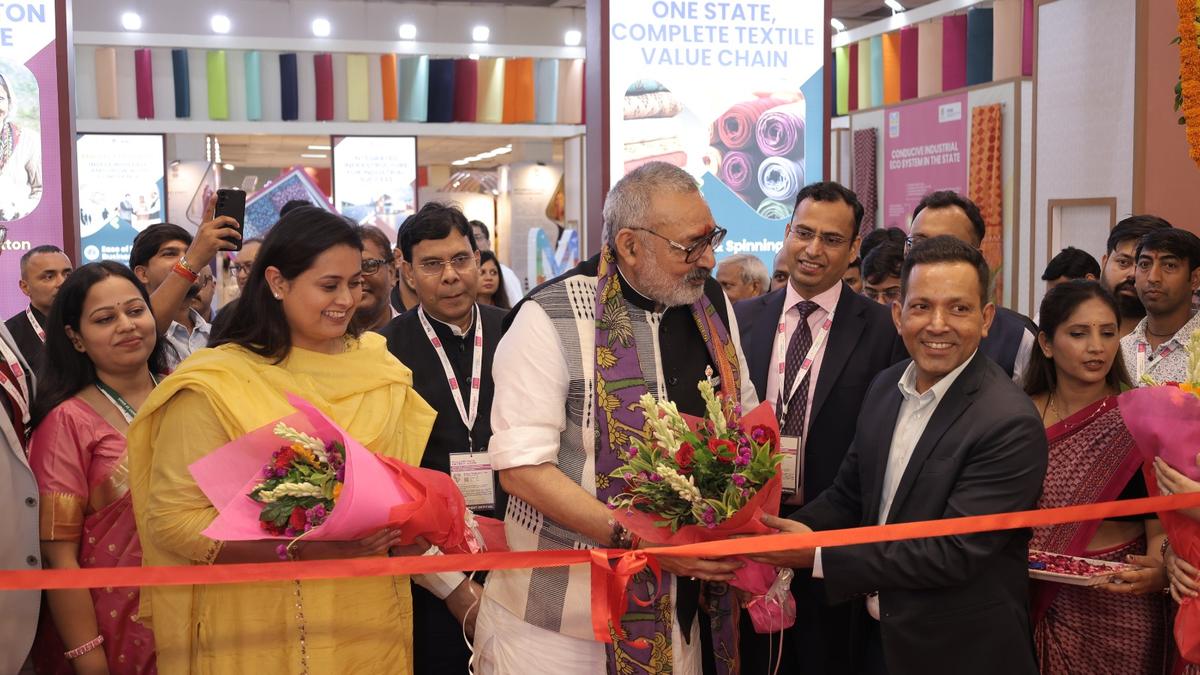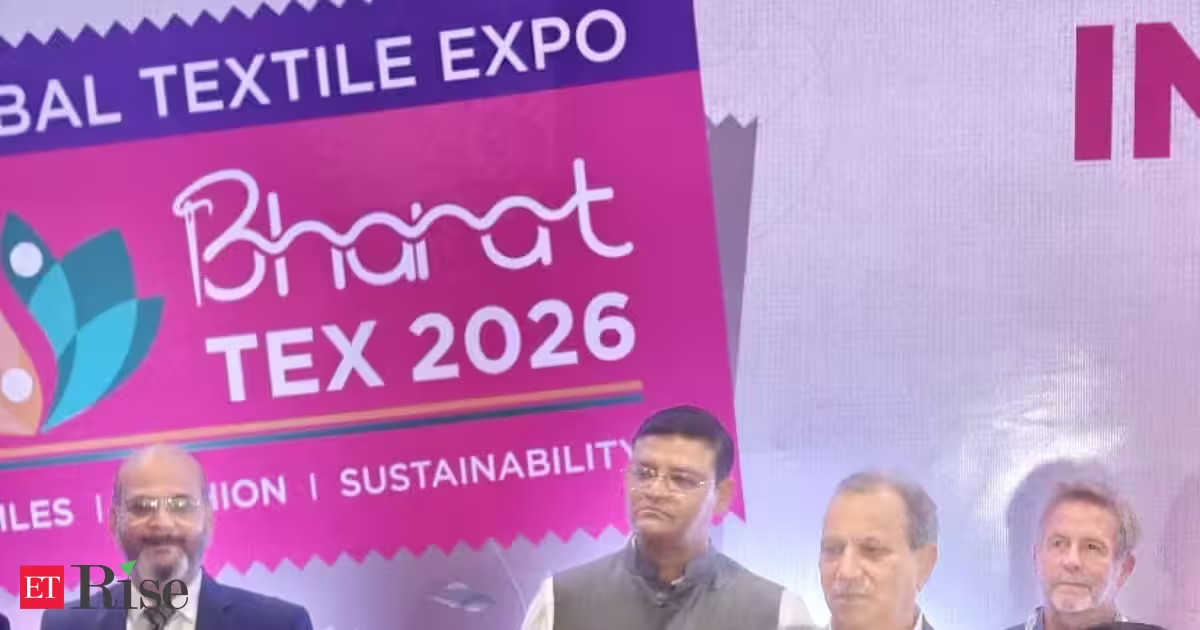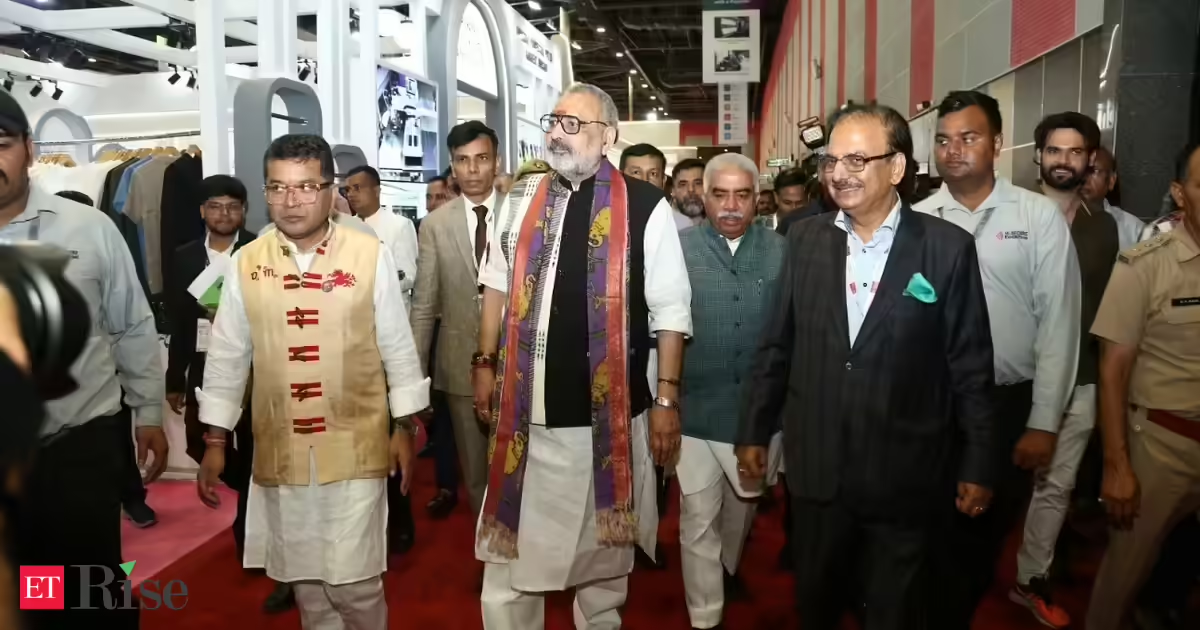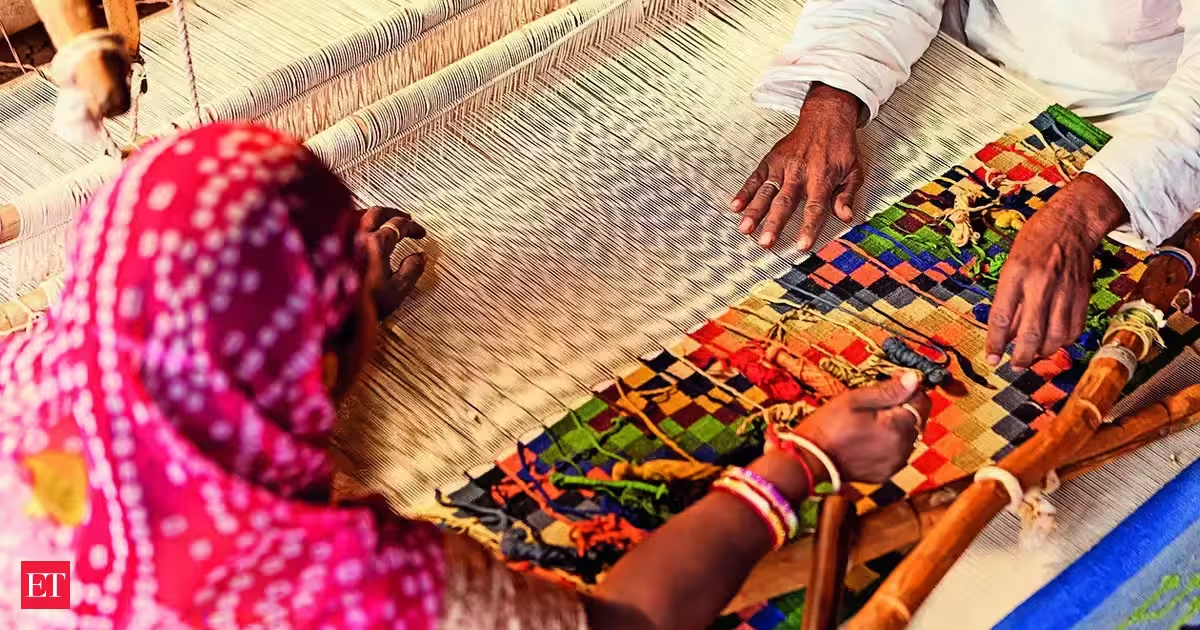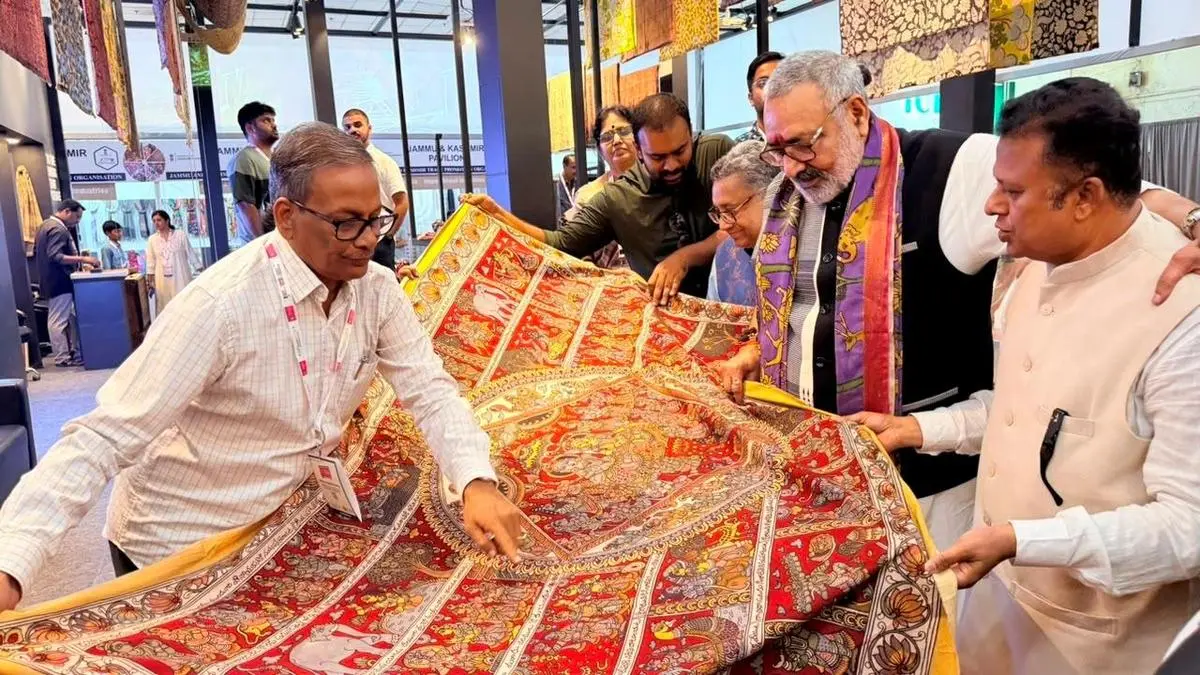
Some events showcase the strength of an industry. Others shape its future. As Bharat Tex 2026 unfolds at Bharat Mandapam, I believe we are witnessing the latter. In just two days, I have seen the full spectrum of India’s textile ambition come together under one roof: manufacturers meeting global buyers, young entrepreneurs presenting transformative ideas, designers reimagining our artistic heritage, and international partners looking at India not merely as a market or manufacturing destination, but as a country with which they want to build the future. These interactions have reinforced three convictions: the world trusts India, India needs to scale & is scaling, and the future of textiles will belong to those who combine sustainability, technology and creativity. India can lead on all three.
Textiles Minister Giriraj Singh
The response to Bharat Tex 2026 reflects this confidence. By the second day, nearly 69,000 footfalls had been recorded. More than 1,600 companies are exhibiting, with MSMEs accounting for nearly three-fourths of the exhibition base. From 111 countries and over 3,600 overseas buyers in 2024, Bharat Tex has expanded to more than 130 countries and 7,000 overseas buyers in 2026. Knowledge sessions have grown from 73 to more than 100, partners from 22 to over 50, while more than 30 MoUs and institutional reports are being taken forward this year. Yet, on the exhibition floor, these numbers mean something more. Every handshake can open a market. Every conversation can become a collaboration. Every idea can find the partner it needs to scale. Our Prime Minister Narendra Modi Ji’s visionary 5F framework, farm to fibre to factory to fashion to foreign, provides the roadmap for this transformation. At Bharat Tex, this entire value chain is visible in action. Farmers and fibre producers, artisans and designers, start-ups and manufacturers, buyers and exporters, policymakers and investors are meeting and building possibilities together. Four thematic tracksThe knowledge architecture reflects this convergence. Four thematic tracks — Trade and Investment, Technology and Innovation, Sustainability and Circularity, and Fashion and Craft — are focused on the forces shaping our industry’s future. Conversations range from global trade, FTAs and PM MITRA Parks to technical textiles, future fibres, AI, smart manufacturing, circularity, global brands and skilling. Eight dedicated State sessions are bringing the strengths and investment potential of India’s textile clusters into this global conversation. These themes have come alive through my own engagements. While chairing the session on “India: A Trusted Partner in an Uncertain World,” one reality stood out: as supply chains are re-organised and businesses seek resilience, trust has become an economic asset. My interactions with global buyers and industry leaders have repeatedly affirmed India’s position as a dependable partner. Our task now is to convert that trust into scale. But scale cannot mean production alone. The scale of the future must combine manufacturing with innovation, competitiveness with sustainability, technology with skills, and India’s creative inheritance with global branding. My discussions with the Ministerial delegation from New Zealand opened new avenues for cooperation, while my engagement with representatives of the Republic of Kalmykia, Russia, explored opportunities for new textile value chains. Interactions with Ministers from our States reinforced the critical role of States and district level clusters in translating national ambition into investment, manufacturing and employment. Across these conversations, one message has been unmistakable — sustainability and circularity are no longer optional, they are becoming the foundations of competitiveness. India must transform its inherent strengths in natural fibres, handlooms, reuse and resource-conscious production into a modern competitive advantage through traceability, recycling, green manufacturing, new materials and decarbonisation. At the same time, our extraordinary repository of motifs, temple art, crafts and weaves must inspire globally desired Indian brands. Our ambition must move beyond “Made in India” to “Imagined, Designed and Branded in India.” Technology must accelerate this transition. Artificial intelligence can strengthen skills, raise MSME productivity, improve design, deepen consumer insights and enable smarter manufacturing. The opportunity is to combine India’s creativity with the power of new technology. This is why Bharat Tex is much more than an exhibition. It brings manufacturers and entrepreneurs, global buyers and Indian exporters, master artisans and designers, startups, policymakers and investors together. The outcome must be collaboration, and collaboration must lead to action. A start-up should find an industry partner to scale its innovation. A young designer should find a pathway to global markets. An MSME should find a new buyer or technology. An artisan should find new applications for traditional knowledge. Government, in turn, must create an ecosystem where ideas move rapidly from conception to commercial scale. That is why my vision for Bharat Tex extends beyond these few days. It must evolve into a self-sustaining global institution for textiles, working throughout the year to connect buyers with exporters, startups with industry, designers and artisans with markets, technology providers with MSMEs, and States with investors. Its success will ultimately be measured not merely by footfalls, but by conversations becoming contracts, ideas becoming enterprises, MSMEs becoming global exporters, Indian brands reaching international markets and partnerships enduring beyond the event. I am confident that Bharat Tex can be a powerful platform for achieving India’s Vision 2030 and building global leadership beyond it. Bharat Tex 2026 is still unfolding. I invite entrepreneurs, exporters, designers, artisans, innovators, buyers and global partners to come to Bharat Mandapam, forge partnerships and witness firsthand the scale, creativity and ambition of Indian textiles. For centuries, Bharat has given the world its textiles, colours, techniques and designs. Today, we can combine that timeless inheritance with technology, sustainability, enterprise and global scale. The world is looking for trusted partners. Bharat is ready. The world is moving towards sustainable textiles. Bharat can lead. Come and witness Bharat Tex 2026, not merely to see the future of textiles on display, but to become part of building it. The future of global textiles is being woven today, and Bharat is ready to help shape it. (The writer is Textiles Minister)Published on July 15, 2026