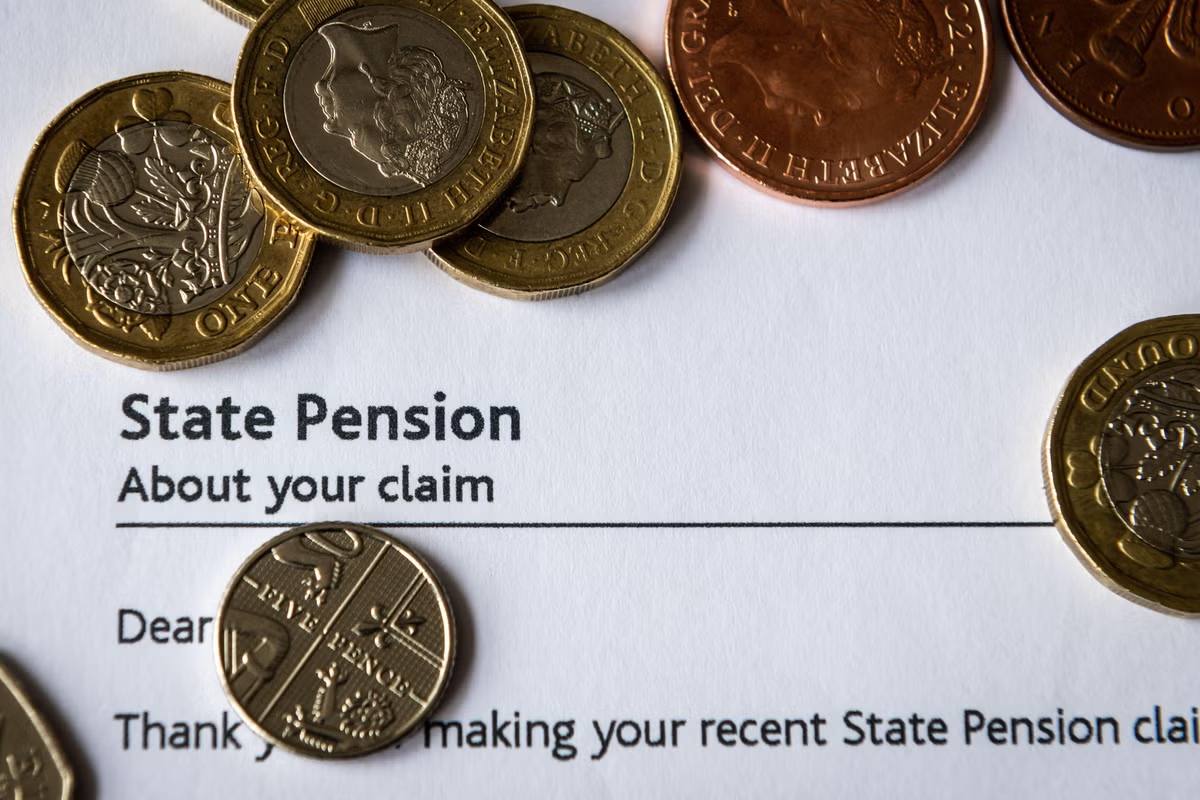
Millions more workers face having to wait until age 68 to receive their state pension, as the Government plans to bring forward a rise in the retirement age, it has emerged. The age at which you receive the state pension is currently scheduled to rise from 67 to 68 between April 2044 and April 2046. But Treasury officials have confirmed that the Government plans to speed up this increase, bringing it forward by at least seven years to 2037, according to the Office for Budget Responsibility (OBR), the official forecaster. This means that millions of people who are between the ages of 49 and 55 today would be forced to wait an extra year before receiving their state pension, leaving them at least £12,500 out of pocket. This follows an increase to age 67, which is currently underway. The state pension age began to rise this April, from 66 to 67.The change is being phased in – one month is being added on to the state pension age until April 2028, by which time everyone will reach it at 67 (for more on how this will work, see below) though further changes are afoot.For some, working for another year or two won’t be an issue – especially those in good health and who enjoy their job.But now a report by MPs has warned that many people in their mid to late 60s will be risking their health if they try to keep working until 67. The age at which you start receiving the state pension began to rise again in April, increasing from 66 to 67Others have already had to leave the workforce, despite not being eligible for the state pension.Just 42 per cent of 65-year-olds and 29 per cent of 66-year-olds are still in work, the report by the Work and Pension Committee found. It urged the Government to give financial support to those who face hardship during the lengthening wait for the state pension.So what do you do if you want to keep your retirement plans on track and retire at 66, regardless of the ongoing change?We’ve asked experts to calculate the amount you would need to put into your pension each month to tide you over until you become eligible for the state pension, depending on your age today.When will you get the state pension?Because the rise in the state pension age is being brought in gradually, not everyone will have to make up a whole year.For example, those born between April 6 and May 5, 1960, will get their pension at the age of 66 years and one month. Those born between May 6 and June 5, 1960, will receive it at 66 years and two months, and so on.Retirement age will be 67 for anyone who was born on or after March 6, 1961.But there are credible fears that this is just the beginning. Younger generations could be made to wait well into their 70s before retiring.For now, the next increase to 68 has yet to be set in stone. Officially, it’s scheduled to happen between 2044 and 2046, which would affect those born on or after April 6, 1977 – people who are turning 49 in this financial year and anyone younger than that.But the Government is required by law to review the state pension age every six years, and it has already ordered several reports into when it should next rise.The Government should give you ten years’ warning if you face an increase in your state pension age. Meanwhile, the minimum pension age – the age from which you can access workplace and other private retirement savings – will rise from 55 to 57 overnight on April 6, 2028. This tends to be ten years prior to state pension age.How much extra should you save?If you are in your 50s and still working, there’s plenty of time to prepare for an income gap between leaving employment and receiving the state pension.The more you have tucked away in private and workplace pensions the better, as it could also give you the financial freedom to retire early or cut your hours.Financial firm Quilter has run the numbers to see just how much extra you would have to pay in monthly pension contributions to still be able to retire at age 66 and make up for the lost year of state pension. The calculations apply to anyone age 50, 55, 60 and 65 today needing to bridge the gap.The state pension is currently £12,548 a year if you qualify for the full amount, based on 35 years of National Insurance payments.We have assumed the state pension will keep rising by at least 2.5 per cent a year – the minimum increase under the triple lock, which guarantees it rises by the highest of inflation, earnings growth or 2.5 per cent a year.This means that to keep up with it you may have to set aside even more if the state pension grows by wage growth or inflation in the coming years. Adam Cole, of Quilter, says: ‘A relatively modest increase in contributions can create valuable options later in life'If you are 50 years old and want to stop work by 66 rather than 67, you will have to save an extra £60 a month to replace one year of state pension payments, which would be worth £18,628 by then, according to Quilter’s calculations, or £21,915 before tax.This assumes your £60 a month would be topped up with basic rate tax relief, boosting your contributions to £75. It also assumes 5 per cent investment growth a year.Those who are currently 55 would need to put away an extra £89 every month, before tax relief, to replace a state pension worth £16,464 by the time they turn 66, or £19,369 before tax.If you are already 60, you need to save £163 a month into your pension before tax relief to replace a £14,552 state pension at 66, or £17,120 before tax.The goal is hardest to achieve if you are already 65, as you would need to put aside an extra £982 a month before tax relief to replace a £12,862 state pension, which is worth £15,131 before tax.Adam Cole, retirement specialist at Quilter, says: ‘These calculations underline the value of building private savings that give you flexibility and control over when you retire. 'For those determined to stop working before state pension age, a relatively modest increase in contributions many years in advance can create valuable options later in life.’Cole stresses that retirement planning should not revolve solely around the state pension, and that building sufficient private savings through pensions, Isas or a combination of those can help make your retirement plans more certain.Are you worried about increases in the state pension age? Email us at editor@thisismoney.co.ukPension income and annuities It's important to consider professional financial advice on pensions and inheritance tax. An adviser will look at all your options and build a tailored financial plan for you.We've partnered with Pense, UK-based pension experts who can help you find the right annuity. They have access to market-leading annuity rates and will compare providers to help you get the best deal.> Use Pense's free annuity calculator to discover what you could access* If you need help with broader retirement planning or inheritance tax, then seeking financial advice is wise.You can find a local adviser in your area with Unbiased*, the platform that matches you with financial professionals based on your needs.> Guide: How to find the best annuity rates If you open an account using links which have an asterisk, This is Money will earn an affiliate commission. We do not allow this to affect our editorial independence.
How YOU can beat the state pension age rise and still retire at 66
Millions of workers will have to wait longer than previous generations to receive the state pension - but what if you aren't able or willing to work until a later date?
1,279 words~6 min read