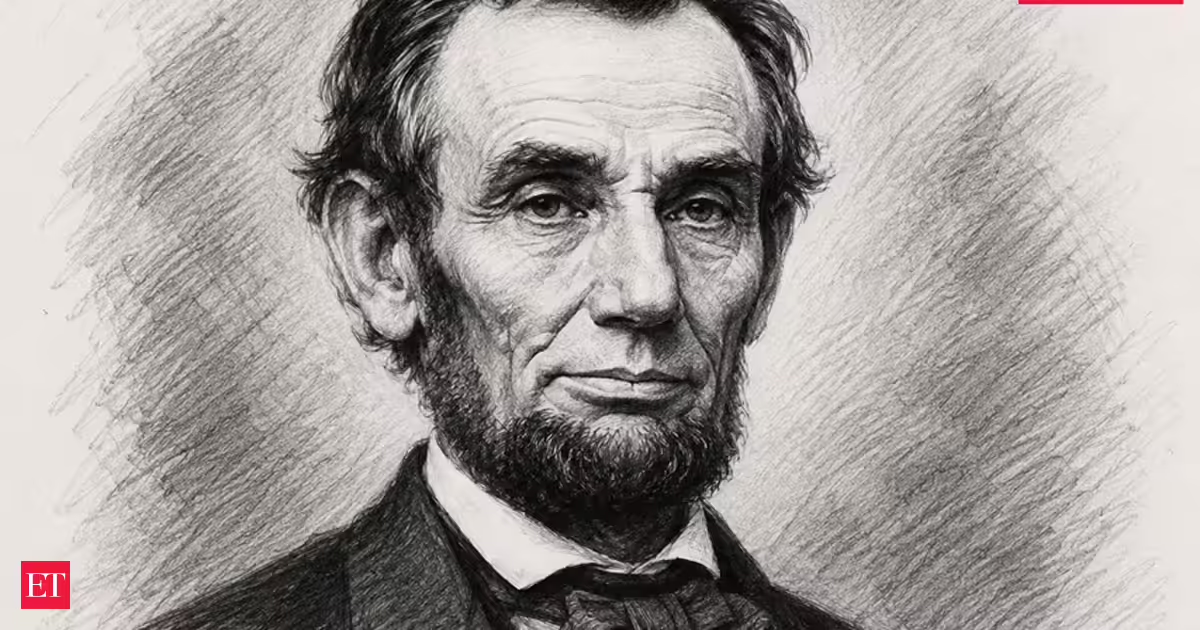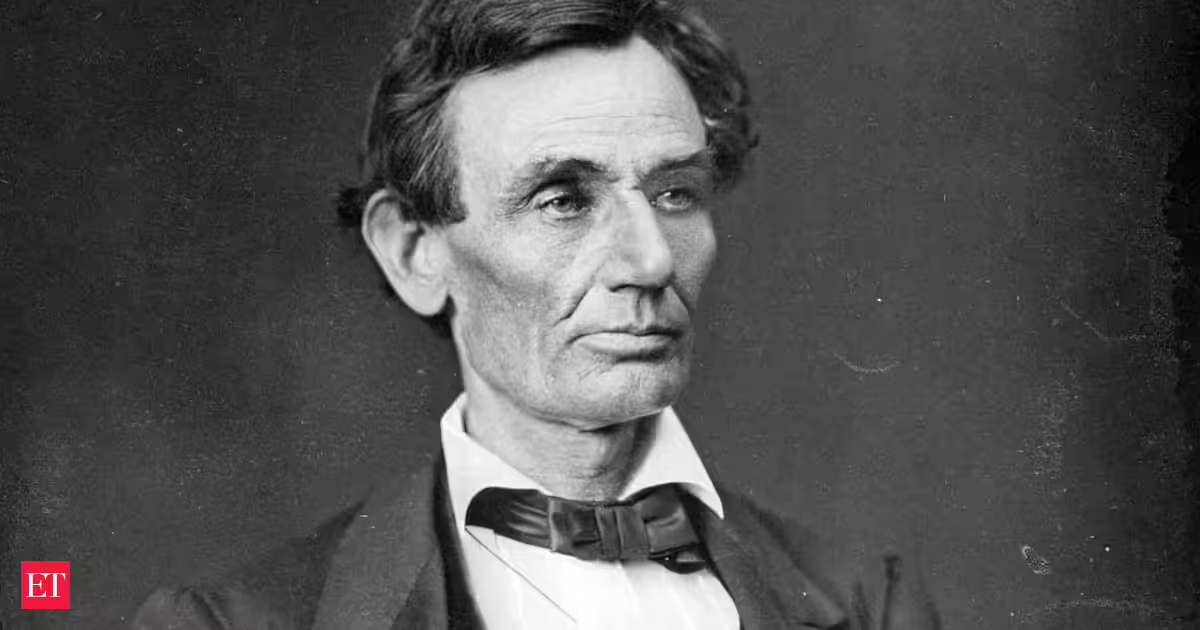
Abraham LincolnSuccess is usually measured in visible ways like election victories, promotions, medals, or wealth. However, history shows us people who won by compromising their principles and others who lost while holding firmly to them. Abraham Lincoln's words remind us that these are not the same kind of success."I am not bound to win, but I am bound to be true."The quote shifts attention from outcomes, which are often shaped by circumstances beyond our control, to character, which remains a matter of personal choice. Lincoln suggests that while no one can guarantee victory, everyone can decide whether to act with honesty, fairness and conviction. In that sense, integrity is the only success that does not depend on external validation.What did Abraham Lincoln mean?Lincoln's statement is not an argument against ambition or achievement. Instead, it separates success from integrity and places them in different categories. Winning depends on many factors: opportunity, timing, competition, luck and circumstances. Being true, however, depends only on whether a person remains faithful to their values, even when doing so carries a cost.The quote continues in a longer passage attributed to Lincoln: "I am not bound to win, but I am bound to be true. I am not bound to succeed, but I am bound to live by the light that I have." Together, these words express a simple but demanding philosophy. Success is desirable, but it should never come at the expense of one's conscience.The idea remains striking because modern life frequently encourages the opposite. Results are celebrated, while the methods used to achieve them are sometimes overlooked. Lincoln's words insist that the path matters as much as the destination.Lincoln's own life reflected the principleAbraham Lincoln did not become one of America's most respected presidents through an uninterrupted series of triumphs. Before entering the White House, he experienced repeated political defeats and personal setbacks. He lost elections, faced business failures and endured profound personal grief. Even after becoming president, he led the United States through the Civil War, one of the most divisive periods in the country's history. Every decision was scrutinised, criticised and contested. Throughout these years, Lincoln repeatedly emphasised duty over popularity and principle over convenience.Historians have long noted his determination to preserve constitutional government while confronting slavery, even when his choices alienated allies and opponents alike. Whether one agreed with every decision or not, Lincoln consistently framed leadership as a responsibility to truth and conscience rather than public approval.Why integrity is the only success that cannot be measured by victoryMost achievements fade with time. Records are broken, companies change hands, political leaders leave office and trophies gather dust. Integrity, however, leaves behind something less visible but often more enduring: trust.People remember the colleague who refused to manipulate numbers despite pressure to meet targets. Students respect the classmate who admitted to making a mistake instead of blaming someone else. A business owner who honours commitments during difficult times may lose money in the short term but gains a reputation that cannot be bought.These choices rarely make headlines because they do not always produce immediate rewards. In fact, they sometimes result in disappointment or failure. Yet, they shape how people are remembered long after individual victories have been forgotten.The same principle appears throughout history. Whistleblowers who exposed wrongdoing, judges who upheld the law despite political pressure and journalists who pursued facts despite personal risk were not guaranteed success. What gave their actions lasting value was not whether they prevailed in every battle, but whether they remained faithful to what they believed was right.Integrity also brings a quieter reward. It allows people to look back on difficult decisions without wondering whether they abandoned their values for temporary gain. External success depends on how others judge us. Integrity depends on how honestly we judge ourselves.In an age driven by rankings, followers, profits and public recognition, Lincoln's words offer a different measure of achievement. Winning may bring celebration, but being true builds credibility, earns trust and shapes a legacy that survives long after the scoreboard has been forgotten. Victory can be temporary, but integrity is one success that cannot be taken away because it is defined not by what we achieve, but by who we choose to be.
Quote of the day by Abraham Lincoln: 'I am not bound to win, but I am bound to be true,' and why integrity is the only success that cannot be measured by victory
Success is usually measured in visible ways like election victories, promotions, medals, or wealth. However, history shows us people who won by compromising their principles and others who lost while holding firmly to them.
700 words~3 min read