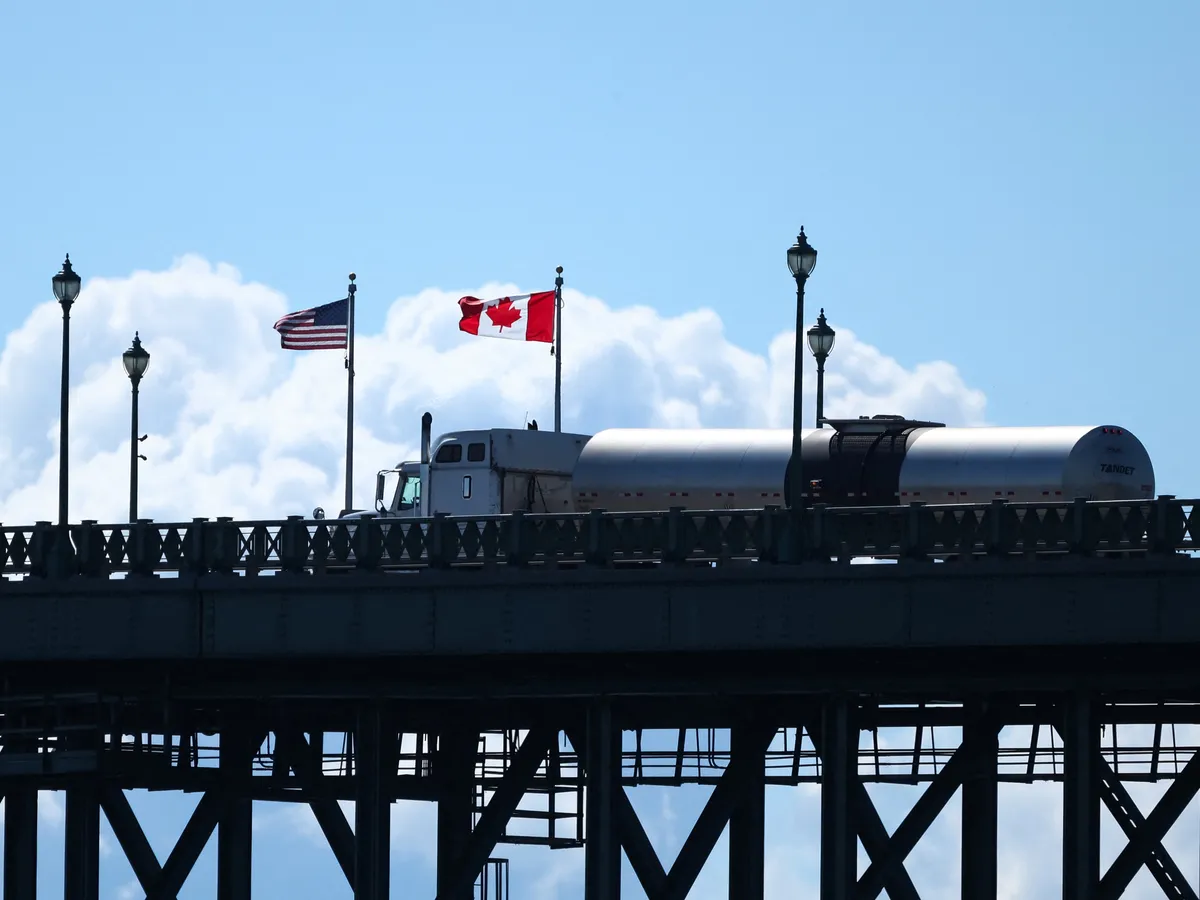
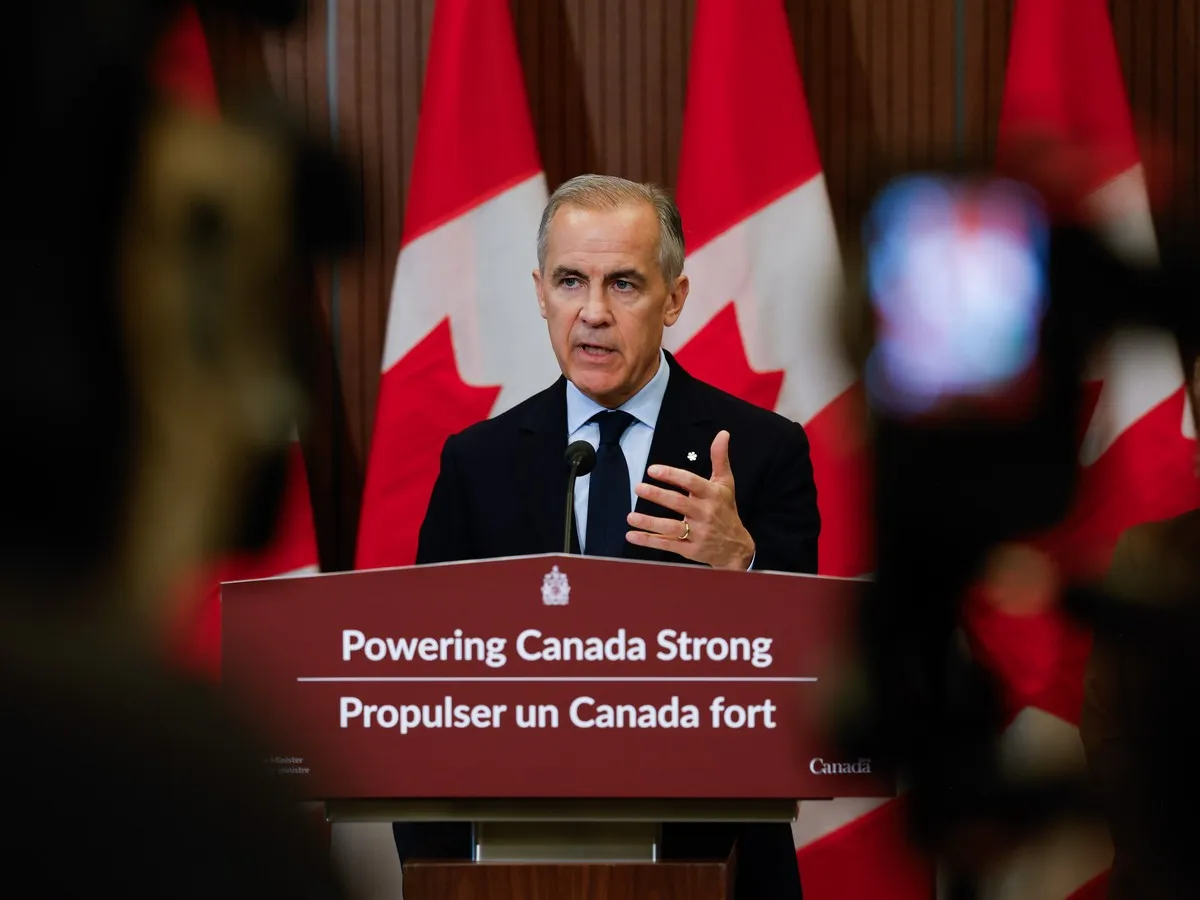
Skip to Content Subscribe Our Offers My Account Manage My Subscriptions FAQ Newsletters Canada Canadian True Crime Canadian Politics Health World Israel & Middle East Financial Post NP Comment Longreads Puzzmo Diversions Comics NP News Quiz New York Times Crossword Horoscopes Life Eating & Drinking Style Sponsored Play for Ontario Travel Travel Canada Travel USA Travel International Cruises Travel Essentials Culture Books Celebrity Movies Music Theatre Television Business Essentials Advice Lives Told Tails Told Shopping Buy Canadian Home Living Outdoor Living Kitchen & Dining Tech Style & Beauty Personal Care Entertainment & Hobbies Gift Guide Travel Guide Amazon Prime Day Deals Savings National Post Store More Sports Hockey Baseball Basketball Football Soccer Golf Tennis Driving Vehicle Research Reviews News Gear Guide Obituaries Place an Obituary Place an In Memoriam Classifieds Place an Ad Celebrations Working Business Ads Archives Healthing Epaper Manage Print Subscription Profile Settings My Subscriptions Saved Articles My Offers Newsletters Customer Service FAQ Newsletters Canada World Financial Post NP Comment Longreads Puzzmo Diversions Life Shopping Epaper Manage Print Subscription HomeNewsCanadaCanadian PoliticsGovernments get good marks for prioritizing provincial trade barriers, but must 'step up' on results: CFIBAccording to the report, a clear majority of Canadian small businesses have not noticed a change in the ease of doing business across provincial bordersLast updated Jul 15, 2026 You can save this article by registering for free here. Or sign-in if you have an account.The federal government has authority over interprovincial trade but has never been willing to use its leverage to bring down interprovincial trade barriers. Photo by Steph Crosier/Kingston Whig-Standard/PostmediaA leading business group is giving some provinces and the federal government good grades for trying to break down Canada’s costly internal trade obstacles, even as those barriers continue to cost Canadians billions of dollars a year.Enjoy the latest local, national and international news.Exclusive articles by Conrad Black, Barbara Kay and others. Plus, special edition NP Platformed and First Reading newsletters and virtual events.Unlimited online access to National Post.National Post ePaper, an electronic replica of the print edition to view on any device, share and comment on.Daily puzzles including the New York Times Crossword.Support local journalism.Enjoy the latest local, national and international news.Exclusive articles by Conrad Black, Barbara Kay and others. Plus, special edition NP Platformed and First Reading newsletters and virtual events.Unlimited online access to National Post.National Post ePaper, an electronic replica of the print edition to view on any device, share and comment on.Daily puzzles including the New York Times Crossword.Support local journalism.Create an account or sign in to continue with your reading experience.Access articles from across Canada with one account.Share your thoughts and join the conversation in the comments.Enjoy additional articles per month.Get email updates from your favourite authors.Create an account or sign in to continue with your reading experience.Access articles from across Canada with one accountShare your thoughts and join the conversation in the commentsEnjoy additional articles per monthGet email updates from your favourite authorsSign In or Create an AccountorIn its annual report on internal trade due to be released Wednesday, the Canadian Federation of Independent Business (CFIB) credited Ottawa and the provinces for their efforts in trying to tackle internal trade barriers, while acknowledging that most of the “significant progress” stems from the increased attention they’re paying to the problem, without much by way of results.The federal government, which removed all federal barriers to internal trade a year ago, was given an A+ grade after receiving a mark of C a year earlier. Eight of the 10 provinces received As this year, with British Columbia receiving an A-. Newfoundland and Labrador didn’t receive a grade because of a recent government change.The grades were much higher than in most years, the report said, because of a new multiplier that kicked in a year ago for those provinces that changed their rules to recognize some of the regulations and standards of other jurisdictions.But Keyli Loeppky, one of the authors of the report, The State of Internal Trade, said governments should expect harsher grading next year because CFIB will be looking for tangible results. Loeppky, CFIB’s senior director for Alberta and interprovincial affairs, also said that the group wants to see the federal government start to use its ability to penalize and reward provinces for working to tear down trade walls.Loeppky said Ottawa may have to get tougher because it’s unlikely the provinces will get very far on their own.“They do need to step up,” said Loeppky. “We’ve seen enough announcements — now we want to see results.”The federal government has authority over interprovincial trade but has never been willing to use its leverage — perhaps including adjusting big-ticket transfer payments or corporate subsidies — to bring down interprovincial trade barriers.Despite the good grades, many economists, businesses and even governments say that more needs to be done to remove barriers, and faster.Intergovernmental Affairs Minister Dominic LeBlanc met a couple of weeks ago with his provincial and territorial counterparts and later released a statement that emphasized the need to uphold previous commitments that have largely not been met.Most businesses, meanwhile, aren’t yet seeing clearer trade paths across the country, nor are workers in a range of professions finding it easier to move from one province to the next because of unharmonized accreditation standards. According to the report, a clear majority of Canadian small businesses (70 per cent) have not noticed a change in the ease of doing business across provincial borders.The issue of internal trade barriers has come under greater scrutiny over the last year or so, following U.S. President Donald Trump’s implementation of punishing tariffs against Canada and many other countries. The Trump tariffs created economic anxiety but also raised fresh questions about why Canada still hasn’t created its own internal free-trade zone.Federal barriers have largely been removed but were mostly related to government procurement and were never the biggest problem. But the broader goal of free trade within Canada has again slowed in recent months despite widespread agreement that provincial impediments are costing the economy billions of dollars and countless jobs a year.Economic estimates on the cost of internal trade barriers to the Canadian economy have shown quite a range. The federal government has been quoting a figure of between four and eight per cent of gross domestic product (GDP), or about an average of $5,100 per Canadian per year.The International Monetary Fund (IMF) says that removing these barriers could boost the Canadian economy over the long term by almost seven per cent a year.No matter the most accurate figures, the elimination or lowering of trade barriers would mean greater competition, and therefore lower prices and better service for consumers. Some domestic companies would also benefit from expanded markets, allowing them to expand, take advantage of economies of scale, and then perhaps sell more overseas.The political case also seems strong. Beyond the national anxiety over the costs of compromised international free trade agreements, governments already agreed to interprovincial free-trade agreements in 1995 and 2017, while the Constitution states that products from one province shall “be admitted free into each of the other provinces.”Some provincial politicians, however, are wary of exposing local businesses to out-of-province competitors, despite the benefits to consumers. And some provincial regulators, Loeppky said, will defend their own rules despite the economic costs.“It’s really a result of protectionism,” Loeppky said.Tim Sargent, director of economic growth and prosperity at University of Calgary’s School of Public Policy, said interprovincial trade barriers are no accident. They exist, Sargent said, because many provinces and their regulatory bodies want to protect their local businesses and other parochial interests.“They suit people’s economic interests. If they didn’t, they wouldn’t be there.”Provincial barriers to trade and worker mobility in Canada are widespread, including:Registration fees that businesses often must pay to expand into new provinces, even though they’ve already paid them in their home province.The red tape and extra costs on businesses because some provinces don’t recognize the paperwork from other provinces for such programs as workers’ compensation and occupational health and safety.The wasted time and financial costs to workers, from medical professionals to truck drivers to real estate agents to hairstylists, who want to work in another province but find that their credentials aren’t recognized.The costs to business and consumers because food inspected in one province is often inspected again when it crosses a provincial border.The treatment of beer, wine and other alcohol from another province as if it’s being imported from abroad.National PostOur website is the place for the latest breaking news, exclusive scoops, longreads and provocative commentary. Please bookmark nationalpost.com and sign up for our daily newsletter, Posted, here. Join the Conversation This website uses cookies to personalize your content (including ads), and allows us to analyze our traffic. Read more about cookies here. By continuing to use our site, you agree to our Terms of Use and Privacy Policy.
Governments get good marks for prioritizing provincial trade barriers, but must 'step up' on results: CFIB
The CFIB said most of the "significant progress" stems from the increased attention, without much by way of results.
1,468 words~7 min read