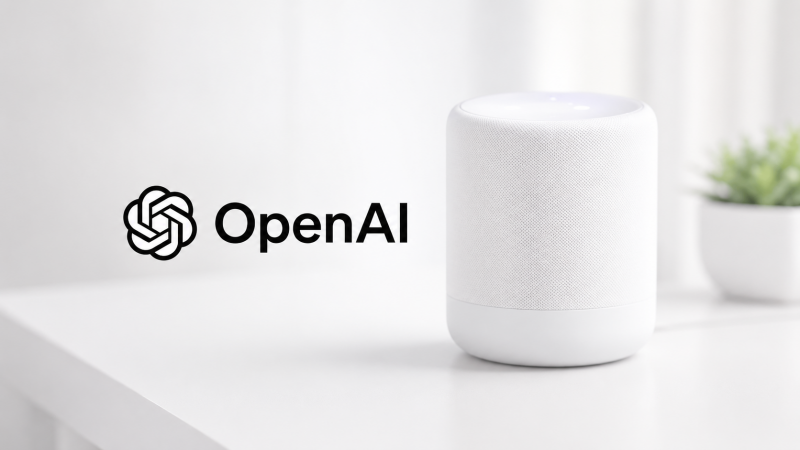
OpenAI’s consumer hardware push begins in the living room. The company’s first device designed with Jony Ive is a mobile, screen-free smart speaker meant to sit in a home and behave like a humanlike companion, according to people familiar with the project who spoke to Bloomberg.
It surfaced the day before OpenAI’s actual first shipping hardware, a macro pad for Codex coders, reached customers.
The distinction matters for anyone counting firsts. Codex Micro is a developer accessory built with the boutique keyboard maker Work Louder, while the speaker is the first consumer product out of io, the startup OpenAI bought from Ive for $6.5bn last year.
Internally, OpenAI does not describe it as a speaker at all. It calls the product the first of its kind, a computer built for AI and aimed at making busy people more productive, one that controls smart-home appliances, plays media, answers questions, responds to messages, and reaches into the rest of ChatGPT.
The defining feature is meant to be personality. The device carries mechanical elements that can move on their own, engineered to create the sense that it is alive rather than an object waiting to be addressed.