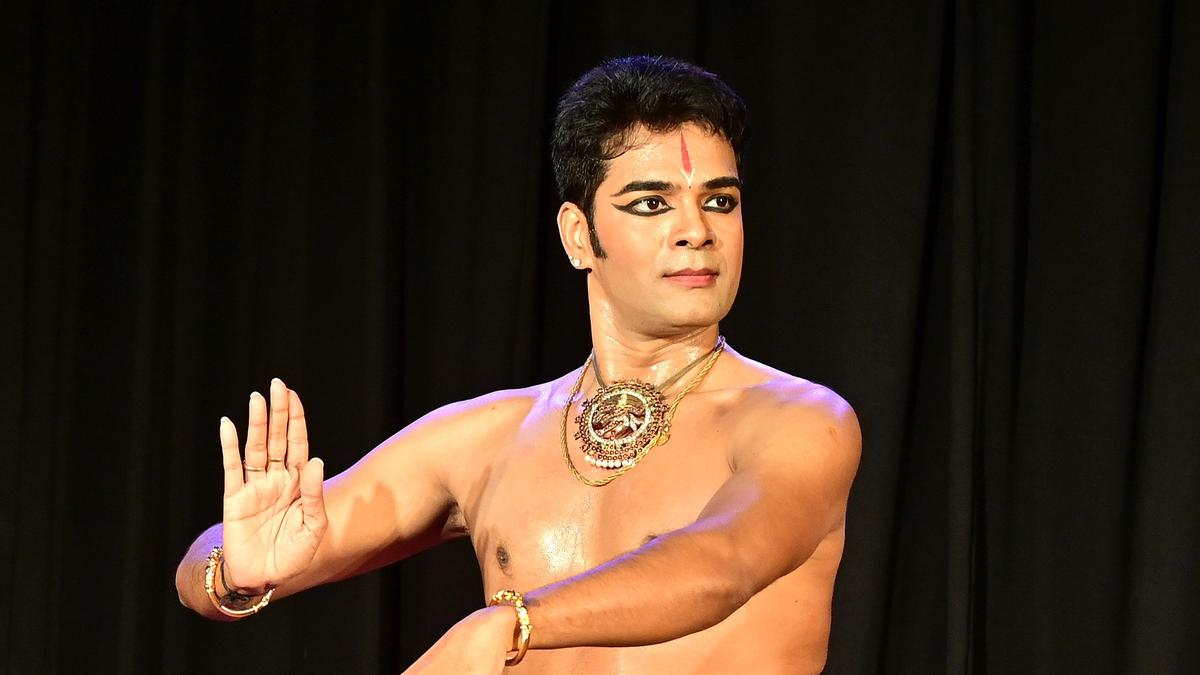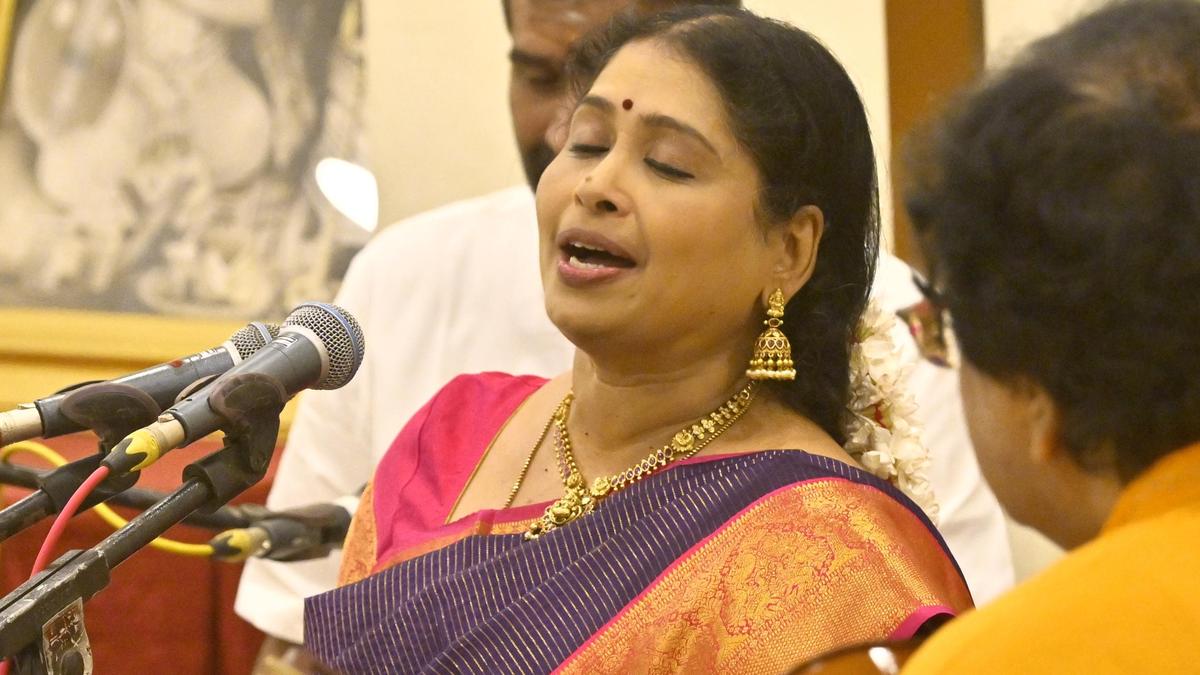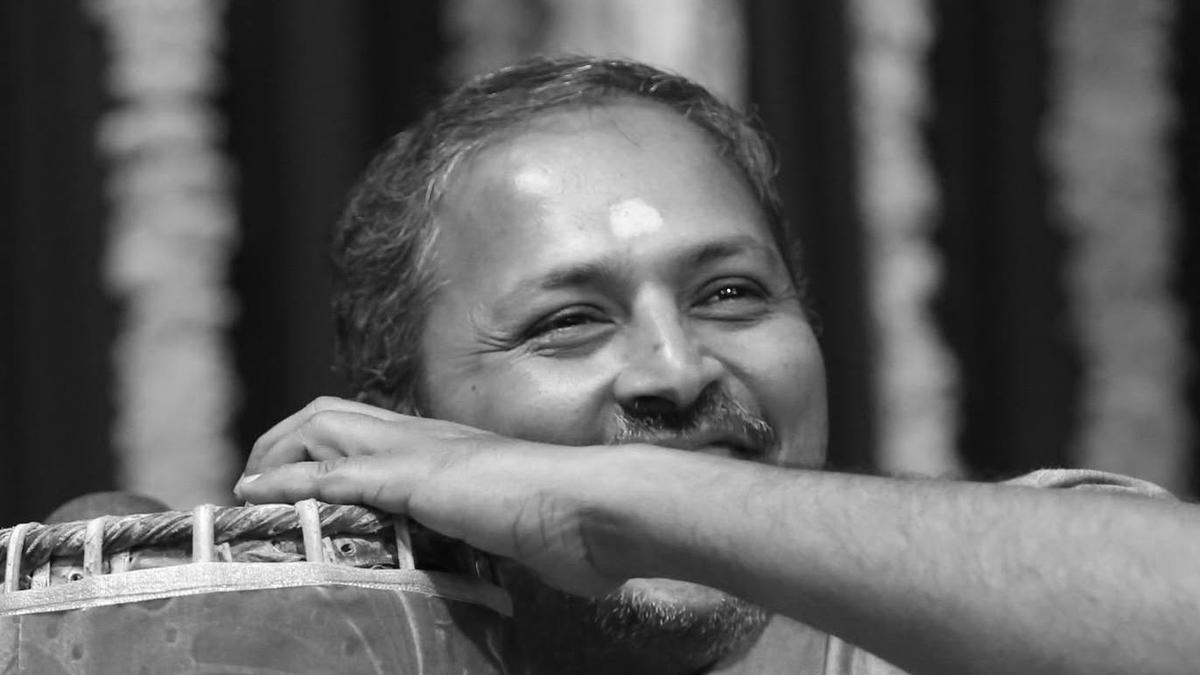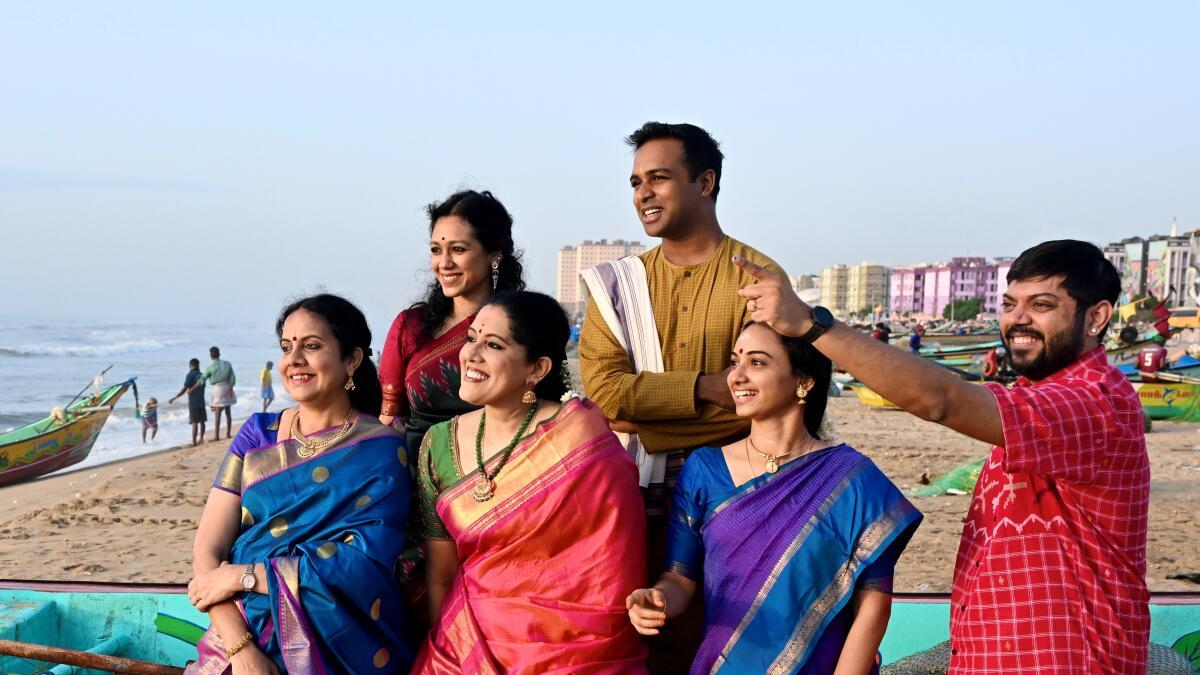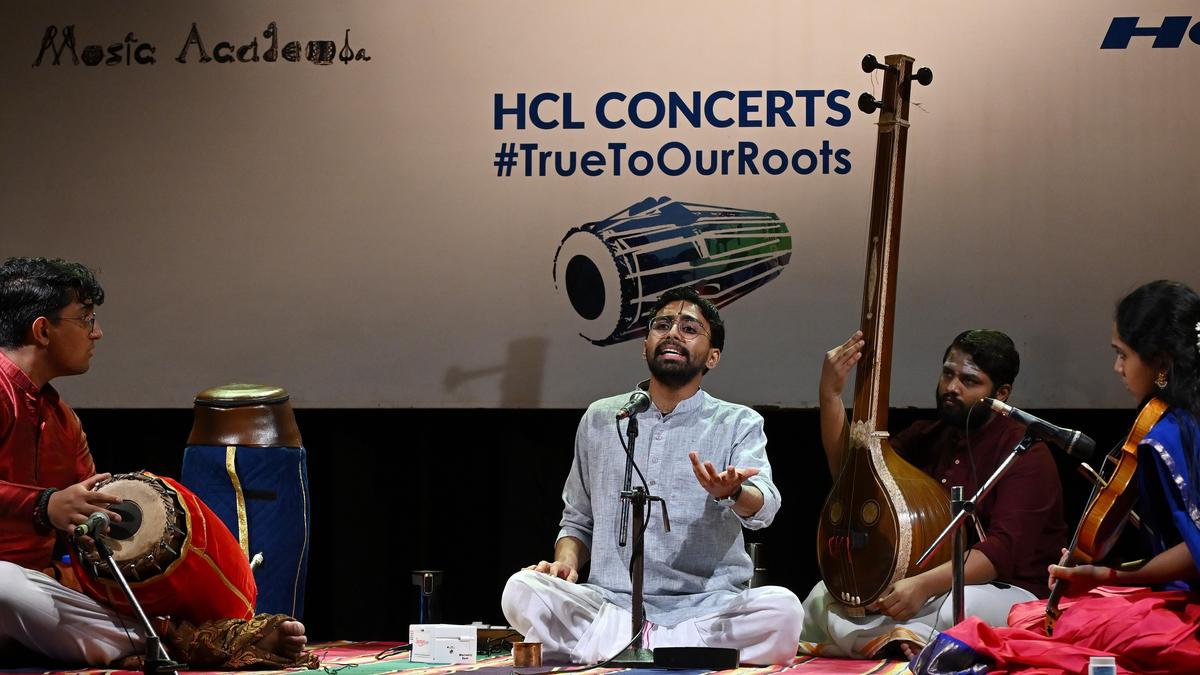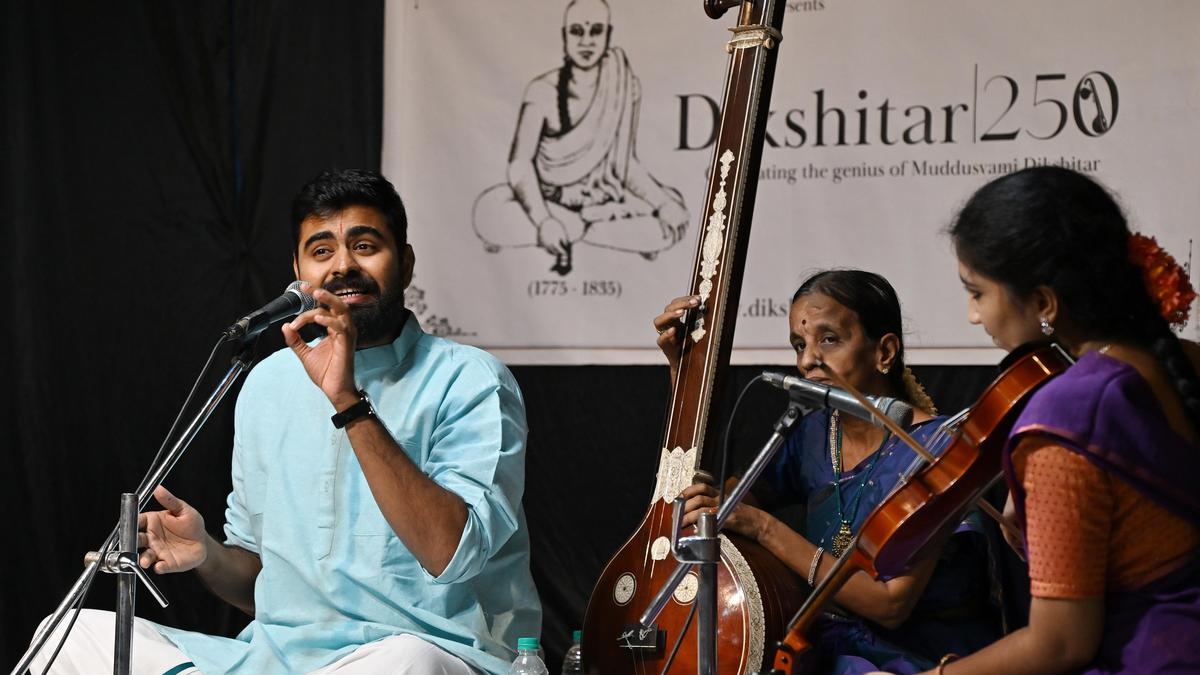
Aditya Madhavan’s thematic concert was based Dikshitar’s Pancha Bhuta Linga kritis
| Photo Credit: B. Velankanni Raj
Among the many thematic groupings in Muthuswami Dikshitar’s repertoire, the Pancha Bhuta Linga kritis occupy a distinctive place. Dedicated to the five Shiva temples, representing the primordial elements — earth, water, fire, air and ether — these compositions weave together temple legends, philosophy and musical expression. As T.K. Govinda Rao observes in the book Compositions of Muddusvami Dikshitar, each kriti draws upon the sthala puranam of its respective kshetra, portraying the elemental manifestation of Shiva through rich poetic imagery and philosophical symbolism. While these compositions are collectively known as the Pancha Bhuta kritis, historian V. Sriram observes that there is no conclusive evidence that Dikshitar himself conceived them as a formal compositional set. Nevertheless, they exhibit several common characteristics, including the conventional pallavi–anupallavi–charanam structure and the incorporation of raga mudras, features that are typical of many Dikshitar’s compositions. Thus, ‘Jambupate mam pahi’ in Yamuna Kalyani celebrates the Jambukeswara shrine at Thiruvanaikaval, where the linga is perpetually surrounded by an underground spring, symbolising the water (appu/jala) element. ‘Cintaya ma kanda mulakandam’ in Bhairavi recalls the legend of the ancient Ekamra mango tree at the Kanchipuram Ekambreswarar temple and Parvati’s worship of the sand linga, representing the earth element. ‘Arunachalanatham smarami’ in Saranga evokes the celebrated legend of Shiva manifesting as the infinite column of fire at Tiruvannamalai. ‘Sri kalahastisha’ in Husseni extols the Vayu Linga at Srikalahasti and the sanctity of the shrine associated with the element of air, while ‘Ananda natana prakasam’ in Kedaram celebrates Nataraja’s cosmic dance at Chidambaram, alluding to the Chidambara Rahasya and the ether (akasha) principle.Taking up this theme for his concert, at Raga Sudha Hall as part of Guruguhaamrta’s mid-year music festival, Aditya Madhavan had a formidable task ahead of him in deciding how to structure the concert within a relatively short duration of about an hour and a half. While there is no prescribed order in which these compositions must be presented, each offers ample scope for manodharma in different forms. Bhairavi naturally lends itself as the prime candidate for the main composition (’Chintaya’), and Aditya chose to go ahead with this familiar choice, launching brightly into the upper octave in an alapana that was well thought out. Beginning the niraval at ‘Mangalakara’ directly in mel kalam, he went on to weave a fine kalpanaswara section, culminating in an engaging dialogue with violinist VSP Gayatri Sivani during the final swara exchange, centred around the panchamam. Mridangist Adharsh Devarajan’s support was intuitive throughout the performance.