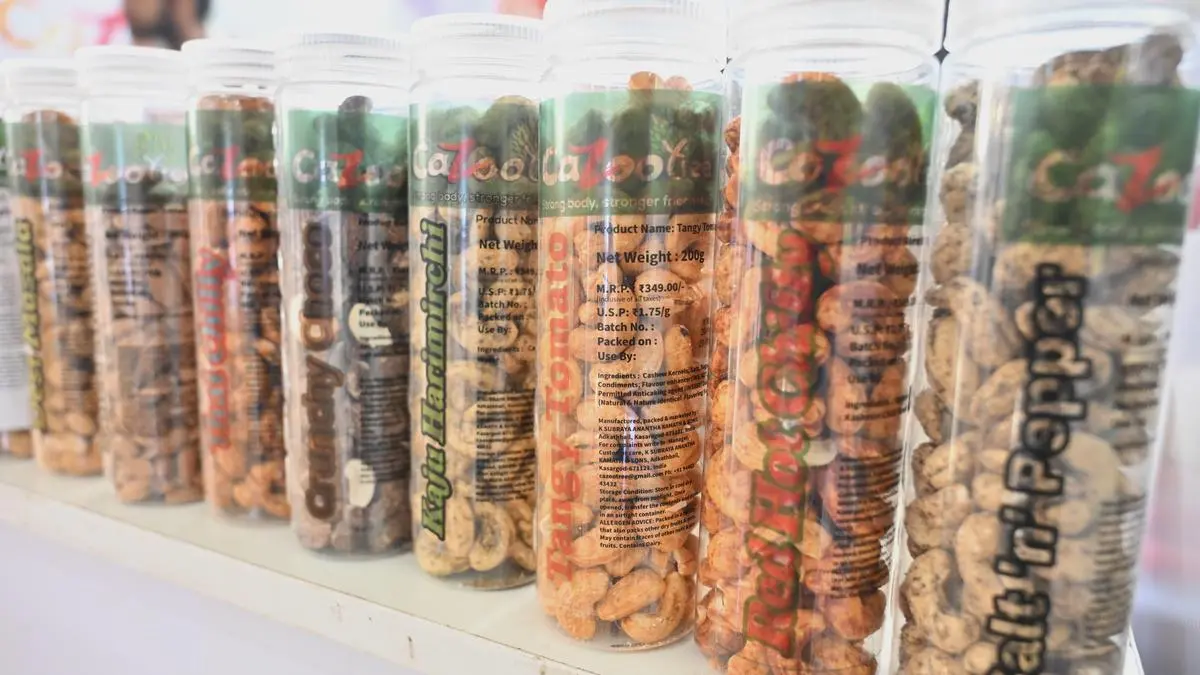
The Commission also approved India’s proposal to undertake new work for the development of a Codex standard for Cashew Kernels.
| Photo Credit:
The 49th session Codex Alimentarius Commission (CAC49) adopted seven Codex standards and guidelines developed under India’s chairmanship and co-chairmanship in Geneva last week.The Commission also approved India’s proposal to undertake new work for the development of a Codex standard for Cashew Kernels.Led by Rajit Punhani, Chief Executive Officer of Food Safety and Standards Authority of India (FSSAI), the Indian delegation participated actively in the Commission’s deliberations along with technical experts from FSSAI and Spices Board.The Commission adopted the Codex Standards for Dried Coriander Seeds and Fresh Curry Leaves, both developed under India’s chairmanship. The Standard for Dried Coriander Seeds would facilitate trade in one of the world’s most widely traded spices, while the Standard for Fresh Curry Leaves provides an international benchmark for this regionally important culinary herb.CAC49 also adopted five Codex texts developed under India’s co-chairmanship. These include the Codex Standards for Vanilla and Large Cardamom, which establish internationally harmonized quality requirements for these globally traded commodities; the Annexes to Guidelines for the Safe Use and Reuse of Water in Food Production and Processing, promoting sustainable water management while ensuring food safety; the Guidelines for the Control of Campylobacter and Salmonella in Chicken Meat, strengthening measures to reduce foodborne illnesses associated with poultry; and the Provisions Relevant to Joint Presentation and Multipack Formats under the General Standard for the Labelling of Prepackaged Foods, providing greater clarity and consistency in food labelling requirements.A key achievement for India at CAC49 was the Commission’s approval of India’s proposal to undertake new work for the development of a Codex Standard for Cashew Kernels under the Codex Committee on Processed Fruits and Vegetables (CCPFV). The proposal received overwhelming support from Codex members, recognizing the need for harmonized international quality and safety requirements for one of the world’s most traded tree nuts. The new standard is expected to facilitate fair trade, reduce technical barriers to trade, strengthen market access for Indian exports by enhancing its competitiveness in the global cashew trade.Further, India has been elected Co-Chair of the Electronic Working Group established regarding New Food Sources and Production Systems (NFPS), which will review existing regulatory frameworks, identify gaps in Codex risk analysis principles, and consider the need for any future Codex guidance.A media statement said India’s achievements at CAC49 reinforce the country’s commitment to strengthening the global food standards system through scientific excellence, international collaboration and consensus-building. The outcomes are expected to benefit Indian farmers, food businesses, exporters and consumers, while contributing to safer food and more predictable international trade, it added.Published on July 15, 2026