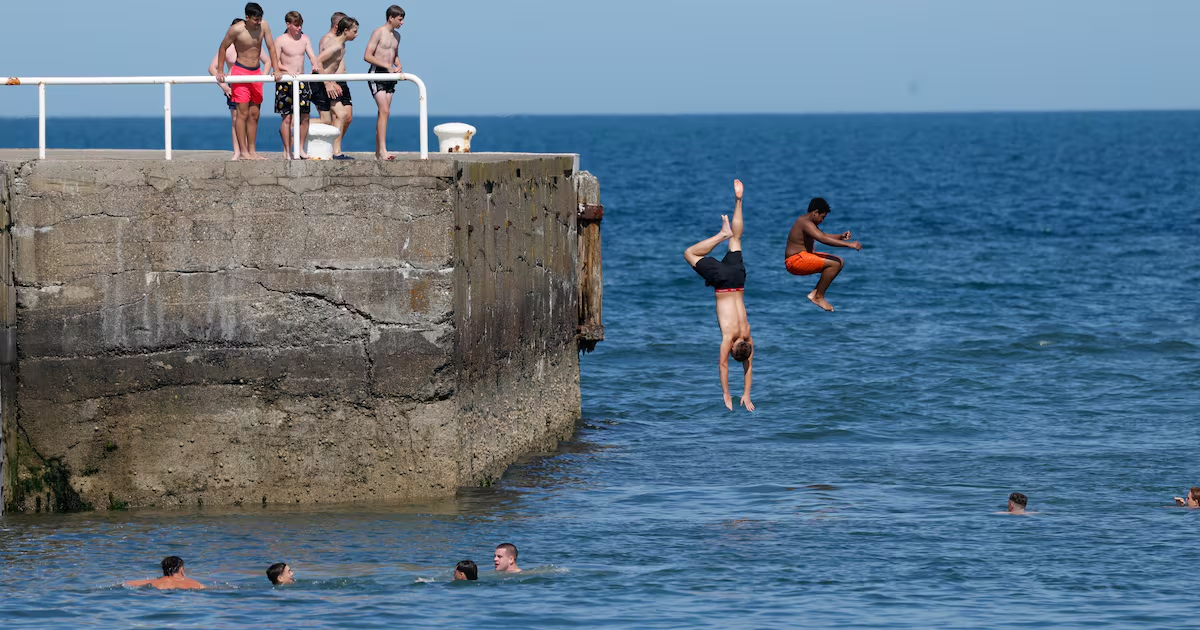
Temperatures could rise as high as 30 degrees in some areas on Wednesday, according to Met Éireann, as a weather warning is due to come into effect for much of the country.A status yellow high temperature warning is in force from noon on Wednesday, with the forecaster warning of general maximum temperatures in excess of 27 degrees.The alert, which lasts until 6am on Friday, also warns of overnight minimum temperatures of 15 degrees.Wednesday is set to be “very warm or hot”, the forecaster said, as highest temperatures of between 24 and 30 degrees are expected.Areas in the south and west of the country are likely to be the hottest.Highs of 24 to 29 degrees are expected on Thursday and Friday, with the forecaster saying its high temperature warning could be extended to southern counties in the coming days.The hot conditions are expected to continue through Friday, before decreasing “slightly” thereafter.Temperatures are expected to reach 22 to 26 degrees throughout the weekend.Although there is increasing uncertainty at the end of next week, the dry and warm conditions are also expected to continue beyond the weekend, Met Éireann said.[ Six-week hosepipe ban issued for parts of east of country amid ongoing hot weatherOpens in new window ]The status yellow warning coming into effect on Wednesday covers Munster and Connacht, as well as counties Carlow, Kildare, Kilkenny, Laois, Longford, Offaly, Westmeath, Cavan and Donegal.It comes as five weather stations have officially reached heatwave status in recent days, having recorded temperatures exceeding 25 degrees for five days or more.Those stations were Shannon Airport in Co Clare, Moore Park in Co Cork, Athenry in Co Galway, Valentia in Co Kerry and Oak Park in Co Carlow.Shannon Airport also recorded Tuesday’s highest temperature, based on provisional data, of 29 degrees.The National Severe Weather and Flood Coordination Group met on Tuesday to discuss the impacts of the continuing high temperatures.It warned of possible drought conditions, animal welfare issues and potential wildfires and forest fires.Other potential impacts include disruption to public transport, heat stress and dehydration, as well as water safety issues due to increased swimming.[ Ireland’s heatwave: Can I still exercise? What should I be eating?Opens in new window ]“While many people understandably welcome this period of warm weather, it is also placing additional pressure on many people, services and on our local water supplies and we have to respond to that,” said Minister for Housing James Browne.A six-week-long water-conservation order, commonly known as a hosepipe ban, comes into effect at a minute past midnight on Thursday for Dublin, large parts of Wicklow, Kildare, Meath, Wexford and south Tipperary.Browne urged the public to “look out for anyone who may need assistance” over the coming days, and to take heed of advice from the HSE, Met Éireann and local authorities.
Temperatures could reach 30 degrees on Wednesday as Met Éireann warns of ‘hot’ day
A status yellow high temperature warning comes into effect at noon for much of the country, lasting until Friday morning
462 words~2 min read