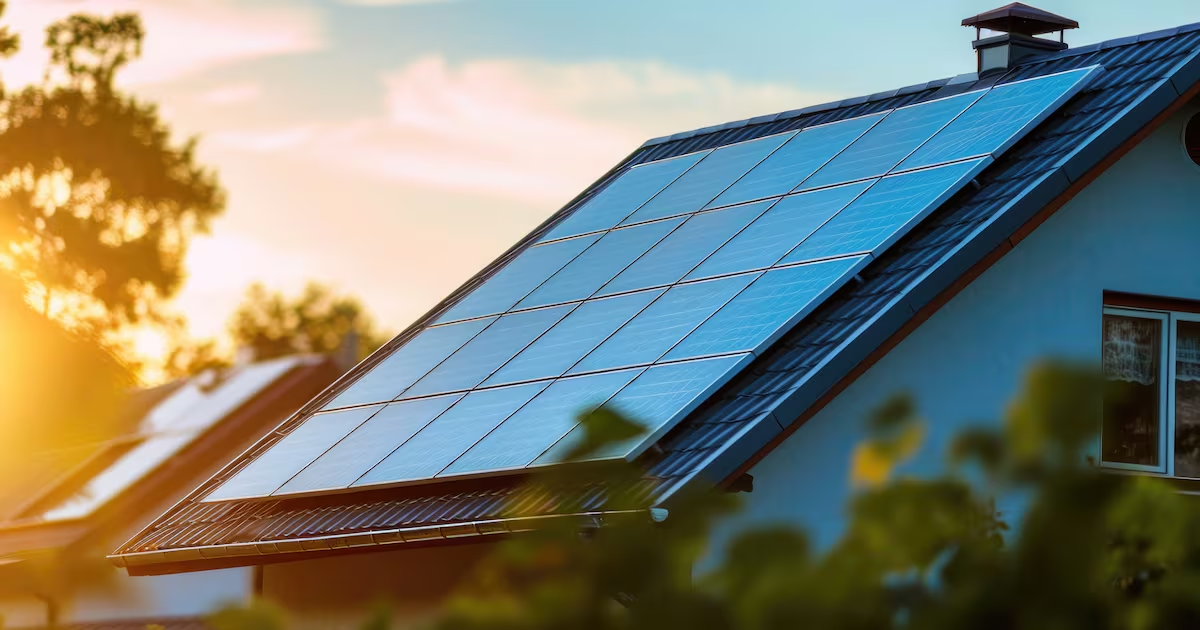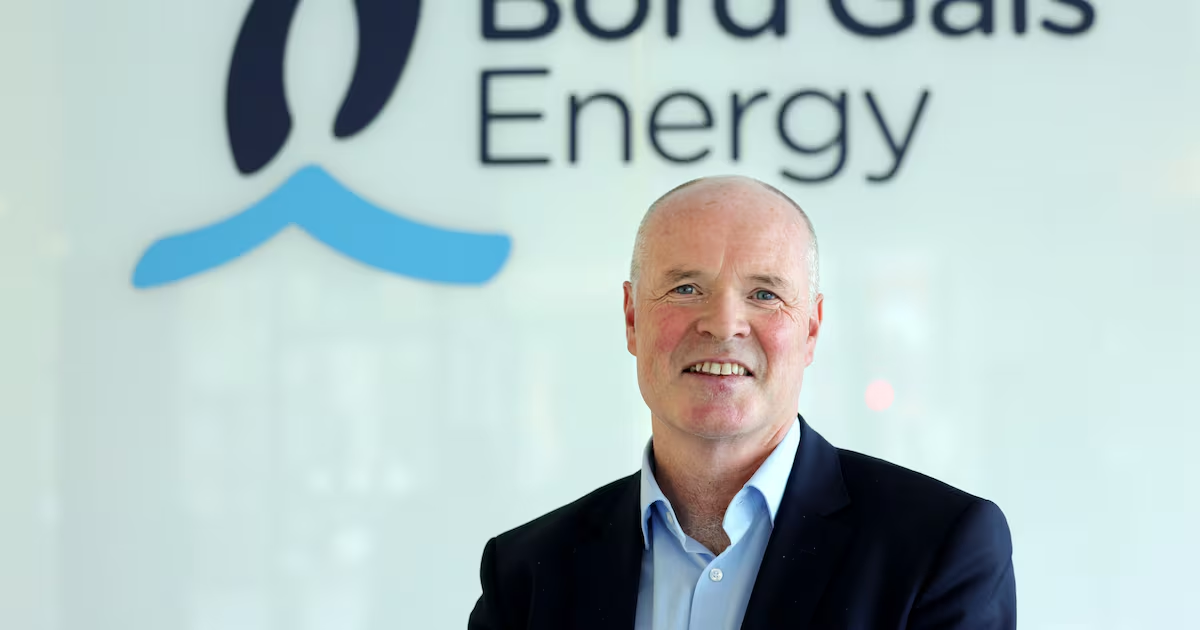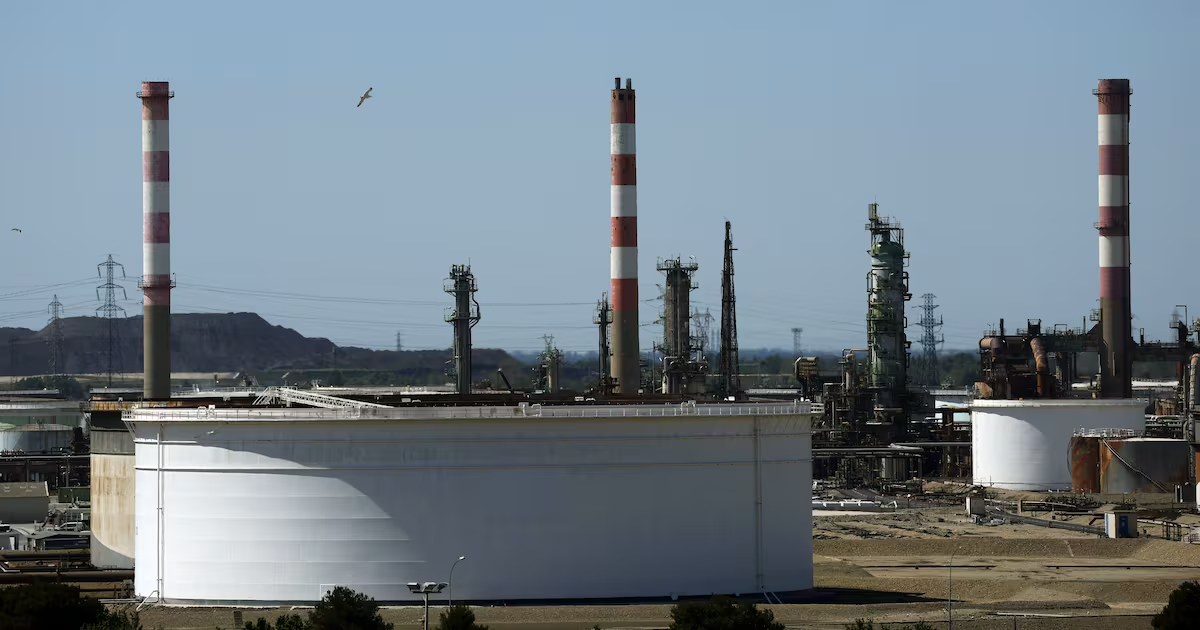
Bord Gáis Energy has been serving Irish families and businesses for 50 years. It’s an auspicious milestone and one the integrated energy company is marking by taking a leading role in Ireland’s energy transition, helping its 715,000 customers reach net zero by 2050. It started in 1976 as Bord Gáis Éireann, a commercial semi-State charged with developing Ireland’s natural gas industry. That remit is what attracted Carlow engineer Dave Kirwan, now country chair of Bord Gáis Energy, to join the company, in August 1999. Both its status as a semi-State and its role building out the infrastructure to support economic growth appealed to him. “The Bord Gáis culture was that of a plucky organisation acting in the best interests of Ireland in a classic, semi-State public sector sense, but doing brave stuff such as bringing gas ashore from Kinsale, getting it to markets that didn’t yet exist, and delivering a customer service.” It was a tall order for a sector in steep decline. “It’s hard to believe now but at one point, the idea of gas as a heating fuel was dead. By the 1980s it had dropped to a low of about 80,000, largely because town gas systems had lost all credibility,” he explains. By consolidating and revitalising them, Bord Gáis turned that story around, installing modern gas networks, encouraging people to switch to gas as a cleaner fuel and selling both gas and gas appliances. “In doing so we utterly transformed the market. It went from 80,000 to 600,000 customers in just under a decade, and the infrastructure to underpin the resilience of the network was built in tandem, including the interconnector with the UK,” he says. “So the level of engineering and innovation leading up to the late 1990s was the spirit of a company I wanted to join, and the spirit I wanted to maintain as I was fortunate enough to be put into a senior position to lead.” Dave Kirwan, country chair, Bord Gáis Energy. Photograph: Bryan Meade Decades of innovation After that, if anything, the pace of innovation increased. “Over the next decade we completed the interconnector, joined the Corrib field into the network, and published the first third party access tariffs so that other users could come on to the network,” says Kirwan. “We set up a business in Northern Ireland, to bring gas to Derry, developed our renewables proposition and built a power station, Whitegate, which contributes to supplying up to 10 per cent of Irish demand.” It allowed Bord Gáis to enter the electricity market for the first time. “The Guinness Book of Records referred to it as the most successful launch into an energy market in the world,” he recalls. “It was then that we launched the Bord Gáis Energy brand properly. Before that, it had been a business division. It now had to become something meaningful to the outside world, and that coincided with the naming rights of the Bord Gáis Energy Theatre.” Enter Centrica All this took place in the bleak years after the financial crisis, the collapse of the construction industry, and the recession that followed. As part of the EU-IMF bailout agreement, signed in 2010, the Government was required to sell off state owned assets to help pay down debt and, in 2014, Bord Gáis Éireann’s retail, trading and Whitegate power generation division was sold to international energy company Centrica. It was a period he’ll never forget, not least because he had “misgivings”, Kirwan admits. “I had been, man and boy, in semi-States. I had started with ESB and ended up in Bord Gáis, and we had done amazing things in the model we were asked to operate in. I wondered at the time, because of the circumstances that led to it, if it would be good for the business,” he says. His job, as managing director of Bord Gáis Energy, was to run the business through the sale, which he did until 2018. As it happened, being part of the publicly traded energy company was a “new dawn” for the company, he says, coming with a commitment to invest €1 billion in critical infrastructure, innovation and customer solutions, by 2029. Powering the energy transition After two years at senior leadership level with Centrica in the UK, Kirwan returned to Ireland to head Bord Gáis Energy once more in 2020, “with a determination to be relevant in net zero,” he says. “We couldn’t remain known as the gas incumbent. We had to become relevant by bringing the propositions to householders and businesses across Ireland to help them to decarbonise, even if doing that would be cannibalising our core business.” More innovation followed, including a partnership with the Irish Farmers Association (IFA). “We said to the IFA let us be the supplier of choice for solar installations and we will help to decarbonise farms across the country,” he explains. Solar has since eclipsed its boiler services business. The company also innovated in relation to talent, investing in apprenticeship programmes to ensure it has the engineers it needs for renewables technologies. It has launched a One Stop Shop, undertaking home retrofits, and continued to invest in physical infrastructure. “We’re developing flexible gas fired generators that help the intermittency of renewables, at efficiencies never achieved before. We’re bringing batteries to the Irish market and people like me are now sticking our head above the parapet and asking if Ireland should consider next generation nuclear as a way of decarbonising and supporting data centre growth,” he explains. In doing so he is drawing on the company’s 50-year legacy of addressing big infrastructural issues head on. “There is now a global competition among countries to host data centre infrastructure for AI, in order to have digital sovereignty and to create economic hubs of growth. If we are not brave enough it will be a story of missed opportunity that we will have to tell our grandchildren.” Throughout its history Bord Gáis Energy management has always been guided by a sense of “doing the right thing”, he says. That hasn’t changed. “Our values are care, courage, collaboration, delivery and agility and I think they stand up. We care about the impact on the customers we have, and we’ve been put to the test on that most recently in the energy crisis. We care about the impact on the communities we engage with, and how we deliver projects. We collaborate in doing so with all organs of the state and with the people in the communities we impact,” he explains. “We also have the courage to say tough stuff that needs to be said, if we think it’s right to say it. Those values have carried us quite a distance, and they will during the next phase of the transformation as well.”
How 50 years of innovation and investment have fuelled Bord Gáis Energy – and powered Ireland
From transforming Ireland’s gas network to championing renewable energy, Bord Gáis Energy is positioning itself for the next chapter of the country’s energy transition
1,129 words~5 min read