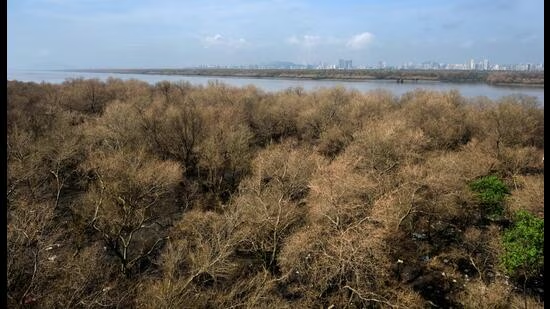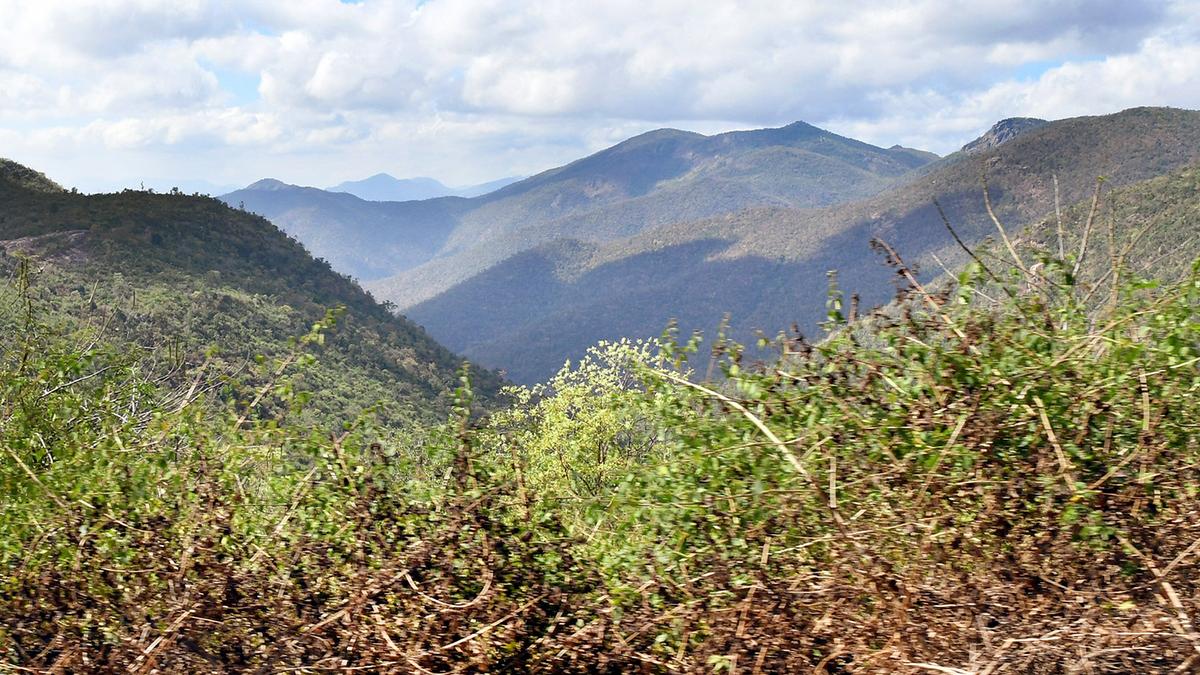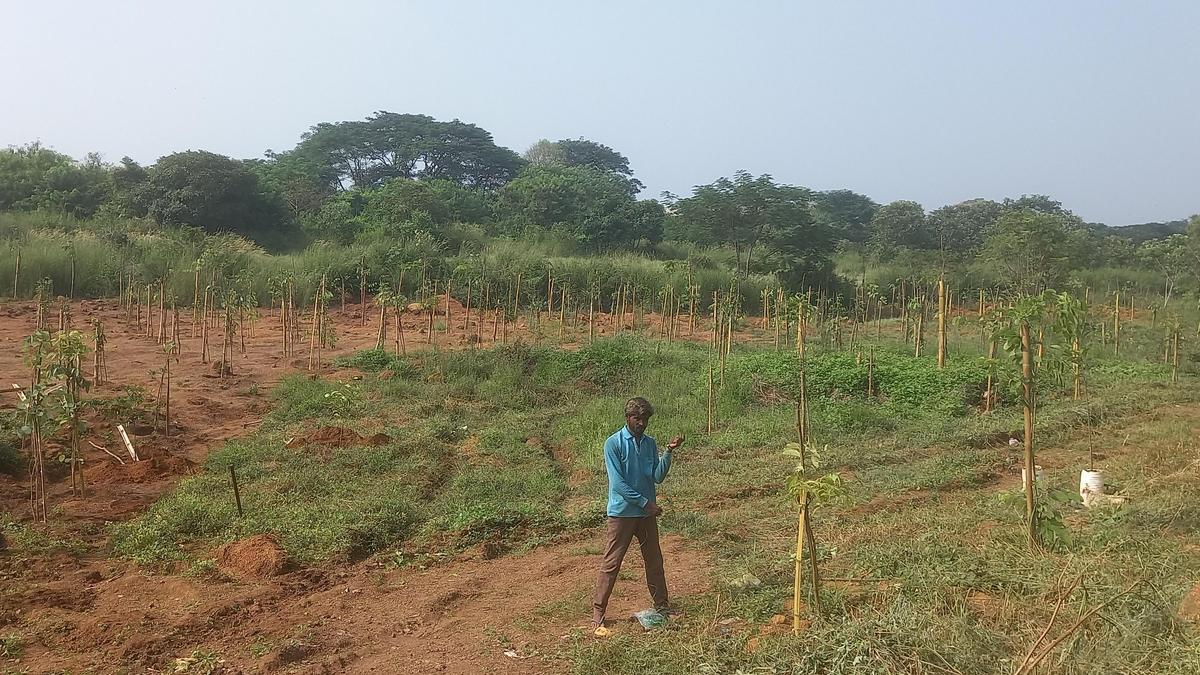
Image used for representational purposes only.
| Photo Credit: Raghava M.
The National Compensatory Afforestation Fund Management and Planning Authority (CAMPA) last week gave the nod to four projects aimed at conserving river dolphins, snow leopards, Indian rhinoceroses and wild water buffaloes, along with a set of initiatives to preserve wildlife and green cover across the country. Set up under the Compensatory Afforestation Fund Act, 2016, CAMPA works as a regulatory body to utilise compensatory afforestation funds, with each State and Union Territory (U.T.) having its own CAMPA body undertaking localised projects and a National CAMPA providing broad policy guidelines and technical oversight.What is compensatory afforestation?As the name suggests, compensatory afforestation is the practice of replacing forest land that has been converted into infrastructure projects to maintain green cover. While the practice cannot be used as a justification for large scale projects that alter the ecosystem of a region, compensatory afforestation is an effective way to be sustainable while undertaking necessary developmental projects. In India, compensatory afforestation is a key condition for approval for diversion of forest land for non-forest purposes to compensate for the loss of ‘land by land’ and ‘trees by trees’. Any proposal submitted seeking prior approval of Union government under the Forest (Conservation) Act (FCA), 1980, should have a comprehensive scheme for compensatory afforestation, duly approved by the competent authority of the concerned State/U.T. administration.Where does CAMPA funds come from?The primary source of funds for CAMPA are compensatory charges levied from any person, organisation or government departments for diverting forest land. These charges include costs of compensatory afforestation applicable for compensating the loss of forest land. These charges are non-lapsable, meaning they do not expire at the end of financial years and could be carried forward. They are also interest-bearing and are shared between the National and State/U.T. fund in the ratio of 10:90. The National CAMPA is maintained in Public Account of India, whereas State/ U.T. funds are maintained in Public Account of the respective State or U.T.What are CAMPA funds used for?The major use of CAMPA funds is for sustainable enhancement of ecosystems through plantations, conservation of resources, protection of forests, and improving wildlife-linked infrastructure and habitat.What are the latest projects under CAMPA?The governing body of National CAMPA, at a meeting in Coimbatore on July 10, approved studies on the conservation and recovery action plan for river dolphins, Project Snow Leopard Phase-II with second cycle of population estimation, conservation action plan for the Indian rhinoceros, and a pan-India conservation approach for the wild water buffalo. It also approved the continued support for the conservation of Manipur’s Brow-antlered deer (Sangai) and extended its flagship mangrove restoration scheme, MISHTI (Mangrove Initiative for Shoreline Habitats and Tangible Incomes) for three more years with a revised outlay of ₹600 crore.What are concerns raised about CAMPA?While compensatory afforestation is suitable for a developing economy to maintain sustainability, one of its main drawbacks is that plantations are inherently different from natural ecosystems. Mere afforestation without acknowledging the ecological balance of an area disrupted by developmental initiatives will restore green cover, but will also fail to replicate the ecosystem. Climate activists have also raised the issue of compensatory plantations being carried out on forest land rather than in non-forest areas, as stipulated by the CAF, a violation that undermines the purpose of the compensation. Published - July 15, 2026 09:10 am IST