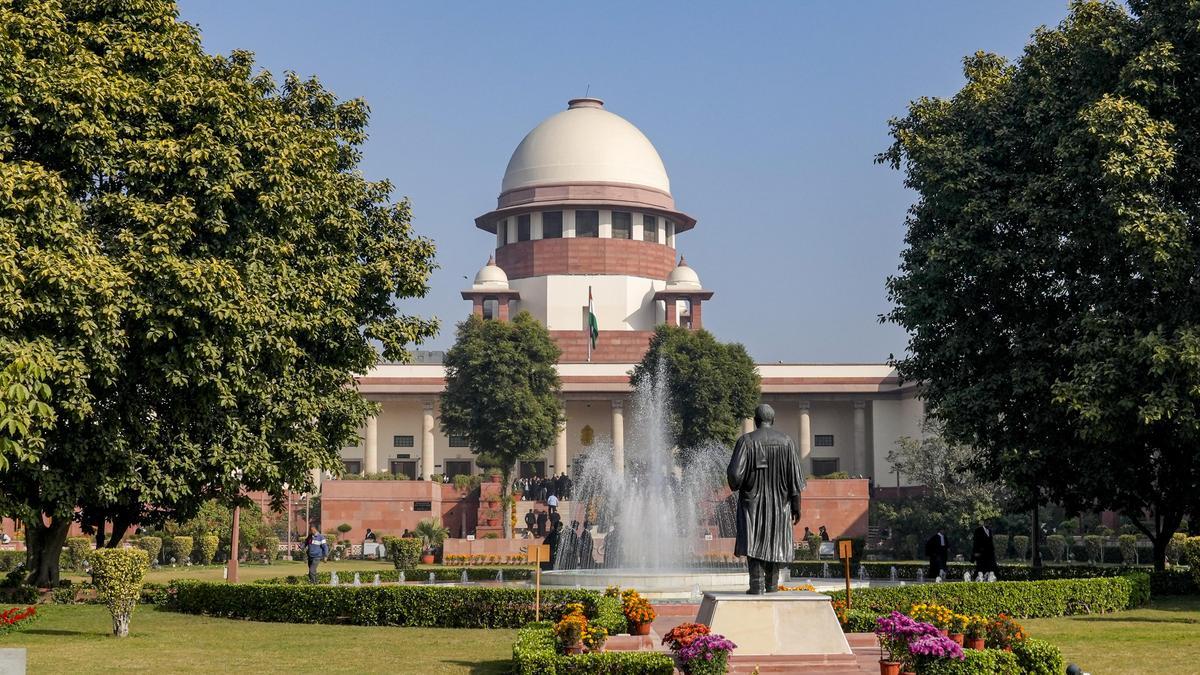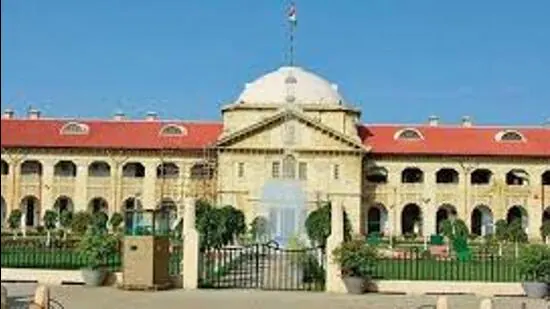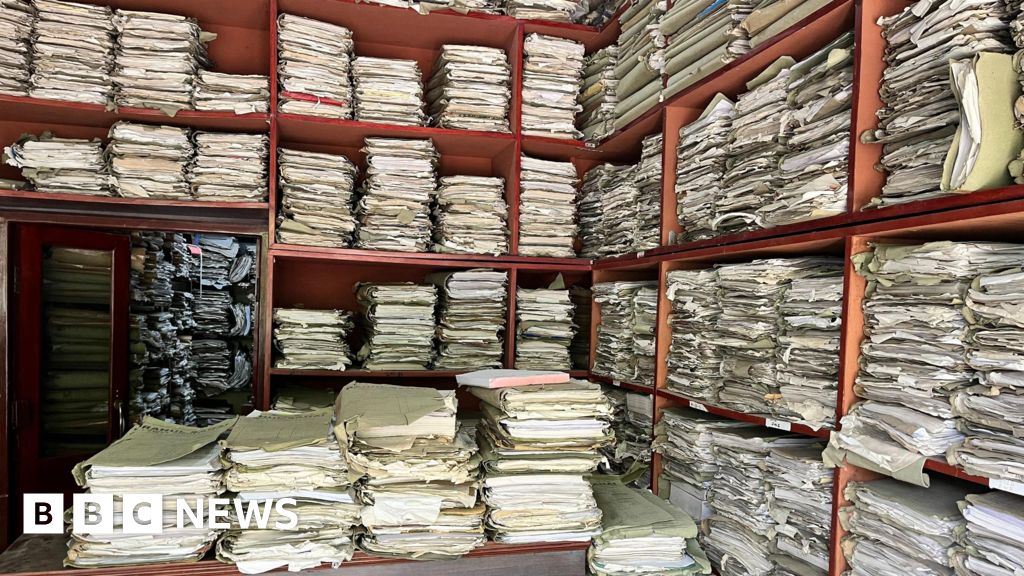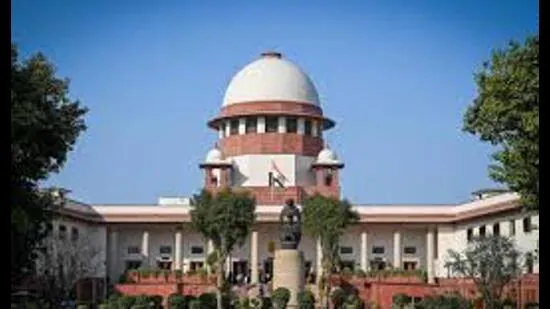
The Supreme Court’s sharp observations over a criminal appeal remaining pending in the Allahabad high court for nearly 41 years have renewed focus on Uttar Pradesh’s mounting judicial backlog, with official data showing the state accounts for a substantial share of pending cases in both the higher and subordinate judiciary.Supreme Court (Sourced)The issue came to the fore during a hearing on June 8 when a Supreme Court bench of Justices Prashant Kumar Mishra and AS Chaudhary described as “disturbing” the delay in deciding the appeal of a murder convict whose case remained pending in the Allahabad high court for almost four decades. The bench sought suggestions on “innovative measures” to tackle growing pendency in the court.The case concerned Vijay Singh, who was arrested in November 1983 at the age of 28 and convicted by a Kanpur sessions court in December 1985. Sentenced to life imprisonment, he challenged the verdict before the Allahabad high court. His appeal, however, was decided only in February 2026.The apex court noted that Singh remained on bail for nearly 43 years and spent only a short period in custody while awaiting a final decision on his appeal.Though arising from a single case, the observations have revived concerns about whether Uttar Pradesh’s justice delivery system is grappling with a deeper structural capacity challenge.Allahabad HC tops pendency listThe Allahabad high court currently carries the largest case burden among all high courts in the country.According to data presented in the Rajya Sabha by Union law minister Arjun Ram Meghwal on March 19, 2026, pendency in the Allahabad high court has crossed 12 lakh cases. The figure stood at around 10.24 lakh in 2021, increased to 10.34 lakh in 2022, 10.66 lakh in 2023 and exceeded 12.18 lakh in 2024. The backlog remained above 12 lakh in early 2026.With about 63.6 lakh cases pending across all 25 high courts at the end of 2025, the Allahabad high court alone accounts for nearly 19% of the national pendency.Court data show that around 6.17 lakh pending matters are civil cases, while criminal cases account for approximately 5.76 lakh.The age profile of pending cases reflects the scale of the challenge. According to data compiled in the Indian Justice Report, nearly 40% of pending cases in the Allahabad high court are more than 10 years old, while only about 37% are less than five years old.The burden is compounded by judicial vacancies. As of December 2025, the Allahabad high court reportedly had the highest number of vacancies among all high courts, with around 60 posts vacant against a sanctioned strength of 160 judges.Lower courts face greater pressureThe situation is even more severe in Uttar Pradesh’s district and subordinate courts. Parliamentary data for 2025 showed that the state had the highest number of vacancies in the subordinate judiciary, with 1,055 judicial officer posts lying vacant.At the same time, district courts across the state were handling more than 1.19 crore pending cases by mid-June, according to the National Judicial Data Grid. UP accounts for nearly one-fourth of the country’s total lower court pendency of about 4.96 crore cases.Age-wise data reveal that nearly 40% of cases in subordinate courts have remained pending for over five years. More than 15 lakh cases are between 10 and 20 years old, over 3.35 lakh have been pending for 20 to 30 years and nearly 17,000 cases have remained unresolved for more than three decades.UP also continues to remain below recommended judge-population ratios. The Law Commission of India had recommended 50 judges per million population in 1987. Available estimates place UP at about 11.2 judges per million people, below the national average of 14 judges.SC pushes reformsThe Supreme Court has recently sought to address systemic delays. In May this year, while hearing matters related to delays in bail applications, a bench led by Chief Justice Surya Kant proposed a series of measures for high courts, while drawing attention to pendency concerns in the Allahabad and Patna high courts.The court suggested automatic listing systems, fixed timelines for disposal, weekly or fortnightly listing of bail matters through software-based mechanisms and limiting avoidable adjournments sought by government counsels. It observed that prolonged delays directly affect personal liberty guaranteed under Article 21 of the Constitution.Registrar-general of the Allahabad high court, Manjeet Sheoran, said efforts were underway to tackle both pendency and vacancies. “I am on summer vacation these days and therefore cannot share details off-hand. All that I assure is that we are trying our level best to reduce the pendency of cases and fill the vacant posts of judges in the high court,” he told HT over phone.On the subordinate judiciary, UP principal secretary (Law) and legal remembrancer Uday Pratap Singh acknowledged that vacancies and pendency remain longstanding concerns. “The state government, on its part, is taking a number of measures, including setting up new courts and filling existing vacancies to deal with the problem,” he said, adding that a collegium meeting for appointment of more judges to the Allahabad high court was expected soon.
SC’s 41-year appeal remark puts spotlight on U.P’s judicial backlog
Calling a 41-year delay in deciding a criminal appeal “disturbing”, the Supreme Court sought “innovative measures” to tackle mounting pendency in Allahabad high court.
831 words~4 min read