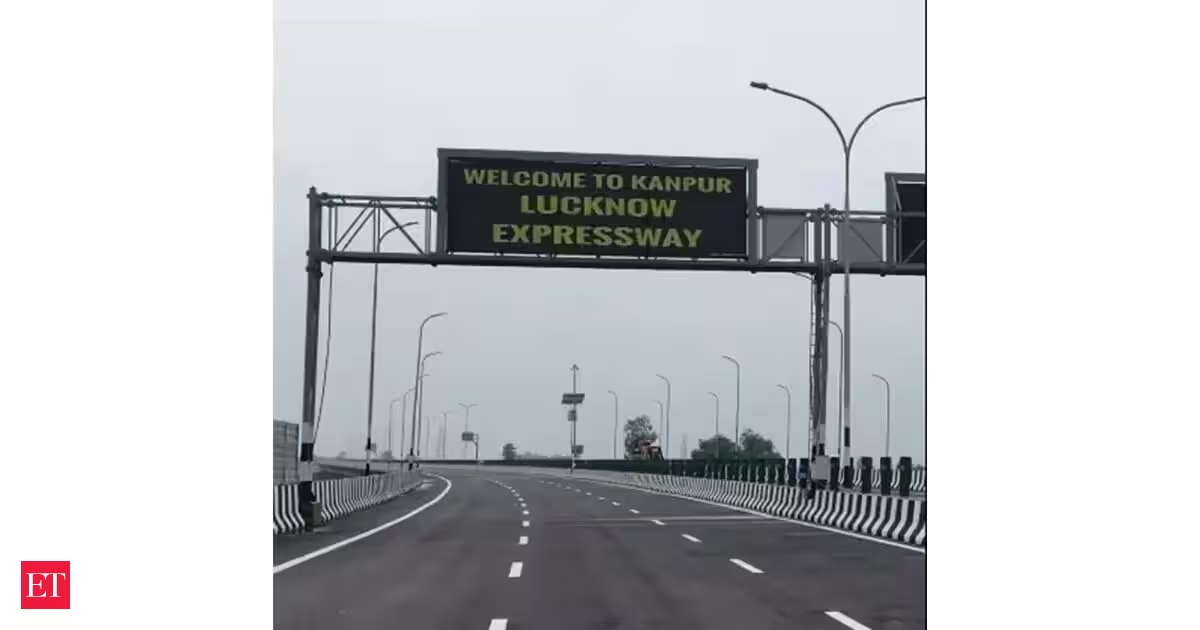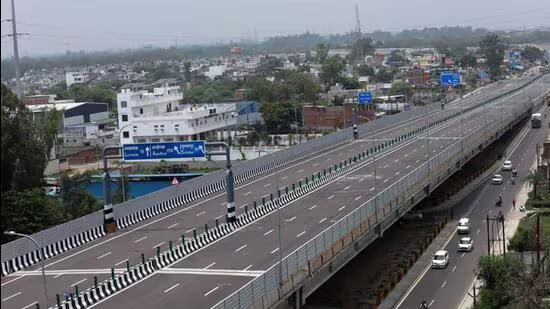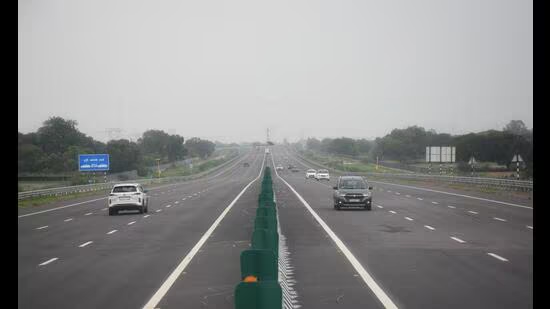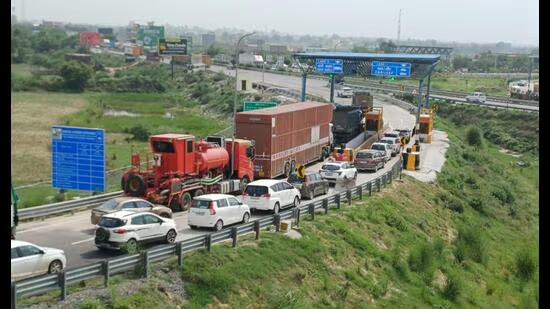
LUCKNOW The first day of public operations on the newly inaugurated Lucknow–Kanpur Expressway saw moderate traffic movement on Tuesday, with commuters experiencing significantly reduced travel time but also facing higher toll charges and minor technical glitches at some entry and exit points.Vehicles queue up near the Unnao exit of the Lucknow–Kanpur Expressway on Tuesday after a technical glitch in the vehicle-detection (ANPR) sensors caused temporary disruptions during the first day of public operations. (Deepak gupta/HT Photo)The 63-km, six-lane access-controlled expressway, inaugurated on Monday, has significantly reduced travel time between Uttar Pradesh’s capital and its industrial hub. Commuters reported completing the journey in around 35–45 minutes, compared to the 2–3 hours often required on the congested Lucknow–Kanpur highway, particularly during peak traffic hours.While the expressway largely delivered on its promise of faster connectivity, some motorists faced difficulties near the Unnao exit point, where technical issues related to vehicle-detection sensors reportedly led to temporary disruptions. Several vehicles were seen halted on the roadside as officials worked to resolve the issue. Sources said the malfunction affected seamless passage for some users during the initial hours of operation.The expressway has also sparked discussion over its toll structure. A one-way trip for cars, jeeps and vans costs ₹275, compared to ₹96 on the existing NH-27. For light commercial vehicles and minibuses, the toll is ₹445, while buses and trucks are charged ₹935. Multi-axle heavy vehicles pay ₹1,020. The toll rates are significantly higher than those on the existing highway, where corresponding charges are around ₹155, ₹325 and ₹355, respectively.Despite the higher user fee, officials maintain that the expressway offers substantial value through reduced travel time, lower fuel consumption, improved driving conditions and enhanced road safety. Designed for high-speed travel, the corridor eliminates traffic signals, intersections and local traffic interference that frequently slow movement on NH-27.The project is also being closely watched for its barrier-free tolling system, making it India’s first expressway to rely on a combination of automatic number plate recognition (ANPR) technology and FASTag-based electronic toll collection. Unlike conventional toll roads, there are no physical toll plazas along the route.However, motorists reported that vehicles were being stopped at some exit points to verify whether toll deductions had been successfully processed, indicating that operational fine-tuning may still be underway during the initial days of service. Transport experts noted that such checks partially dilute the concept of seamless travel, though they are expected to reduce once the system stabilises.National Highways Authority of India (NHAI) project director for the Lucknow–Kanpur Expressway, Nakul Verma, said official traffic figures would be released after a full 24-hour assessment period. The data is expected to provide the first indication of how many commuters have shifted from NH-27 to the new corridor and the extent to which the expressway has eased traffic pressure on the existing route.Officials believe the expressway will gradually attract a larger share of inter-city traffic, particularly private vehicles and commercial transport operators seeking faster and more predictable travel times. Over the coming weeks, traffic patterns on both the expressway and NH-27 will be closely monitored to assess the corridor’s impact on regional mobility and its role in strengthening connectivity within the proposed State Capital Region.However, some vehicles were seen stranded for a brief period near the Unnao entry and exit point due to issues with the ANPR sensors. The glitch temporarily affected seamless movement, requiring intervention by on-ground staff. Officials said the issue was being addressed and the system would be fine-tuned as traffic volume increases in the coming days.At certain exit points, vehicles were temporarily halted to verify whether the toll amount had been successfully deducted from users’ accounts, indicating that the fully automated tolling system is still undergoing operational adjustments.Officials maintain that the higher toll is justified by the advanced infrastructure, access-controlled design, improved safety features and lower vehicle operating costs resulting from smoother traffic flow.The expressway has been designed for high-speed travel and is expected to decongest NH-27, particularly the busy stretches through Unnao and suburban areas between Lucknow and Kanpur.While business travellers and time-sensitive commuters are likely to benefit the most from the new corridor, local traffic and cost-conscious motorists may continue to rely on NH-27 due to its substantially lower toll rates.
Lucknow, Kanpur 45 mins apart: A cruise for commuters amid toll debates, sensor glitches
While the expressway largely delivered on its promise of faster connectivity, some motorists faced difficulties near the Unnao exit point, where technical issues related to vehicle-detection sensors reportedly led to temporary disruptions
699 words~3 min read