Support CleanTechnica's work through a Substack subscription, on Patreon, or on Stripe. Help us produce all of the high-quality, original content we publish week after week despite the challenges of content-scraping AI, antisocial media, inflation, and other hurdles.
Well, we don’t know exactly how much EU tariffs on EVs produced in Chinese hit different brands, but a new analysis from Transport & Environment (T&E) sure provides some strong implications that made my eyes pop.
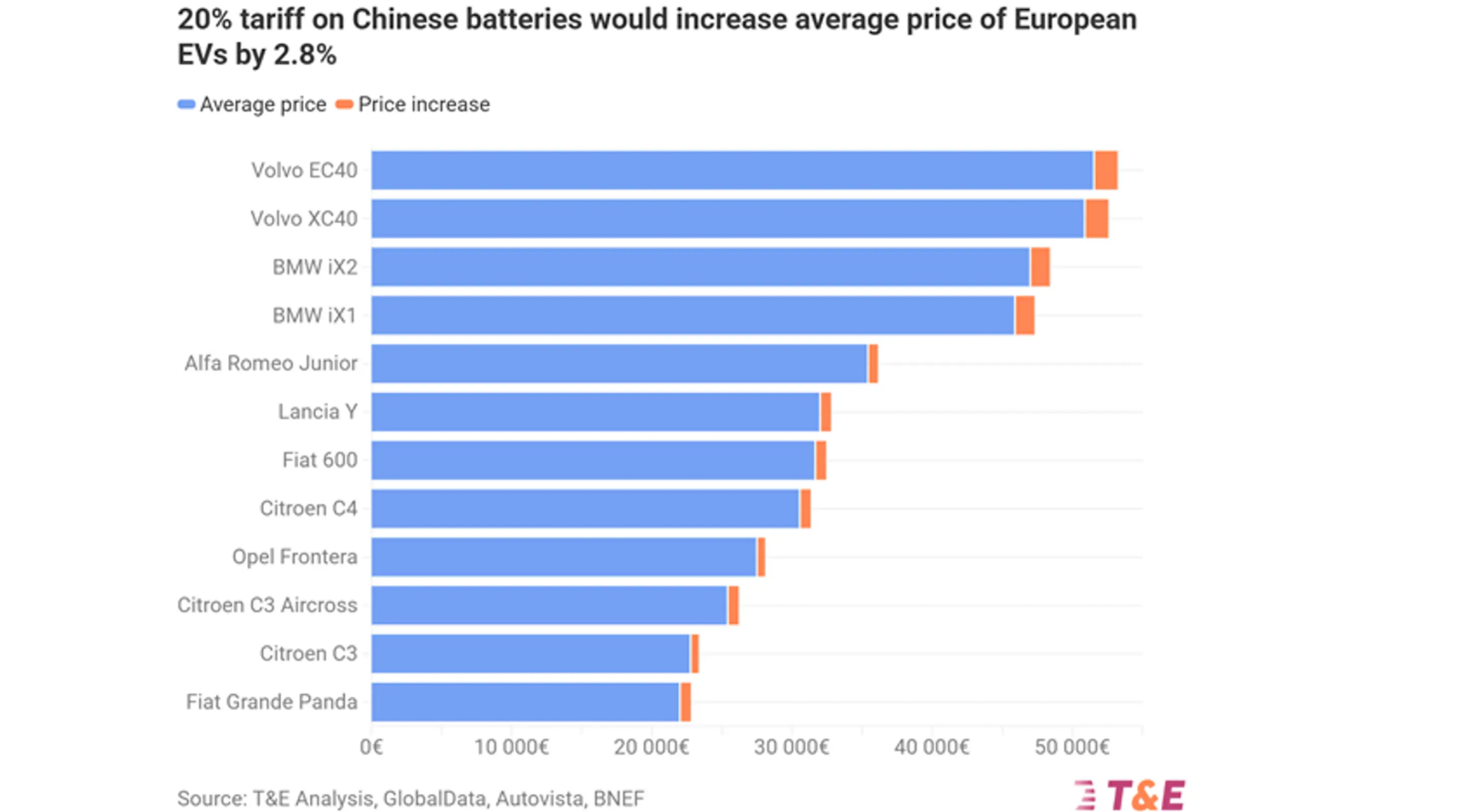
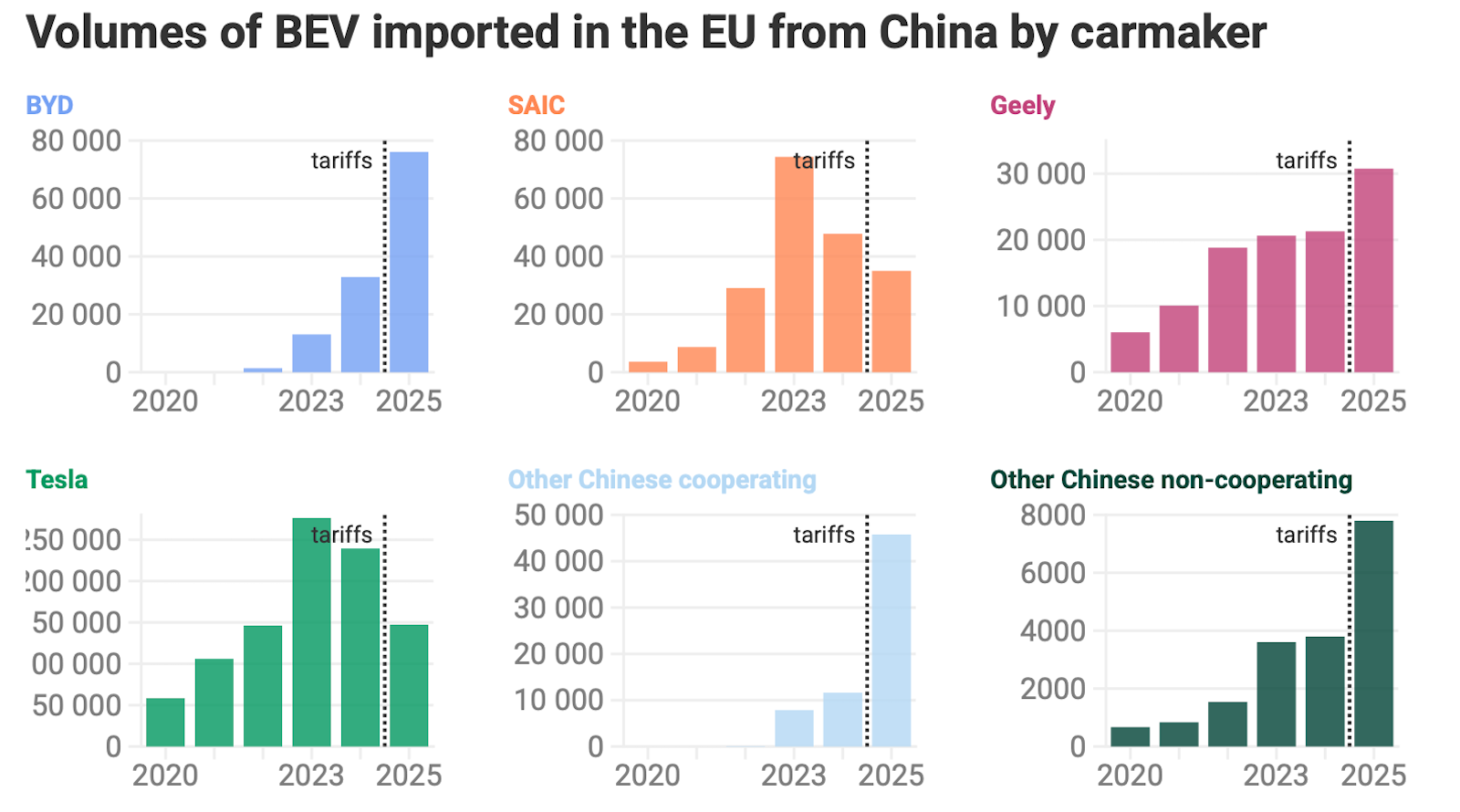
Scrolling through the report, I saw this chart and found it fascinating:
First of all, I didn’t expect so much divergence here. Secondly, I did expect companies to be hit quite hard by these tariffs, but several don’t look to have been hurt by them — but that may be deceiving. (Also, note that the scales here are not the same for each automaker.)
On that first point, clearly, BYD, Geely, and “other” Chinese companies did well; whereas SAIC and Tesla had serious sales declines following the tariffs. However, how much is that because of the tariffs? We simply don’t know. But we do know the tariffs didn’t make it easier for those companies to make sales in Europe. On the matter of Geely versus BYD, T&E also makes this point: “Lower tariffs (17%) for BYD allowed BEV sales to grow, while higher tariffs for SAIC (35%) led to a decrease.” BYD’s sales, in fact, more than doubled year over year. Tesla, though, had some of the weakest penalties, but there were other factors at play. For one, the brand faced certain demand challenges in Europe. Additionally, though, it also had its Berlin factory where it could start producing vehicles for Europe and then reduce imports from China.