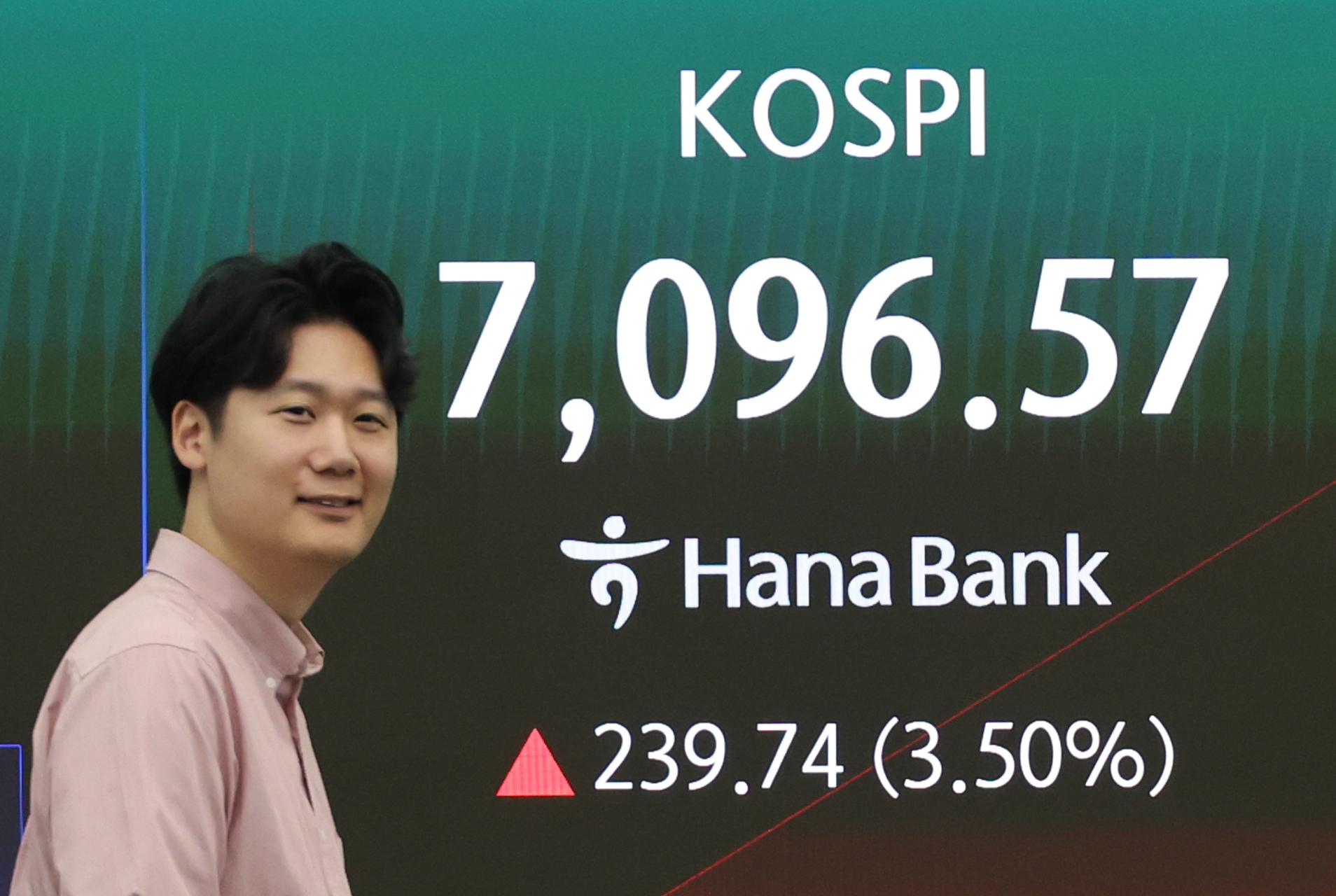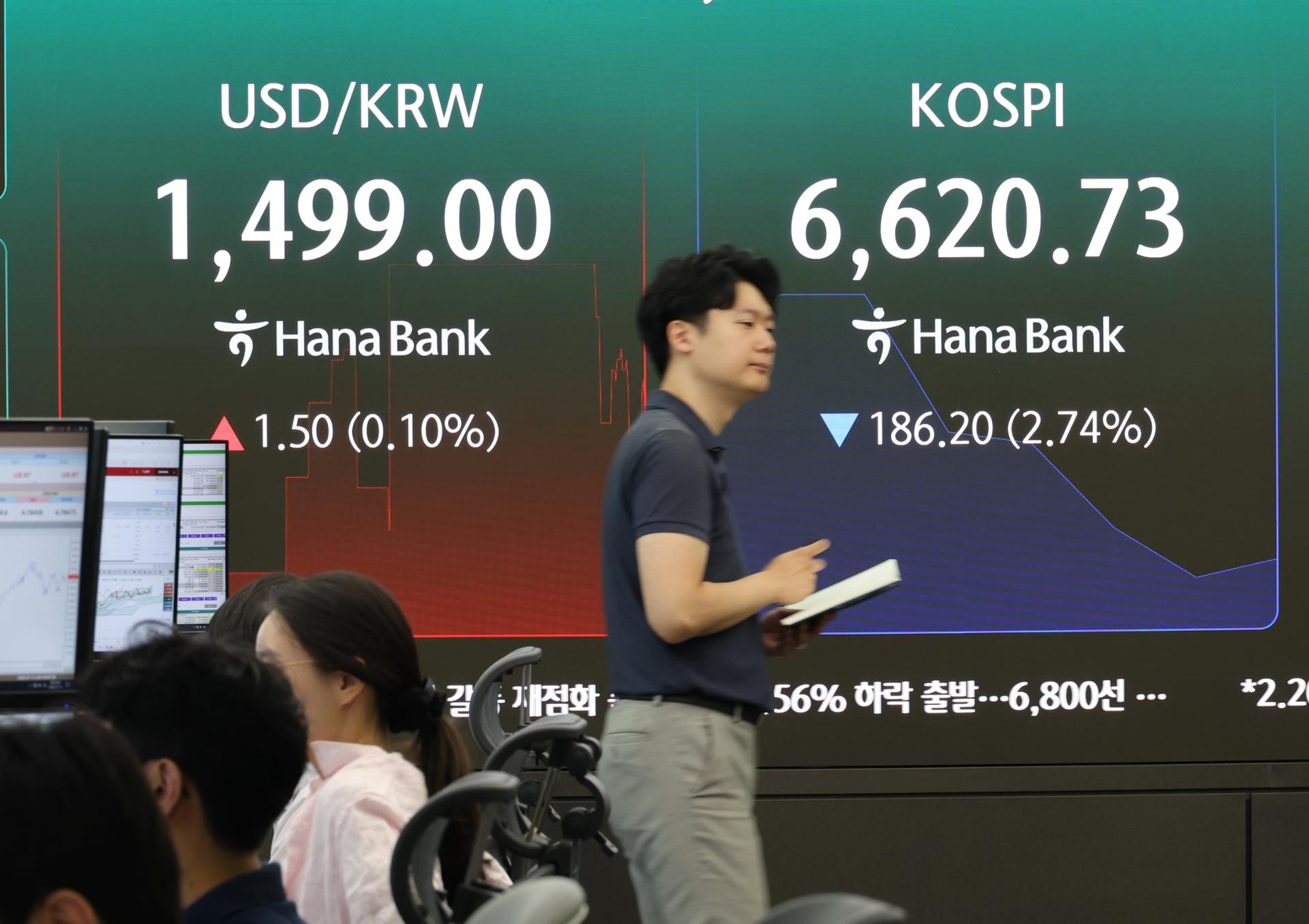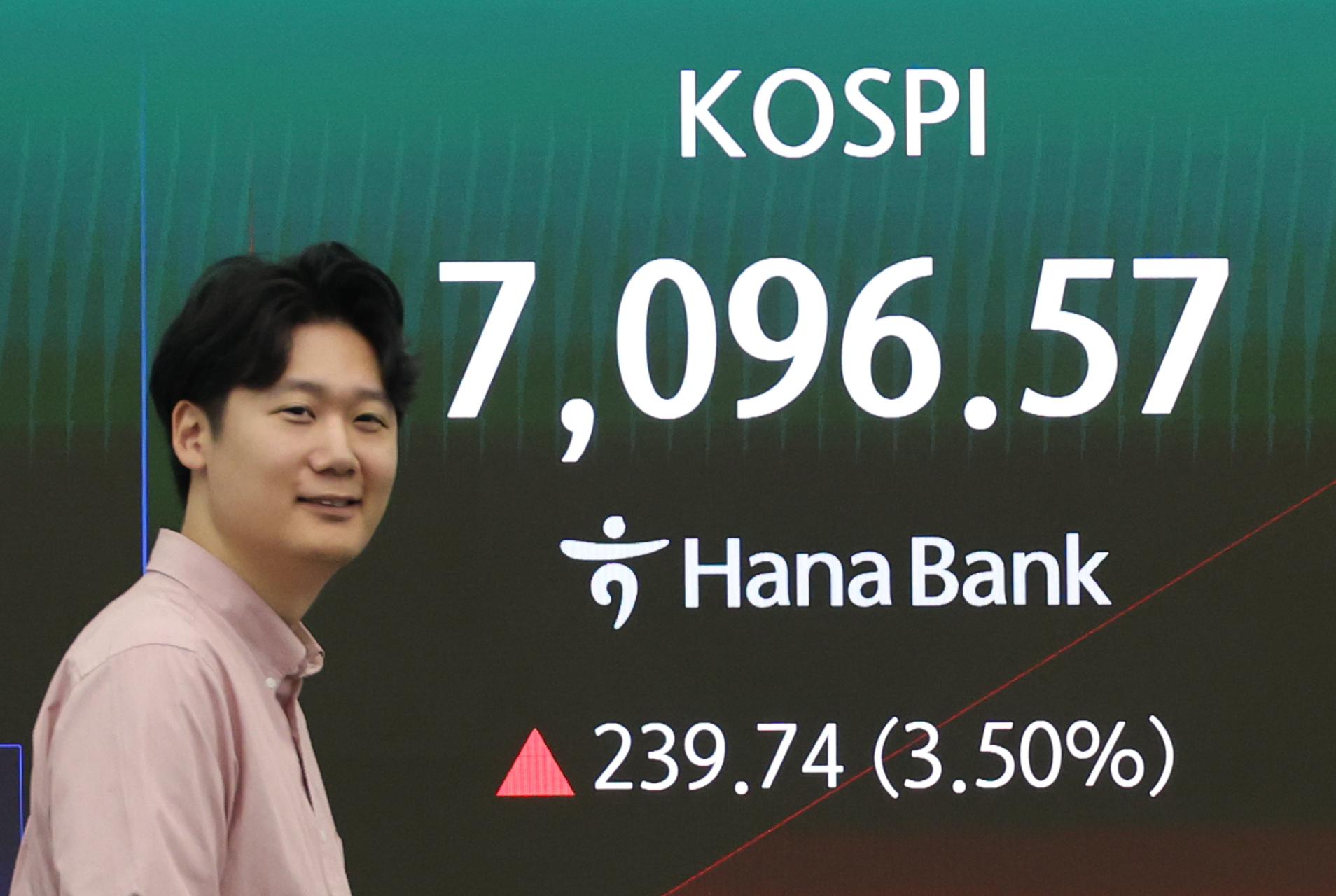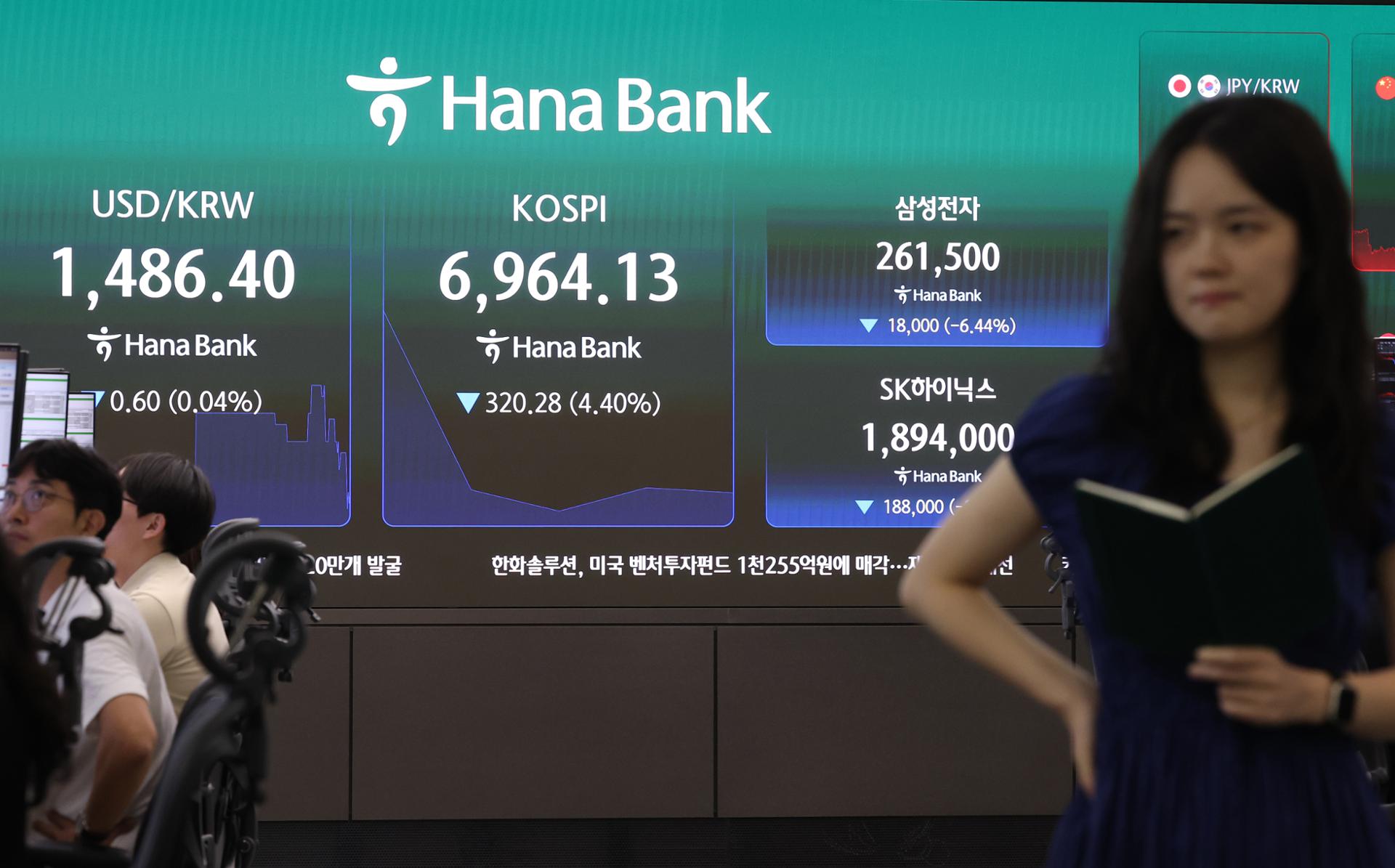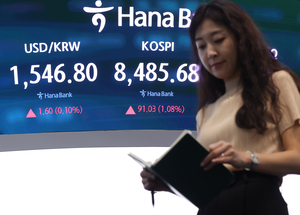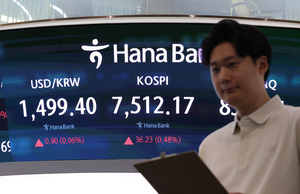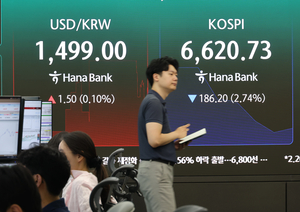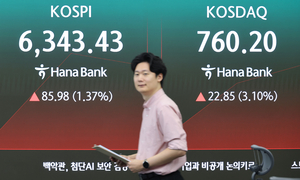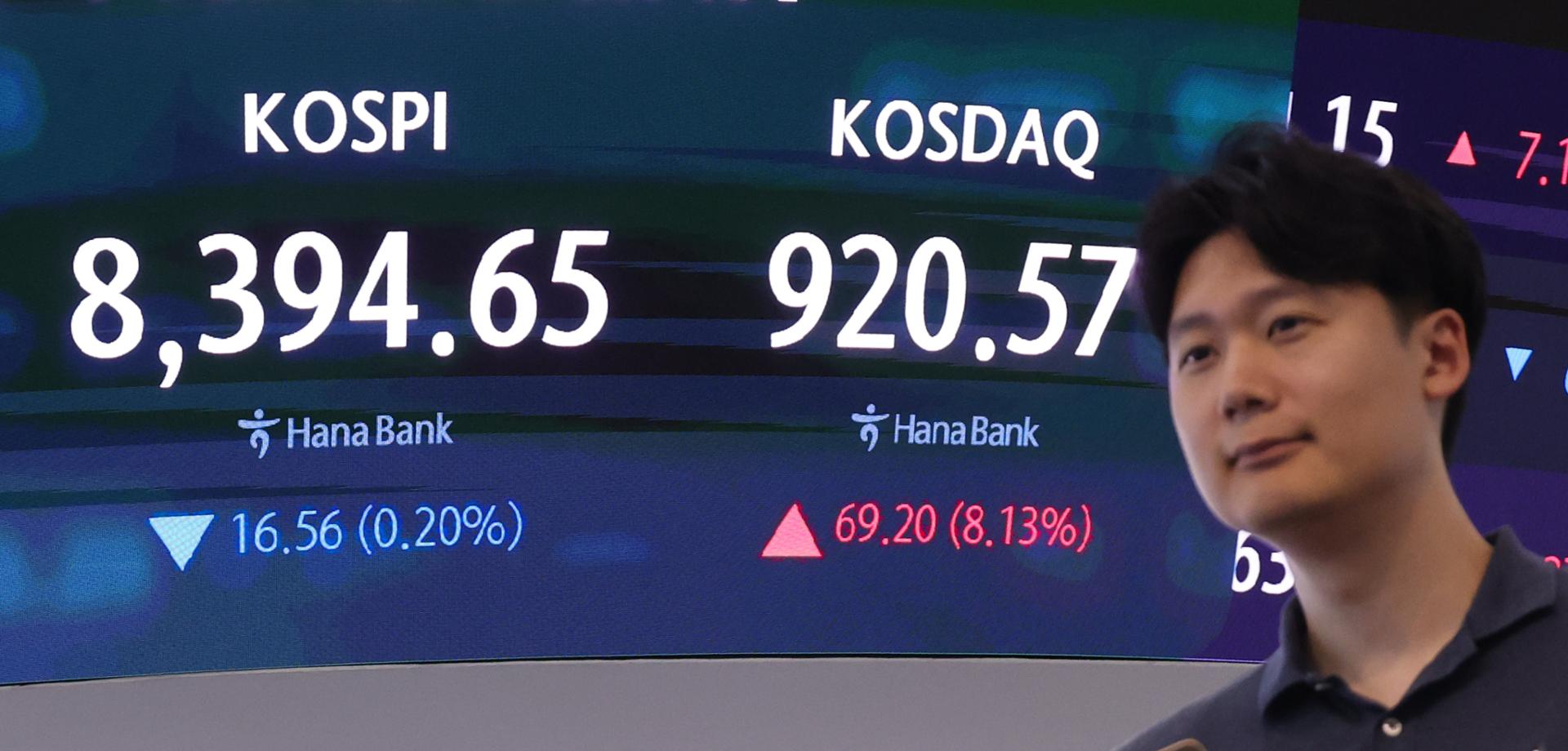
An electronic board showing the Korea Composite Stock Price Index at a dealing room of the Hana Bank headquarters in Seoul on Wednesday. (Yonhap) Seoul shares opened higher Wednesday, tracking overnight gains on Wall Street, though continued uncertainty in the Middle East remains a concern for investors.After opening 3.3 percent higher, the benchmark Korea Composite Stock Price Index extended gains, rising 415.65 points, or 6.06 percent, to 7,272.48 as of 9:15 a.m.The index closed 0.73 percent higher Tuesday after rebounding from an 8.95 percent plunge a session earlier due to a massive sell-off of technology stocks.Overnight, the Dow Jones Industrial Average rose 0.02 percent to 52,508.27, while the tech-heavy Nasdaq Composite climbed 0.9 percent to 26,107.01.Renewed tensions between the United States and Iran in the Middle East are expected to continue to weigh on investor sentiment.US President Donald Trump on Tuesday dropped his proposal to impose a 20 percent "reimbursement" fee on cargo shipped through the crucial Strait of Hormuz, saying that he will replace it with trade and investment deals with Middle Eastern countries.Just a day earlier, he said the US will serve as the "guardian" of the strait and be reimbursed at a 20 percent rate on all cargo shipped through the waterway.In Seoul, tech stocks led the gains.Market bellwether Samsung Electronics jumped 6.84 percent, and its chipmaking rival SK hynix surged 11.76 percent.Top carmaker Hyundai Motor rose 2.71 percent, defense firm Hanwha Aerospace climbed 5.5 percent, and steelmaker POSCO Holdings gained 3.95 percent.Among decliners, instant noodle maker Samyang Foods fell 1.4 percent and leading beverage firm Hitejinro backtracked 0.14 percent.The Korean won was trading at 1,489.35 won against the US dollar, up 1.15 won from the previous session, as of 9:15 a.m. (Yonhap)
Seoul shares open higher, tracking Wall Street gains amid Middle East tensions
Seoul shares opened higher Wednesday, tracking overnight gains on Wall Street, though continued uncertainty in the Middle East remains a concern for investors.
286 words~1 min read