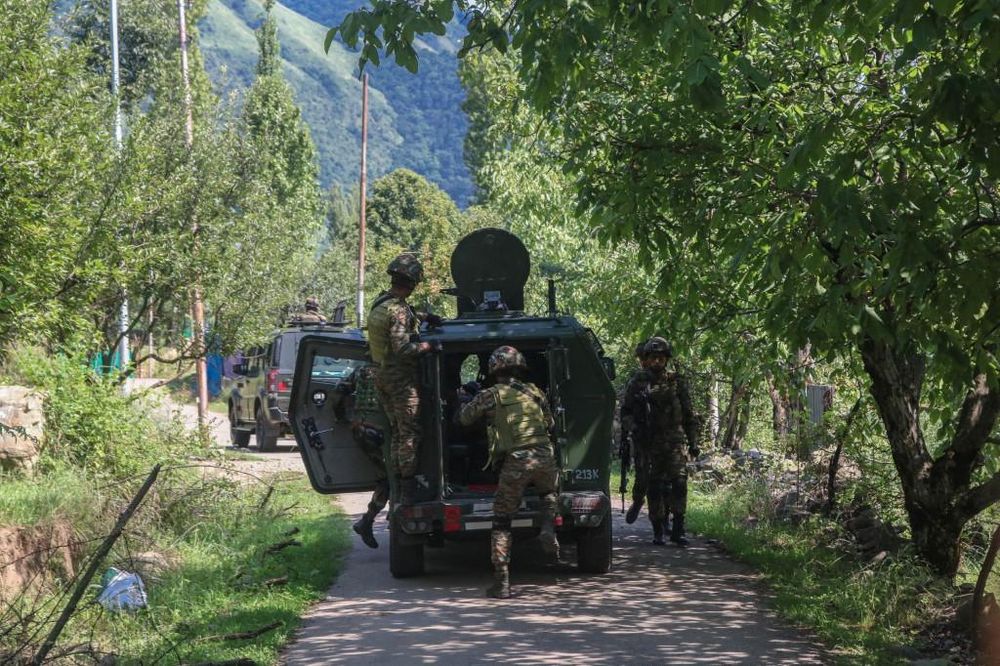
Indian Army soldiers near the site of a gunbattle between militants and Indian security forces on the outskirts of Srinagar, Jammu and Kashmir, on July 28, 2025. The writer argues that the principles of India-Pakistan cooperation that existed for decades were eroded over the years by Pakistan’s persistent obstructionism, politicisation of technical matters, and repeated weaponisation of the Indus Waters Treaty mechanisms to frustrate legitimate development in this Union Territory of Jammu and Kashmir.
The decision to place the Indus Waters Treaty (IWT) in abeyance marks the end of India’s restraint in the face of multiple grave provocations by Pakistan. Signed in 1960 and celebrated internationally as a rare example of sustained cooperation between two adversarial neighbours, the Treaty survived wars, political upheavals, military crises, and prolonged diplomatic hostility only on account of India’s benign and good-neighbourly approach. Agreements of such consequence depend on reciprocity, trust, good faith, and a genuine commitment to cooperation. Over the past six decades, these foundational principles were steadily eroded by Pakistan’s persistent obstructionism, politicisation of technical matters, and repeated weaponisation of Treaty mechanisms to frustrate legitimate development in the Union Territory of Jammu and Kashmir. To cap it all, Pakistan relentlessly pursued a diabolical policy of exporting terror, completely demolishing the very foundation of goodwill, friendship and good faith on which the Treaty stood.