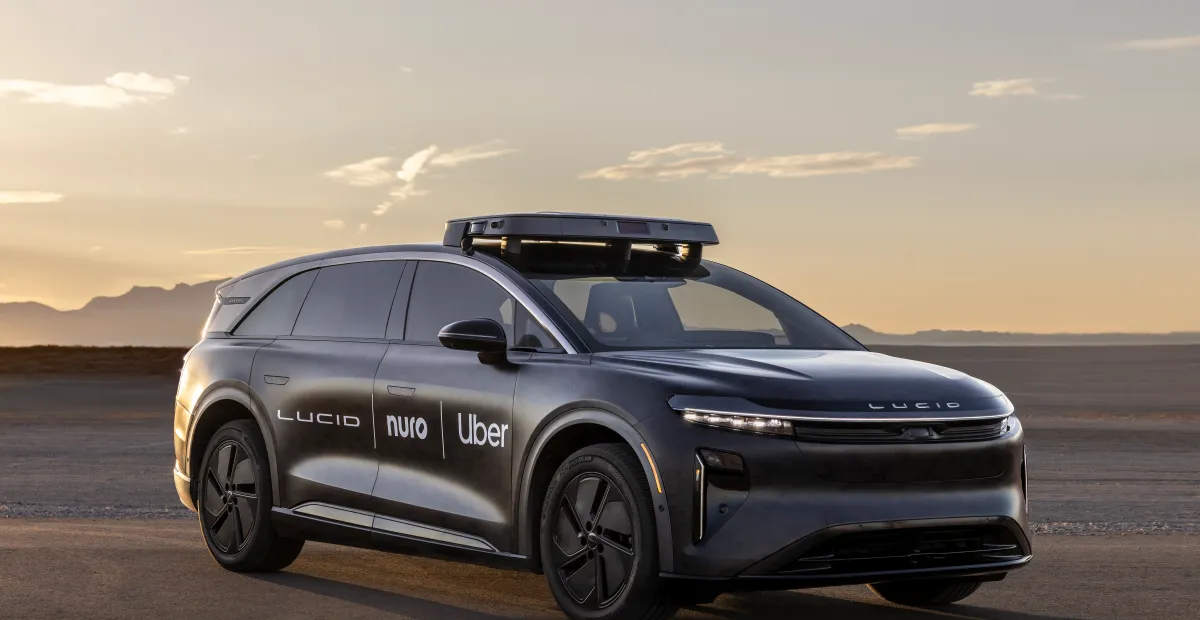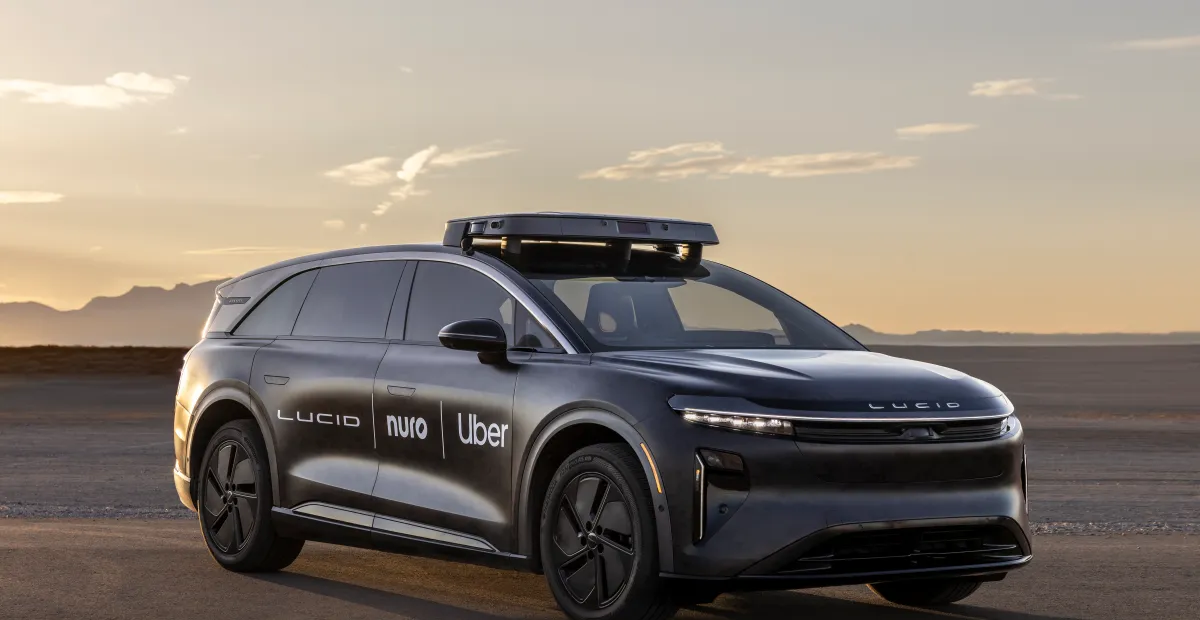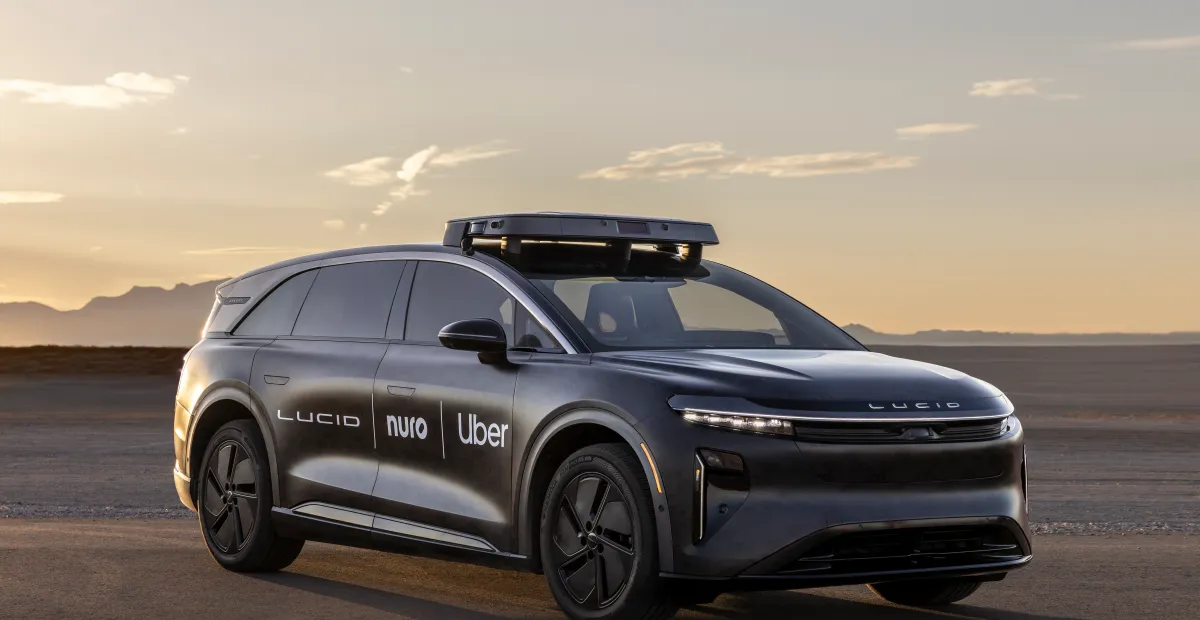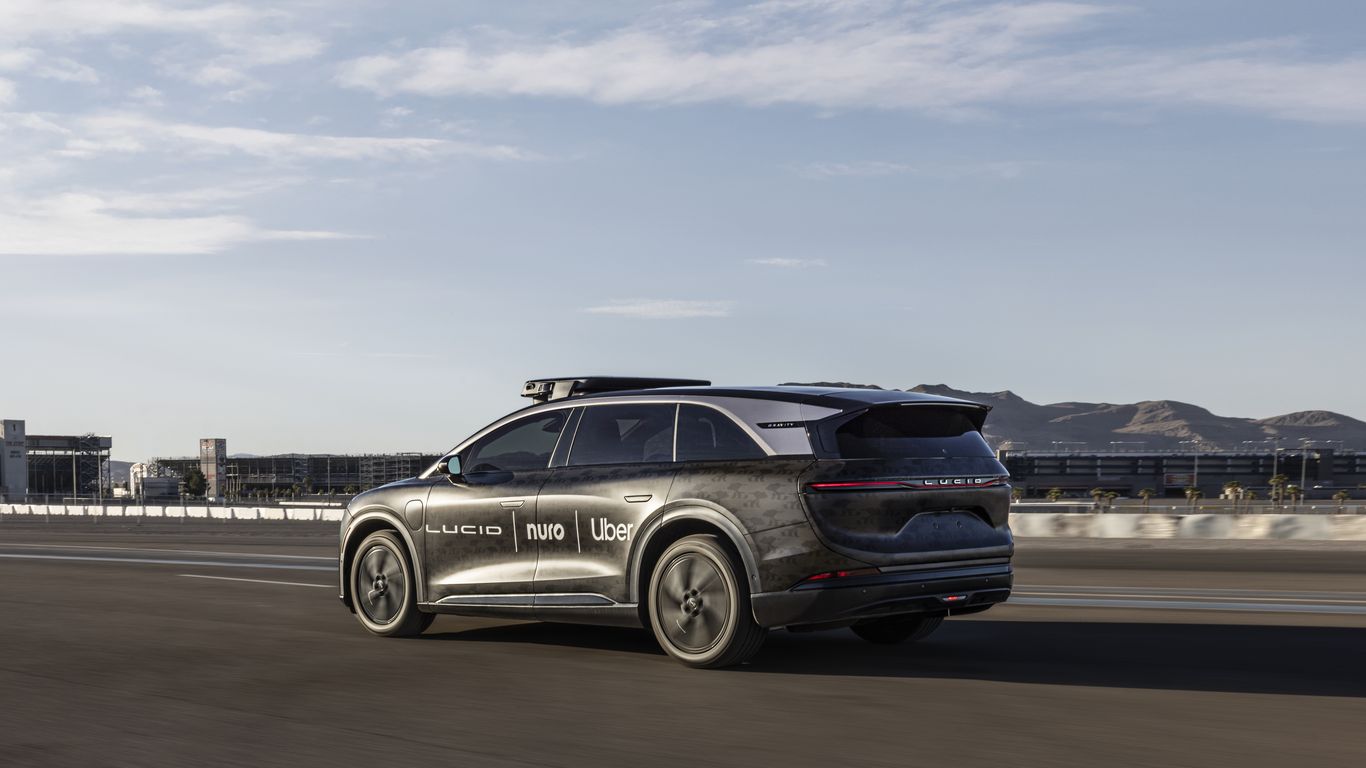
Self-driving Lucid Gravity electric SUV being tested at Nuro's test track in Las Vegas. Uber plans to buy at least 20,000 of them for a premium robotaxi service. Photo courtesy of LucidUber is adding Lucid electric vehicles equipped with Nuro's self-driving technology to its growing robotaxi network, and is buying a stake in both companies.Why it matters: The deal is important to all three partners.For the first time, Uber has made a commitment to buy at least 20,000 robotaxis from a vehicle manufacturer.Lucid gets a welcome $300 million investment from Uber and a guaranteed customer for the next six years. It is the first technology licensing partnership for Nuro, an AV pioneer that recently pivoted away from its original delivery robots. It, too, will receive a "multi-hundred-million dollar" investment from Uber.The big picture: Uber says it is building an electric, shared, and autonomous future and is already working with 18 AV partners.In May, Uber said it has grown to an annualized rate of 1.5 million autonomous rides or delivery trips.Its autonomous ride-hailing services include partnerships with Waymo in Phoenix, Austin, and Atlanta. It also has robotaxis in partnership with WeRide in the Middle East. Uber has autonomous delivery programs in 11 cities with six partners, including Avride, Cartken, CoCo, Nuro, Serve and Waymo.Uber Freight is also working with autonomous providers to deploy self-driving commercial trucks. Driving the news: The deal envisions Lucid's electric Gravity as the heart of a new premium global robotaxi program created exclusively for the Uber ride-hailing platform.Uber aims to deploy 20,000 or more Lucid vehicles equipped with the Nuro Driver over six years. The vehicles will be owned and operated by Uber or its third-party fleet partners, such as Alto or Avomo. The first Lucid-Nuro robotaxi prototype is already operating autonomously on a closed circuit at Nuro's Las Vegas proving grounds.Lucid Gravity, with a 450-mile driving range, means less frequent downtime for charging, which means lower costs and higher utilization. The necessary hardware will be integrated into the Lucid Gravity on Lucid's assembly line and will subsequently receive Nuro's software when the vehicle is commissioned by Uber.Nuro is responsible for validating the safety of the vehicles, the companies said. The bottom line: The deal is a win-win-win for all three companies.
Uber to buy at least 20,000 luxury robotaxis from Lucid
Lucid gets a $300 million investment from Uber and a guaranteed customer for the next six years.
375 words~2 min read